

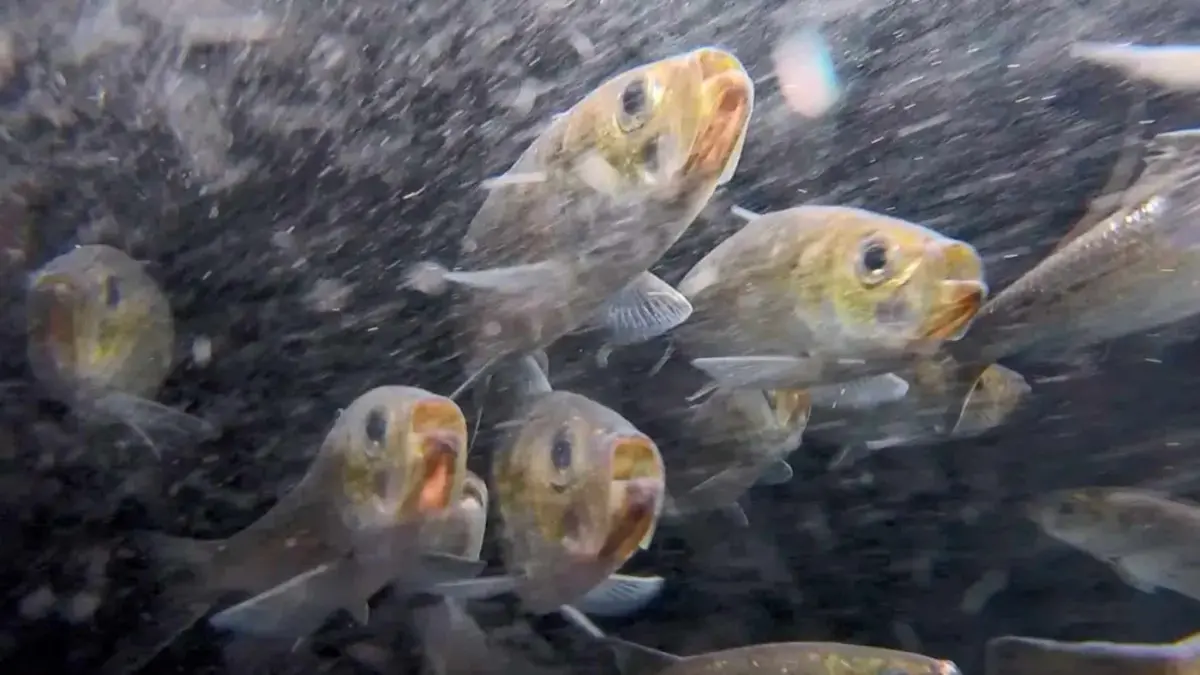
MAINE, UNITED STATES — For nearly two centuries, the majestic Penobscot River basin in Maine bore the heavy industrial footprint of America’s early modernization. A web of dams choked its waters, serving as monumental blocks of concrete and steel that powered local mills and generated electricity, but severed a vital ecological lifeline. For decades, migratory species such as river herring—collective terms for alewives and blueback herring—found their ancient spawning grounds virtually inaccessible.
Where once millions of silvery fish swam upstream from the Atlantic Ocean into the cool, freshwater tributaries, only a pitiful few hundred or low thousands managed the grueling journey. By 2011, counts dwindled to a precarious 2,000 fish.
Yet, what has unfolded over the past decade in this northern watershed is nothing short of a conservation miracle. Today, the river pulses with life once more. During the spring migrations of recent years, fisheries biologists have counted not thousands, but millions of river herring surging upstream. In 2023 alone, over six million of the small fish crowded the basin, with upwards of five million navigating the Milford Dam fishway alone in 2024.
Crucially, this ecological renaissance was not achieved by simply bulldozing every dam in sight. Instead, the Penobscot River restoration stands as a landmark global case study in compromise—proving that energy production and river ecology can coexist through strategic planning, technological innovation, and unprecedented multi-stakeholder collaboration.
Main Facts: The Anatomy of a Watershed Transformation
The Penobscot River watershed is New England’s second-largest river system, draining more than 8,500 square miles. For migratory pelagic and diadromous fish—species that spend their adult lives in saltwater but must return to freshwater streams to spawn—the river once offered an expansive highway of pristine habitat.
The introduction of industrial dams in the 19th century fundamentally altered this dynamic. While these barriers fueled regional economic growth, they fragmented the ecosystem, precipitating catastrophic declines in native fish populations, including Atlantic salmon, American shad, shortnose sturgeon, and river herring.
The turning point came through the Penobscot River Restoration Project, an ambitious, multi-faceted initiative launched in the early 2000s. Rather than pursuing a blanket policy of absolute dam removal—which would have severely compromised regional renewable energy grids—project leaders adopted a nuanced, surgical approach.
The core strategy relied on a blend of strategic demolitions and advanced engineering retrofits:
- Total Removal: Outdated or redundant barriers, such as the Great Works Dam (removed in 2012) and the Veazie Dam (removed in 2013), were completely dismantled to restore natural free-flowing river conditions.
- By-pass Channels: At other sites, like Howland Dam, the primary structure was preserved to maintain local infrastructure and water levels, but engineers constructed an innovative, naturalistic bypass channel around the dam, allowing fish to safely swim past the barrier.
- Fishway Enhancements: At active hydroelectric facilities like the Milford Dam, operators upgraded and expanded state-of-the-art fish lifts and ladders, ensuring safe passage while continuing to generate clean energy.
This combination of measures unlocked more than 1,000 miles of historical habitat, effectively reconnecting the Gulf of Maine to the deep interior of the Maine woods.
Chronology of a River Reborn: From Industrial Chokehold to Ecological Triumph
To understand how the Penobscot achieved this modern miracle, one must trace a timeline defined by decades of bitter litigation, followed by visionary diplomacy and landmark execution.
The 19th and 20th Centuries: Industrialization and Decline
As Maine emerged as a powerhouse of the American paper and textile industries, dams proliferated along the Penobscot. Little thought was given to the ecological consequences. Fish populations that had sustained indigenous communities and regional wildlife for millennia crashed. By the latter half of the 20th century, runs were a fraction of their historical abundance.
The Early 2000s: A Radical Shift in Paradigm
Recognizing the impending collapse of the watershed’s native fisheries—and facing mounting federal regulatory pressure regarding endangered species like the Atlantic salmon—stakeholders began to talk. The Penobscot Nation, conservation groups (such as American Rivers and The Nature Conservancy), state and federal agencies, and the primary dam owners (ultimately acquired by Brookfield Renewable US) sat at the same table. Their shared objective was radical for the time: restore sea-run fisheries to a commercial and ecological scale without entirely sacrificing the river’s hydroelectric capacity.
2011–2014: The Physical Transformation
The blueprint moved into reality. In 2011, baseline counts for river herring at the gateway of the lower river hovered near a dismal 2,000 individuals. Then the heavy machinery arrived. The removal of the Great Works Dam in 2012 and the Veazie Dam in 2013 eliminated the two lowest barriers on the river, immediately tidalizing miles of riverbed and granting direct access to vast upstream spawning lakes. Simultaneously, construction began on the Howland bypass and upgrades at Milford.
2023–2024: The Millions Return
The biological response was staggering, though not instantaneous. As generations turned, word spread chemically through the watershed. The numbers scaled exponentially: from thousands to tens of thousands, then hundreds of thousands, finally shattering expectations. In the spring migration of 2023, monitoring stations recorded over six million river herring. The momentum sustained into 2024, with more than five million fish successfully passing the Milford Dam alone.
Supporting Data: What the Science Shows
The anecdotal success of seeing rivers churn with silver scales has been rigorously validated by peer-reviewed science. A landmark study published in Marine and Coastal Fisheries (Whittum et al., 2023) meticulously documented the transformation a decade after the initial dam removals.
PENOBSCOT RIVER HERRING MIGRATION ESTIMATES (KEY MILESTONES)
+------------+-----------------------------------+
| Year       | Estimated River Herring Count     |
+------------+-----------------------------------+
| 2011       | ~2,000 fish                       |
| 2015       | Hundreds of thousands             |
| 2023       | >6,000,000 fish (Basin-wide)      |
| 2024       | >5,000,000 fish (Milford Dam)     |
+------------+-----------------------------------+
According to the research team led by K. A. Whittum and J. D. Zydlewski, the fish assemblages throughout the Penobscot River basin underwent a profound structural shift. The return of diadromous species triggered an influx of marine-derived nutrients—nitrogen and phosphorus bound in the bodies of the fish—which enriched depleted freshwater ecosystems. Furthermore, the rapid repopulation demonstrated the remarkable resilience of nature: given a fighting chance and an open path, aquatic species can recover at speeds that frequently outpace scientific projections.
- Scientific Citation:
Whittum, K. A., Zydlewski, J. D., Coghlan, S. M., Jr., Hayes, D., Watson, J., & Kiraly, I. A. (2023). Fish assemblages in the Penobscot River: A decade after dam removal. Marine and Coastal Fisheries, 15(1), e10227. https://doi.org/10.1002/mcf2.10227
Official Responses and Collaborative Governance
The success of the Penobscot project offers a masterclass in modern conservation governance. It proved that adversarial legal battles over environmental degradation can be replaced by cooperative, multi-sector negotiations.
The Penobscot Nation, whose ancestral lands and culture are inextricably linked to the river and its runs of fish, played a vital leadership role throughout the process. Tribal leaders emphasized that a healthy river is culturally and physically foundational to their community’s identity.
Federal bodies, including the U.S. Fish and Wildlife Service (USFWS), coordinated structural changes and habitat restoration across smaller tributaries. State agencies and conservation non-profits pooled millions of dollars in philanthropic and public funding to purchase dam assets, finance removals, and construct high-tech engineering workarounds.
Even the industrial stakeholders emerged as victors. By working collaboratively to decommission low-yielding, high-impact dams downriver while optimizing generation capacity at higher-head facilities like Milford, energy producers avoided protracted regulatory battles while burnishing their corporate sustainability credentials.
Broader Implications: Ecosystems, Economy, and Global Lessons
The resurgence of millions of river herring in Maine extends far beyond the satisfaction of a successful wildlife census. The return of these keystone species triggers profound ecological and economic ripples.
1. Rebuilding the Food Web
River herring are the ultimate forage fish. Their massive seasonal migrations provide a high-energy buffet for a wide array of predators. Bald eagles, ospreys, cormorants, seals, otters, and larger game fish such as striped bass and Atlantic salmon all feed heavily on the migrating runs. The sudden abundance of food has revitalized local terrestrial and marine predator populations alike.
2. Marine-to-Freshwater Nutrient Transport
For centuries, the dams blocked the transfer of marine nutrients upstream. As millions of adult herring swim inland to spawn—and subsequently die or drop waste—they transport rich ocean-derived nitrogen and phosphorus into inland lakes and forests. This natural fertilization primes the entire aquatic food web, benefiting juvenile insects, amphibians, and resident fish species.
3. Economic Lifelines for Maine Fisheries
On the economic front, the return of the humble river herring holds unexpected promise for Maine’s iconic lobster industry. Historically, herring have served as a prime, highly sought-after bait for trapping lobsters. As stocks of traditional bait fish face pressures and regulatory restrictions, the thriving abundance of Penobscot river herring offers a sustainable, locally sourced alternative that supports coastal fishing communities.
A Blueprint for the Future
As the world grapples with aging infrastructure, climate change, and accelerating biodiversity loss, the Penobscot River project serves as an inspiring beacon of hope. It shatters the false dichotomy that humans must choose exclusively between industrial progress and pristine wilderness.
By strategically deciding where barriers must fall to heal a watershed, and where engineering ingenuity can allow human enterprise and wild migration to share the same waters, Maine has proven that rivers can be brought back to life—transforming trickles of a few thousand survivors into thundering, silver rivers of millions.



Leave a Reply