

By Global Affairs Desk
Published: November 2025
1. Main Facts: A Nation on the Brink
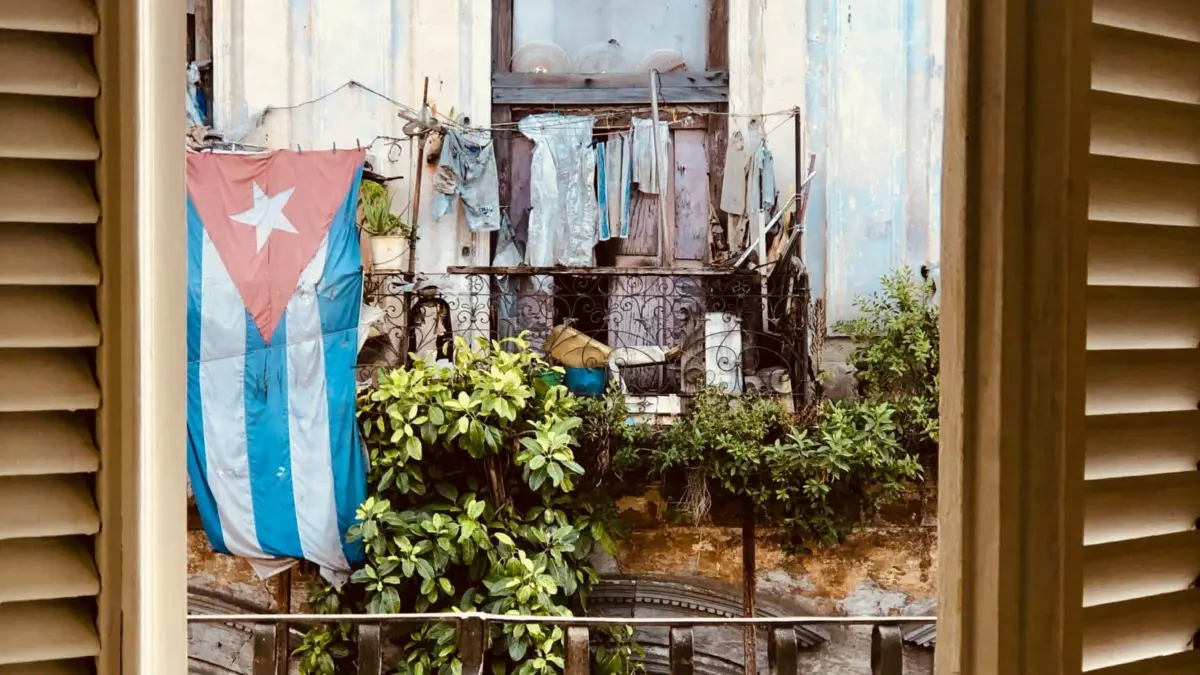
Cuba is currently enduring one of the most perilous chapters in its modern post-revolutionary history. Squeezed between intensifying foreign policy strategies from Washington and a worsening domestic structural crisis, the island nation is facing an acute humanitarian emergency.
At the center of this turmoil are widespread, crippling blackouts that have left millions of citizens in the dark, a severe shortage of crude oil, and a hardening sanctions regime orchestrated by the United States.
The administration of U.S. President Donald Trump, having returned to the White House in early 2025, has placed the overthrow or total economic debilitation of the Miguel Díaz-Canel government at the forefront of its Latin American foreign policy.
Bolstered by sweeping executive orders designed to penalize any nation or entity daring to trade fuel with Havana, Washington has effectively choked off the island’s primary energy lifelines.
International bodies, most notably the United Nations and its Human Rights Council, have issued dire warnings regarding the trajectory of these policies. UN officials have cautioned that the cumulative effects of aggressive economic isolation, resource deprivation, and systemic infrastructure failure risk turning Cuba into "the new Gaza"—a silent humanitarian disaster characterized by severe food insecurity, a crumbling healthcare infrastructure, and widespread civilian suffering.
While Washington maintains that its actions are a matter of vital national security—citing alleged covert operations and ties between Havana and adversarial global powers like China, Russia, and Iran—independent analysts and international human rights advocates argue that the strategy is an ideological crusade with devastating human costs.
2. Chronology of Escalation: From the 2025 Executive Order to the Energy Collapse
To understand the current crisis in Cuba, one must examine the rapid sequence of geopolitical events and legislative maneuvers that have unfolded throughout 2025:
- January 2025: Following his return to the presidency, Donald Trump signals an aggressive posture toward remaining leftist governments in the Western Hemisphere. This renewed campaign is marked early on by high-profile regional interventions, including the capture of Venezuelan leader Nicolás Maduro, sending shockwaves through Managua and Havana.
- January 29, 2025: President Trump signs a pivotal Executive Order imposing harsh secondary tariffs and trade penalties on any international shipping companies, intermediaries, or sovereign states that supply petroleum products to Cuba. This effectively cuts off the island’s traditional, subsidized oil imports.
- February – March 2025: The immediate impact of the January Executive Order ripples through Cuba’s antiquated energy grid. Thermoelectric plants, heavily reliant on imported heavy crude oil, begin to stall. Rolling blackouts, which had previously plagued the island intermittently, transform into prolonged, multi-day systemic failures.
- Mid-2025: The U.S. Department of State (DOS) releases a comprehensive intelligence and policy report titled "Cuba: The Capital of 21st-Century Communism." The document frames the island as an active center of espionage and subversion against U.S. interests, alleging direct operational channels connecting Havana to Beijing, Moscow, and Tehran.
- Late 2025 (Recent Weeks): The humanitarian toll reaches a critical inflection point. Reports from Infobae and other regional outlets confirm unprecedented instability within the national power grid, including multiple total collapses of the electric system within a compressed 48-hour window. Basic services, including refrigeration for food and temperature control for vital medicines, are severely compromised.
- November 2025: Amidst the rolling blackouts, the Ministry of Foreign Trade of Cuba announces a modest relief measure: a donation of 5,000 photovoltaic systems from the People’s Republic of China, aimed at stabilizing rural outposts and vital public facilities. Simultaneously, the United Nations publicly rebukes Washington’s strategies, warning of an impending civilian catastrophe.
3. Supporting Data and Geopolitical Context: The Energy Squeeze and Foreign Aid
The mechanics of Cuba’s current paralysis are rooted in energy vulnerability. Cuba produces a fraction of the heavy crude oil it requires to run its domestic economy and power generation infrastructure. Historically, it relied on preferential oil agreements with Venezuela and occasional imports from international spot markets.
However, the 2025 U.S. Executive Order fundamentally altered this calculus. By threatening secondary sanctions against global shipping firms and third-party nations, Washington successfully scared off traditional suppliers, creating an artificial yet highly effective maritime blockade.
The consequences for daily life have been catastrophic:
- The Electric Grid: Cuba’s thermoelectric plants—many of which date back to the Soviet era and suffer from decades of deferred maintenance—require a specific blend of crude to operate efficiently. Without steady imports, plants have been forced to shut down entirely. This triggered catastrophic grid failures, plunging entire provinces into total darkness for days at a time.
- Public Health and Nutrition: Without electricity, municipal water pumps fail, leading to compromised sanitation and a rising threat of waterborne diseases. Hospitals rely on failing, fuel-starved backup generators, putting surgical patients and intensive care units at risk. Furthermore, the inability to refrigerate food has catalyzed acute food insecurity and widespread spoilage.
- The Chinese Intervention: In response to the crisis, Beijing has stepped up its economic and material diplomacy. The recent delivery of 5,000 solar photovoltaic systems represents a vital, albeit fractional, attempt to decentralize energy production. According to Cuban trade officials, these systems will be prioritized for isolated rural households and essential infrastructure, such as clinics and water purification stations, serving as a stopgap measure against total systemic failure.
Simultaneously, the U.S. Department of State’s strategic reports frame these developments not as humanitarian concerns, but as necessary pressures against what Washington characterizes as an entrenched national security threat. The DOS dossier argues that Cuba serves as a regional intelligence hub, hosting listening posts and facilitating coordination among America’s primary geopolitical rivals in the Eurasian sphere.
4. Official Responses: Washington’s Security Framework vs. UN Legal Objections
The standoff over Cuba has triggered a fierce diplomatic war of words between the United States, the Cuban government, and international bodies.
The United States Position: National Security and the Legacy of the Cold War
The U.S. Department of State and the White House defend their escalation as an extension of a renewed doctrine against authoritarianism in the Americas. Grounded in a modern iteration of the Cold War playbook—frequently labeled "McCarthyite" by its critics—the administration argues that neutralizing leftist regimes in Cuba, Venezuela, and Nicaragua is essential for protecting the Western Hemisphere from adversarial extra-continental influence.
Washington insists that the economic pressure campaign is designed to force democratic transitions and counter illicit intelligence-sharing operations. From the perspective of U.S. policymakers, the hardships faced by Cuban citizens are the direct result of systemic mismanagement and economic failure inherent to the island’s socialist model, rather than external trade restrictions.
The United Nations Perspective: A Violation of Sovereignty
The United Nations has taken a fundamentally opposing view, challenging both the legality and the morality of the U.S. campaign. Representatives from the UN Human Rights Council and independent legal experts have scrutinized the DOS report, concluding that it fails to provide concrete, verifiable evidence linking contemporary Cuba to active international terrorism or direct military subversion against the United States.
Instead, the UN views the current U.S. strategy as an ideological and political assault designed to precipitate the collapse of the Cuban state through deliberate economic suffocation. International jurists have pointed out that these sweeping extraterritorial sanctions directly violate Article 2 of the United Nations Charter, which enshrines the sovereign equality of states, the prohibition of the threat or use of force, and the principle of non-intervention in internal affairs.
5. Implications: Is Cuba Becoming a "Silent Gaza"?
As diplomatic channels remain frozen and domestic pressures mount, political analysts and human rights observers are forced to confront the chilling long-term implications of this crisis.
The comparison of Cuba to Gaza—invoked by UN human rights experts and echoed by visiting international delegations—highlights the terrifying reality of a civilian population caught in the crossfire of geopolitical warfare. While the military dynamics differ vastly from active urban warfare in the Middle East, the structural outcomes share alarming parallels: an isolated population trapped by external blockades, facing systematic deprivation of basic necessities, crumbling healthcare systems, and an erosion of human dignity.
- The Humanitarian Horizon: Without an immediate relaxation of fuel sanctions or a massive, sustained influx of humanitarian aid, public health experts predict an escalation in preventable diseases, severe malnutrition, and a surge in civilian mortality rates. The psychological toll of living in chronic darkness, economic uncertainty, and infrastructural collapse is also projected to drive further waves of irregular migration northward toward the United States and other regional destinations.
- Geopolitical Polarization: The crisis risks entrenching Cuba even deeper into the orbit of Washington’s adversaries. As traditional western avenues for commerce are sealed off by U.S. sanctions, Havana’s reliance on nations like China, Russia, and Iran for emergency aid, technological lifelines, and diplomatic backing becomes absolute. This dynamic threatens to turn the Caribbean island into an even more acute flashpoint for global great-power competition.
- The Future of Inter-American Relations: The aggressive posture adopted toward Havana sets a turbulent precedent for hemispheric diplomacy. It signals to Latin American and Caribbean nations that Washington is willing to utilize maximum economic pressure—regardless of humanitarian collateral damage—to purge leftist governments from the region.
Ultimately, as the blackouts persist and international warnings grow more urgent, the situation in Cuba stands as a stark test of the international community’s ability to protect civilian populations from the devastating impacts of unilateral economic warfare. Whether the global diplomatic pressure can alter Washington’s calculus—or whether Cuba will slide further into a protracted, silent catastrophe—remains the defining geopolitical question of the region.


Leave a Reply