

KATHMANDU, NEPAL — The majestic yet unforgiving landscape of the Nepalese Himalayas has once again become the stage for a heart-wrenching natural disaster. A massive avalanche struck the remote slopes of Mount Himlung, a formidable 7,126-метре (23,379-foot) peak situated in the rugged Manang district within the Nar-Phu region. The catastrophic slide, which tore down the mountainside on the morning of Sunday, September 27, has left a confirmed toll of at least four fatalities, while twelve others remain unaccounted for, sparking an urgent, high-altitude search and rescue operation fraught with peril.
The disaster struck local support personnel—predominantly veteran Nepalese workers, porters, and climbing guides—who were painstakingly preparing the mountain ahead of the lucrative autumn mountaineering expedition season. These seasoned professionals were working at high altitudes to fix ropes, establish secure camps, and scout safe routes for international climbing teams expected to arrive in the weeks following the monsoon transition. Instead of preparing for ascents, the mountain became a zone of destruction, highlighting the precarious conditions under which mountain laborers operate to sustain Nepal’s vital adventure tourism economy.
1. Main Facts: Anatomy of the Himlung Disaster
The disaster on Mount Himlung is one of the most severe pre-season incidents recorded in the Nar-Phu region in recent years. The key details of the event are stark:
- Location: Mount Himlung (Himlung Himal), standing at 7,126 meters, located in the Nar-Phu valley of the Manang district, high within the Nepalese Himalayas.
- Date and Time: Sunday, September 27, during the morning hours, catching teams off-guard during routine infrastructure preparation.
- Casualties: Four confirmed deaths and twelve individuals officially reported as missing.
- Identified Victims: The Nepal National Mountain Guide Association (NNMGA) has formally identified the deceased workers as Chhebi Bhote, Pasang Bhote, Birendra Gurung, and Ghanshyam Rai.
- Demographics of the Affected: All the victims and missing individuals are local Nepalese mountain professionals—guides and logistical staff whose deep local knowledge is typically relied upon to keep foreign mountaineers safe.
- Current Status: Rescue operations, temporarily halted by treacherous weather, have resumed with teams deployed from Chame to the Himlung base camp, battling dense snow and low visibility.
The initial hours following the disaster were characterized by chaotic communication blackouts, typical of the remote Himalayan backcountry. Conflicting reports trickled out of the Nar-Phu region as authorities struggled to ascertain how many individuals were in the direct path of the avalanche. It was only through the concerted efforts of the NNMGA and local district authorities that a clearer, albeit grim, picture emerged, culminating in the formal confirmation of the four recovered bodies and the twelve still missing.
2. Chronology of Events: From the Slide to the Resumption of Search Efforts
Understanding how the disaster unfolded requires tracing a tense timeline defined by rapidly deteriorating weather windows and heroic logistical efforts by local rescue syndicates.
Sunday, September 27: The Strike and Initial Confusion
- Morning: A massive volume of snow and ice breaks loose from the upper slopes of Himlung Himal, sweeping down unpredictably over the advance routes and lower camps where local crews are working.
- Midday: Initial reports of a catastrophic avalanche reach district authorities in Manang. Due to the extreme remoteness of the Nar-Phu region, communication lines are severely compromised.
- Afternoon: Ground teams in the vicinity attempt preliminary sweeps, but continuous heavy snowfall and high-velocity winds make it impossible for rescue helicopters to approach the disaster zone.
- Late Afternoon: Searchers locate the first two victims—Chhebi Bhote and Pasang Bhote—confirming the worst fears of the mountaineering community. Nightfall forces a temporary halt to ground operations.
Monday, September 28: Weather Windows and Recoveries
- Early Morning: The Department of Hydrology and Meteorology of Nepal maintains active weather warnings across multiple parts of the country, signaling persistent instability.
- Mid-Morning: A brief, fragile meteorological window opens. Specialized rescue teams and mountain guides utilize this opportunity to move swiftly from Chame up toward the Himlung base camp.
- Afternoon: Resuming the painstaking probe lines through packed debris and fresh snowdrifts, rescue teams recover the bodies of the third and fourth victims: Birendra Gurung and Ghanshyam Rai.
- Ongoing Operations: Search efforts for the remaining 12 missing individuals press forward, heavily constrained by unstable snowpacks, the threat of secondary avalanches, and rapidly shifting visibility.
3. Supporting Data and Rescue Logistics
The logistical hurdles of executing a high-altitude rescue at over 7,000 meters cannot be overstated. When avalanches strike remote peaks like Himlung, survival rates plummet drastically after the initial 15-to-30-minute window, often referred to as the "golden period" for avalanche victims.
According to statements released by Tul Singh Gurung, president of the NNMGA, rescue operations are being conducted under harrowing conditions. "Our teams are committed to searching every possible meter of the avalanche path, but the terrain, continuous accumulation of new snow, and poor visibility are pushing our resources to their absolute limits," Gurung noted. The rescue grid relies on a delicate balance of aerial reconnaissance—when cloud cover permits—and ground teams equipped with avalanche transceivers, probes, and trained search dogs where accessible.
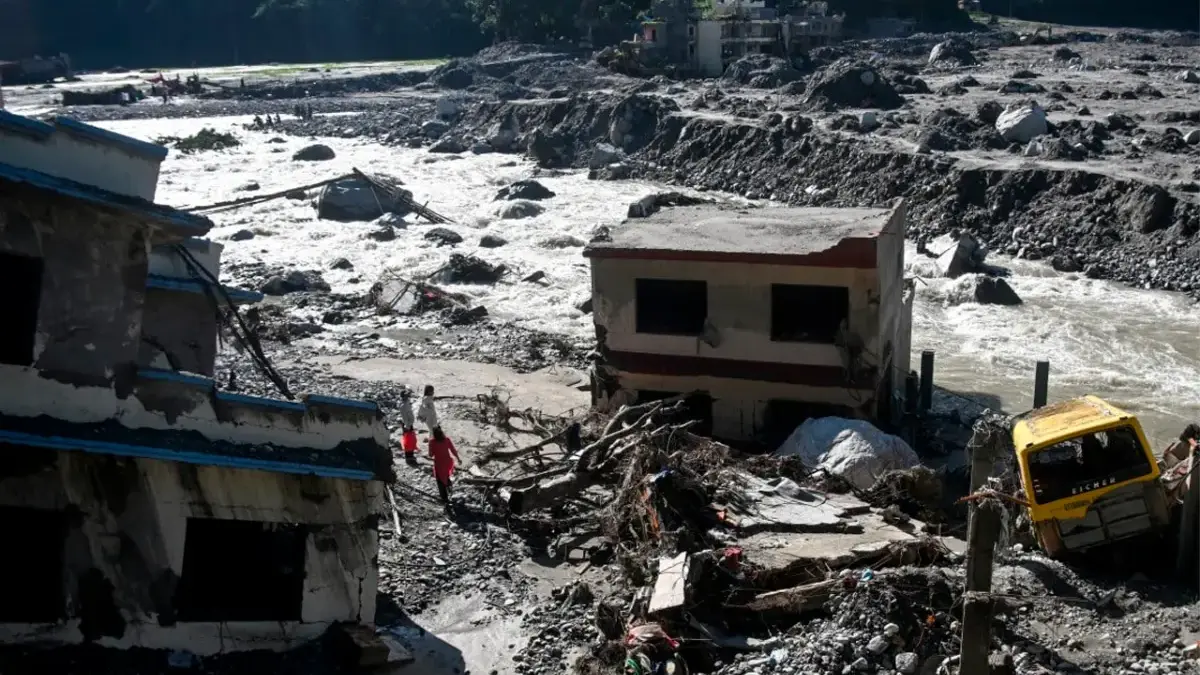
Furthermore, the backdrop of this disaster is magnified by a broader national crisis. The Himlung tragedy comes on the heels of one of the deadliest hydrological disasters in Nepal’s recent history. Exactly one month prior, on August 26, a devastating flash flood roared down the Bhotekoshi River, obliterating sections of Rasuwa and severely impacting northern and central Nepal. That catastrophe washed away critical infrastructure, including major highways, bridges, and entire settlements, sweeping victims kilometers downstream.
Official data compiled weeks after the August flash floods paint a picture of staggering devastation:
- Confirmed Recovered Bodies: 1,453 individuals.
- Missing Persons: Approximately 5,285 people still unaccounted for.
- Forensic Challenges: The National Authority for Disaster Risk Reduction and Management (NDRRRMA) has had to implement extensive DNA identification protocols to process the high volume of recovered remains, straining the nation’s forensic capabilities.
The compounding effect of these disasters has stretched Nepal’s national emergency response infrastructure thin, forcing authorities to juggle long-term recovery from widespread riverine flooding with sudden, localized high-altitude rescue missions.
4. Official Responses and Institutional Reactions
In the wake of the Himlung avalanche, national and international mountaineering bodies have mobilized to support the families of the victims and coordinate ongoing search efforts.
The Ministry of Culture, Tourism and Civil Aviation, alongside the Nepal Tourism Board, issued statements expressing profound grief over the loss of lives among the country’s elite mountain workforce. "The guides and workers of the Himalaya are the backbone of our mountaineering sector. Their bravery and tireless efforts make every successful expedition possible. Losing them in the line of duty is an irreparable loss to the nation," a ministry spokesperson stated.
The NNMGA has taken a central role in coordinating with insurance providers, expedition operators, and government agencies to ensure that families of the deceased receive immediate support and that search teams remain fully provisioned. However, calls are mounting from union representatives and labor advocates within the adventure tourism industry to re-evaluate safety protocols for pre-season workers. Questions are increasingly being raised regarding whether early-season route setting is being forced forward too aggressively in response to commercial pressures, exposing workers to heightened seasonal vulnerabilities.
5. Broader Implications: Climate Change and the Fragile Hindu Kush-Himalaya
While direct attribution linking a single localized avalanche to global climate change remains scientifically complex, leading climatologists and environmental institutions emphasize that the Himlung tragedy is symptomatic of profound, systemic changes sweeping across the Hindu Kush-Himalaya (HKH) region.
The International Centre for Integrated Mountain Development (ICIMOD) has repeatedly warned that the roof of the world is warming at rates significantly higher than the global average. This accelerated warming is driving dramatic environmental transformations across the high mountains of Nepal:
- Glacial Retreat and Mass Loss: Glaciers across the Himalayas are shrinking at an unprecedented pace, destabilizing surrounding rock and ice walls.
- Permafrost Degradation: As subterranean permafrost thaws, slopes that were historically anchored by frozen soil and ice lose their structural integrity, making them dangerously prone to sudden rockfalls and catastrophic avalanches.
- Unpredictable Weather Patterns: Monsoonal shifts, unseasonal heavy snowfalls, and erratic freeze-thaw cycles are increasing the frequency and intensity of natural hazards, complicating traditional meteorological forecasting for high-altitude regions.
Experts note that these environmental shifts transform the Himalayas into an increasingly volatile landscape. For climbers, guides, and the millions of people living downstream in river valleys, the margin for error is shrinking rapidly. The disaster on Mount Himlung is not merely an isolated mountain accident; it serves as a glaring indicator of the escalating risks confronting high-mountain regions in an era of rapid climate destabilization.
As rescue teams on Himlung continue their desperate race against time and weather to find the remaining twelve missing individuals, Nepal is once again left to mourn the steep human toll exacted by its majestic peaks—a stark reminder of the vulnerability of those who live and work in the shadow of the world’s highest mountains.