

By Global Urban Development Desk
Published: October 2026
Main Facts
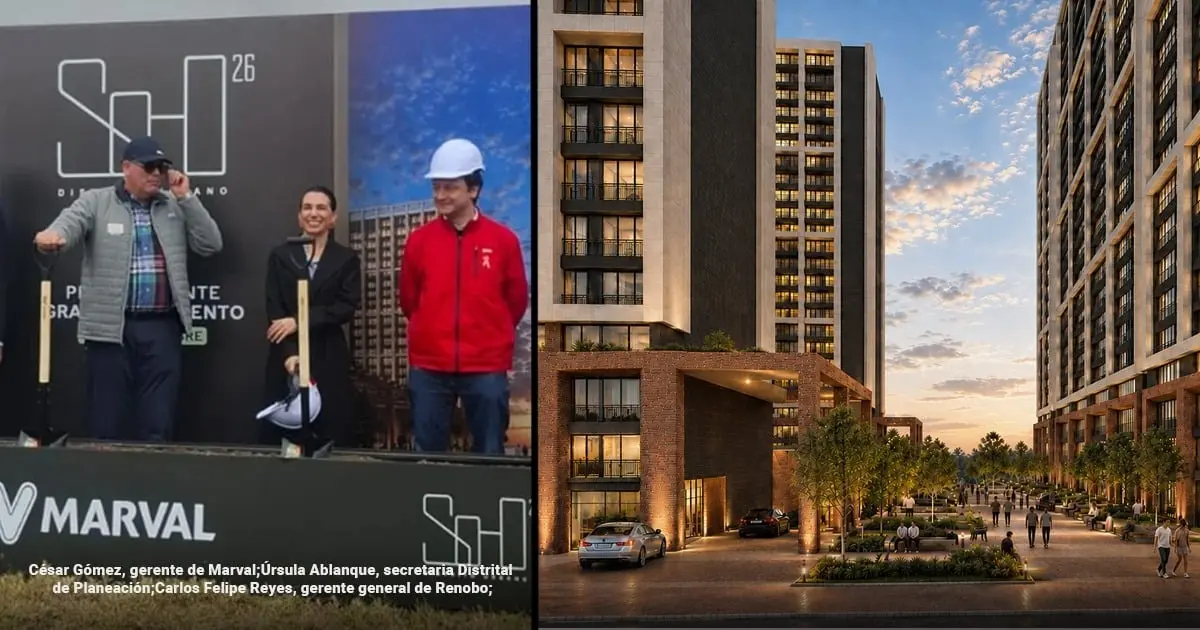
Urban renewal in the Colombian capital has reached a historic milestone. A sprawling, underutilized 4.8-hectare property situated directly across from the Gran Estación shopping center—formerly owned by the Bogota Energy Company (Empresa de Energía de Bogotá)—is set to undergo a dramatic metamorphosis. The strategic lot, located immediately behind the headquarters of the Bogota Secretariat of Education near Calle 26, will soon host Soho 26 Distrito Urbano, an ambitious mixed-use megaproject developed by the construction giant Marval.
Slated for official presentation to the public on November 5, 2026, Soho 26 represents the tangible realization of Bogota’s innovative urban planning mechanism: the city’s inaugural auction of Certificates of Construction and Development Rights (CCDCD). Marval secured the first construction license for the plot, issued by Urban Curatorship No. 1, by redeeming 19,800 certificates acquired during a landmark municipal auction held earlier this year.
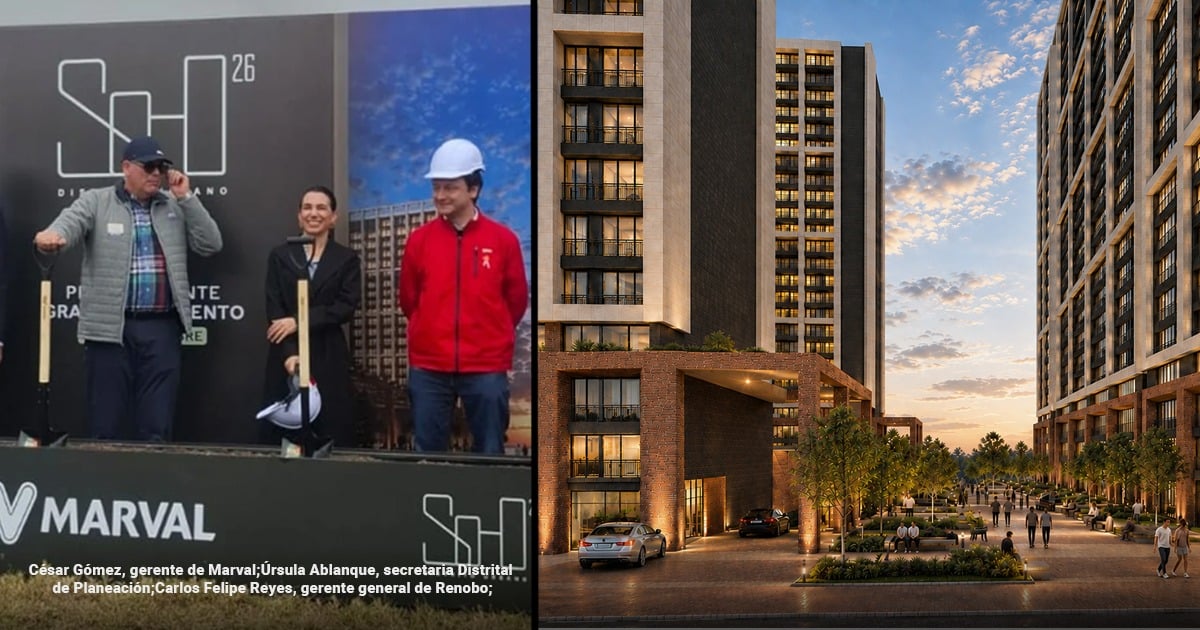
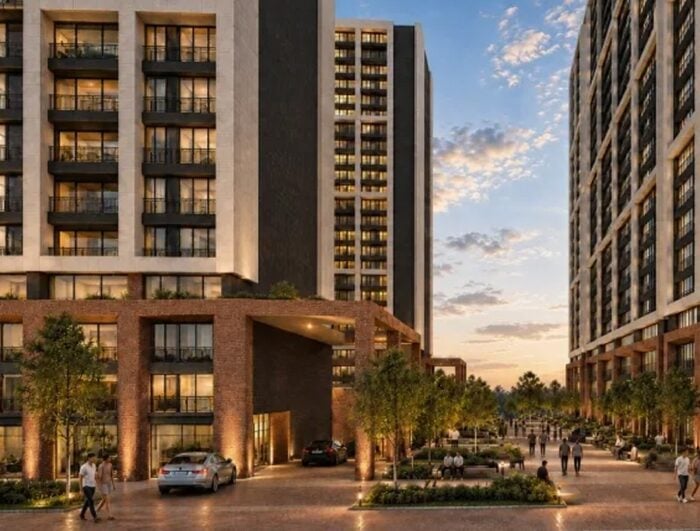
The development plan is vast in scale and scope. Spanning a total construction area of approximately 160,000 square meters dedicated to housing, the project will integrate 2,000 residential units designed to inject new life into an area previously defined by dormant urban space. Beyond residential towers, Soho 26 will incorporate 50,000 square meters of commercial spaces and offices, 11,000 square meters allocated for new road infrastructure, and 38,000 square meters dedicated to community and institutional facilities (dotacionales).
Situated in a prime geographic corridor, the development sits just minutes away from Bogota’s historic downtown core, the central transportation terminal, and a mere 15-minute drive from El Dorado International Airport. This strategic integration positions Soho 26 as a cornerstone project in the administration’s broader strategy to revitalize consolidated urban areas, optimize existing infrastructure, and promote sustainable densification.
Chronology of the Initiative
The journey toward the transformation of the former energy company lot is rooted in a meticulously planned municipal strategy implemented by the administration of Mayor Carlos Fernando Galán. The timeline highlights how modern public policy can successfully bridge private sector real estate development with public environmental conservation:

- April 27, 2026: The Alcaldía Mayor of Bogota—acting through a coordinated effort by the Secretariats of Planning (Planeación), Habitat (Hábitat), and Environment (Ambiente), alongside the Urban Renewal and Development Enterprise of Bogota (Renobo)—conducted the city’s first-ever public auction of Certificates of Construction and Development Rights.
- May through September 2026: Following the competitive bidding process, winning developers began integrating their acquired certificates into architectural planning, regulatory filings, and licensing procedures. The District government focused on laying the groundwork to replicate the model on a broader scale.
- Late 2026 (Current Phase): Marval successfully utilized 19,800 of its acquired certificates to obtain the definitive construction license from Urban Curatorship No. 1, officially clearing the path for the physical groundbreaking of Soho 26 Distrito Urbano.
- November 5, 2026: The official public launch date for Soho 26, where Marval will unveil the complete architectural designs, master plan, and commercial offerings to the citizens of Bogota.
- October 13, 2026 (Ongoing Deadline) & November 2026: Propelled by the success of the first auction, Renobo and its partner secretariats officially opened registration for Bogota’s second auction of Construction and Development Rights, scheduled to take place in November 2026.
Supporting Data and Economic Mechanics
The financial framework underpinning Soho 26 and Bogota’s new urban policy relies on a market-driven mechanism designed to capture land value and reinvest it into ecological preservation.
The Auction Figures
During the pioneering April 2026 auction, the District government offered a total of 204,815 certificates at a fixed base price of $205,000 COP per certificate. Six prominent construction firms participated in the high-stakes bidding war, resulting in five victorious enterprises: Marval, Las Galias, Buen Vivir, Coandes, and Incol.
Collectively, these five developers purchased the entire allotment of 204,815 certificates, generating a total revenue of $41,987 million COP for the District.
Environmental Reinvestment
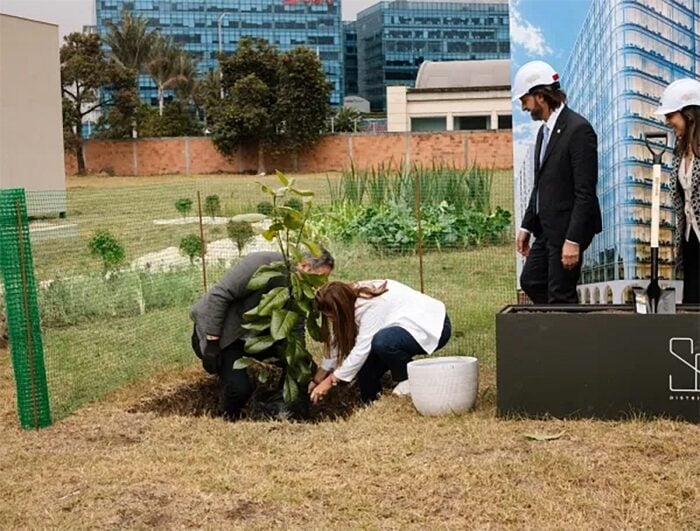
Rather than disappearing into general municipal coffers, every peso raised through the sale of these special building permits is legally earmarked for ecological restoration and land acquisition in Bogota’s most vital environmental zones. The funds are directed toward:
- The protection and reforestation of the Eastern Hills (Cerros Orientales).
- Ecological rehabilitation projects along the Bogota River basin.
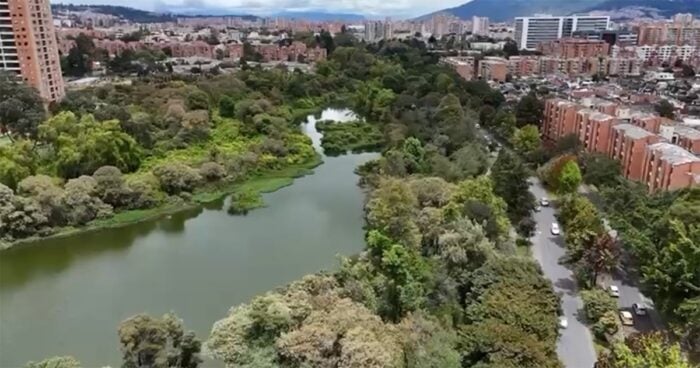
- Land acquisition and conservation efforts within the Thomas Van der Hammen Forest Reserve.
Real Estate Impact and Metrics
For Marval—a heavyweight in the Colombian construction sector celebrating over 50 years in the market—the redemption of 19,800 certificates for Soho 26 is just the beginning. The macro-vision of the Galán administration extends far beyond this single plot. The District aims to unlock approximately 25,000 hectares of useful land for real estate development across the capital. This policy is explicitly engineered to spur the construction of 10,000 to 15,000 Social Interest Housing (VIS) units, ensuring that urban revitalization does not exclusively cater to high-income demographics, but rather addresses the city’s profound housing deficit.
Official Responses and Stakeholder Perspectives
The rollout of Soho 26 and the underlying auction mechanism has drawn widespread praise from both public sector officials and private industry leaders, who view the model as a blueprint for future Latin American urbanism.

César Gómez, General Manager of Marval:
Highlighting the significance of the project as the company marks half a century of operations, Gómez described Soho 26 Distrito Urbano as "the best of Bogota made into a district." He emphasized that the development embodies Marval’s commitment to modern, integrated urban living. "This project is a testament to how private enterprise can collaborate with municipal authorities to reimagine underutilized city spaces, creating vibrant communities where residents can live, work, and thrive without enduring grueling daily commutes," Gómez noted.
Vanessa Velasco, Secretary of Habitat for Bogota:
Velasco championed the auction model as definitive proof that the city can grow vertically and densely without sacrificing its natural heritage. "The success of this first auction demonstrates that it is entirely possible to build a city in a fundamentally different way," Velasco stated. "We are protecting strategic environmental land while simultaneously unlocking useful soil so that more Bogotana families can achieve homeownership in prime, highly connected locations, ensuring a balanced and sustainable growth path for our capital."
Carlos Felipe Reyes Forero, Manager of Renobo:
Reyes Forero framed the initiative as a structural paradigm shift for urban management in Colombia. According to the Renobo director, Soho 26 represents the inception of a self-sustaining financial model. "This is the beginning of a new era where the city can successfully finance its own environmental conservation, while simultaneously unblocking urban renewal processes in strategic zones that have spent years—sometimes decades—waiting for viable development," explained Reyes Forero. He added that the overwhelming response from the construction sector has given Renobo the confidence to push forward with a second auction cycle.
Implications for the Future of Bogota
The transformation of the former Empresa de Energía de Bogotá lot into Soho 26 carries profound implications for the future trajectory of Colombia’s capital, touching upon urban economics, environmental policy, and social equity.
1. A New Paradigm for Urban Finance
For decades, municipal growth in Latin America has struggled with the dichotomy between urban expansion and environmental protection. Traditional zoning changes often triggered speculative land hoarding or protracted legal battles. By introducing transferable development rights through competitive public auctions, Bogota has created a transparent market mechanism. Developers buy the right to build at higher densities in consolidated areas, and the state uses those private funds to buy and protect critical green buffers like the Thomas Van der Hammen Reserve. This closes the loop between densification and conservation.
2. Combating Sprawl Through Strategic Densification
Soho 26 exemplifies the principles of the "15-minute city" and transit-oriented development. By placing 2,000 housing units, commercial spaces, and institutional offices immediately adjacent to major transit corridors (Calle 26, the central bus terminal, and the airport highway), the project reduces reliance on long-distance vehicular commuting. It breathes life into a defunct industrial/utility plot, replacing a blighted landscape with an active, pedestrian-friendly urban fabric.
3. Scaling the Model: The Road Ahead
With Marval blazing the trail as the first developer to successfully execute certificates from the April auction, all eyes are now on the remaining winning firms—Las Galias, Buen Vivir, Coandes, and Incol—to bring their respective projects to fruition.
Furthermore, the imminent launch of the second auction in November 2026 (with registration open through October 13) signals that this is not a one-off experiment, but a permanent pillar of Bogota’s urban planning toolkit. As the District refines and expands the mechanism, it holds the potential to systematically revitalize stagnant industrial pockets across the capital, generating thousands of housing units, safeguarding ecological treasures, and redefining how public-private partnerships can reshape the modern metropolis.


Leave a Reply