

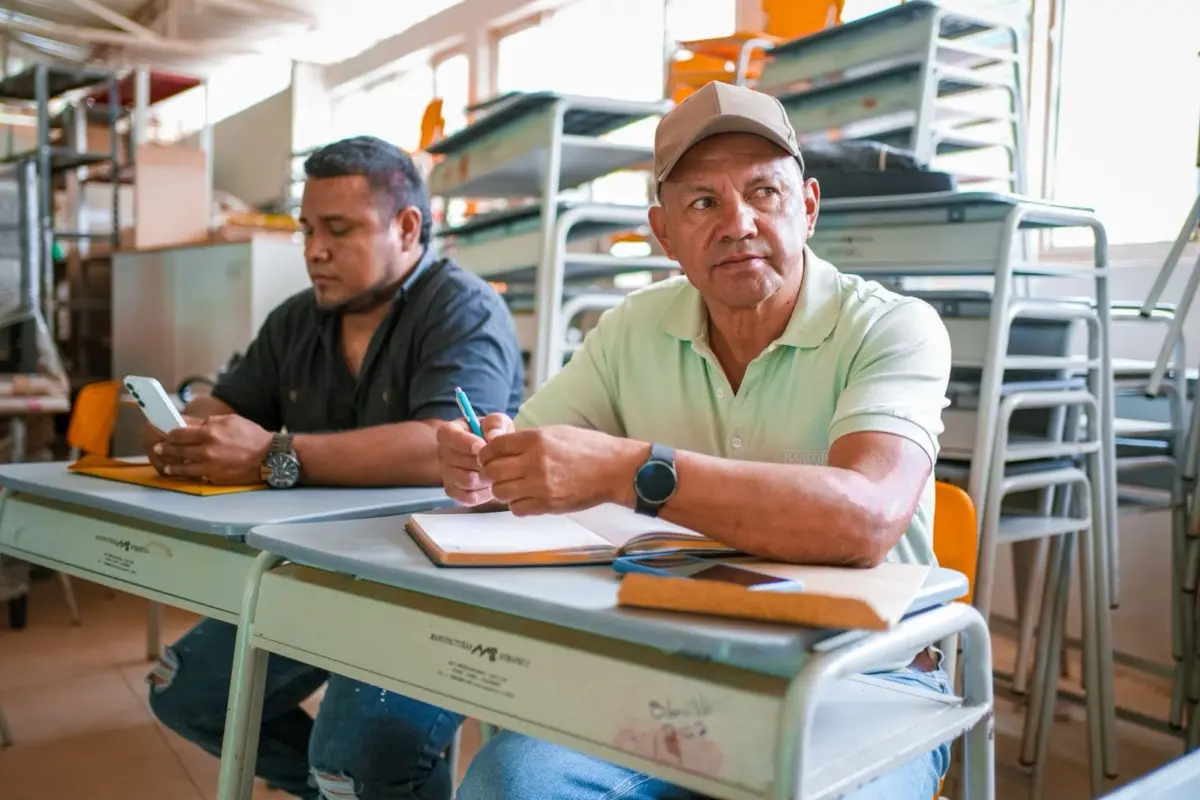
BOGOTÁ, Colombia — In a sweeping national effort to combat historical marginalization and foster long-term social inclusion, the Ministry of National Education has announced that nearly 50,000 individuals across the country are actively participating in structured literacy programs. Designed to tackle an illiteracy rate that still affects 5.11% of the Colombian population, this multifaceted initiative goes far beyond teaching basic reading, writing, and arithmetic.
By combining formal schooling models with flexible, community-tailored informal educational strategies, the government aims to equip young people, adults, and seniors with the tools necessary to interpret their social contexts, exercise active citizenship, and fundamentally transform the realities of their communities.
The nationwide campaign bridges regional divides, targeting historically neglected departments through heavy financial investments, international cooperation, and innovative inter-institutional partnerships.
1. Main Facts: A Comprehensive Look at the Literacy Drive
The core of the Ministry’s announcement centers on a staggering statistic: 49,450 people are currently engaged in literacy initiatives nationwide. This population is divided primarily between formal educational pathways and informal, localized learning strategies tailored to the unique geographic and cultural realities of Colombia’s diverse regions.
Addressing the 5.11% Structural Deficit
Illiteracy in Colombia is not merely an educational hurdle; it is a profound driver of social inequality, predominantly affecting rural, remote, and historically conflict-impacted zones. The Ministry’s literacy programs are anchored in the foundational belief that mastering reading, writing, and basic mathematics is the first step toward reclaiming fundamental human rights.
However, officials emphasize that literacy is treated here as a dynamic tool for empowerment rather than a mechanical skill. The curriculum is deliberately designed to foster critical thinking, enabling participants to decode their socio-economic environments, participate meaningfully in democratic processes, and advocate for their communities.
Two-Pronged Approach: Formal vs. Informal Education
To maximize its reach, the Ministry has split its strategy into two primary operational branches:
- Formal Education (CLEI 1): Geared toward structured academic environments, backed by significant financial commitments, and designed to integrate adults seamlessly into the official educational ladder.
- Informal Education: Flexible, territory-focused alternatives built for regions where geographic isolation or specific community dynamics make traditional classroom attendance impractical.
2. Supporting Data: Investments, Regions, and Strategic Allocations
The scope of Colombia’s current literacy drive is mapped out across rigorous financial investments and targeted regional deployments.
Formal Education: The Push for CLEI 1
Through the formal education component, the National Government has allocated 20,522 million pesos to implement specialized literacy strategies. These funds have successfully enabled 21,130 individuals to enroll in and navigate the first Special Integrated Literacy Cycle (known by its Spanish acronym, CLEI 1).
These formal programs are executed through a robust collaborative framework connecting the Ministry of National Education, certified territorial entities, and high-quality accredited higher education institutions. This synergy has bridged institutional resources with local needs, deploying programs in departments that have historically suffered from state absence or high educational deficits.
The beneficiary regions for the formal track include:
- Amazonas
- Arauca
- Bolívar
- Cauca
- Chocó
- Córdoba
- La Guajira
- Nariño
- Norte de Santander
- Tolima
- Valle del Cauca
- The Special District of Buenaventura
Informal Education: Flexibility for Remote Communities
Recognizing that rigid school structures often fail populations in remote jungles, plains, or mountainous rural areas, the Ministry has deployed an informal education strategy backed by an 18,220-million-peso investment.
This component directly serves 23,320 young people, adults, and seniors across urban, rural, and dispersed rural sectors spanning 10 distinct departments. By prioritizing a territorial approach, these programs adapt pedagogical methods to the rhythms, traditions, and economic realities of the communities they serve, ensuring that learning does not require uprooting livelihoods.
International Cooperation: The Sucre Project
Adding an international dimension to the national strategy, Colombia has leveraged bilateral ties. Under an Understanding Agreement between the Ministries of Education of Colombia and Cuba—and executed via a strategic alliance with the Minuto de Dios Educational Corporation (CEMID)—a targeted campaign is currently underway to alphabetize 5,000 individuals across 12 municipalities in the Department of Sucre. This localized effort is heavily supported by 125 specialized facilitators trained directly within the territory.
3. Chronology of Policy Development and Implementation
The rollout of these sweeping educational programs is the result of a carefully sequenced governmental roadmap designed to ensure both immediate relief and long-term financial sustainability.
- Early Policy Formulation: The Ministry of National Education identifies the reduction of the 5.11% illiteracy rate as a cornerstone for social equity, aligning educational expansion with broader national peacebuilding and human rights agendas.
- Funding and Institutional Alignment: Substantial national budgets are approved—yielding over 20 billion pesos for formal CLEI 1 structures and over 18 billion pesos for informal territorial alternatives. Partnerships are forged with universities, regional entities, and international bodies like the Cuban Ministry of Education.
- Integration of Youth Social Service: Through an inter-ministerial alliance with the Ministry of Culture, Arts, and Knowledge, the "Social Service for Peace" program (specifically under the "Tangible and Intangible Cultural Heritage Pathways of the Nation" modality) incorporates youth into the educational chain. This phase sees 74 young leaders from Bogotá, Cali, Puerto Tejada, Quibdó, Buenaventura, and Cartagena trained explicitly as community literacy facilitators.
- Securing Long-Term Territorial Funding (Circular 018 of 2025): To prevent these literacy efforts from remaining isolated short-term projects, the Ministry issues Circular 018 of 2025. This crucial regulatory step establishes that Certified Territorial Entities in Education can finance the implementation of CLEI 1 using resources from the General Participation System (SGP). This guarantees the continuity of adult educational trajectories, allowing students to progress seamlessly from foundational literacy all the way through CLEI 6.
- Present Day Status: The Ministry officially reports that 49,450 citizens are actively navigating these multi-layered pathways, marking a pivotal milestone in the current administration’s broader educational overhaul—an overhaul whose systemic progress has also been recently highlighted in evaluations conducted with UNESCO support.
4. Official Responses and Perspectives
Government officials and educational authorities have underscored that these literacy programs represent a paradigm shift in how the Colombian state views adult education—transitioning from a compensatory afterthought to an essential pillar of human development.
"These initiatives strengthen life skills and recognize the diverse ways in which communities learn and comprehend their reality," the Ministry of National Education stated in an official release.
By validating ancestral knowledge, local worldviews, and community dynamics, the educational approach seeks to dismantle traditional, top-down pedagogical models.
Local educators and community leaders participating in the programs echo this sentiment. Facilitators operating in high-conflict and historically neglected zones like Buenaventura, Chocó, and Catatumbo note that teaching an adult to read is rarely just about literacy; it restores personal dignity, protects vulnerable populations from fraud and exploitation, and gives marginalized citizens a voice in local governance, land defense, and cooperative economic ventures.
5. Implications: Social Inclusion, Peacebuilding, and Lifelong Learning
The broader implications of mobilizing nearly 50,000 citizens into literacy programs extend far beyond classroom metrics. Experts and policymakers agree that this strategy serves as a critical catalyst for several national imperatives:
Advancing the Peace Agenda
In a country working tirelessly to implement peace accords and dismantle decades of internal conflict, education is widely recognized as the ultimate preventative tool against violence and illegal recruitment. By bringing basic state services, structured learning, and community empowerment to remote areas, the Ministry is actively cutting off the structural vulnerabilities that feed poverty and criminal economies.
Fostering Lifelong Learning and Economic Mobility
The operational link established via Circular 018 ensures that adult learners are not abandoned after learning the alphabet. By integrating foundational literacy into the formal SGP funding streams, the state provides a clear pathway for adults to complete high school (CLEI 6). This educational continuity opens doors to technical training, formal employment, and entrepreneurship—lifting entire households out of generational cycles of poverty.
Strengthening Democratic Participation
An illiterate citizen is perpetually vulnerable to disenfranchisement. By imparting functional literacy and critical contextual analysis, the national strategy transforms passive observers into active participants. Empowered citizens are better equipped to hold local authorities accountable, engage in community organizing, and exercise their constitutional rights fully.
Ultimately, Colombia’s ongoing literacy crusade demonstrates that closing the educational gap is not merely a logistical challenge, but a moral and political imperative essential for building a more inclusive, equitable, and peaceful society.

Leave a Reply