

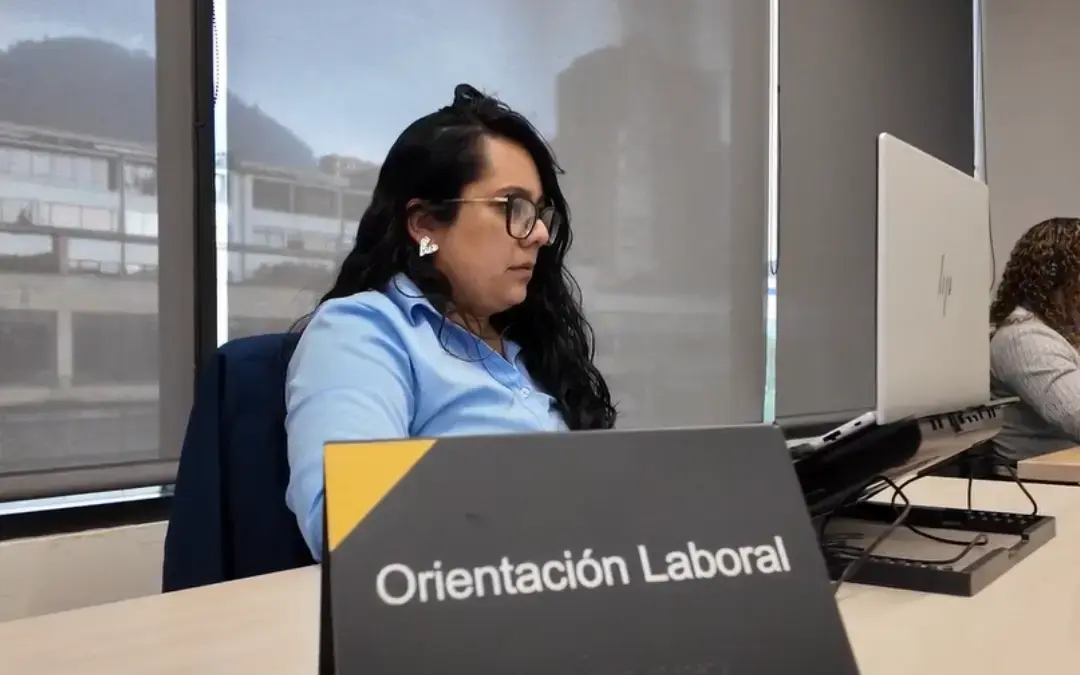
BOGOTÁ, COLOMBIA — In today’s hyper-competitive and volatile economic environment, businesses across Latin America face a persistent paradox: high unemployment and underemployment rates running parallel to a severe shortage of qualified talent. For small and medium-sized enterprises (SMEs) in Colombia, this friction is exacerbated by heavy reliance on informal recruitment channels, leading to high turnover, prolonged vacancy periods, and compromised productivity.
Addressing this structural bottleneck requires more than incremental changes to human resources practices; it demands a fundamental redesign of how talent and employers connect. Stepping into this breach, the Strategic Employment Center of Colsubsidio has unveiled a transformative model designed to supply businesses with pre-screened, rigorously evaluated talent. Bolstered by strategic technological partnerships—most notably with employment platform Magneto—this initiative offers end-to-end, expert-guided recruitment support entirely free of charge, setting a new benchmark for labor market intermediation in the region.
Main Facts: A Paradigm Shift in Colombian Recruitment
At its core, the initiative spearheaded by Colsubsidio’s Strategic Employment Center seeks to dismantle the traditional, often cumbersome barriers that hinder efficient hiring in Colombia. By intervening at the critical juncture where job seekers look for opportunity and companies search for capability, the program transforms a traditionally haphazard process into a streamlined, data-driven pipeline.
- Pre-Screened and Evaluated Talent: Companies gain direct access to candidates who have not only been vetted for baseline competencies but have also received professional orientation. This drastically reduces the time-to-hire and minimizes the risk of misaligned cultural or technical placements.
- Zero Cost for Employers: To empower SMEs and larger organizations alike, Colsubsidio provides this end-to-end expert accompaniment at no cost, democratizing access to professional recruitment services that are typically reserved for large corporations with massive HR budgets.
- Strategic Sector Focus: The initiative targets high-demand industries driving the Colombian economy—specifically Information and Communications Technology (ICT), healthcare, commerce, and manufacturing—where specialized skills are acutely scarce.
- Technological Integration via Magneto: Through a robust alliance with employment technology leader Magneto, the initiative leverages advanced data analytics and artificial intelligence (AI) to optimize vacancy visibility and match candidates with unprecedented precision.
Chronology: The Evolution of Colombia’s Employment Challenges and the Birth of the Solution
To fully understand the gravity and timeliness of Colsubsidio’s initiative, it is essential to trace the historical progression of recruitment challenges in Colombia and the strategic steps that led to this modern solution.
Phase 1: The Informal Legacy (Pre-2020)
For decades, the recruitment landscape in Colombia—particularly among SMEs, which account for over 80% of national employment—relied heavily on informal networks. Word-of-mouth recommendations, physical classified ads, and unstructured interviews were the norm. While cost-effective on the surface, this approach resulted in high information asymmetry, where employers could not accurately verify skills, and candidates lacked visibility into organizational cultures and growth trajectories.
Phase 2: Post-Pandemic Disruption and the Digital Pivot (2020–2022)
The COVID-19 pandemic acted as an intense catalyst for labor market shifts. Remote work exploded, digital transformation accelerated, and the demand for specialized tech and administrative roles skyrocketed. Traditional recruitment channels broke down entirely under the weight of remote-first operations. Companies realized they needed digital tools, but the cost of proprietary Applicant Tracking Systems (ATS) and specialized headhunting services remained prohibitive for most local businesses.
Phase 3: The Rise of the Skills Gap and Strategic Intermediation (2023–2024)
As economic recovery took hold, a structural mismatch became glaringly apparent. Employers complained of unfilled vacancies, while job seekers struggled to find roles matching their training. International bodies began sounding alarms regarding Latin America’s educational and vocational misalignment. In response, institutional actors like Colsubsidio began rethinking employment services. The focus shifted from mere job-matching databases to comprehensive talent development, evaluation, and strategic alignment.
Phase 4: The Launch of the Modern Ecosystem (Present)
Today, the integration of Colsubsidio’s Strategic Employment Center with cutting-edge technological infrastructure marks the maturation of this evolution. By partnering with platforms like Magneto, the initiative merges institutional reach with state-of-the-art AI analytics, creating a seamless bridge between modern enterprises and the national workforce.
Supporting Data: The Anatomy of the Regional Skills Gap
To contextualize the urgency of Colsubsidio’s intervention, one must examine the macroeconomic data defining the Latin American and Colombian labor markets.
The International Labor Organization (ILO) Perspective
According to reports from the International Labor Organization (ILO), structural mismatches between the skills possessed by the workforce and those demanded by the modern economy represent one of the single greatest barriers to productivity and equitable growth in Latin America. As global supply chains shift and digitization permeates every sector, the half-life of technical skills is shrinking rapidly. Workers trained in traditional methodologies find themselves obsolete, while companies report vacancy rates lasting months, directly impacting their top and bottom lines.
The SME Reality in Colombia
In Colombia, small and medium enterprises form the backbone of the economy, generating the vast majority of jobs. However, data from national labor observatories indicates that a significant percentage of these enterprises still utilize rudimentary, manual recruitment processes. This operational inefficiency leads to:
- Extended Vacancy Cycles: Open positions remaining unfilled for 60 to 90 days on average in specialized sectors.
- High Turnover Costs: Bad hires resulting from poor initial screening, which cost companies up to 30% of the employee’s first-year earnings.
- Administrative Burden: Human resources teams—often consisting of a single generalist in an SME—spending up to 70% of their time on administrative tasks rather than strategic workforce planning.
Sectoral Pressures
The demand for specialized profiles is heavily concentrated in four primary pillars of the Colombian economy:
- ICT: Driven by the rapid expansion of software development hubs in Bogotá, Medellín, and Cali.
- Healthcare: Accelerated by post-pandemic health infrastructure demands and an aging population.
- Commerce: Transformed by the boom in e-commerce and omnichannel retail logistics.
- Manufacturing: Modernized by Industry 4.0 automation, requiring technicians adept in robotics and data monitoring.
Colsubsidio’s model directly targets these friction points by pre-evaluating candidates across these specific verticals, slashing the administrative burden on companies while elevating the quality of every placement.
Official Responses and Expert Insights
The success and vision of the Strategic Employment Center are best understood through the voices of the leaders driving this transformation. Their insights reveal a shared commitment to modernizing the labor market through empathy, data, and technological empowerment.
Democratizing HR Technology
A cornerstone of the initiative’s technological edge is its partnership with Magneto. Alejandro Arango, a key voice in the deployment of these digital tools, emphasized the democratization of recruitment technology as a fundamental corporate mission.
"Our mission is to democratize access to human resources technology so that more companies can make better decisions regarding talent," Alejandro Arango stated, highlighting how artificial intelligence and advanced analytics are no longer exclusive luxuries for multinational conglomerates, but accessible assets for businesses of all sizes.
By integrating Magneto’s platform into Colsubsidio’s ecosystem, job postings receive targeted visibility among highly relevant candidate pools. Algorithms process thousands of data points to match behavioral traits, technical proficiencies, and experiential backgrounds with employer requirements, ensuring that human recruiters only interact with high-potential shortlists.
Institutional Commitment to Development
Colsubsidio representatives have consistently underscored that employment intermediation is not merely an administrative transaction, but a vital social engine. By offering expert accompaniment throughout the recruitment journey—from defining profile parameters and designing evaluation rubrics to conducting final interviews—the organization acts as an external strategic partner to businesses that lack robust HR departments.
This institutional backing ensures that the human element is never lost amidst algorithms and data points. While technology drives efficiency, human experts provide the contextual empathy necessary to assess cultural fit, emotional intelligence, and leadership potential—qualities that code cannot fully measure.
Implications: What This Means for the Future of Work in Colombia
The deployment of Colsubsidio’s Strategic Employment Center model carries profound implications for employers, job seekers, and the broader socioeconomic landscape of Colombia.
1. For Businesses: Operational Relief and Strategic Focus
For corporate leaders and SME owners, the primary implication is the liberation of operational bandwidth. By outsourcing the arduous tasks of sourcing, initial screening, and baseline evaluation to Colsubsidio and its technological partners, companies can reallocate internal resources toward core business growth, product innovation, and strategic decision-making.
Furthermore, the reduction of bad hires directly impacts financial health. Higher-quality postulantes lead to greater retention rates, lower training costs, and enhanced team morale. Whether an enterprise is seeking tactical staff for daily operations or strategic visionaries for leadership pipelines, the model adapts to multiple organizational tiers.
2. For Job Seekers: Visibility, Guidance, and Formalization
For the Colombian workforce, the initiative offers a vital pathway out of the shadows of informal employment. Job seekers often face demoralizing black holes when submitting resumes online, receiving no feedback or engagement.
Through Colsubsidio’s structured orientation and evaluation processes, candidates receive professional feedback, understand their competitive standing, and are positioned directly in front of vetted employers who are actively hiring. This transparency fosters a healthier labor market where merit and verified capability dictate career progression.
3. For the Macro Economy: Closing the Productivity Gap
At the national level, bridging the skills gap is synonymous with boosting macroeconomic productivity. When companies in high-growth sectors like ICT, healthcare, commerce, and manufacturing can fill critical roles swiftly and accurately, innovation accelerates, service delivery improves, and national competitiveness rises on the global stage.
Conclusion
The evolution of the Colombian labor market is reaching a critical inflection point. As traditional recruitment methods prove increasingly inadequate against the complexities of modern industry, proactive models that combine institutional reach with advanced technology are proving indispensable.
Through the Strategic Employment Center, Colsubsidio has established a vital bridge connecting organizational ambition with human potential. By leveraging strategic allies like Magneto, embracing data-driven decision-making, and providing expert, cost-free guidance to businesses, the initiative is not just filling vacancies—it is laying the foundation for a more resilient, transparent, and productive economy.
As more enterprises adopt this structured, technologically empowered approach to human resources, Colombia moves steadily closer to resolving its historical labor paradox, ensuring that the right talent finds the right opportunity, every single time.




Leave a Reply