MADRID — In a rapidly evolving tourism landscape defined by geopolitical headwinds, shifting consumer habits, and a technological revolution, travel conglomerate Travel Live has emerged stronger than ever. Posting record-breaking results in its latest fiscal year, the group is aggressively rewriting its playbook—balancing an unwavering commitment to profit margins over sheer sales volume with a bold diversification strategy that bridges traditional travel and large-scale entertainment.
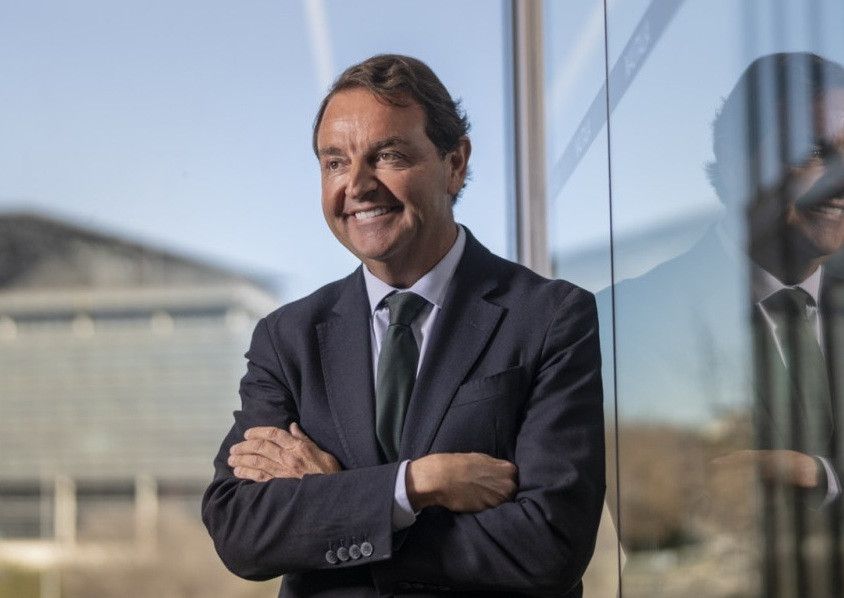
In an exclusive, wide-ranging interview, Rafael García Garrido, CEO of Travel Live, peeled back the curtain on the group’s future. From international expansion plans into the UK, Prague, and China, to an innovative push to capture younger demographics through leisure and events, García Garrido offered deep insights into how the company navigates ongoing global uncertainties—including the lingering disruptions of international conflicts—while fiercely defending the irreplaceable value of the human travel agent.
Main Facts: Record Growth, Strategic Pivots, and Global Expansion
Travel Live’s recent success is no accident; it is the direct result of a calculated pivot toward high-yield operations. While many travel agencies and tour operators chase top-line revenue through volume-heavy models, Travel Live has doubled down on profitability.
Key takeaways from the group’s current strategic roadmap include:
The Profit-First Mantra: Following the lead of the hospitality sector, Travel Live prioritizes high-margin services over low-margin volume, a philosophy García Garrido believes the broader travel distribution sector must adopt to elevate its professional standing.
International Re-entry: Bolstered by its recent financial performance, the company is preparing to re-establish a physical presence in the United Kingdom and Prague under its Premium Incoming receptive brand—markets where it previously operated offices before the COVID-19 pandemic. Furthermore, the group is evaluating a strategic return to China.
Diversifying into Entertainment: Travel Live has successfully integrated major event management into its portfolio—most notably through its Ikigo brand managing events at Madrid’s iconic Plaza de Las Ventas and in Valencia. The group aims to scale this arm aggressively by bidding on public tenders for convention centers, arenas, and cultural venues.
Balancing Tourism and Entertainment: Currently maintaining an 80/20 split between core travel and leisure/events, Travel Live has set a long-term strategic target to rebalance its business model to a 50/50 division.
Technological Integration Without Substitution: Rather than allowing Artificial Intelligence to displace human labor, Travel Live has deployed a comprehensive group-wide digital transformation strategy designed to augment its workforce, enabling agents to provide superior, high-touch service to increasingly informed consumers.
Chronology: From Pandemic Survival to Strategic Consolidation
To understand Travel Live’s current market posture, one must examine the timeline of resilience and transformation that defined the group’s trajectory over the past half-decade.
2020–2021: The Crucible of the Pandemic
When global travel ground to a halt due to the COVID-19 outbreak, Travel Live—like the rest of the global tourism ecosystem—faced an existential crisis. For CEO Rafael García Garrido, this period was characterized by daily operations under conditions of absolute uncertainty.
Operational Hardship: Offices were shuttered, international routes collapsed, and strategic assets—such as a major global airline previously owned by the group—were sold off.
Personal and Professional Realization: Managing a company day-by-day without knowing whether it would survive the fortnight tested leadership to its limits. However, the crisis ultimately vindicated the travel distribution sector. It reminded the public that when systemic disruptions occur, travelers desperately want a reliable human expert on the other end of the line to solve their problems.
Post-Pandemic Rebound and The "Revenge Travel" Boom
As restrictions lifted, pent-up demand triggered a massive surge in travel bookings. Travel Live leveraged this moment not just to recover lost revenue, but to completely restructure its asset portfolio.
Physical Network Optimization: The group streamlined its retail footprint, focusing heavily on strategic brick-and-mortar expansion.
Diversification into Public Venues: Travel Live successfully captured high-profile public concessions, taking over the event management of major cultural spaces like the Plaza de Las Ventas in Madrid, setting a precedent for future public-private partnerships.
2024–2026: Navigating Geopolitical Shocks and International Resurgence
Entering the latest fiscal cycle, the group faced a new wave of macroeconomic and geopolitical challenges. The war in Iran, coupled with overlapping global conflicts and shifting consumer travel calendars, turned the summer season into a logistical minefield.
Coping with Conflict: The Iranian conflict directly impacted pricing structures and tour operations. Rather than panicking, Travel Live absorbed the shocks, noting that modern travelers have increasingly learned to coexist with geopolitical instability.
Laying Groundwork for Global Footprints: Armed with record profits, the group initiated plans for its upcoming international rollout, targeting the restoration of its receptive brands in the UK, Prague, and China by the close of the next operational cycle.
Supporting Data: The Anatomy of Travel Live’s Operations
Numbers tell the story of a mature, deeply rooted company capable of executing localized strategies while maintaining international ambitions. Travel Live’s operational metrics highlight a robust market presence:
Retail Footprint: The group directly operates 186 proprietary brick-and-mortar travel agencies spread across 146 distinct municipalities, ensuring deep local penetration where consumer demand is identified.
Franchise Network: In addition to its corporate-owned stores, Travel Live partners with roughly 30 associated franchise agencies, maintaining a flexible hybrid model.
Revenue Distribution: The company’s current revenue streams are weighted 80% toward traditional tourism and 20% toward leisure, events, and cultural management.
Target Balance: The definitive long-term corporate goal is to shift this matrix to a balanced 50% tourism and 50% leisure enterprise, insulating the group against sector-specific downturns.
Official Responses: Insights from CEO Rafael García Garrido
In his detailed address, Rafael García Garrido tackled the most pressing issues facing the travel distribution sector today, offering candid reflections on strategy, competition, and technology.
On Profitability Versus Volume
"I think it is the strategy that we have repeated every single time we speak: betting on profitability over volume. I believe this should be applied generally across the sector—to dignify our work and to give value to the tourism sector—especially in the outbound business and travel agencies. I always say that we needed to learn from hoteliers, who know how to do this extraordinarily well."
On Geopolitical Headwinds and Market Pressures
"The war in Iran has affected the entire sector directly. It has been a super complicated summer due to the war, the World Cup, and various situations that make people’s behavior change regarding vacation planning. In the case of the war in Iran, it has affected us not only at the pricing level but also in tour operations. Unfortunately, everyone eventually learns to coexist with wars. Therefore, for the coming season, we will adopt appropriate measures as soon as circumstances allow."
On Physical Retail Expansion
"Every year we usually increase the number of stores in a very targeted way. That is to say, wherever we understand there is a need, we open. We do not have a rigid strategy to open a specific number of sales points. We always keep our focus on those places where we understand we can have a good opportunity. We have 186 proprietary stores across 146 municipalities. Therefore, in those destinations where we are not present today, we could have our radar set."
On Re-entering International Markets
"With certainty, we will return to the United Kingdom and Prague with Premium Incoming. I say return because we already had an office there in the past, but we closed it during the pandemic. We also have our sights set on returning with our receptive operations to China. In the wake of the pandemic, everything became blocked."
On Targeting Younger Demographics Through Leisure
"We hope to capture the young public through leisure. Today, it is difficult for a young person to walk into a traditional travel agency. But later, when they go for the first time—which is usually for their honeymoon—they realize that travel agencies genuinely add value for certain trips, such as multi-destination itineraries or slightly more premium, VIP experiences. Therefore, through leisure, we want to show young people that travel agencies truly provide value."
On Artificial Intelligence and Human Capital
"We are developing a technology project across the entire group. A year ago, we hired a person responsible for the technological area with the goal of digitizing everything we possibly can. But I want to remind everyone that we are a business of people. Therefore, we must adapt AI and technology so that people can work better and provide a better service to a customer who arrives exceptionally well-informed by AI. But we want to continue emphasizing that our core strength is people, customer service. AI must be a tool that helps our staff assist the public, not replace them; it must facilitate their work."
On Pricing Trends and Sector Stability
"I think prices will stabilize looking toward the end of the year. Right now, they are too high. I do not see them continuing to rise in an exaggerated way. We have to learn to sell service rather than selling solely on price. I think that has been our mistake. Everyone wants to travel at a good price, but things cost what they cost."
Implications: What the Future Holds for Travel Distribution and Travel Live
The strategic trajectory of Travel Live carries significant implications for the broader travel and tourism ecosystem, both in Spain and internationally.
1. The Death of the Price War?
By openly calling for a sector-wide shift from volume to profitability, Travel Live is challenging a legacy mindset that has long plagued travel agencies. For years, low-margin discounting eroded the perceived value of travel intermediaries. If major players follow Travel Live’s lead in emulating the disciplined pricing strategies of hoteliers, the distribution market could see stabilized pricing and healthier margins across the board.
2. The Resurgence of the Receptive Specialist
Travel Live’s calculated return to the UK, Prague, and China signals renewed confidence in inbound and receptive tourism. As global mobility fully normalizes post-pandemic, regional specialists are finding that generalized online platforms cannot replicate the deeply localized logistical support required for complex, multi-destination international travel.
3. Diversification as Economic Armor
Operating a conglomerate that balances 80% tourism with 20% entertainment (targeting a 50/50 split) provides a masterclass in risk management. The travel sector is notoriously vulnerable to exogenous shocks—ranging from geopolitical conflicts and macroeconomic recessions to extreme weather events and public health crises. By anchoring itself in stable, high-demand public entertainment concessions (such as arenas and convention centers), Travel Live creates a financial buffer that safeguards the group against tourism downturns.
4. Human-Centric Technology as a Competitive Advantage
In an era where tech startups and OTA algorithms attempt to completely automate the booking journey, Travel Live’s philosophy on Artificial Intelligence offers a refreshing counter-narrative. By deploying AI strictly as an internal productivity tool—empowering human agents rather than firing them—the company is doubling down on emotional intelligence, bespoke curation, and crisis management as its primary unique selling propositions (USPs).
As Rafael García Garrido aptly observed, reflecting on the lessons of the pandemic: "When there are problems, you always want to have someone on the other end to resolve them." In a world of perpetual uncertainty, Travel Live’s blend of fiscal discipline, human expertise, and aggressive diversification positions the group not just to survive the next global shockwaves, but to lead the industry into its next golden era.








Leave a Reply