

For decades, the haunting, melancholic songs of humpback whales have captivated human imagination, inspiring poetry, scientific inquiry, and a global movement toward marine conservation. We have recorded their complex underwater vocalizations, mapped their migratory routes, and marveled at the sheer scale of these gentle leviathans. Yet, despite our advanced listening capabilities, one of the most profound biological mysteries remains stubbornly unsolved: How do whales actually perceive the vast, complex acoustic world that surrounds them?
While marine biologists have a firm grasp on the physics of whale songs, they know remarkably little about how these massive cetaceans process auditory information. Answering this question is no longer merely a matter of academic curiosity. As human-induced ocean noise—generated by commercial shipping, naval sonar, offshore energy development, and seismic testing—proliferates across the globe, understanding the auditory thresholds of marine mammals has become a critical conservation imperative.
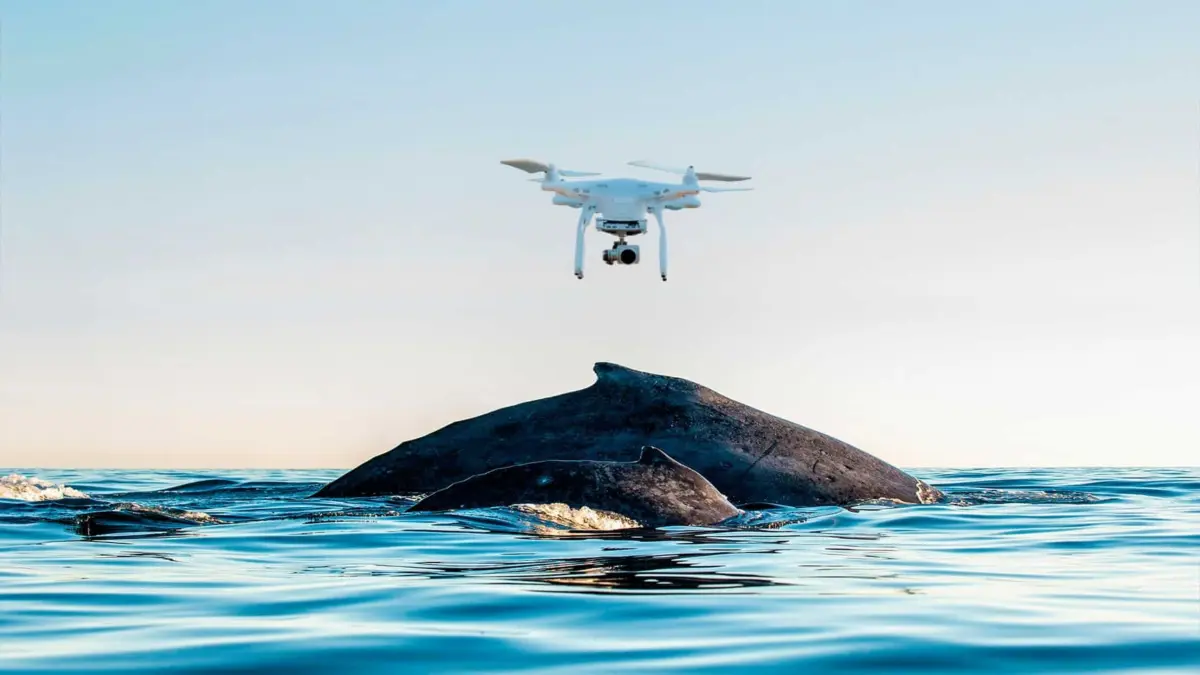
To bridge this massive knowledge gap, scientists from organizations like the National Oceanic and Atmospheric Administration (NOAA) are pioneering a groundbreaking, non-invasive methodology. By combining precision drone technology with specialized epidermal sensor tags, researchers are attempting to decode brainwave activity in humpback whales swimming freely in the open ocean.
Main Facts: The Intersection of Biology, Technology, and Conservation
The core scientific challenge facing researchers studying cetacean hearing comes down to a fundamental incompatibility between traditional laboratory science and the sheer scale of baleen whales.
- The Scale Problem: Smaller marine mammals, such as bottlenose dolphins and California sea lions, have long been subjects of detailed auditory testing. Because of their manageable size, researchers can train them in controlled aquarium or laboratory settings to respond physically or vocally when they detect specific frequencies. However, applying this methodology to a 40-ton, 50-foot humpback whale is physically impossible. Whales cannot be brought into laboratories, nor can they be commanded to sit still for clinical electrodes.
- The Technological Solution: To circumvent this, scientists have effectively inverted the traditional paradigm: instead of bringing the whale to the laboratory, they are bringing the laboratory to the whale. Using advanced unmanned aerial systems (drones), researchers can approach humpback whales from the air with minimal behavioral disruption.
- The Target Area: Precision is paramount. Piloted drones hover directly above a surfacing whale, dropping a lightweight, non-invasive suction-cup tag onto a highly specific target zone: the exact area just behind the animal’s blowhole. This anatomical region is believed to offer the highest probability of capturing faint neurological signals.
- The Ultimate Goal: The primary objective is to record auditory brainstem responses (ABRs). When an animal’s auditory system encounters sound, microscopic electrical potentials are generated along the auditory nerve and brainstem. By playing calibrated, repetitive auditory stimuli through underwater speakers and simultaneously monitoring the tag’s electrodes, scientists hope to map out exact hearing ranges and sensitivities.
- Unexpected Breakthroughs: While capturing precise ABR signals from freely moving baleen whales has proven extraordinarily difficult during initial trials, the tags have successfully yielded high-fidelity electrocardiogram (ECG) data, recording real-time heart rates in wild marine environments.
Chronology of an Acoustic Odyssey: How the Research Evolved
The journey to understand cetacean acoustics has undergone a massive evolution over the past century, transitioning from passive listening to active physiological investigation.
Phase One: Passive Listening (Mid-to-Late 20th Century)
For generations, marine bioacoustics was defined by hydrophones—underwater microphones dropped into the deep. Pioneers like Roger Payne revolutionized our understanding of marine life in the 1970s by recording and popularizing Songs of the Humpback Whale. This era was characterized entirely by recording what whales produced, rather than measuring what they consumed sensorially.
Phase Two: Captive and Stranding Studies (Late 20th to Early 21st Century)
As the impacts of anthropogenic ocean noise grew increasingly apparent, regulatory agencies recognized the need for auditory data. Scientists relied heavily on behavioral audiometry with captive odontocetes (toothed whales and dolphins) or conducted anatomical and audiometric post-mortem studies on stranded baleen whales. While valuable, stranded specimens often suffered from tissue degradation, and captive odontocetes could not adequately represent the auditory biology of massive, deep-diving baleen species like humpbacks, blue whales, and fin whales.
Phase Three: The Tagging Revolution (2010s)
The development of D-tags (digital acoustic recording tags) revolutionized behavioral ecology. Attached via suction cups, these devices recorded depth, orientation, acceleration, and ambient sound. However, they were designed to track what the animal was experiencing externally, not how its central nervous system was processing that sensory input internally.
Phase Four: The Drone and Electrodiagnostic Era (Present Day)
Within the last several years, the convergence of high-precision drone technology and miniaturized, ultra-sensitive biomedical telemetry has unlocked the next frontier. Researchers realized that commercial off-the-shelf drones could deliver specialized sensor tags with pinpoint accuracy. The ongoing trials off coastlines monitored by NOAA and academic partners represent the bleeding edge of this technology, shifting marine biology into the realm of real-time, non-invasive neurophysiology.
Supporting Data: The Anatomy of Ocean Noise and Cetacean Vulnerability
To contextualize why this research is urgently needed, one must examine the acoustic landscape of the modern ocean. The marine environment is no longer the silent realm Jacques Cousteau once romanticized; it is an industrialized sonic soup.
- Exponential Noise Growth: According to marine conservation organizations, low-frequency ambient noise in the world’s oceans has doubled every decade for the past several decades along major shipping routes. Commercial container ships generate continuous low-frequency hums that can travel thousands of miles underwater.
- The Overlap of Frequencies: Humpback whales communicate, navigate, and forage using low-to-mid frequency vocalizations (ranging from roughly 20 Hz to 10 kHz). Unfortunately, this is precisely the same frequency band dominated by commercial shipping engines, naval mid-frequency sonar, pile driving for offshore wind farm installations, and offshore oil and gas seismic airgun surveys.
- Physiological Stress Indicators: Initial deployments of the drone-delivered electrode tags successfully captured heart-rate variability (HRV) in wild humpback whales. Data shows that marine mammals experience acute physiological stress responses—manifested as sudden tachycardia or bradycardia—when exposed to sudden or intense anthropogenic noise.
- The Sensory Gap: Despite these observed stress reactions, regulatory bodies struggle to establish science-based safety thresholds. Without definitive data on exact auditory bandwidths and hearing sensitivity curves for humpbacks, creating effective marine protected areas or speed limits for commercial shipping remains an exercise in educated estimation rather than precision science.
Official Responses and Perspectives from the Scientific Community
The integration of drones and neuro-telemetry into marine mammal research has sparked widespread discussion across the scientific, conservation, and regulatory communities.
Dr. Ted Cranford, a noted cetacean anatomist who has long studied the complex fatty pathways in whale jaws that facilitate sound conduction, emphasizes the monumental nature of the current challenges.
"For decades, we have been flying blind regarding the actual sensory experience of baleen whales," notes a senior marine mammal researcher involved in current NOAA-affiliated projects. "We can measure the decibel levels of a passing cargo ship, and we can record the whale’s vocal response or behavioral avoidance, but we are essentially guessing at how loud that ship actually sounds inside the animal’s brain."
Conservation agencies, including the National Marine Fisheries Service (NMFS), have expressed cautious optimism regarding the deployment of non-invasive drone technology. In the past, securing physiological data often required stressful capture-and-release operations—impossible for a 40-ton baleen whale—or invasive biopsies. The non-invasive nature of suction-cup drone tags ensures that the welfare of the animal remains uncompromised.
Furthermore, animal welfare advocates have championed the methodology because it respects the autonomy of wild populations. The tags adhere via soft silicone suction cups, designed to naturally detach within hours and float to the surface for retrieval, leaving no permanent physical scars or long-term behavioral disruptions.
Implications: What Decoding Whale Hearing Means for the Future of Our Oceans
The success—and ongoing refinement—of this research carries profound implications for global environmental policy, marine conservation, and maritime commerce.
1. Revolutionizing Ocean Noise Regulations
Current international regulations governing ocean noise are often generalized. With accurate auditory brainstem response (ABR) data harvested from wild humpbacks, regulators can establish precise, species-specific acoustic safety thresholds. This will enable governments to mandate targeted "slow-down zones" for commercial shipping when endangered whales are detected in the vicinity, drastically reducing acoustic masking and the risk of fatal ship strikes.
2. Mitigating the Impact of Renewable Energy Expansion
As the global push for green energy accelerates, offshore wind development is expanding rapidly. The construction phases—specifically the pile-driving of massive steel monopiles into the oceanic crust—produce concussive underwater shockwaves that can cause permanent hearing loss or disorientation in marine mammals. Understanding precisely how humpbacks process these frequencies will allow engineers to mandate advanced mitigation technologies, such as bubble curtains (which absorb acoustic energy) and acoustic deterrent devices, with pinpoint accuracy.
3. A New Paradigm for Wildlife Telemetry
The technological marriage of drones and neuro-telemetry does not stop at humpback whales. The methodologies currently being tested in marine environments could theoretically be adapted for other elusive, large, or dangerous wild species—ranging from giant squids and whale sharks to terrestrial megafauna—opening an entirely new chapter in physiological ecology.
Conclusion: Bridging the Acoustic Chasm
For centuries, humanity has projected its own interpretations onto the haunting songs of the humpback whale, treating them as musical curiosities, objects of commercial exploitation, or symbols of the wild, untamed majesty of nature.
Today, science is shifting from passive appreciation to active, empathetic understanding. By utilizing state-of-the-art drones to gently place sensors upon the skin of migrating giants, researchers are attempting to cross an evolutionary chasm. They are no longer content with merely hearing the ocean through the whale’s voice; they are striving to learn how the ocean sounds to the whale itself.
As these technological barriers gradually fall, humanity moves one step closer to truly understanding—and ultimately protecting—the delicate acoustic fabric of our blue planet.




Leave a Reply