

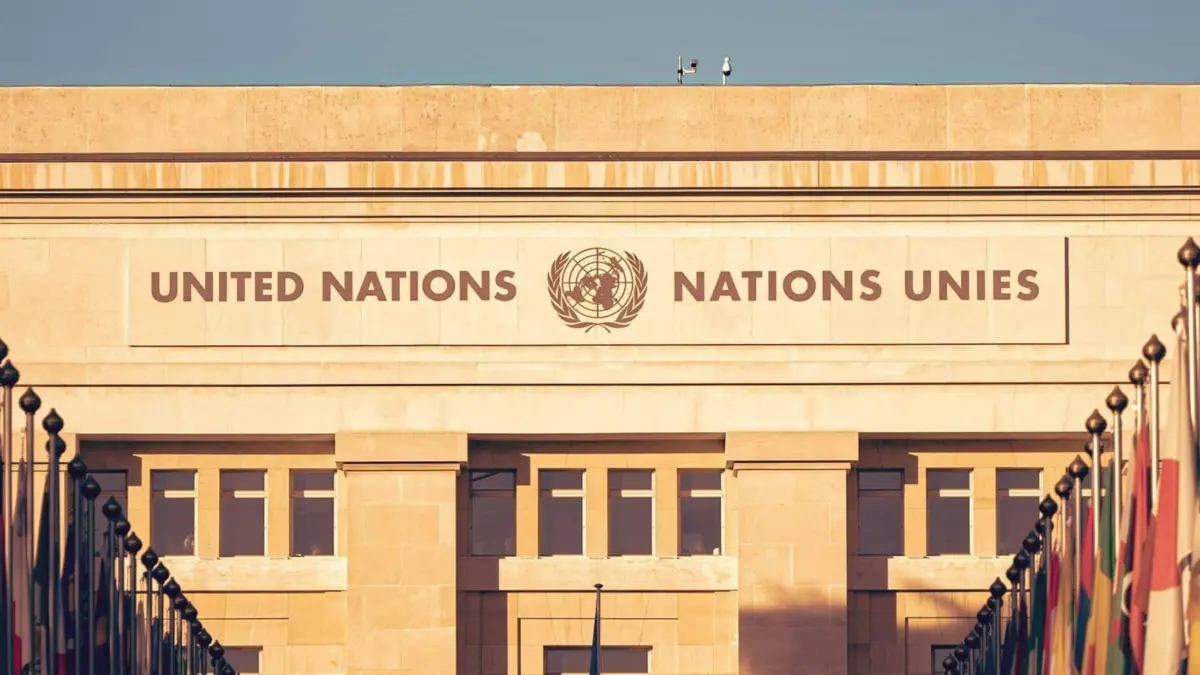
UNITED NATIONS, NEW YORK — As the high-level general debate of the United Nations General Assembly entered its crucial fourth day, the world’s most vulnerable nations took center stage to deliver an uncompromising wake-up call to the international community. Against a backdrop of rising global temperatures, geopolitical instability, and the exponential growth of artificial intelligence, leaders from the Caribbean, the Pacific, and Eastern Europe converged in New York to demand immediate structural transformations.
The day’s proceedings were defined by a dual ultimatum: wealthy industrialized nations must instantly course-correct on climate finance and emissions, while global governance must rapidly adapt to the ethical and operational dilemmas posed by breakthrough technologies. Far from traditional diplomatic rhetoric, the speeches delivered on Thursday resonated as urgent, existential pleas for human survival, sovereignty, and equity in an increasingly precarious world.
Main Facts
The fourth day of the UN General Assembly’s general debate crystallized two converging global crises: the escalating planetary emergency and the unregulated acceleration of advanced technologies.
- The Existential Climate Threat: Small Island Developing States (SIDS) reiterated that climate change is not a future projection, but a present, destructive reality threatening their very existence. Rising sea levels, intensifying tropical storms, and severe marine pollution are undermining their territorial integrity and economies.
- Sovereignty and Maritime Borders: Leaders firmly rejected the notion that physical displacement or the submersion of landmasses due to sea-level rise could legally erase their sovereign borders or maritime rights.
- The Financial Injustice Paradox: SIDS leaders exposed a deeply flawed international financial architecture that forces climate-vulnerable countries—who bear the least historical responsibility for global emissions—to plunge deeper into sovereign debt simply to recover from climate disasters.
- The Artificial Intelligence Frontier: While some nations are pioneering AI integration into public administration, global leaders issued severe warnings regarding the erosion of human judgment, the proliferation of state and non-state disinformation, and the absence of international regulatory guardrails.
Chronology of the Fourth Day
The rhythm of the fourth day’s debate was marked by a seamless transition from the realities of ecological collapse to the philosophical and administrative challenges of the digital age.
Morning Session: The Vulnerable Frontlines Take the Podium
The morning session opened with a series of hard-hitting addresses from representatives of the Caribbean and the Pacific. Rather than focusing on macro-economic trends, these delegations brought the human cost of climate inaction directly to the General Assembly Hall.
Geoffrey Hanley, Deputy Prime Minister of Saint Kitts and Nevis, utilized his platform to highlight localized resilience efforts, noting that his nation had successfully installed a solar-powered desalination plant to triple access to clean water. However, he quickly pivoted to a chilling geopolitical warning: rising sea levels must never be allowed to shrink or erase the sovereign territory of a nation.
As the morning progressed, representatives from the Bahamas, Tonga, and Saint Vincent and the Grenadines took turns dismantling the current paradigm of international aid. They argued that disaster recovery loans are predatory instruments that punish victims of climate change twice: first through the catastrophe itself, and second through crippling national debt servicing.
Afternoon Session: Marine Degradation and the Tech Frontier
The afternoon debates expanded the scope of environmental grievances while introducing the complex dimensions of digital governance. Samoa delivered a searing indictment of global marine pollution, linking industrial neglect to the systematic destruction of Pacific ecosystems. Concurrently, leaders from Saint Lucia and the Solomon Islands framed climate financing not as charitable aid or foreign assistance, but as an absolute prerequisite for human survival.
As the daylight faded over the East River, the focus shifted dramatically from oceans to algorithms. Prime Minister Albania Edi Rama captured the assembly’s attention by discussing the unconventional integration of an artificial intelligence tool—colloquially referred to as an "AI minister"—into his government’s public service infrastructure. Yet, Rama’s endorsement was heavily tempered by a grave caution regarding the dangers of unchecked algorithmic decision-making and the systemic threat of widespread disinformation.
The session drew to a close with a unifying synthesis: ecological resilience and digital oversight are no longer isolated policy niches, but interconnected pillars of modern global governance.
Supporting Data and Context: The Anatomy of SIDS Vulnerability
To understand the urgency behind the podium speeches at the UN, one must examine the broader socioeconomic and environmental data surrounding Small Island Developing States.
- Disproportionate Impact: While SIDS are responsible for less than 1% of global greenhouse gas emissions, they consistently rank among the nations most severely impacted by global warming. According to meteorological data, the frequency of Category 4 and 5 hurricanes in the Caribbean has surged over the past two decades.
- The Debt Trap: Economic analyses presented by multilateral institutions indicate that developing island nations face borrowing costs that are significantly higher than those of developed economies. When a major hurricane strikes, reconstruction costs frequently exceed 100% of a small island nation’s Gross Domestic Product (GDP), leaving governments with little choice but to borrow from international lenders at punishing rates.
- Water Scarcity and Salinization: As groundwater tables are increasingly contaminated by saltwater intrusion caused by rising sea levels, freshwater access has become a critical security issue. Initiatives like the solar-powered desalination plant in Saint Kitts and Nevis represent vital adaptations, yet remain out of reach for many impoverished island communities without external grants.
- The Scale of AI Integration: On the technological front, the global AI market is expanding at a compound annual growth rate exceeding 35%. While nations like Albania experiment with algorithmic public administration to reduce bureaucratic corruption and streamline services, global indices show that regulatory frameworks lag years behind private-sector innovation.
Official Responses and Statements
The rhetoric from the fourth day showcased a profound philosophical divide between the Global South—demanding immediate systemic reform—and the traditional centers of economic and technological power.
"Our borders will not be submerged beneath the ocean, and our sovereignty will not be negotiated away in the boardrooms of nations that grew rich on the carbon emissions choking our islands."
— Representative of the Bahamas
The sentiment was echoed by regional blocs calling for a total overhaul of the Bretton Woods institutions (the World Bank and the International Monetary Fund). Representatives from Saint Vincent and the Grenadines argued that the current global financial architecture is structurally obsolete, designed for a post-World War II reality rather than a 21st-century climate emergency.
On the technological front, Prime Minister Edi Rama of Albania offered a pragmatic yet sobering perspective on artificial intelligence:
"We are implementing artificial intelligence to optimize our public administration and fight inefficiencies. But let us be profoundly clear: when algorithms begin to replace human judgment, and when synthetic disinformation floods our public squares faster than truth can travel, we are no longer managing technology—technology is managing us."
— Edi Rama, Prime Minister of Albania
Implications for International Law and Global Governance
The convergence of climate emergencies and rapid technological disruption at the UN General Assembly carries profound implications for the future of international relations.
1. Redefining Statehood and Maritime Boundaries
For centuries, international law—specifically the United Nations Convention on the Law of the Sea (UNCLOS)—has linked maritime rights, exclusive economic zones, and national sovereignty directly to physical, above-water landmasses. As sea levels rise, threatening to completely submerge low-lying island nations like Tuvalu, Kiribati, and the Maldives, the international legal community faces an unprecedented crisis. The demands voiced during the UN debate signal a growing push to codify permanent sovereignty into international law, ensuring that nations displaced or physically diminished by climate change do not lose their maritime resources, cultural identity, or legal recognition as sovereign states.
2. The Mandate for Climate Reparations and Grant-Based Finance
The unified front presented by Caribbean and Pacific nations places immense pressure on historical polluters. Loans disguised as "climate assistance" are increasingly being categorized by developing nations as a form of climate injustice. The international community is moving toward a contentious crossroads: either industrialized economies establish large-scale, accessible, grant-based loss and damage funds, or face a complete breakdown of trust in multilateral climate negotiations like the upcoming COP summits.
3. The Urgent Need for Algorithmic Governance
Albania’s testimony regarding its "AI minister" highlights a dual reality: automation can enhance administrative efficiency, but it also introduces profound systemic risks. As artificial intelligence systems begin to influence critical infrastructure, healthcare allocation, law enforcement, and public discourse, the UN General Assembly is recognizing that algorithmic transparency is a matter of international security. The international community must soon decide whether to establish binding global treaties on AI ethics or risk a fragmented digital landscape vulnerable to manipulation, deepfakes, and automated authoritarianism.
Conclusion
As the fourth day of the UN General Assembly general debate drew to a close, the path forward was sharply delineated. The dual crises of planetary heating and digital transformation cannot be addressed through incremental adjustments or business-as-usual diplomacy.
For the small island states of the world, survival is not an abstract policy debate; it is an immediate, daily struggle against rising tides and financial exclusion. Simultaneously, the unchecked expansion of artificial intelligence demands rigorous ethical oversight before algorithms outpace democratic institutions.
Ultimately, the proceedings reaffirmed that ecological restoration, financial equity, and digital regulation are shared global responsibilities. Protecting the sovereignty of the most vulnerable nations and reining in the dark potentials of modern technology remain the ultimate litmus tests for international justice in the twenty-first century.



Leave a Reply