By Jhoan Sebastián Salazar Enriched and Expanded English Editorial
Main Facts
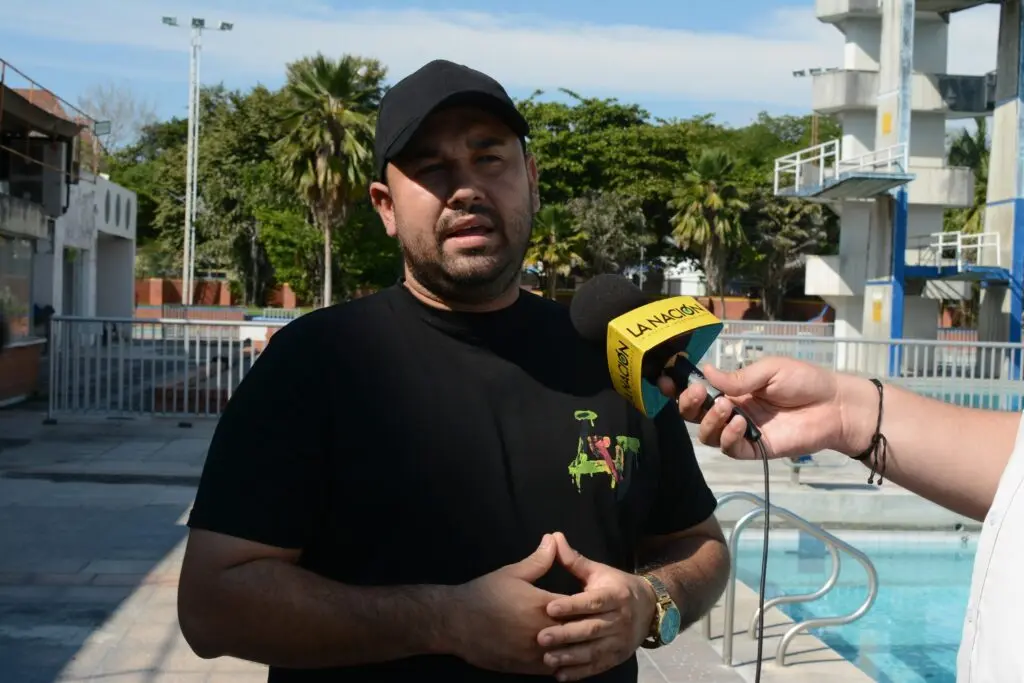
In a decisive step toward the revitalization of regional sports infrastructure, the municipal administration of Neiva has officially radicated the comprehensive modernization project for the city’s Villa Olímpica to the Ministry of Sport. The announcement was exclusively confirmed to LA NACIÓN and LA NACIÓN Stereo by the Secretary of Sports of Neiva, Juan Camilo Muñoz.
The ambitious master plan carries an estimated total cost of 15,000 million Colombian pesos and is structurally divided into four distinct phases. The initiative aims to rescue, modernize, and elevate the complex to competitive standards, transforming it into a premier hub for aquatic and recreational sports not only for the capital city of Huila but for the entire southern region of Colombia.
The project has been designated as a top-tier priority by Neiva’s Mayor, Germán Casagua. This institutional backing was further solidified during recent regional transition meetings involving national leadership, setting the stage for a collaborative financial rescue package involving the National Government, the Government of Huila through Inderhuila, and municipal co-financing.
Chronology of the Initiative
The path toward the formal radication of the Villa Olímpica project reflects a meticulous process of strategic planning, political prioritization, and regional alignment.
Phase 1: Initial Diagnosis and Municipal Assessment (Late 2023 – Early 2024): Upon taking office, Mayor Germán Casagua’s administration conducted a comprehensive audit of Neiva’s public infrastructure. The assessment revealed that while several neighborhood sports courts had undergone minor repairs, major complexes like the Villa Olímpica suffered from severe structural obsolescence, particularly the aquatic sectors.
Phase 2: Strategic Prioritization (Mid-2024): Recognizing the prohibitive cost of a total overhaul against the backdrop of constrained municipal budgets, the Secretariat of Sports—led by Juan Camilo Muñoz—segmented the master plan into four manageable, modular phases ranging between 3,000 million and 4,000 million pesos each. This modular design ensures that execution can proceed sequentially depending on immediate funding availability.
Phase 3: High-Level Regional Integration and National Alignment: During recent institutional transition meetings and regional dialogues with incoming national authorities, Mayor Casagua personally championed the Villa Olímpica as a vital project for national sports development.
Phase 4: Formal Radication (Current Milestone): With the technical structuring complete, the project dossiers were officially submitted to the Ministry of Sport, opening the window for national co-funding, technical review, and inter-institutional resource blending.
Supporting Data and Technical Breakdown
The $15,000 million peso modernization plan is far from a superficial paint-and-patch job. It targets the core athletic infrastructure of the Villa Olímpica, with a structural focus on high-performance aquatic disciplines.
Financial Architecture
Total Project Cost: $15,000,000,000 COP.
Modular Phase Value: Each of the four stages is budgeted between $3,000,000,000 and $4,000,000,000 COP, allowing for flexible, incremental execution.
Funding Triad: The financial strategy relies on a tripartite agreement involving:
The National Government (via the Ministry of Sport and incoming national administration funds).
The departmental administration (via the Government of Huila and Inderhuila).
The Municipality of Neiva (local co-funding and administrative resource allocation).
Infrastructure Scope across the Four Phases
While the exact sequence of the four stages is still being fine-tuned against forthcoming budgetary approvals, the technical interventions will encompass:
The 50-Meter Olympic Swimming Pool: The crowning jewel of the project.
The Diving Pool: Essential for specialized aquatic training and regional competitions.
The 25-Meter Secondary Pools: Designed for training regimens, warm-ups, and developmental programs.
Recreational Pools: Aimed at community access, family recreation, and social inclusion programs.
Sanitary Batteries & Supplementary Works: Complete overhaul of plumbing, electrical grids, spectator changing rooms, administrative offices, and perimeter security.
Official Responses and Stakeholder Perspectives
Speaking directly to LA NACIÓN, Secretary of Sports Juan Camilo Muñoz emphasized the cooperative spirit driving the project and expressed high optimism regarding the response from national authorities.
"With the help of the National Government, we were able to radicate this project to the Ministry of Sport. In previous meetings held by the Mayor with the incoming presidential administration, discussions have focused on the procedural pathways required to develop and execute this project—one of immense importance not only for Neiva, but for the entire department of Huila," stated Muñoz.
The Secretary underscored that the project is not merely an administrative wish-list item, but a foundational pillar of Mayor Casagua’s municipal development strategy:
"This is one of the projects prioritized by Mayor Germán Casagua before the National Government. As Secretary of Sports, I harbor very high expectations. We aspire to develop this monumental work in its entirety, or at least secure the execution of its most critical phases."
Addressing the financial reality of the municipality, Muñoz was candid about the impossibility of funding the project through local revenues alone, underscoring the necessity of external partnerships:
"Right now, we are evaluating what we can manage alongside the National Government, but it is clear that the Villa Olímpica is an absolute priority for us. We will undoubtedly secure assistance from the Government of Huila through Inderhuila, the National Government, and we, as the Mayor’s Office, will contribute our grain of sand."
Regarding project timelines, Muñoz maintained professional transparency, noting that setting a definitive calendar is premature until funding streams are legally secured:
"Everything depends on financial backing. The situation has not been easy; we have successfully recovered many sports scenarios, and we see a very positive willingness from the National Government to provide the support we need. At this moment, I cannot provide a stipulated timeline because the municipality does not possess the total resources. Therefore, we will wait to work hand-in-hand with the incoming government to rescue the Villa Olímpica."
Implications for Neiva and the Department of Huila
The modernization of the Villa Olímpica carries profound socioeconomic, athletic, and cultural implications for the region.
1. The Strategic Importance of the 50-Meter Pool
Among all the components slated for intervention, the 50-meter Olympic swimming pool stands out as an irreplaceable asset for regional sports. Secretary Muñoz highlighted its unique status:
"The 50-meter pool is a priority because we simply do not have another swimming facility with these specifications in the entire department of Huila. While we have three other 25-meter pools here in Neiva, the structural necessity for competitive training firmly centers on the 50-meter infrastructure."
Without a functional 50-meter pool, high-performance swimmers from Huila are forced to travel to other departments—such as Tolima, Cundinamarca, or Valle del Cauca—to complete regulation training and time trials. Restoring this pool will allow Neiva to once again host departmental, national, and potentially international aquatic championships, injecting vital tourism revenue and hospitality traffic into the local economy.
2. Social Impact and Youth Development
Beyond elite competition, the revitalization of the recreational pools and complementary infrastructure directly serves the community. Public sports complexes act as essential community anchors, steering youth away from vulnerability and fostering social cohesion through structured athletic programs.
3. A Test of Regional-National Synergy
For Mayor Germán Casagua’s administration, the success of the Villa Olímpica project serves as a crucial litmus test for its inter-governmental lobbying capacity. By successfully aligning local municipal planning with national sports agendas, Neiva positions itself as a capable, structured recipient of central government investment.
As the project rests in the hands of the Ministry of Sport for technical evaluation, athletes, coaches, and citizens of Neiva watch with cautious optimism. If the financial architecture holds and the political will translates into disbursed funds, the Villa Olímpica is poised to rise from years of neglect, cementing Neiva’s status as a formidable sports capital in southern Colombia.




Leave a Reply