By Jhoan Sebastián Salazar Adapted and Enriched for International Publication
Main Facts
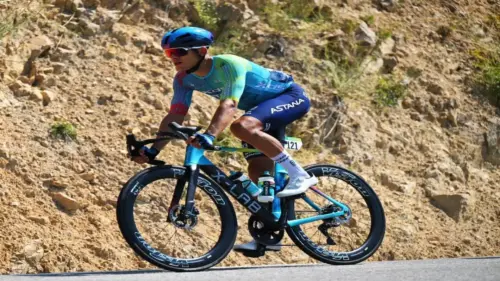
After an absence of more than twenty years, the Vuelta a Colombia—the nation’s most prestigious and historic cycling competition—is returning in full force to the roads of the Huila department. The 76th edition of the race will feature an elite peloton of more than 160 cyclists representing top-tier national and international teams.
Departmental authorities, led by Huila Governor Rodrigo Villalba Mosquera, alongside mayors from ten participating municipalities including Neiva, Garzón, and San Agustín, officially announced that regional preparations are finalized. The route spans four distinct stages designed to showcase the geographic diversity, agricultural power, and rich cultural heritage of the region to a national and global audience.
The initiative is not merely a sporting spectacle; it is a strategic economic and touristic campaign. By securing four stages through institutional partnerships with the Colombian Cycling Federation (Federación Colombiana de Ciclismo), the departmental government has positioned Huila at the epicenter of Latin American sports tourism for August 2026.
Chronology of the Event and Route Logistics
The operational blueprint for the Vuelta a Colombia’s passage through Huila involves rigorous logistical coordination, infrastructural enhancements, and scheduled road closures. Municipal leaders have laid out a precise timeline for the events taking place in early August.
Key Dates and Schedule of Operations
Saturday, August 8: Official start of operations and stage departures featuring comprehensive urban closures in Neiva.
Sunday, August 9: Transition stages highlighting secondary and primary transit corridors across central Huila.
Monday, August 10: Final local circuits, high-profile arrivals, and departures connecting key sub-regions like Garzón and San Agustín.
Neiva Urban Circuit and Road Closures
Director of Inderhuila, Felipe Victoria, detailed the exact transit corridors designated for the race. Authorities have mapped out specific routes to minimize public disruption while guaranteeing the safety of the 160+ athletes.
Stage Departures: The peloton will roll out at 8:00 AM from Carrera Cuarta directly in front of the Huila Government Palace. Cyclists will proceed down Carrera Cuarta to Calle Quinta, transition to Carrera Segunda via Calle Quinta, pass the iconic Madre Tierra (Mother Earth) monument, and seamlessly merge onto Ruta 45.
Stage Arrivals (via Garzón): For stages entering the capital from the south, the route crosses Puente Santander, navigates the Avenida 26 roundabout, moves along Calle 27, and concludes near Carrera 16 in the immediate vicinity of the Tenerife Military Battalion (Batallón Tenerife).
Supporting Data and Regional Context
Huila’s resurgence as a premier cycling destination is backed by significant geographical, economic, and tourism data. Regional leaders are leveraging the 76th Vuelta a Colombia to highlight the department’s transformation over the last two decades.
The Two-Decade Gap: It has been over 20 years since the Vuelta a Colombia last mapped a major route through Huila, and upwards of 30 years since municipalities like Garzón hosted both a start and finish line.
Participant Scale: Over 160 elite cyclists from international and domestic squads will test their endurance across Huila’s varied topography.
Ecological and Geographical Diversity: As Governor Villalba noted, Huila offers a rare microclimatic and topographic juxtaposition within Colombia:
Agriculture: Recognized as an emerging agricultural powerhouse and often styled as the "New Coffee Axis" of the country.
Topography: Features dramatic landscapes ranging from high-altitude snow-capped peaks (nevados) to hyper-arid desert terrain (such as the Tatacoa Desert).
Cultural Heritage: Anchored by San Agustín, home to the largest group of religious monuments and megalithic sculptures in Latin America, designated as a UNESCO World Heritage Site.
Official Responses and Stakeholder Perspectives
The return of the cycling tour has generated profound enthusiasm among regional administrators, security agencies, and civic leaders, all of whom emphasize a unified front to guarantee the event’s success.
Governor Rodrigo Villalba Mosquera
Reflecting on his previous gubernatorial term twenty years ago—when the race last graced Huila’s roads—Governor Villalba underscored the historic significance of the event:
"I had the fortune of serving as governor twenty years ago when the Vuelta a Colombia passed through here. Today, through deliberate management, this competition returns for the enjoyment of all Huilenses. We became financial sponsors, engaged directly with the Federation, and successfully secured four stages covering almost the entire department. What is our objective? To promote Huila, to let the country gaze upon our splendors. Huila is an agricultural powerhouse, the new Coffee Axis of the nation. We can proudly say that we possess snow-capped peaks and deserts, but our crown jewel remains San Agustín."
Felipe Victoria, Director of Inderhuila
Highlighting the inter-institutional synergy required to mount a security and operational apparatus of this magnitude, Victoria expressed gratitude to national forces:
"From the Departmental Government, we are immensely joyful to have articulated efforts with the Colombian Cycling Federation to bring this vital event to our roads. I want to thank the institutional backing offered by the Federation, the National Police, the National Army, and the mayoralties of the ten municipalities through which the competition will transit."
German Casagua, Mayor of Neiva
Speaking exclusively to La Nación and La Nación Stereo, Neiva’s municipal leader emphasized the urban readiness and economic catalysts accompanying the tour:
"The Vuelta a Colombia is a cycling competition we have anticipated for a long time in our department and, naturally, within our city of Neiva. These types of events are crucial because they elevate our national visibility. Furthermore, such spectacles undoubtedly dynamize our economy, activate our restaurants and hotels, and provide undeniable benefits. Regarding infrastructure, we have accelerated road improvements. We haven’t stopped; we are working not only on the specific routes of this cycling competition but continuing to positively impact neighborhoods and primary arteries across our city."
Francisco Calderón, Mayor of Garzón
Garzón’s municipal executive praised the foresight of the departmental administration regarding the local economic spillover:
"I believe it was a highly astute decision by the governor to sponsor the Vuelta a Colombia. It elevates our department’s visibility, unlocks developmental opportunities, and positions Huila as a cultural, tourist, and sports promotion benchmark. For Garzón, after thirty years, hosting both the arrival and departure of a Vuelta stage will tremendously invigorate our hotel, restaurant, and transport sectors."
Heber Nel Muñoz, Mayor of San Agustín
As the guardian of Huila’s premier archaeological and natural treasure, Mayor Muñoz emphasized the global marketing value of the route:
"It is profoundly special that this Vuelta a Colombia traverses Huila and that the second stage commences in San Agustín. Our municipality is a World Heritage site and a fluvial star. Through these collaborative activities, we aim to project San Agustín outward to Colombia and the global stage."
Implications for Tourism, Economy, and Infrastructure
The hosting of the 76th Vuelta a Colombia carries multi-layered implications for the department of Huila, translating short-term sporting excitement into long-term socioeconomic growth.
1. Economic Dynamization and the Hospitality Sector
The influx of 160+ athletes, technical staffs, international media, and cycling enthusiasts will saturate regional lodging, dining, and transport networks. Small and medium-sized enterprises (SMEs) across Neiva, Garzón, San Agustín, and intermediate towns are projected to experience a major revenue surge during early August. Local chambers of commerce have encouraged businesses to optimize service quality to convert temporary sports tourists into recurring leisure travelers.
2. Infrastructure Acceleration
The demands of hosting an internationally televised sporting event have served as a catalyst for urban renewal. Municipalities like Neiva have fast-tracked road resurfacing projects, urban beautification, and traffic-flow restructuring. Beyond the immediate requirements of the cycling route, these infrastructural interventions leave behind improved transit corridors that benefit local commuters permanently.
3. Repositioning Huila on the National and Global Tourism Map
For decades, Huila’s immense tourism assets—spanning the archaeological wonders of San Agustín, the paleontological and astronomical draws of the Tatacoa Desert, and the burgeoning agritourism of the Coffee Axis—have occasionally been overshadowed by neighboring regions. By broadcasting four full stages across diverse Huilense landscapes, the Vuelta a Colombia acts as a high-definition, multi-hour commercial broadcast for the department, inspiring domestic and international travelers to explore Colombia’s south.
4. Sports Culture and Youth Engagement
Beyond economic and touristic metrics, the return of elite cycling serves an invaluable cultural function. By bringing top-tier national athletic competition directly to local streets, the event ignites passion among youth demographics, encouraging grassroots athletic participation, healthy lifestyles, and the emergence of the next generation of Colombian cycling legends from the Andean-Amazonian foothills of Huila.




Leave a Reply