

Main Facts
Few mechanical configurations in the history of the internal combustion engine have captured the automotive imagination quite like the Wankel rotary engine. Unlike traditional piston engines that rely on vertical, reciprocating motion to turn a crankshaft, the Wankel engine uses triangular rotors spinning within an epitrochoid-shaped housing. This design trades the complex valvetrain, camshafts, and multitude of moving parts of a conventional powerplant for extreme simplicity, a remarkably compact footprint, low weight, and an exceptionally high power-to-displacement ratio.
While virtually every major global automaker—including General Motors, Mercedes-Benz, NSU, and Citroën—experimented with Felix Wankel’s radical concept during the late 1960s and 1970s, only one manufacturer possessed the stubborn tenacity to champion, refine, and produce it on a mass scale: Mazda.
For decades, the Japanese manufacturer pushed the boundaries of rotary technology, culminating in legendary sports cars like the RX-7 and RX-8. However, the Wankel engine’s inherent thermodynamic inefficiencies, high oil consumption, and notoriously difficult emissions management ultimately forced its temporary retirement from the high-performance passenger car market.
Yet, the saga of the rotary engine is far from over. In a surprising yet brilliant twist of modern engineering, Mazda has breathed new life into the Wankel architecture. In the modern era, the rotary engine has been reimagined not as a direct propulsion source, but as a compact electricity generator in the Mazda MX-30 e-Skyactiv R-EV plug-in hybrid. This evolution proves that while emissions standards and electrification are reshaping the automotive landscape, Mazda’s engineering ethos remains inextricably linked to the rotary heartbeat.
Chronology: A History of Innovation, Glory, and Adaptation
The journey of the rotary engine is a tale defined by bold engineering leaps, racing glory, and regulatory battles. Its timeline spans nearly a century of automotive development:
- 1929: German engineer Felix Wankel successfully patents the basic operating principles of the rotary engine design, laying the groundwork for decades of mechanical experimentation.
- 1961: Mazda (then Toyo Kogyo) signs a historic technical partnership agreement with NSU to develop and commercialize the Wankel engine, recognizing its potential to differentiate the Japanese brand globally.
- 1967: The Mazda Cosmo Sport becomes the world’s first production automobile powered by a twin-rotor Wankel engine, instantly elevating Mazda’s reputation for daring engineering.
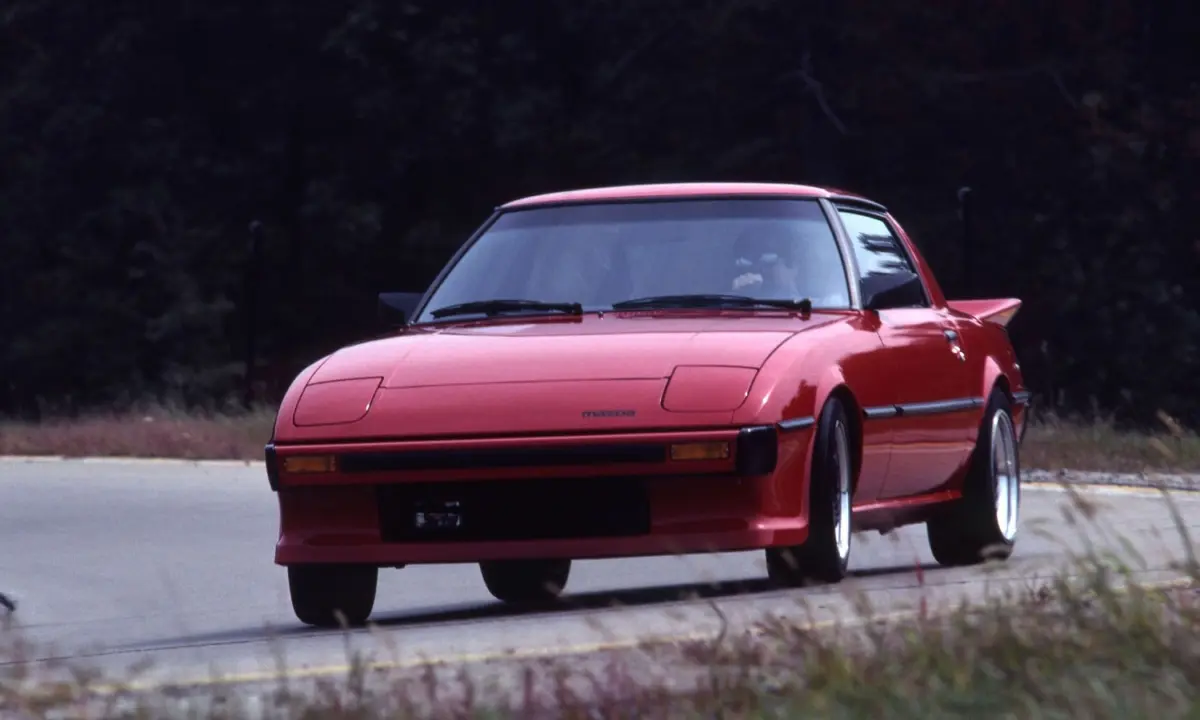
- 1978: The birth of the Mazda RX-7. Armed with lightweight rotary power, the front-engine, rear-wheel-drive sports car captures the hearts of driving enthusiasts worldwide and establishes Mazda’s dominance in endurance racing, including a historic overall victory at the 24 Hours of Le Mans in 1991 with the 787B.
- 1992–2002: The golden era of the rotary sports car reaches its peak with the production of the third-generation Mazda RX-7 (FD3S). Featuring a twin-turbocharged 13B-REW engine, it delivers supercar-beating performance from a featherlight package.
- 2003–2012: The Mazda RX-8 enters the market equipped with the naturally aspirated Renesis rotary engine. Despite winning numerous accolades, tightening global emissions standards and sluggish sales spell the end of mass-production rotary sports cars.
- 2023: Mazda officially resurrects the Wankel engine with the introduction of the MX-30 e-Skyactiv R-EV. In this configuration, a newly developed single-rotor engine serves strictly as a range-extending generator to charge the vehicle’s high-voltage battery, bridging the gap between historical heritage and zero-emissions mobility.
Supporting Data: Engineering Metrics and Specifications
To understand why engineers remain both enamored and frustrated by the Wankel engine, one must examine its mechanical metrics. The advantages and drawbacks of the rotary architecture are starkly visible when evaluated through data:
The 13B-REW Engine (Mazda RX-7 FD)
- Configuration: Two-rotor, water-cooled Wankel rotary engine.
- Displacement: Equivalent to 1.3 liters (654 cc per chamber).
- Weight: Approximately 107 kg (complete with turbocharging infrastructure), offering a weight savings of dozens of kilograms compared to contemporary V6 or V8 engines of equivalent output.
- Power Output: Officially rated at 276 hp (280 PS) for the Japanese domestic market due to a "gentlemen’s agreement" among manufacturers, though real-world tuning potential frequently exceeded 300 hp.
- Redline: An astonishing 8,000 to 9,000 RPM, allowing for linear power delivery and an addictive, sewing-machine-like exhaust shriek.
The MX-30 e-Skyactiv R-EV Generator
- Configuration: Single-rotor Wankel engine (designated 8C).
- Displacement: 0.8 liters (830 cc).
- Power Output: 74 hp (55 kW), acting solely as a stationary generator.
- Efficiency and Emissions: While optimized to operate at a constant, highly efficient RPM range to recharge the battery, the vehicle’s WLTP combined fuel consumption sits at roughly 15.4 km/l (approx. 6.5 L/100km or 36 mpg US)—a figure that reflects the inherent thermodynamic challenges of the combustion chamber’s elongated shape.
Official Responses and Industry Perspectives
Mazda’s corporate leadership has consistently maintained that the rotary engine is more than just a historical footnote; it is a core pillar of the company’s rebellious engineering identity—often referred to internally as the "Mazda Spirit."
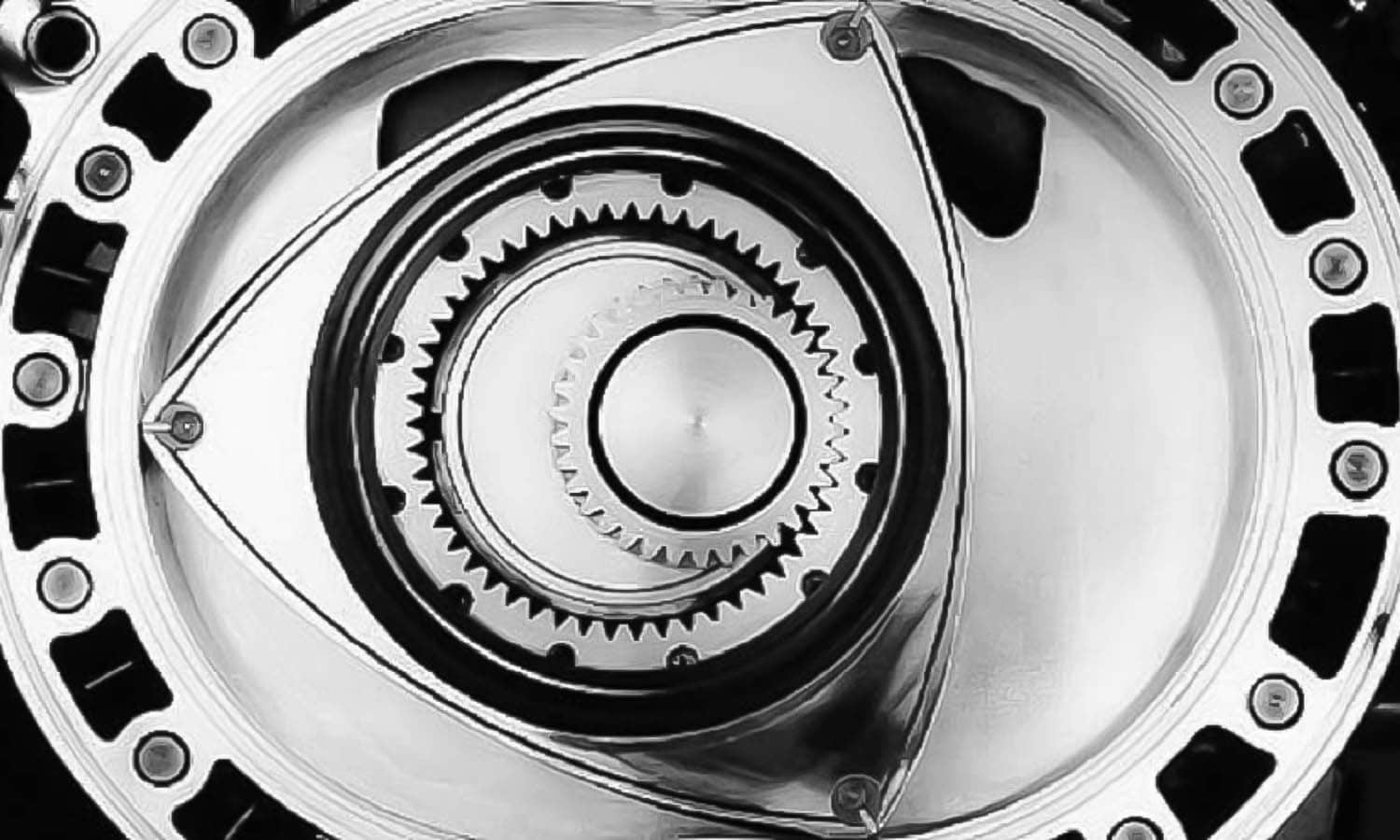
When questioned about the decision to bring back the Wankel engine in an era dominated by pure battery-electric vehicles (BEVs), Mazda executives have emphasized flexibility and emotional connection. During the launch of the MX-30 e-Skyactiv R-EV, Chief Engineers noted that packaging constraints and weight efficiency made the rotary engine the ideal choice for a range-extending hybrid. Because a rotary engine lacks pistons, connecting rods, and a crankshaft, it generates virtually zero primary vibrations, making its operation exceptionally smooth when tucked under the compact hood of a crossover.
Furthermore, industry analysts have pointed out that Mazda’s continued investment in the Wankel engine leaves the door open for future high-performance applications. With advancements in synthetic fuels (e-fuels) and hydrogen combustion technologies, executives have repeatedly hinted that a lightweight sports car powered by a hydrogen-fueled or carbon-neutral rotary engine is not entirely out of the question. Mazda refuses to let the rotary legacy die, viewing it as a technological asset that sets them apart from risk-averse competitors.
Implications: The Legacy and Future of the Rotary Engine
The trajectory of the Wankel engine—from a radical German patent to Mazda’s high-revving sports car icons, and finally to an eco-conscious range extender—carries profound implications for the future of automotive propulsion.
First, it highlights the importance of lateral thinking in engineering. While the automotive industry has largely converged on standardized internal combustion layouts and battery-electric platforms, Mazda’s enduring commitment to the rotary engine demonstrates that alternative thermodynamic paths still hold value. The challenges that plagued the RX-7 and RX-8—such as apex seal wear, high oil consumption, and poor thermal efficiency—were largely mitigated in the MX-30 by utilizing the engine exclusively as a stationary generator running at optimal thermal loads.
Second, the survival of the Wankel engine proves that emotional resonance still matters to consumers. In an increasingly homogenized market of crossover utility vehicles and silent electric cars, the distinct mechanical character, history, and sound of a rotary-powered machine evoke a passionate community of purists and collectors.
Ultimately, Mazda has transformed the Wankel engine from an environmental liability into a badge of honor. By adapting the rotary concept to meet modern electrification and sustainability demands, the company has ensured that the spirit of Felix Wankel’s invention will continue to spin for generations to come.

Leave a Reply