

By Global Culture & Music Desk
Published: October 2023
Main Facts: The Legacy of a Musical Titan
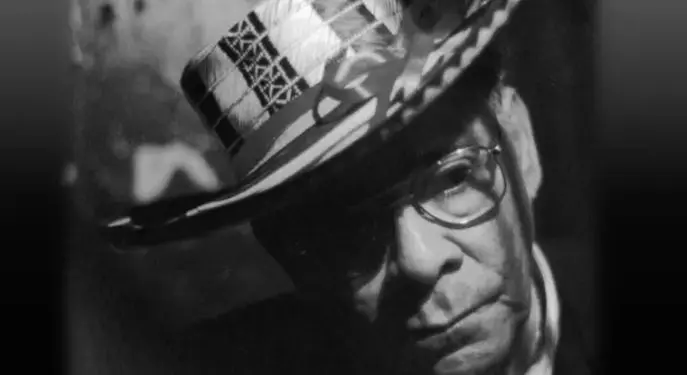
In the sun-drenched, palm-fringed lowlands of Colombia’s Córdoba department, where the sluggish waters of the Sinú River carve a path toward the Caribbean Sea, music is not merely a pastime; it is the lifeblood of the community. Among the pantheon of cultural icons who captured the soul of this tropical paradise, few shine as brightly or as uniquely as Pablo José Flórez Camargo—universally revered by his people simply as "Pablito."
A composer, virtuoso guitarist, and evocative vocalist, Flórez Camargo stands as one of the most prolific and influential musical architects in Colombian history. Over a career spanning decades, he penned at least one thousand compositions, effortlessly navigating the complex rhythms of porros, cumbias, boleros, and vallenatos. His profound lyrical depth and unmatched melodic intuition earned him prestigious titles that echo through Latin American folklore to this day: "The Bard of the Porro" (Juglar del Porro) and "The Poet of the Sinú" (Poeta del Sinú). Admirers and cultural historians have also affectionately dubbed him "The Bard of Nostalgia" and "The Jocular Singer-Songwriter."
Yet, long before his compositions were immortalized by legends like Carlos Vives, Totó la Momposina, and Alfredo Gutiérrez, Pablito’s hands were shaped by physical labor. Born in Ciénaga de Oro on June 27, 1926, he spent his early years working alongside his father as a bricklayer and a blacksmith. It was during these formative, dust-filled days of blue-collar labor that his artistic journey began to take root. Taught the basics of construction by day, young Pablo began taking guitar lessons by night from Johnny Sáez, a local maestro in Ciénaga de Oro.
What began as a quiet escape from manual labor blossomed into a historical calling. Flórez Camargo did not just write songs; he crafted an auditory archive of the Caribbean coastal identity, blending the rustic heat of the countryside with the sophisticated syncopations of traditional brass bands. His pioneering decision to introduce the acoustic guitar into the traditionally brass-heavy porro genre transformed Colombian music forever, proving that a single wooden instrument could carry the weight, majesty, and narrative power of an entire folklore.
Chronology: From the Forge to National Immortality
The trajectory of Pablo José Flórez Camargo is a classic narrative of artistic perseverance, serendipitous encounters, and ultimate vindication.
1. Early Life and the Apprenticeship (1926–1940s)
Born on June 27, 1926, in Ciénaga de Oro, Córdoba, Flórez grew up immersed in the rich, multicultural sounds of the Sinú Valley—a melting pot of indigenous flute traditions, African percussion, and Spanish string arrangements. While working as a mason and blacksmith to support his family, he dedicated his free hours to mastering the guitar under the tutelage of Johnny Sáez.
2. The Formative Years in Orchestras (Late 1940s–1950s)
Flórez’s transition into professional music began when he joined forces with his coterminous musical explorer, Antolín Lenes. Initially serving as a drummer in the Combo Orense, Flórez quickly demonstrated a vocal talent that caught the attention of industry heavyweights.
Antonio Fuentes, the legendary founder of Discos Fuentes, recognized Flórez’s exceptional vocal timbre and placed him alongside Lucy González, known as the "Cieguita de Oro" (The Little Blind Girl of Gold), in his stable of artists. However, creative friction soon arose. Fuentes rejected one of Flórez’s compositions, deeming it insufficiently commercial for the mainstream market.
Undeterred, Flórez and Lenes parted ways with Discos Fuentes, taking the rejected song to rival label Codiscos. That rejected track was "La aventurera" (The Adventurer). Released by Lenes and his Combo Orense with Flórez on lead vocals, the vallenato paseo became an instant, runaway masterpiece.
3. The Golden Era of Composition (1960s–1980s)
Freed by the success of his songwriting, Flórez entered his most productive decades. He penned an astonishing catalogue of tracks that defined Colombian radio and dance floors, including:
- "Los sabores del porro"
- "Fiesta vieja"
- "Cabeza’e gato"
- "Goza Plinio Sierra"
- "Tan lejos de ti"
- "La ciroma"
- "María Marzola"
- "Sinú caliente"
- "El gavilán"
- "Los sabores de María"
- "Con el agua a las rodillas"
- "La negra Facta"
- "La cumbia está herida"
- "Lloró Pelayo"
- "La muerte de María Varilla"
In 1986, his instrumental fandango "Tres clarinetes" won the coveted award for Best Unpublished Theme at the prestigious Festival del Porro de San Pelayo, cementing his structural mastery of traditional Caribbean wind-band music.
4. Solo Recognition and Late-Career Renaissance (1980s–2010s)
Beginning in the 1980s, Flórez stepped firmly into the spotlight as a solo artist, recording for Sonolux and collaborating on special archival projects with the Secretariat of Culture of Córdoba, often alongside his own children.
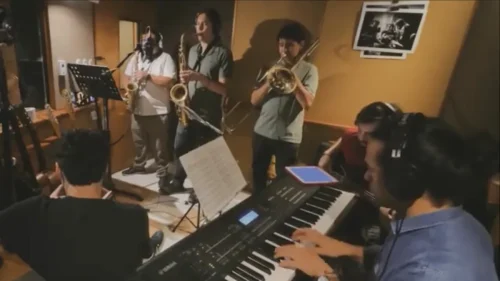
In his later years, he experienced a profound artistic renaissance, serving as a living bridge between the golden age of Colombian tropical music and the contemporary alternative scene. In 2005, he recorded a landmark album with Alé Kumá, a roots project led by double bassist Leonardo Gómez. He also forged deep mentorships and friendships with modern folkloric interpreters like Mónica Giraldo and María Mulata.
The culmination of his life’s work arrived in 2010, when the Colombian government bestowed upon him the Grand Order of Masters of Cultural Heritage in Colombia, sharing the honor with fellow musical icons León Cardona and Jairo Varela.
Pablo José Flórez Camargo passed away on December 14, 2011, in Montería, leaving behind an irreplaceable void in the nation’s cultural fabric.
Supporting Data & Artistic Analysis
To fully comprehend the magnitude of Flórez’s output, one must examine the quantitative and qualitative dimensions of his work. Scholars and biographers have analyzed his structural contributions to Colombian folklore with rigorous precision.
The Monument of "La aventurera"
The cultural impact of "La aventurera" extends far beyond vinyl records and streaming platforms. The song’s narrative—inspired by the arrival and departure of a captivating young woman named Ninfa del Valle from Ciénaga de Oro—is so deeply woven into regional identity that Montería erected a dedicated public statue representing her story.
Data compiled by national music historians places "La aventurera" among the most frequently covered vallenatos in Colombian history. Its lineage of interpreters bridges generations, stretching from Antolín Lenes’ original 78 RPM recording to modern renditions by contemporary superstars like Carlos Vives and acoustic songstresses like Mónica Giraldo.
Breaking New Ground: The Guitar in the Porro
According to Carlos Marín Calderón, author of the definitive biography Pablo Flórez, juglar del porro cantado (Pablo Flórez, Bard of the Sung Porro), Flórez achieved two revolutionary milestones in Caribbean music:
- The Guitarization of the Porro: Before Flórez, the porro was viewed almost exclusively as a genre for large, roaring brass bands (pelayeras) or big band orchestras. Flórez had the audacity and the technical skill to strip the genre down to its acoustic core, proving that the intricate counterpoint and infectious rhythms of the porro could be delivered with masterclass intimacy on a classical guitar.
- The Introduction of Narrative Lyrics: Traditionally, the porro was primarily an instrumental dance form or featured light, repetitive chants. Flórez insisted on writing rich, highly descriptive, and socially resonant poetry for the genre. As Marín Calderón notes, Flórez "defended the idea that the message caused a greater impact among the public and within folklore itself."
Renowned writer and musicologist Edgardo José Esquivia captured this essence perfectly in his book Ciénaga de Oro y su música (Ciénaga de Oro and Its Music):
" além de ser guitarra, sombrero y corazón, es un historiador de nostalgias y de testimonios de los tiempos idos de una región llamada Sinú. Todas las anécdotas cercanas a su corazón y a su tierra las llevó a su guitarra y la convirtió en obras en donde lo popular con toda su carga ardiente y picaresca se manifiesta con intensidad y solvencia."
(Translation: "Aside from being a guitar, a hat, and a heart, he is a historian of nostalgias and testimonies of times past from a region called Sinú. All the anecdotes close to his heart and his land he took to his guitar and turned into works where the popular, with all its fiery and picaresque load, manifests itself with intensity and solvency.")
Official Responses and Institutional Tributes
The passing of Pablito in December 2011 prompted an outpouring of grief and high-level institutional recognition across Colombia, reflecting his status as a national treasure.
Upon receiving news of his death, the Ministry of Culture of Colombia issued a formal resolution highlighting his indispensable role in preserving the oral traditions of the Caribbean coast. Ministry officials noted that Flórez did not merely compose songs; he constructed an emotional map of the Sinú River basin that would guide future generations of Colombian artists.
Local governments in Córdoba and the municipal administration of Montería declared three days of official mourning, holding public vigils where musicians gathered in the plazas to play acoustic versions of "Los sabores del porro" and "La aventurera."
When he was awarded the Grand Order of Masters of Cultural Heritage a year prior to his passing, the award committee released a joint statement emphasizing:
"The legacy of Pablo Flórez represents the absolute pinnacle of Caribbean storytelling. In honoring him alongside maestros like León Cardona and Jairo Varela, the Colombian state recognizes those rare individuals whose personal creativity became indistinguishable from the collective soul of the nation."
Collaborators and younger artists whom he mentored also shared heartfelt tributes. The contemporary folk artist María Mulata remarked during a retrospective concert that "Pablito taught us that true modernity in music does not come from abandoning our roots, but from digging deeper into the mud of our own history until we strike gold."
Implications: The Enduring Echo of the Sinú Poet
The story of Pablo José Flórez Camargo offers critical lessons for contemporary Latin American cultural preservation. In an era dominated by hyper-commercialized, algorithm-driven music production, the life of the "Bard of the Porro" serves as a powerful reminder of the enduring strength of organic, place-based storytelling.
1. Intergenerational Dialogue
Flórez’s career proves that traditional folklore is not a static museum piece, but a living, breathing dialogue. By eagerly collaborating with younger musicians late into his life—such as his work with Alé Kumá in 2005—Flórez ensured that his complex rhythmic sensibilities were passed down directly to the architects of modern Colombian alternative music. Today, indie folk artists and pop stars alike continue to mine his catalog for inspiration, proving that great songwriting transcends generational divides.
2. The Valorization of Regional Identity
By elevating the vernacular experiences of Ciénaga de Oro and the Sinú Valley into universal poetry, Flórez challenged the historical cultural centralization of Bogotá and the major Andean urban centers. He demonstrated that regional Caribbean narratives—the smell of the river, the sweat of the blacksmith’s forge, the heartache of transient lovers—possess profound universal resonance.
3. Preserving the Unsung Custodians
As Colombia continues to grapple with the preservation of its intangible cultural heritage, the life of Pablito underscores the urgent need to support foundational artists while they are alive. While his posthumous honors—from the Montería statue to national governmental decrees—are richly deserved, cultural critics argue that the true homage to Flórez lies in the continued education of youth in the traditional rhythms of the porro and fandango.
Ultimately, Pablo José Flórez Camargo remains what Edgardo José Esquivia so aptly called him: a historian of nostalgias. Long after the last brass band finishes its final set in the plazas of San Pelayo, and long after the waters of the Sinú complete their journey to the sea, the acoustic guitar of Pablito will continue to strum through the national conscience—a timeless testament to a blacksmith who forged not just iron, but the eternal soundtrack of the Colombian soul.


Leave a Reply