

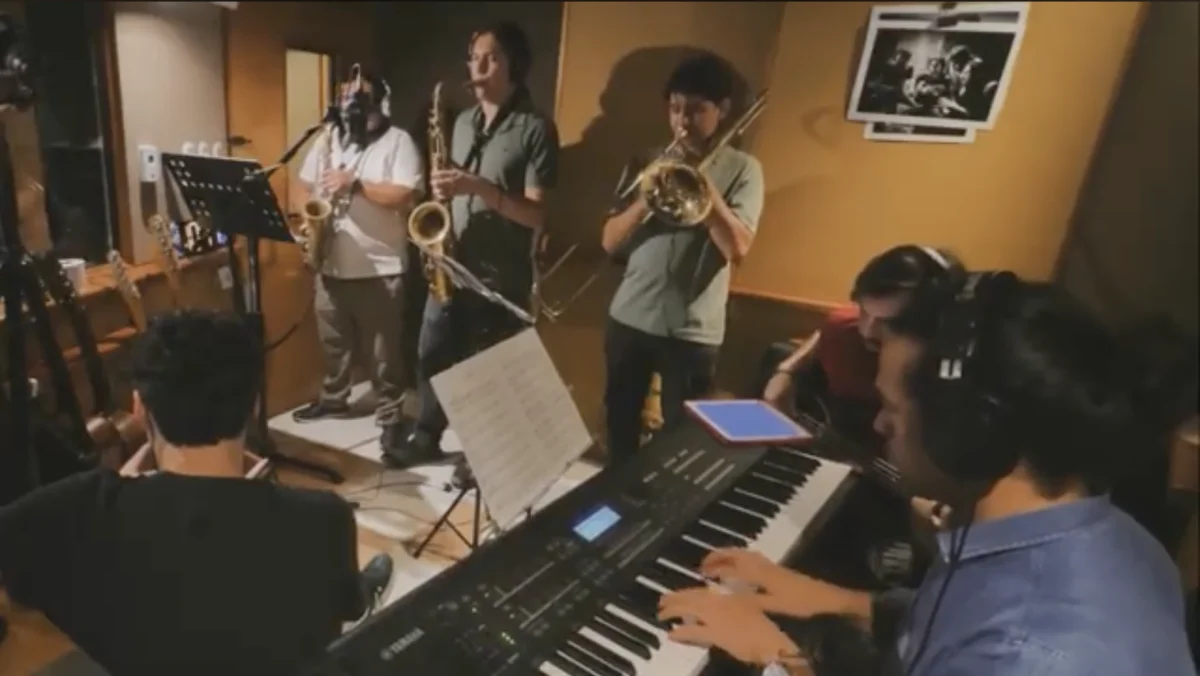
BOGOTÁ, Colombia — In the ever-evolving landscape of contemporary Latin American music, few movements are as vibrant or as critically compelling as the fusion of traditional Caribbean rhythms with sophisticated, modern harmonic structures. At the forefront of this sonic renaissance is Diego Barrios, an accomplished saxophonist and composer whose artistic journey spans the cultural corridors of Colombia and Mexico.
Barrios’s latest release, the evocative bullerengue titled “Una vez más,” stands as a masterclass in cross-genre dialogue. Seamlessly blending the rich, ancestral heritage of the Colombian Caribbean with the improvisational freedom and intricate voicings of modern jazz, Barrios and his dynamic sextet have crafted a piece that honors the past while aggressively pushing toward the future.
Originally highlighted on Demo Estéreo—Radio Nacional de Colombia’s premier digital platform dedicated to unearthing and amplifying emerging musical talent—“Una vez más” has quickly captured the attention of critics, purists, and contemporary music enthusiasts alike. This comprehensive report explores the anatomy of the track, the background of its creator, the collective power of his ensemble, and the broader implications of this modern-folkloric synthesis on the Latin American music scene.
1. Main Facts
At its core, “Una vez más” is more than just a song; it is a cultural and sonic intersection. Composed entirely by Diego Barrios, the track takes the traditional bullerengue—a rhythmic, vocal-driven musical and dance tradition deeply rooted in the Afro-descendant communities of the Colombian Caribbean—and recontextualizes it through the lens of modern jazz and contemporary chamber music.
- The Artist: Diego Barrios, a native of Bucaramanga, Colombia, who has forged a bi-national career bridging the musical ecosystems of Colombia and Mexico.
- The Project: The Diego Barrios Sextet, a forward-thinking ensemble formed in 2025 that serves as the primary vehicle for Barrios’s original compositions and bespoke arrangements.
- The Sound: A meticulously engineered bridge connecting the harmonic complexity, extended chords, and improvisational ethos of jazz with the pulsating, organic percussion and syncopated grooves of the Colombian Caribbean.
- The Ensemble Members:
- Diego Barrios – Saxophones
- Camilo Torres – Saxophones
- Daniel Poveda – Trombone
- Jorge Ortiz – Keyboards
- Santiago Esguerra – Electric Bass
- Leo Parra – Drums
- The Launchpad: The track made its strategic debut on Demo Estéreo, cementing its status as a vital piece of new Colombian independent music before securing broader national airplay and digital streaming traction.
2. Chronology: The Evolution of Diego Barrios and the Sextet
To understand the sophisticated architecture of “Una vez más,” one must trace the artistic trajectory of its creator. Barrios’s musical evolution is a story of geographical movement, academic rigor, and relentless cross-pollination.
Early Foundations and International Immersion
Born in Bucaramanga, a city nestled in the Andean region of Colombia known more for its traditional música carranguera and Andean string ensembles than coastal rhythms, Barrios exhibited an early fascination with the saxophone. Drawn to the instrument’s expressive capabilities and its central role in both classical and jazz idioms, he dedicated his youth to rigorous technical study.
Seeking to broaden his artistic horizons, Barrios embarked on a transformative period of his career living and working in Mexico. The vibrant cultural scene of Mexico City and its surrounding artistic hubs exposed him to a vast array of Latin American musical traditions. In Mexico, Barrios did not merely study jazz; he immersed himself in the Latin American songbook, analyzing how folkloric elements could be successfully translated into instrumental and small-ensemble formats without losing their emotional core.
The Return to Colombia and the Formation of the Sextet (2025)
Upon returning to Colombia, Barrios recognized a burgeoning appetite for contemporary music that defied rigid genre classifications. The Colombian jazz scene, particularly in hubs like Bogotá, Medellín, and Cartagena, was experiencing a golden age of hybridization, where young musicians trained in European and North American academic traditions were eagerly turning their gaze toward the musical wealth of the Pacific and Caribbean coasts.
In response to this creative climate, Barrios formally launched his sextet format in 2025. This lineup was not assembled haphazardly; it was the result of years of musical collaboration with peers who shared his vision of a fluid, borderless musical language.
By integrating a dual-saxophone front line with a trombone, the ensemble unlocked a rich, horn-heavy texture reminiscent of classic jazz hard-bop groups, yet capable of the nuanced microtonal bending required for folkloric interpretation. Supported by a rhythm section consisting of keyboards, electric bass, and drums, the sextet quickly established a reputation for tight, high-energy performances that balanced intellectual rigor with visceral, danceable grooves.
Festival Circuits and Critical Acclaim
As a cohesive unit, the Diego Barrios Sextet quickly moved beyond local club gigs, securing slots at prestigious regional events. A notable milestone in the ensemble’s trajectory was their participation in the Voces del Jazz festival in Cartagena, a major cultural gathering that celebrates the intersection of Caribbean coastal traditions with national and international jazz expressions.
Performances at Voces del Jazz served as a crucible for the group, testing their ability to present complex arrangements to audiences deeply familiar with the source material. The positive reception of these live sets laid the groundwork for the recording and release of original material, culminating in the genesis of “Una vez más.”
3. Supporting Data: Anatomy of the Sound and Ensemble Profile
The brilliance of “Una vez más” lies in its execution. To appreciate how a bullerengue—traditionally performed a cappella with handclaps and a tambor alegre—can be transformed into a modern jazz composition, one must examine the specific contributions of the musicians involved and the theoretical framework constructed by Barrios.
The Harmonic and Rhythmic Blueprint
In traditional bullerengue, the rhythm is relentless, cyclical, and deeply hypnotic. Barrios preserves this hypnotic quality while subverting listener expectations through advanced harmonic framing. Instead of standard diatonic progressions, the underlying chords provided by Jorge Ortiz’s keyboards utilize extended voicings (minor ninths, eleventh chords, and altered dominants) that create a palpable tension.
Over this sophisticated harmonic bed, the front line—consisting of Barrios and Camilo Torres on saxophones and Daniel Poveda on trombone—weaves countermelodies that mirror the call-and-response vocal structures typical of coastal singing. The result is a sonic illusion: the music feels simultaneously ancient and hyper-modern.
Meet the Ensemble: The Personnel Behind the Music
A meticulous examination of the Diego Barrios Sextet reveals a powerhouse lineup of contemporary Colombian jazz talent:
- Diego Barrios (Saxophones / Composition): As the primary composer and arranger, Barrios acts as the architect of the sound. His saxophone playing is characterized by a warm, resonant tone, precise intonation, and an improvisational vocabulary that nods to jazz legends like Wayne Shorter and Joe Henderson while remaining anchored in Latin phrasing.
- Camilo Torres (Saxophones): Providing harmonic counterweight and soaring countermelodies, Torres’s interplay with Barrios forms the melodic backbone of the sextet. The dual-saxophone arrangements create a rich, choral density that expands the perceived size of the ensemble.
- Daniel Poveda (Trombone): Poveda’s trombone work introduces a brassy warmth that bridges the gap between the reedy upper registers of the saxophones and the low-end foundation. His soloing style combines aggressive slide-work with lyrical phrasing, adding grit and texture to the arrangements.
- Jorge Ortiz (Keyboards): Navigating between acoustic piano textures and modern synth pads, Ortiz provides the harmonic cement that holds the complex arrangements together. His chordal choices are crucial in translating folkloric modal structures into a jazz-friendly environment.
- Santiago Esguerra (Electric Bass): Eschewing the traditional upright bass in favor of the electric bass, Esguerra delivers a punchy, articulate low-end. His basslines respect the syncopated bass drum patterns of Caribbean styles while integrating walking-bass concepts and fusion-era grooves.
- Leo Parra (Drums): Perhaps the most challenging role in the ensemble belongs to Parra. Tasked with merging the kit drumming of modern jazz with the polyrhythmic demands of the Colombian Caribbean, Parra utilizes a hybrid setup that captures the essence of traditional percussion instruments through cymbals, snare snaps, and bass drum accents.
4. Official Perspectives and Critical Reception
The arrival of “Una vez más” has generated considerable buzz within Colombian cultural circles, largely due to its endorsement by national tastemakers and public broadcasting institutions dedicated to independent art.
Radio Nacional de Colombia and Demo Estéreo
The track’s trajectory from studio concept to national broadcast standard highlights the vital role played by public media in supporting independent musicians. Radio Nacional de Colombia, through its digital incubator Demo Estéreo, has consistently served as the primary gateway for artists working outside the commercial mainstream.
In reviewing the track’s debut, cultural programmers and music journalists emphasized the importance of platforms that bypass commercial formulas. Demo Estéreo was specifically designed to give visibility to artists who refuse to choose between academic discipline and popular roots. By premiering “Una vez más,” the station validated Barrios’s artistic thesis: that contemporary Colombian music does not need to dilute its folkloric roots to appeal to sophisticated, international jazz audiences.
The Artist’s Vision: Bridging Worlds
In interviews and artist statements accompanying the release, Diego Barrios has consistently articulated a philosophy of musical inclusivity. Speaking on the conceptual foundation of the sextet and his bi-national experiences, Barrios has noted that music functions best as a translator of lived experience.
"When you live between countries like Colombia and Mexico, your sense of identity expands," cultural analysts note regarding Barrios’s artistic statements. "You realize that folkloric expressions are not museum pieces frozen in time; they are living, breathing languages capable of absorbing new vocabulary without losing their native accent."
This perspective has resonated deeply with cultural critics in both nations, who view Barrios as part of a new wave of Latin American composers who are dismantling the artificial barriers between "high art" (jazz/classical) and "popular culture" (folkloric dance music).
5. Cultural Implications and the Future of Colombian Jazz
The release of “Una vez más” and the ongoing work of the Diego Barrios Sextet carry significant implications for the broader Latin American music industry, touching upon cultural preservation, globalization, and the economics of independent art.
The Globalization of Colombian Folklore
For decades, traditional Colombian coastal rhythms like cumbia, porro, and bullerengue were largely viewed through a lens of regional folklore or packaged for mass-market tropical consumption. However, the 21st century has witnessed a profound paradigm shift. Musicians with advanced conservatory training are returning to these ancestral rhythms not merely to quote them, but to deconstruct and rebuild them.
By treating the bullerengue as a complex rhythmic matrix worthy of jazz improvisation, Barrios and his contemporaries are elevating these genres to the global chamber and jazz stage. This artistic elevation helps combat cultural homogenization, proving that local traditions possess the harmonic and rhythmic resilience to withstand cross-cultural experimentation.
Challenges for Independent Ensembles in Latin America
Despite the critical acclaim surrounding projects like the Diego Barrios Sextet, significant structural challenges remain. Operating a six-piece acoustic-electric ensemble in the current economic climate requires immense logistical coordination and financial sacrifice. Jazz and experimental fusion rarely enjoy the immediate commercial returns of urban reggaeton or commercial pop, making institutional support, festival bookings, and digital visibility platforms critical to their survival.
The success of “Una vez más” on platforms like Radio Nacional de Colombia demonstrates that an audience for sophisticated, roots-infused jazz does exist—it simply requires intentional curation and state-supported or public-interest media amplification to break through the noise of algorithm-driven streaming giants.
Looking Ahead: What’s Next for the Diego Barrios Sextet?
With the momentum generated by “Una vez más” and their festival appearances, the Diego Barrios Sextet is poised for further expansion. Plans for future studio recordings, expanded national tours, and potential international collaboration projects are already underway.
As Barrios continues to refine his compositional voice—exploring further intersections between Andean textures, Caribbean polyrhythms, and international jazz harmony—his work remains a beacon for a new generation of Latin American musicians. They are proving, note by note, that the future of music lies not in the erasure of borders, but in the fearless, respectful exploration of where they meet.
“Una vez más” by the Diego Barrios Sextet is available now across major streaming platforms. Listeners can continue to discover emerging Colombian talent by tuning into Demo Estéreo via Radio Nacional de Colombia.




Leave a Reply