

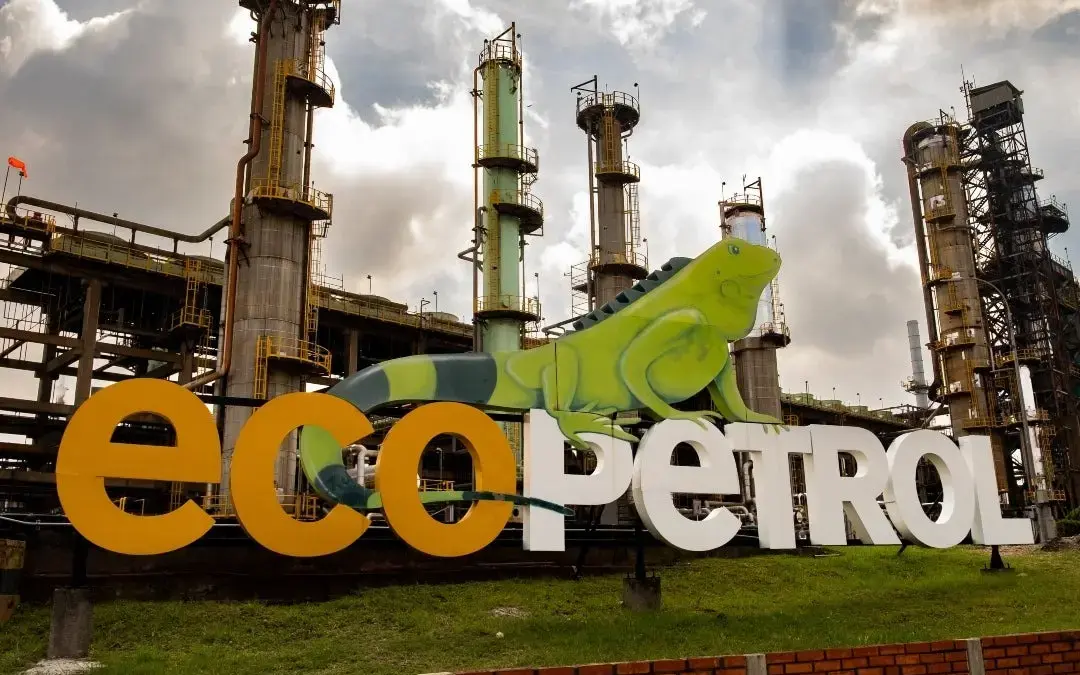
BOGOTÁ — The corporate governance and stock market valuation of Ecopetrol, Latin America’s energy powerhouse, have been plunged into a deep institutional limbo. A sprawling web of corruption allegations—ranging from the alleged sale of high-level corporate vice presidencies to multi-million-dollar kickbacks for lucrative infrastructure, cybersecurity, and hydrocarbon-trading contracts—has triggered an unprecedented internal crisis.
According to explosive investigative data revealed by the Unidad Investigativa of El Tiempo, a comprehensive forensic audit is currently underway. Estimated to take between four to eight months to complete, the audit is meticulously gathering and securing a voluminous digital and testimonial archive under strict chain-of-custody protocols. This archive includes thousands of internal emails, encrypted chat logs, and confidential testimonies from top-tier executives across the parent company and its most strategic subsidiaries, including logistics giant Cenit, transmission leader ISA, and Ecopetrol’s critical operational outpost in Houston, Texas.
The compounding scandals comprise at least 32 macro-investigative cases, painting a picture of systemic institutional capture, political favoritism, and parallel contracting networks that threaten to destabilize Colombia’s premier state-owned enterprise.
1. Main Facts: A Multifaceted Corporate Crisis
The unfolding scandal at Ecopetrol is not isolated to a single department or administrative oversight; rather, it represents a multi-pronged crisis touching nearly every operational vertical of the conglomerate.
The Core Allegations
At the heart of the forensic investigation are two primary vectors of corruption: administrative corruption through the monetization of corporate appointments, and procurement fraud via rigged bidding processes.
- The Sale of Executive Positions: Whistleblowers and cooperating former executives have provided investigators with detailed accounts suggesting that key vice presidencies within Ecopetrol and its subsidiaries were treated as political or transactional commodities. Rather than being awarded based on technical merit and industry experience, positions of immense budget oversight were allegedly bartered.
- Procurement and Infrastructure Kickbacks: The audit has identified a pattern of systematic manipulation in the awarding of contracts. These irregularities span vital operational sectors, including the maintenance of national oil pipelines, commercial aviation services, hydrocarbon trading and export quotas, and critical cybersecurity infrastructure.
The Scope of the Subsidiary Network
The investigation extends far beyond Ecopetrol’s corporate headquarters in Bogotá. Subsidiaries such as Cenit (responsible for the transport of hydrocarbons through thousands of kilometers of pipelines) and ISA (Interconexión Eléctrica S.A., a massive infrastructure and energy transmission company operating across the Americas) are heavily implicated. Furthermore, the operational dynamics of Ecopetrol’s international office in Houston have drawn intense scrutiny regarding cross-border transactions and external gas procurement strategies.
2. Chronology of Events: From Whispers to a Full-Scale Forensic Probe
The path leading to Ecopetrol’s current state of crisis has evolved over several years, marked by shifting political landscapes, internal whistleblowing, and escalating institutional alarms.
-
2022–2023: The Political Transition and Leadership Shifts
Following the inauguration of President Gustavo Petro, sweeping administrative changes took place across Colombia’s state-owned enterprises. Ricardo Roa was appointed as the president of Ecopetrol, initiating a period of significant strategic realignment that critics argue opened the door to heightened political interference in corporate decision-making. -
Late 2023–Mid 2024: Accumulation of Internal Dissent
As new management teams settled into Ecopetrol and its subsidiaries, internal friction began to mount. Whistleblowers within the corporate hierarchy—including high-ranking officials such as the former Vice President of Energies for the Transition, Bayron Triana—began flagging irregular pressures originating from external political actors regarding high-value international contracts and domestic procurement. -
Late 2024: The Whistleblower Breakthrough
A critical turning point occurred when several former high-level executives chose to collaborate with investigative authorities. Their testimonies provided the missing puzzle pieces, converting scattered rumors of corruption into concrete evidentiary leads supported by documentary proof, text messages, and internal memos. -
Early 2025: Initiation of the Forensic Audit
Faced with mounting internal evidence and external media pressure, Ecopetrol’s governance structures greenlit a comprehensive forensic audit. Tasked with reviewing thousands of communications across the parent company and subsidiaries like Cenit and ISA, the audit was structured with a strict timeline of four to eight months to secure a bulletproof evidentiary file. -
Present Day: Dual Domestic and International Scrutiny
With the forensic audit underway, the findings have begun leaking into public view via investigative journalism, triggering immediate reactions from local oversight bodies in Colombia and regulatory authorities in the United States, where Ecopetrol’s American Depositary Shares (ADS) are actively traded.
3. Supporting Data: Political Interference and the Parallel Contracting Network
One of the most damning dimensions of the forensic dossier is the detailed mapping of political interference and a parallel contracting network that allegedly bypassed standard corporate governance protocols.
External Influencers and the $10 Trillion Procurement Shadow
Investigators are closely examining the alleged influence of private individuals over Ecopetrol’s internal contracting decisions. Prominent among the names in the dossier are Manel Grau, a Catalan businessman known for his close ties to former President Gustavo Petro and former First Lady Verónica Alcocer, and contractor Jorge Humberto Argüello Beltrán, widely known in the industry by the alias "El Bachiller".
According to documents and testimonies supplied by cooperating ex-executives, a carefully curated cluster of favored firms managed to secure contracts exceeding $10 trillion pesos collectively between Ecopetrol and Cenit.
Key areas under forensic review within this parallel contracting structure include:
- Framework Construction Contracts: Allegations of undue political pressure influencing large-scale master construction agreements.
- Atypical Service Orders: The irregular and repetitive issuance of direct service orders to specific preferred vendors.
- Regional Firm Anomalies: Specialized regional entities, such as Conyser—a company that received more than $79,000 million pesos in contracts related to geotechnics and water treatment—are facing rigorous audits to determine whether their selection complied with objective technical and financial standards.
- The Role of Julián Caicedo: Investigators are also evaluating the activities of Julián Caicedo, the partner of former Ecopetrol President Ricardo Roa, concerning alleged mediations in the assignment of lucrative tenders and service orders.
Commercial Favors, Hydrocarbon Exports, and the Houston Office
The investigative tentacles stretch directly into Ecopetrol’s Commercial and Marketing Vice Presidency. The audit has uncovered concerning patterns regarding alleged commercial favors and preferential pricing in the sale of crude oil, natural gas, and asphalt.
Among the specific transactions under verification is an alleged disbursement of approximately $1,000 million pesos linked to a Turkish businessman and various border-region firms. These entities allegedly gained access to premium crude export quotas without meeting the stringent technical, financial, and legal requirements typically demanded of international trade partners.
Simultaneously, operations at Ecopetrol’s Houston office have been placed under a microscope. Investigators are reviewing allegations that heavy pressures were applied directly from the Casa de Nariño (the presidential palace) to force the signing of a multi-million-dollar gas purchase agreement—a move initially flagged and denounced by former Vice President Bayron Triana.
In the technological sphere, the audit is untangling the complexities surrounding Project Bionube, an initiative valued at $80 million USD executed alongside Internexa, alongside various electronic security and corporate surveillance tenders reportedly agreed upon during private, informal meetings held in Europe.
4. Official Responses and Institutional Reactions
As the findings of the forensic audit circulate within high-level political and corporate circles, institutional actors have begun positioning themselves to respond to the unfolding storm.
Ecopetrol’s Corporate Stance
Ecopetrol leadership has emphasized its commitment to corporate governance and institutional integrity. While official statements have stressed that internal compliance mechanisms are actively cooperating with investigators, insiders report a palpable sense of alarm within the boardrooms of the Carrera 13 headquarters in Bogotá. The company faces the delicate task of assuring the market of its operational independence while transparently purging any corrupt elements identified by the forensic team.
Regulatory and Judicial Mobilization in Colombia
Domestically, the findings compiled under strict chain-of-custody protocols are destined directly for the Fiscalía General de la Nación (Office of the Attorney General). Colombian anti-corruption prosecutors are preparing to evaluate the 32 macro-cases to determine individual criminal liabilities, asset forfeiture possibilities, and formal indictments for crimes ranging from influence peddling to embezzlement and illicit enrichment.
5. Global Implications: The Long Arm of Wall Street and U.S. Regulators
While the domestic political and legal fallout in Colombia will be fierce, the ultimate existential threat to Ecopetrol may well emanate from international jurisdictions.
Because Ecopetrol is a publicly traded company whose American Depositary Shares (ADS) are listed on the New York Stock Exchange (NYSE), its corporate governance practices are subject to rigorous international standards. The implications of the ongoing forensic audit thus transcend Colombian borders.
The Intervention of the DOJ and the SEC
According to legal experts familiar with cross-border securities enforcement, the final results of Ecopetrol’s forensic audit will not only be transmitted to local authorities but will also land squarely on the desks of the U.S. Department of Justice (DOJ) and the Securities and Exchange Commission (SEC).
Federal regulatory and investigative agencies in the United States have already begun making preliminary inquiries and formal requests for information regarding specific dossiers within the multi-case investigation. Under the U.S. Foreign Corrupt Practices Act (FCPA), any enterprise whose securities are traded on American exchanges can face astronomical financial penalties, mandatory independent compliance monitorships, and severe shareholder litigation if found culpable of utilizing international banking systems or foreign networks to facilitate bribery and procurement fraud.
Impact on Stock Valuation and Investor Confidence
The mere specter of a DOJ or SEC investigation, combined with the uncertainty surrounding the four-to-eight-month forensic audit, has cast a heavy shadow over Ecopetrol’s stock valuation. Institutional investors and international bondholders are growing increasingly jittery, weighing the company’s traditional status as the crown jewel of the Colombian economy against the severe reputational and financial risks posed by systemic governance failures.
As the forensic audit progresses toward its eventual conclusion, Ecopetrol stands at a historic crossroads. The decisions made by its board, Colombian prosecutors, and international regulators in the coming months will determine not only the accountability of those implicated in the $10 trillion parallel contracting network, but also the long-term viability of the company’s standing in global capital markets.




Leave a Reply