

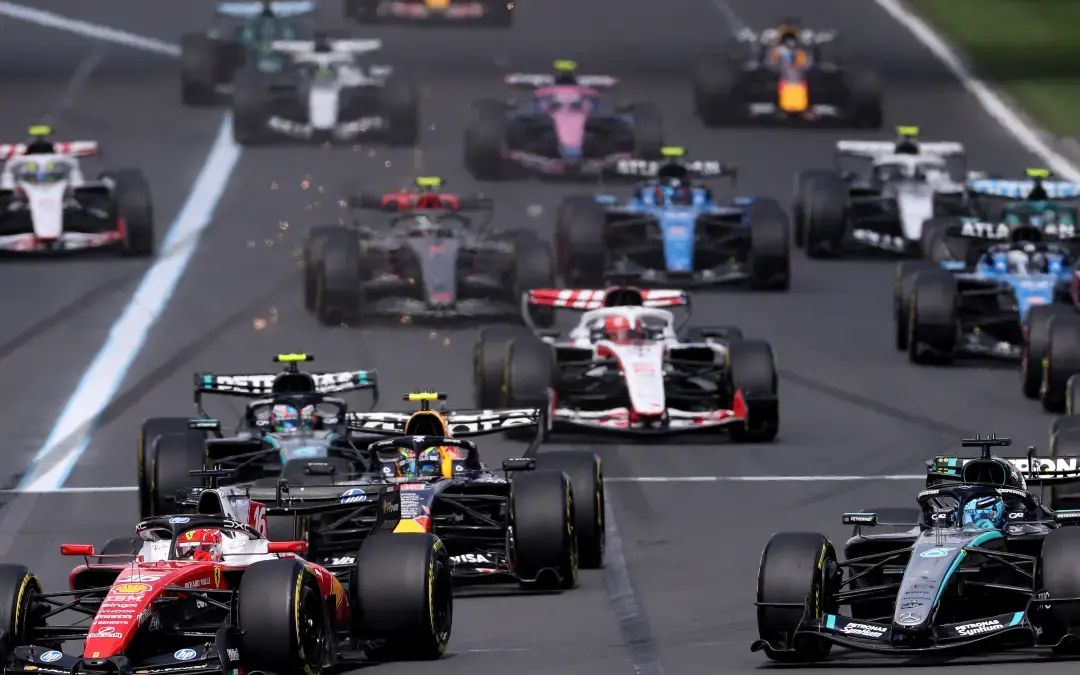
LONDON — In a move designed to future-proof the sport and elevate the spectator experience, the FIA Formula 1 Commission has approved a sweeping package of regulatory updates for the 2027 season and beyond. Convening at the London offices of the Fédération Internationale de l’Automobile (FIA), the sport’s governing body, alongside team representatives and the commercial rights holder, agreed to structural changes that will fundamentally alter Grand Prix formats, technical development pathways, and race weekend operations.
The headline adjustments include a reduction in the standard Grand Prix race distance from 305 kilometers to 290 kilometers, the elimination of the rigid three-hour overall race time limit, and the complete removal of gearbox homologation restrictions. Together, these measures represent a strategic alignment with the upcoming 2026/2027 power unit regulations while addressing long-standing fan frustrations regarding weather-interrupted events.
Main Facts of the Commission’s Decisions
The F1 Commission meeting yielded several critical agreements aimed at balancing technical progress, financial sustainability, and entertainment value.
1. Reduction of Standard Race Distance
Starting in 2027, the standard minimum distance for a Grand Prix will be reduced from 305 kilometers (190 miles) to 290 kilometers (180 miles). This change will result in races being shortened by approximately two to three laps, depending on the circuit layout. The exception remains the Monaco Grand Prix, which historically runs a shorter distance of 260 kilometers due to its unique low-speed street circuit layout.
2. Overhaul of the Race Time Limit Structure
The current regulations stipulate that a Grand Prix must be completed within a maximum window of three hours from the official start time, regardless of interruptions such as red flags or severe weather. The Commission has voted to completely eliminate this overall three-hour limit.
However, to protect team personnel, broadcast schedules, and trackside logistics:
- The two-hour limit on actual green-flag racing remains strictly in place.
- A new, fixed end-of-competition curfew will be introduced to establish a definitive cutoff time for racing activities on Sundays, allowing for greater buffer periods during red-flag stoppages.
3. Increased Flexibility for Practice Sessions
To prevent trackside fans and television audiences from losing out on valuable track action, race organizers and stewards will now have greater administrative flexibility to extend Free Practice (FP) sessions if they are severely disrupted by red flags, weather, or technical failures.
4. Abolition of Gearbox Homologation
Under current cost-cap and technical rules, gearbox designs are frozen (homologated) for multi-year periods to limit development expenses. Following a recommendation from the Sporting Advisory Committee and extensive consultations with power unit and transmission manufacturers, the Commission agreed to completely abolish gearbox homologation starting in 2027. This restores complete developmental freedom to suppliers.
Chronology of Formula 1 Race Standards and Regulations
To understand the magnitude of these changes, it is essential to examine the historical context of how Formula 1 has regulated race distances, durations, and technical developments over the decades.
+-----------------------------------------------------------------------------+
|                                  TIMELINE                                   |
+-----------------------------------------------------------------------------+
|                                                                             |
|  1980s - 2026: Standard GP distance set at 305 km (excluding Monaco).       |
|                                                                             |
|  2011: Canadian GP runs for over 4 hours due to torrential rain.            |
|        -> Leads to the introduction of a strict 4-hour maximum window.      |
|                                                                             |
|  2021: Spa-Francorchamps rain disaster. Only 2 laps completed behind SC.    |
|        -> Maximum window reduced from 4 hours to 3 hours.                   |
|                                                                             |
|  2026: Major Technical Overhaul (Sustainable fuels, 50/50 power split).     |
|                                                                             |
|  2027: Implementation of new F1 Commission rules:                           |
|        -> Race distance reduced to 290 km.                                  |
|        -> 3-hour limit abolished; fixed curfew introduced.                  |
|        -> Gearbox homologation eliminated.                                  |
+-----------------------------------------------------------------------------+
The Evolution of the 305-Kilometer Distance
For decades, the standard formula for a Grand Prix has been the minimum number of laps required to exceed 305 kilometers. This standard was established to ensure that races lasted approximately 80 to 100 minutes under normal racing conditions—providing a substantial endurance test for machinery and drivers while remaining highly digestible for television audiences.
The Evolution of Time Limits: From Canada 2011 to Spa 2021
Historically, there was no hard limit on how long a race afternoon could drag on. The catalyst for change occurred at the 2011 Canadian Grand Prix, which remains the longest race in Formula 1 history. Interrupted by torrential rain and a lengthy red flag, the event lasted 4 hours, 4 minutes, and 39 seconds.
Following this, the FIA introduced a four-hour maximum time limit (including stoppages) to prevent broadcasts from running indefinitely.
In 2021, the Belgian Grand Prix at Spa-Francorchamps was hit by relentless rain. The four-hour clock ticked down while cars sat in the pit lane. Ultimately, only two laps were completed behind the Safety Car to declare a legal result, drawing widespread criticism from fans who waited hours in the cold. In response, the FIA reduced the maximum window from four hours to three hours for the 2022 season, hoping to force quicker decisions. However, this three-hour limit often penalized fans by cutting short races that could have otherwise restarted once the weather cleared.
The Road to the 2026/2027 Technical Era
Formula 1 is preparing for a massive technical regulations overhaul in 2026, which introduces active aerodynamics, fully sustainable synthetic fuels, and a near 50/50 power split between the internal combustion engine (ICE) and electrical energy recovery systems (ERS). The 2027 adjustments represent the secondary phase of this regulatory cycle, fine-tuning sporting rules to align with how these advanced power units perform over a race distance.
Supporting Data and Technical Analysis
The transition from 305 kilometers to 290 kilometers, while seemingly minor, has significant mathematical and physical implications for the sport.
Analyzing the 290-Kilometer Shift
A reduction of 15 kilometers equates to roughly a 5% decrease in total race distance. The table below illustrates how this change will impact the lap counts of some of the sport’s most iconic circuits, based on current track lengths:
| Circuit | Track Length (km) | Current Laps (305 km standard) | New Laps (290 km standard) | Difference (Laps) |
|---|---|---|---|---|
| Monza (Italy) | 5.793 | 53 | 51 | -2 |
| Silverstone (UK) | 5.891 | 52 | 50 | -2 |
| Spa-Francorchamps (Belgium) | 7.004 | 44 | 42 | -2 |
| Red Bull Ring (Austria) | 4.318 | 71 | 68 | -3 |
| Interlagos (Brazil) | 4.309 | 71 | 68 | -3 |
Power Units and Fuel Flow Correlation
The FIA confirmed that the distance reduction is directly aligned with the 2027 power unit specifications. Under the 2026/2027 rules, fuel flow rates will be restricted to promote thermal efficiency and electrical energy deployment.
By shortening the race by 15 kilometers, teams will require less fuel volume at the start of the race. This yields several benefits:
- Weight Reduction: Cars can start with roughly 5 to 7 kilograms less fuel, reducing the initial weight of the car and lowering physical strain on the tires and suspension.
- Energy Management: Drivers will have to perform less "lift-and-coast" (a fuel-saving technique), allowing them to push flat-out for a higher percentage of the race.
Official Responses and Stakeholder Perspectives
The decisions reached in London have been met with broad support across the paddock, though they represent a delicate compromise between different factions of the sport.
The FIA’s Stance on Spectator Experience
In an official statement, the FIA emphasized that the restructuring of the time limits is entirely focused on the fans:
"The primary objective of removing the rigid three-hour maximum limit is to offer trackside spectators and global television viewers the best possible opportunity to enjoy a complete, green-flag race when there are major weather or track-related interruptions. We want to ensure that if fans buy a ticket, they see racing, not a ticking clock."
Team Principals on Gearbox Freedom
The decision to lift the gearbox homologation freeze was highly praised by technical directors and team principals, who felt the previous rules were too restrictive. One prominent team principal, speaking anonymously following the meeting, noted:
"Under the cost cap, we initially thought freezing gearboxes would save money. In reality, if you design a poor gearbox package at the start of a regulatory cycle, you are trapped with a performance deficit for years. Removing homologation for 2027 restores our ability to innovate and rectify engineering mistakes, which is the DNA of Formula 1."
Broadcaster and Promoter Feedback
Television networks and race promoters have welcomed the change to practice session rules. In past seasons, if a 60-minute practice session was red-flagged for 40 minutes to repair a barrier, fans trackside saw virtually no action. The new flexibility to extend these sessions ensures that broadcasters can deliver valuable content to their audiences and promoters can justify ticket prices.
Strategic and Logistical Implications
The ripple effects of these regulatory changes will be felt across several departments of the Formula 1 ecosystem.
+-----------------------------------------------------------------------------+
|                         IMPLICATIONS OF 2027 RULES                          |
+-----------------------------------------------------------------------------+
|                                                                             |
|  [TECHNICAL] -------------------> Gearbox development unfrozen.            |
|                                   Allows continuous mechanical refinement.  |
|                                                                             |
|  [STRATEGY] --------------------> Shorter races (290 km) reduce tire        |
|                                   degradation and fuel-saving demands.      |
|                                                                             |
|  [BROADCAST] -------------------> Removal of 3-hour limit allows longer     |
|                                   stoppages to ensure full green-flag races.|
|                                                                             |
|  [LOGISTICS] -------------------> Fixed curfew protects team mechanics      |
|                                   from excessive overtime during delays.    |
|                                                                             |
+-----------------------------------------------------------------------------+
Technical and Engineering Freedom
With gearbox development completely open from 2027, teams will no longer be locked into rigid casing designs or internal gear ratios. This allows engineers to continuously optimize weight distribution, rear suspension mounting points, and aerodynamic packaging around the gearbox. However, teams must still manage these development programs within the strict boundaries of the FIA Financial Regulations (the cost cap).
Race Strategy and Tire Management
A 5% reduction in race distance will alter tire degradation curves. Strategists will have to recalculate pit-stop windows, as the shorter race distances could shift marginal two-stop races into comfortable one-stop races. Furthermore, with less fuel on board at the start, tire wear in the opening stint of the Grand Prix will be less severe, potentially leading to more aggressive opening laps.
Support Series and Weekend Schedules
By giving organizers the power to extend interrupted practice sessions and allowing races to run past the old three-hour window, the FIA must now navigate tighter weekend timetables. Formula 1 weekends are packed with support series, including Formula 2, Formula 3, and various academy or Porsche Supercup events.
If an F1 practice session is extended or a Grand Prix is delayed by a lengthy red flag, the FIA will need to carefully coordinate with local organizers to ensure that support series are not completely squeezed out of their scheduled slots. The introduction of the "fixed end-of-competition curfew" will serve as the ultimate backstop to ensure that Sunday events do not run into Sunday night, protecting the logistical packing schedules of teams heading to back-to-back races.


Leave a Reply