

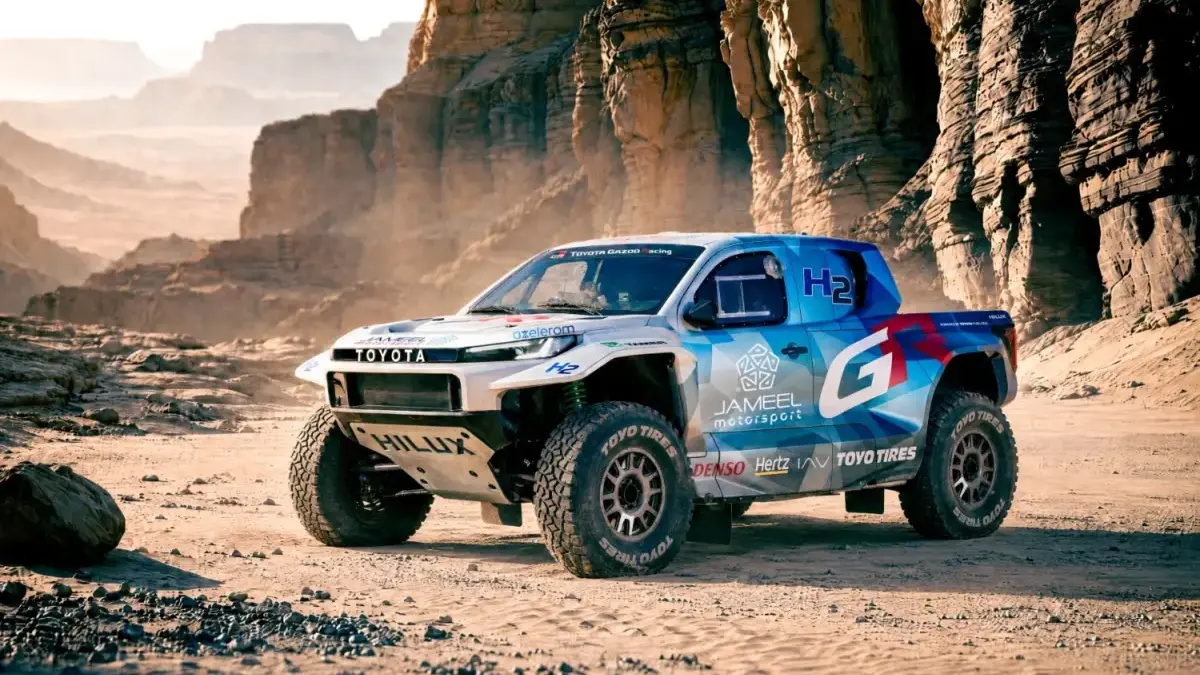
The automotive landscape is undergoing a paradigm shift, and Toyota remains at the vanguard of exploring diverse pathways to carbon neutrality. Moving beyond standard electric vehicle (EV) strategies, the Japanese giant is doubling down on hydrogen fuel cell technology. In a dual-pronged assault, Toyota is preparing a high-stakes debut for a hydrogen-powered pick-up at the world’s most grueling rally, while concurrently laying the groundwork for a commercial road-going Fuel Cell Electric Vehicle (FCEV) variant bound for Europe.
This bold strategy relies on a simple yet demanding premise: if a propulsion system can survive the punishing dunes, searing heat, and abrasive rocks of the Dakar Rally, it can withstand the rigors of everyday commercial and consumer use. Toyota’s blueprint marries the unforgiving development crucible of elite motorsport directly to future dealership showrooms, signaling a long-term commitment to hydrogen combustion and fuel cell technology that defies industry trends toward pure battery-electric uniformity.
Main Facts: The DKR GR FC Hilux and the 2028 Commercial FCEV
Toyota’s comprehensive hydrogen push centers on two distinct pillars of engineering: the radical DKR GR FC Hilux racing prototype and the upcoming Hilux FCEV production model.
At the heart of the racing project is the adaptation of Toyota’s proven endurance chassis into an experimental emissions-free platform. The motorsport division, TOYOTA GAZOO Racing, has stripped away the conventional internal combustion engine from its championship-winning DKR GR Hilux, replacing it with an advanced electric drivetrain powered by a hydrogen fuel cell. This vehicle does not burn fossil fuels, nor does it emit carbon dioxide; its only tailpipe emission is pure water vapor.
Concurrently, the consumer-facing side of the project is advancing rapidly. Toyota has confirmed that a production-intent Hilux FCEV will debut in European markets by 2028. Sharing its foundational architecture with the standard, immensely popular internal combustion pick-up, the production variant promises robust utility metrics: an estimated driving range exceeding 400 kilometers (approx. 250 miles) under the strict WLTP cycle, and a towing capacity of 2,500 kilograms. Notably, these capability metrics eclipse those of Toyota’s own battery-electric Hilux variants, making the hydrogen model a compelling proposition for heavy-duty commercial users. Furthermore, refueling the hydrogen tanks takes a mere five minutes—a stark contrast to the lengthy charging times associated with high-capacity commercial battery packs.
Chronology of Development: From Concept to Deserts and Showrooms
The trajectory of Toyota’s hydrogen-powered workhorse is the result of years of meticulous research, design, and multi-phased testing.
- Initial Conception and Research: Long before public reveals, Toyota’s European Research and Development hub—situated near Brussels, Belgium—began conceptualizing the integration of lightweight fuel cell stacks into heavy-duty ladder-frame chassis architectures.
- Proof-of-Concept Prototypes: Toyota initially rolled out early operational prototypes of the Hilux FCEV to validate packaging, weight distribution, and thermal management of the fuel cell system within a pick-up truck’s constraints.
- Motorsport Adaptation (2025–2026): TOYOTA GAZOO Racing accelerated the development of the DKR GR FC Hilux, tailoring the experimental technology to withstand high-stress competitive racing conditions.
- The Dakar Debut (January 1–15, 2027): The ultimate proving ground arrives when the DKR GR FC Hilux takes the start line in Saudi Arabia. Competing in the rigorous Dakar Future Mission 1000 experimental category, the prototype will face 13 grueling stages and approximately 1,000 kilometers of punishing terrain.
- European Market Launch (2028): Following the collection of telemetry, stress data, and reliability metrics from the Saudi Arabian desert, Toyota is scheduled to introduce the final production-ready Hilux FCEV to the European and UK markets.
Supporting Data and Technical Specifications
To properly evaluate Toyota’s hydrogen commercial strategy, industry analysts look closely at the comparative capabilities of the FCEV platform versus alternative powertrains, alongside the logistical hurdles facing the technology.
Performance and Utility Metrics
- Powertrain: Hydrogen Fuel Cell Electric Vehicle (FCEV) system combined with high-output electric motors.
- Target Range: >400 km (WLTP cycle) for the production variant.
- Towing Capacity: 2,500 kg, outperforming standard battery-electric alternatives in the same class.
- Refueling Time: Approximately 3 to 5 minutes to achieve a full hydrogen tank capacity.
- Emissions: Zero CO2 at the tailpipe; primary byproduct is water vapor.
Logistical and Market Realities
While the technical specifications of the production Hilux FCEV paint an attractive picture for fleet operators and outdoor enthusiasts, the vehicle faces steep economic and infrastructural headwinds:
- Refueling Infrastructure: As of the mid-2020s, the public hydrogen fueling station (hidrolinera) network across Europe and the United Kingdom remains sparse. While fast-charging EV networks continue to expand exponentially, drivers of fuel cell vehicles face severely limited geographic reach outside of specific regional test corridors.
- Manufacturing Costs: The complex engineering required for carbon-fiber hydrogen storage tanks, precious-metal fuel cell stacks, and high-pressure delivery systems significantly drives up the cost of production. Consequently, industry experts project that the Hilux FCEV will occupy the highest pricing tier within the global pick-up range, potentially restricting early adoption to specialized enterprise fleets rather than retail buyers.
Official Responses and Strategic Partnerships
No automotive manufacturer tackles a technological leap of this magnitude in isolation. TOYOTA GAZOO Racing has deliberately curated a coalition of elite industrial and technical partners to ensure the success of the Dakar mission.
For the Dakar Future Mission 1000 campaign, Toyota is collaborating closely with four key strategic partners:
- Jameel Motorsport: Bringing vital expertise in driver development, regional logistics, and competitive motorsport management in extreme environments.
- DENSO: Providing cutting-edge electronic control systems, thermal management solutions, and advanced power-delivery components tailored to withstand extreme vibrations and desert heat.
- TOYO TIRES: Developing specialized, high-durability rubber compounds and tread patterns capable of handling the unique weight distribution and torque delivery of a hydrogen-electric drivetrain over sharp rocks and shifting dunes.
- IAV: Contributing world-class engineering, powertrain integration, and validation methodologies to ensure the hydrogen fuel cell stack maintains optimal efficiency under fluctuating environmental loads.
Speaking on the strategic value of the project, representatives from Toyota’s racing and technical divisions emphasized that the harsh landscape of the Dakar Rally is irreplaceable. "There is no laboratory in the world that can replicate the sheer abuse, thermal stress, and unpredictable terrain of a two-week desert rally," notes development briefings from the Brussels R&D hub. "By testing our hydrogen technology under these extreme conditions, we are fast-tracking the durability of systems that will eventually serve our commercial customers on public roads."
Industry Implications: Why Toyota Refuses to Abandon Hydrogen
The broader automotive industry has largely gravitated toward a binary choice: internal combustion engines on the phase-out path, or battery-electric vehicles (BEVs) as the universal default. Toyota, however, has consistently championed a multi-pathway approach, arguing that a singular focus on BEVs ignores the diverse realities of global energy grids, commercial towing needs, and regional infrastructure limitations.
The commercialization of the Hilux FCEV and its baptism by fire in the Dakar Rally carry several profound implications for the global automotive market:
1. Validating Hydrogen for Heavy-Duty Utility
While passenger cars like the Toyota Mirai have proven the viability of hydrogen on paved roads, pick-up trucks and commercial utility vehicles demand high payload capacities, heavy towing thresholds, and rapid turnaround times. Battery-electric pick-ups often suffer from massive, heavy battery packs that degrade payload capacity and require extended charging times—an impracticality for remote worksites or long-distance hauling. Hydrogen fuel cells offer a lightweight alternative with rapid refueling, directly addressing these industrial pain points.
2. Motorsport as an R&D Accelerator
By entering a hydrogen vehicle into a top-tier rally, Toyota is changing how alternative energies are perceived in motorsport. Historically, racing formats focused purely on speed; today, events like the Dakar serve as accelerated stress-tests for zero-emission tech. If successful, the DKR GR FC Hilux will dismantle the notion that eco-friendly powertrains lack the ruggedness required for motorsport endurance.
3. The Chicken-and-Egg Infrastructure Dilemma
The biggest roadblock for the production Hilux FCEV arriving in 2028 is not the vehicle itself, but the ecosystem into which it is being born. Fleet managers and private buyers will hesitate to invest in hydrogen technology if refueling stations are dozens or hundreds of miles apart. Toyota’s continued push into hydrogen passenger and commercial vehicles serves as a persistent signal to energy providers and governments that heavy transport requires parallel investments in green hydrogen infrastructure.
Conclusion
Toyota’s dual strategy—testing a hydrogen racer in the scorching sands of the 2027 Dakar Rally while finalizing a production-ready FCEV pick-up for European showrooms in 2028—is a calculated gamble. It acknowledges the steep hurdles of cost and infrastructure while refusing to let those challenges halt technological progress. As the countdown to the desert stage begins, the automotive world watches closely to see if Toyota can successfully translate the extreme trials of motorsport into a viable, sustainable reality for the everyday driver.

Leave a Reply