

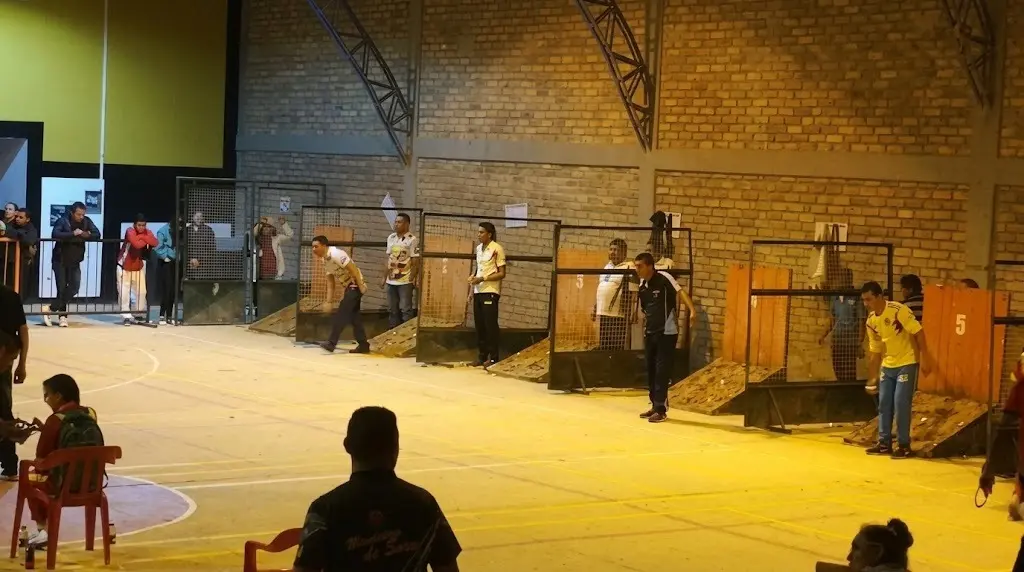
BOGOTÁ, Colombia — Bogotá is set to host the IV World Tejo Championship (IV Mundial de Tejo) on October 2, welcoming delegations from 18 countries to compete at the famed venue Tejo La Embajada. The high-stakes international tournament aims to honor Colombia’s indigenous national sport while creating a dynamic platform for cultural, diplomatic, gastronomic, and tourist exchange centered around one of the nation’s most deeply rooted traditions.
Beyond the competitive drive to claim the coveted world title, the event highlights how a traditional indigenous pastime—once played with solid gold discs by pre-Columbian rulers—has evolved into a international sport capable of bringing together nations from South America, Europe, Asia, North America, and Oceania.
Main Facts: A Global Field Meets at Colombia’s Clay Pits
The IV World Tejo Championship represents the largest international assembly in the sport’s modern history. Delegations representing 18 nations will descend upon Bogotá to test their precision, strength, and nerve in a game defined by heavy iron discs, damp clay pits, and exploding gunpowder targets.
       IV WORLD TEJO CHAMPIONSHIP: AT A GLANCE
======================================================
  Date:                October 2
  Location:            Tejo La Embajada, Bogotá, Colombia
  Participating:       18 International Delegations
  Defending Champion:  India (2025 Titleholder)
  Past Champions:      Peru (1st Ed.), Switzerland (2nd Ed.)
======================================================
The 18 Participating Nations
The international field features a diverse blend of returning powerhouses and emerging international contenders:
- Americas: Canada, Colombia, Mexico, Peru, Uruguay
- Europe: Austria, England, Netherlands, Poland, Switzerland, Turkey, Wales
- Asia & Middle East: China, Filipinas (Philippines), India, Indonesia, Japan
- Oceania: Australia
Clash of the Former Champions
A major storyline of the IV World Championship is the showdown between three distinct nations that have previously lifted the championship trophy:
- Peru: Champion of the inaugural World Tejo Championship, known for adopting a tactical, high-precision approach to clay sports.
- Switzerland: Champions of the second edition, who stunned traditionalists by mastering the trajectory control required on long-distance throws.
- India: The reigning champion from the 2025 tournament, returning to Bogotá with high expectations as they defend their crown against a revamping Colombian host squad and ambitious challenger nations.
Host nation Colombia will be represented by a specialized group drawing from the tourism, hospitality, events, institutional relations, and city-promotion sectors. The delegation features high-profile figures including Luisa Vásquez, Thelma Gómez, Ángela Garzón, and Edwin Bernal, who are tasked not only with competing on the clay but also with serving as ambassadors of Colombian heritage.
Chronology: From Sacred Muisca Ritual to Modern International Sport
The evolution of tejo from a localized indigenous gathering to an international championship spans over five centuries of cultural transformation, institutionalization, and diplomatic expansion.
                  HISTORICAL TIMELINE OF TEJO
===================================================================
 Pre-1500s   | Muisca civilization plays 'Turmequé' using gold
             | discs (*zepguagoscua*) in Boyacá and Cundinamarca.
-------------+-----------------------------------------------------
 16th-19th C | Spanish colonization introduces iron discs; the sport
             | spreads across rural labor villages and haciendas.
-------------+-----------------------------------------------------
 Sept 2000   | Congress passes Law 613, officially declaring tejo
             | Colombia's national sport (*Deporte Nacional*).
-------------+-----------------------------------------------------
 2019        | Law 1955 establishes tejo as Intangible Cultural
             | Heritage of the Colombian Nation.
-------------+-----------------------------------------------------
 Edition I   | Inaugural World Championship hosted; Peru claims
             | the first international title.
-------------+-----------------------------------------------------
 Edition II  | Switzerland captures the title in a landmark victory
             | for European traditional sports enthusiasts.
-------------+-----------------------------------------------------
 2025        | India emerges victorious in the III World Championship,
             | cementing the sport's Asian expansion.
-------------+-----------------------------------------------------
 Present     | Bogotá hosts the IV World Tejo Championship at
             | Tejo La Embajada with 18 nations competing.
===================================================================
Indigenous Roots
Over 500 years ago, prior to Spanish colonization, the Muisca people inhabiting the high-altitude plateaus of Cundinamarca and Boyacá played a game known as Turmequé. The ritualistic game was held during major tribal assemblies, market exchanges, and chieftain celebrations.
Participants hurled tailored gold discs called zepguagoscua across distances of approximately 20 meters toward a target area. Over time, as European colonizers extracted precious metals, gold discs were replaced by heavy forged iron pieces (tejos), and gunpowder pouches (mechas) were added to provide immediate audible feedback upon impact.
National Recognition and Globalization
In September 2000, the Congress of Colombia enacted Law 613, officially elevating tejo to the status of Colombia’s National Sport (Deporte Nacional). Subsequent legislation in 2019 formally incorporated the practice into the nation’s Intangible Cultural Heritage inventory.
The establishment of formal rules, standardized pitch dimensions, and safety regulations paved the way for international exhibition tours. These efforts culminated in the creation of the World Tejo Championship, an initiative designed to export Colombia’s signature sport abroad while inviting international delegations to compete on Colombian soil.
Supporting Data: Rules, Mechanics, and Technical Specifications
To understand the competition unfolding at Tejo La Embajada, one must examine the technical dimensions, scoring parameters, and structural rules governed by the Colombian Tejo Federation (Federación Colombiana de Tejo).
                 THE ANATOMY OF A TEJO PITCH (CANCHA)
+------------------------------------------------------------------+
|                                                                  |
|   Throwing Box                                  Clay Box         |
|   +----------+                              +--------------+     |
|   | Player   |====== ~19.5 meters =========>|  ( / mecha )|     |
|   +----------+                              | ( | bocín|  )|     |
|                                             |  (  mecha /)|     |
|                                             +--------------+     |
|                                                  Clay Bed        |
+------------------------------------------------------------------+
Pitch Dimensions and Equipment Specs
- Overall Alley Length: 19.5 meters (standard professional length).
- The Target Box (Cancha): A wooden frame measuring 1 meter wide by 1 meter long, set at a 45-degree angle, filled with dense, moist blue or red clay.
- The Ring (Bocín): A steel ring embedded in the center of the clay bed, measuring roughly 10.5 centimeters in inner diameter.
- The Gunpowder Pouch (Mecha): Triangle-shaped paper packets loaded with small charges of flash powder, balanced on the rim of the steel ring.
- The Disc (Tejo): A tapered metal disc weighing between 1.4 to 2.0 kilograms (approx. 3 to 4.5 pounds), custom-fitted to the thrower’s grip.
Scoring Breakdown
In official championship play, teams or individual players alternate throws toward the opposite clay box. Games are typically played to 21 or 27 points. Points are awarded based on precise criteria:
| Play Type | Name | Description | Point Value |
|---|---|---|---|
| Close Disc | Mano | Awarded to the player whose disc lands closest to the central metal ring (bocín), provided no gunpowder pouches explode. | 1 Point |
| Explosion | Mecha | Awarded when the thrown metal disc strikes a gunpowder pouch, causing a loud detonation upon impact. | 3 Points |
| Center Ring | Embocinada | Awarded when the metal disc lands directly inside the metal ring (bocín) without detonating a gunpowder pouch. | 6 Points |
| The Perfect Throw | Moñona | The ultimate achievement: the disc lands directly inside the central ring and simultaneously detonates a gunpowder pouch. | 9 Points |
                       SCORING HIERARCHY
  [9 Pts] MOÑONA      --> Disc Inside Ring + Detonation
  [6 Pts] EMBOCINADA  --> Disc Inside Ring (No Detonation)
  [3 Pts] MECHA       --> Gunpowder Detonation
  [1 Pt]  MANO        --> Closest Disc to Center Ring
Official Responses: Diplomatic, Cultural, and Tourism Perspectives
Organizers, municipal representatives, and members of the Colombian delegation emphasized that the IV World Championship serves a purpose far broader than sports competition.
Statements from the Colombian Delegation
Luisa Vásquez, Delegate for Tourism and City Brand:
"The IV World Tejo Championship proves that our authentic cultural traditions possess global appeal. Hosting delegates from 18 nations across five continents in Bogotá allows us to showcase our city not just as an event venue, but as a vibrant center of cultural heritage, world-class gastronomy, and diplomatic hospitality."Ángela Garzón, Institutional Relations Coordinator:
"Tejo is fundamentally about community, shared experience, and mutual respect. When foreign ambassadors, international athletes, and local fans sit around the same clay court, cultural barriers instantly dissolve. This tournament uses sport as a catalyst for soft diplomacy and lasting international partnerships."Edwin Bernal, Commercial & Events Delegate:
"From a sports tourism perspective, events like the World Tejo Championship deliver measurable economic impact. Venues like Tejo La Embajada highlight how modern hospitality concepts can elevate traditional cultural practices into international travel attractions."
Municipal and Tourism Support
The District Institute of Tourism (Instituto Distrital de Turismo – IDT) and local cultural bodies have aligned to support the event. Official city briefings emphasize that the arrival of foreign delegations provides direct economic stimulus to Bogotá’s hotel sector, restaurant corridors, and cultural tour operators.
By framing Tejo alongside local culinary staples—such as craft beer, empanadas, and regional dishes—the city presents a holistic cultural package to international visitors.
Implications: Cultural Preservation, Tourism, and Soft Power
The holding of the IV World Tejo Championship highlights several important developments in international sports diplomacy, regional tourism strategy, and cultural preservation.
                    STRATEGIC IMPACT MAP
============================================================
  CULTURAL PRESERVATION    --> Safeguards Muisca heritage via
                               standardized international play.
------------------------------------------------------------
  SPORTS DIPLOMACY         --> Builds non-traditional channels
                               connecting 18 diverse nations.
------------------------------------------------------------
  ECONOMIC DEVELOPMENT     --> Drives sports tourism & urban
                               promotional branding for Bogotá.
============================================================
1. Elevated Global Profile for Native Sports
While global sporting events are dominated by Western-standardized games like soccer, basketball, and tennis, there is growing international demand for unique cultural sports. Tejo’s expansion joins games like cornhole (USA), pétanque (France), and curling (Scotland) in building a global fan base through accessible mechanics, high social engagement, and memorable spectating experiences.
2. Economic and Tourism Positioning for Bogotá
By marketing Tejo La Embajada as a premier cultural hub, Bogotá positions itself as a destination that offers experiences beyond conventional museum tours. The event demonstrates that intangible heritage can be monetized ethically and creatively, generating sustainable revenue streams for local hospitality workers, artisans, and event producers.
3. Soft Power and Cultural Diplomacy
For Colombia, hosting 18 foreign delegations—including economic and political partners like China, Japan, Turkey, Australia, and the Netherlands—provides an alternative, positive entry point for international dialogue. The shared experience of competing in a sport rooted in indigenous history fosters goodwill, cultural literacy, and cross-border friendship.
4. Legacy and Institutionalization
As former champions Peru, Switzerland, and India return alongside newcomers like Wales, Indonesia, and Poland, the sport moves closer to establishing formal international federations outside Latin America. Standardized refereeing, international safety protocol compliance, and multi-lingual media streaming implemented during this 4th edition establish a blueprint for future world championships hosted abroad.
As final preparations wrap up at Tejo La Embajada, the stage is set for a day of explosive competition, where centuries-old indigenous traditions meet modern international sportsmanship on the clay courts of Bogotá.

Leave a Reply