

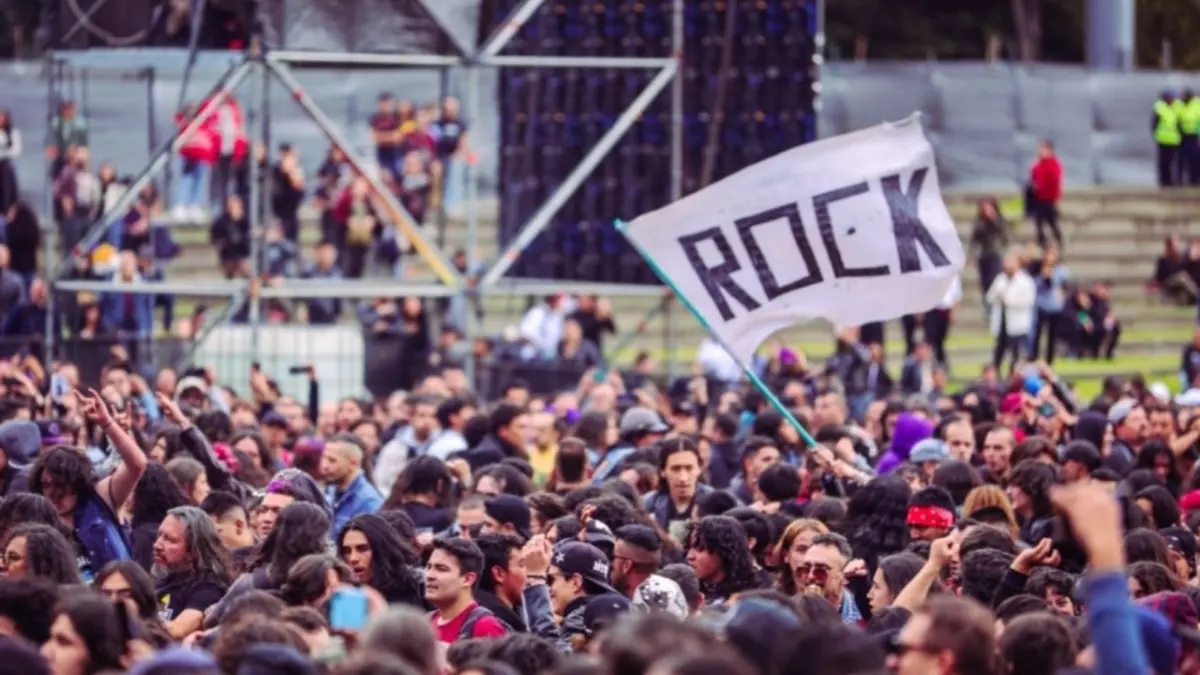
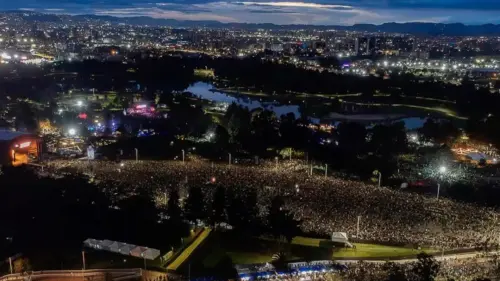
BOGOTÁ, COLOMBIA — The air in the Colombian capital is thick with anticipation, smelling faintly of leather, rain, and high-octane amplifiers. The iconic Parque Metropolitano Simón Bolívar has once again unlocked its gates, welcoming tens of thousands of devoted music fans for a milestone edition of one of Latin America’s most revered free cultural gatherings: Rock al Parque. Marking its historic 30th anniversary, the festival has solidified its status not merely as a concert series, but as a defining socio-cultural institution for Bogotá, bridging generational divides through the universal language of rock and metal.
Spanning three massive days—running from October 10 to October 12—this year’s festival boasts an expansive lineup featuring over 60 stellar musical acts hailing from every corner of the globe. From the frost-bitten Scandinavian metal scenes to the heavy-hitting underground circuits of North America and Europe, alongside the rich, diverse tapestry of Colombia’s own domestic rock movement, Rock al Parque 2026 is a masterclass in global musical curation.
With performances distributed across four distinct stages—Escenario Plaza, Escenario Bio by Vans, Escenario Eco, and Escenario BBC—attendees are treated to an immersive, relentless wave of sonic exploration. As the festival commemorates three decades of history in Bogotá, it continues its founding mandate: providing open, free access to world-class culture for all citizens, affectionately embodying the ethos of Bogotá Ciudad Rock.
Main Facts: A Global Convergence of Heavy Metal Royalty and Local Legends
The opening day of the festival set an extraordinarily high bar, transforming Simón Bolívar Park into a sprawling mecca for black, death, thrash, power, and symphonic metal enthusiasts. The curatorial vision for this anniversary edition heavily favors the heavier, darker shades of rock music, bringing legendary international heavyweights to South American soil alongside foundational pillars of Colombian rock.
International headliners dominating the conversation include the pioneering Finnish symphonic metal giants Apocalyptica, renowned for their cello-driven Metallica covers and original orchestral metal masterpieces; Finnish power metal veterans Stratovarius; and Swiss extreme metal icons Triptykon, who have promised a ferocious set paying homage to the classic repertoires of Hellhammer and Celtic Frost.
Other notable international forces shaking the grounds include the all-female Swiss heavy metal powerhouse Burning Witches, American technical death-metal architects Between the Buried and Me, Swedish death-metal purists Grave, crust-punk standard-bearers End It, and modern melodic death-metal practitioners Darkest Hour.
On the domestic front, Colombian rock history is well represented by legends such as Kraken, the quintessential heavy metal band that defined the genre in the country; thrash standard-bearers Perplicial Warfare; foundational punk acts like I.R.A.; and heavy-hitters such as Darkness, Pornomotora, and Nadie.
The festival’s official organizing body expressed their excitement via social media channels, highlighting the sheer scale of the anniversary programming:
"¡Ya está la programación por días de #RockAlParque30Años! Del 10 al 12 de octubre, el Parque Simón Bolívar recibe a más de 60 agrupaciones. Mon Laferte, Serú Girán, Apocalyptica y grandes nombres nacionales e internacionales. Entrada libre Bogotá Ciudad Rock." — @rockalparquefes
Chronology and Stage-by-Stage Schedule Breakdown
Navigating four simultaneous stages requires military precision. To ensure fans caught their most anticipated acts, festival organizers released a meticulously structured minute-by-minute timetable for the opening day across all performance zones.
Escenario Plaza
The massive Escenario Plaza serves as the beating heart of the festival, hosting the day’s biggest international spectacles and high-profile domestic acts.
- 2:00 p. m. – 2:40 p. m.: Solegnium
- 2:55 p. m. – 3:35 p. m.: Narcocracia
- 3:50 p. m. – 4:30 p. m.: Vein
- 4:50 p. m. – 5:40 p. m.: Hellbutcher
- 6:00 p. m. – 6:50 p. m.: Burning Witches
- 7:15 p. m. – 8:15 p. m.: Stratovarius
- 8:35 p. m. – 9:20 p. m.: Perpetual Warfare
- 9:45 p. m. – 10:45 p. m.: Apocalyptica
Escenario Bio by Vans
Known for highlighting avant-garde, extreme, and deeply historical niche acts, the Bio by Vans stage delivered an uncompromisingly heavy lineup.
- 3:20 p. m. – 4:00 p. m.: Maskhera
- 4:15 p. m. – 4:55 p. m.: Ataque de Pánico
- 5:15 p. m. – 5:55 p. m.: Syracuse
- 6:15 p. m. – 7:05 p. m.: Between the Buried and Me
- 7:20 p. m. – 8:00 p. m.: Valore
- 8:20 p. m. – 9:10 p. m.: Grave
- 9:30 p. m. – 10:30 p. m.: Triptykon (performing classics of Hellhammer and Celtic Frost)
Escenario Eco
Championing the intersections of punk, hardcore, and alternative heavy sounds, the Eco stage proved to be a continuous vortex of mosh pits and raw energy.
- 3:00 p. m. – 3:40 p. m.: No Dependiente
- 3:55 p. m. – 4:45 p. m.: End It
- 5:00 p. m. – 5:50 p. m.: Agua Bendita
- 6:05 p. m. – 6:55 p. m.: Nadie
- 7:10 p. m. – 8:00 p. m.: I.R.A.
- 8:15 p. m. – 9:15 p. m.: Darkest Hour
Escenario BBC
Offering a vibrant showcase of Colombian rock diversity—ranging from industrial sounds to classic heavy metal—the BBC stage kept crowds intensely engaged throughout the afternoon and evening.
- 2:50 p. m. – 3:35 p. m.: Darkness
- 3:50 p. m. – 4:35 p. m.: El EM3
- 4:55 p. m. – 5:40 p. m.: Real House of Hate
- 6:00 p. m. – 6:45 p. m.: Kraken
- 7:05 p. m. – 7:50 p. m.: Info
- 8:10 p. m. – 8:55 p. m.: Pornomotora
- 9:15 p. m. – 10:00 p. m.: Los Setas
Supporting Data: Logistics, Transportation, and Infrastructure
Hosting a free festival of this magnitude requires immense municipal coordination to ensure public safety, fluid mobility, and accessible amenities for the estimated hundreds of thousands of attendees passing through the park over the three-day weekend.
Extended Public Transit Operations (TransMilenio)
To facilitate the safe and efficient return of thousands of headbangers back to their homes across the sprawling capital, Bogotá’s mass transit authority, TransMilenio, implemented special operational measures. Stations surrounding Parque Metropolitano Simón Bolívar operate with extended hours—stretching services until midnight—and adjusted route frequencies based on real-time passenger demand.
Key stations and specific connecting routes highlighted by transit planners include:
- Estación Siete de Agosto: Serving routes D21, Fácil 4, B12, F32, G12, S42, H17, and H21.
- Estación Movistar Arena: Serving routes Fácil 4, B72, D21, C25, H21, L25, and H72.
- Estación CAN – British Council: Serving routes Fácil 1, K10, K54, B16, B23, H54, L10, and M86.
- Estación Salitre El Greco – Vive Claro: Serving routes Fácil 1, K43, K10, K54, S43, L10, B16, B23, and H54.
Transport officials strongly advise festival-goers to check real-time transit updates and pre-load their TuLlave cards to prevent bottlenecks during peak exit hours following the final headliner sets.
Parking Availability for Private Vehicles
For attendees opting to drive cars or motorcycles, the IDRD (Instituto Distrital de Recreación y Deporte) confirmed the availability of the official parking facility located directly within the Parque Metropolitano Simón Bolívar ecosystem.
- Capacity: Approximately 800 vehicles.
- Operating Hours: 5:00 a. m. to 10:00 p. m. throughout all three days of the festival.
- Conditions: Standard parking fees apply. Drivers are encouraged to arrive early, given the high volume of traffic anticipated around the venue perimeter, and to verify rates and entry terms directly with the parking administration on-site.
Official Responses and Stakeholder Perspectives
The enduring success of Rock al Parque over three decades is a testament to sustained public policy and cultural investment by the District of Bogotá. Speaking on the significance of the 30th anniversary, municipal cultural representatives underscored that the festival is far more than a weekend of entertainment; it is a vital platform for social inclusion and artistic democratization.
"Rock al Parque demonstrates that culture can be a public good of the highest order," noted a spokesperson for the District Secretariat of Culture. "Reaching 30 years means that generations of Bogotanos have grown up understanding that public spaces belong to everyone, and that art—including the rebellious, powerful sounds of rock and metal—is an essential right, not a commercial privilege."
International artists arriving in Bogotá have similarly expressed awe at the sheer scale and passion of the Colombian audience. Members of several visiting European bands noted in pre-festival press conferences that the fervor, loyalty, and sheer energy of Latin American metalheads are entirely unmatched anywhere else in the world. For many overseas acts, playing Rock al Parque represents a career-defining highlight.
Implications: The Cultural and Economic Legacy of 30 Years of Rock
As Rock al Parque enters its fourth decade, its broader implications for Bogotá’s cultural landscape and economy are profound.
Economically, the festival acts as a massive tourism catalyst. Hotels, restaurants, bars, and local transport networks experience a dramatic surge in activity over the October holiday weekend. Thousands of domestic tourists from cities like Medellín, Cali, and Barranquilla, alongside international travelers from across the Americas and Europe, descend upon Bogotá specifically for the event, generating significant revenue for the local service economy.
Culturally, the festival serves as an incubator for local talent. By placing emerging Colombian bands on the exact same stages as international legends, Rock al Parque provides local musicians with professional production standards, massive audiences, and vital networking opportunities that elevate the entire national rock ecosystem.
Furthermore, the festival plays an invaluable role in community building. In a massive urban metropolis often fractured by socio-economic divides, Simón Bolívar Park transforms during Rock al Parque into a remarkably peaceful, egalitarian space. Here, amidst the sea of black shirts, denim jackets, and flying hair, differences dissolve in the shared, cathartic thunder of distorted guitars and double-bass drums.
As the final notes of the opening night fade into the Bogotá night, the message is resounding and clear: Rock al Parque is not merely surviving its third decade—it is thriving, evolving, and continuing to write the soundtrack for generations to come.

Leave a Reply