

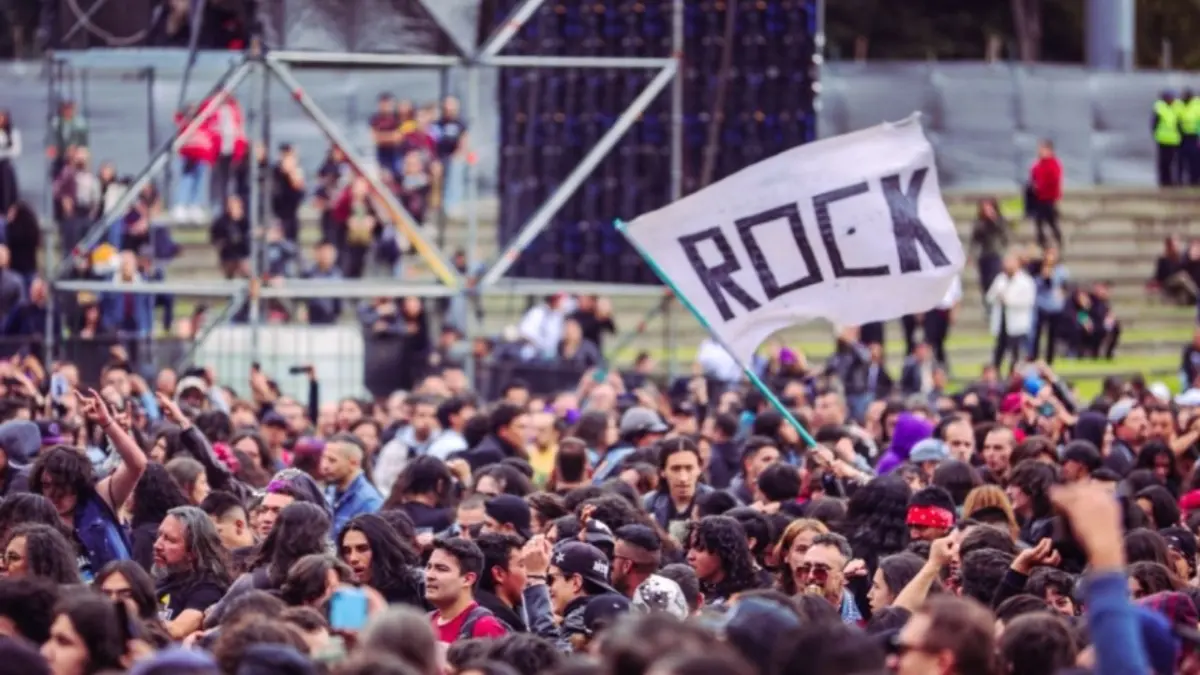
BOGOTÁ, COLOMBIA — The iconic Parque Metropolitano Simón Bolívar has once again opened its gates to host the most anticipated rock festival in Latin America. Rock al Parque, a monumental cultural institution that has defined generations of alternative music lovers in the Colombian capital, kicked off a historic new edition this weekend. Celebrating three decades of relentless sound, community, and countercultural resistance, this milestone anniversary brings together tens of thousands of attendees, free of charge, to witness an eclectic and hard-hitting lineup spanning four distinct stages.
As the crisp Bogotá air mixes with the adrenaline of thousands of fans clad in black leather, battle jackets, and band tees, the festival proves once more why it remains a crown jewel of the city’s cultural portfolio. From seasoned veterans who remember the festival’s modest beginnings in the mid-1990s to a new wave of teenagers experiencing their first mosh pit, Rock al Parque 2026 bridges generational divides through a shared passion for rock, metal, and punk.
Main Facts: A Global Gathering of Heavy Sound
The opening day of the festival established an uncompromising musical standard, blending international heavy metal royalty with the finest exponents of the Colombian underground and alternative scenes. Across the four operational venues—Escenario Plaza, Escenario Bio by Vans, Escenario Eco, and Escenario BBC—more than 60 musical acts are slated to perform over the course of the three-day event, running from October 10 to October 12, 2026.
International representation this year is notably robust, drawing performers from as far away as Sweden, Switzerland, Finland, the United States, and Spain. Simultaneously, the homegrown talent proudly showcases the robust musical ecosystem thriving in cities like Bogotá and Medellín.
Headliners dominating the conversation include symphonic metal pioneers Apocalyptica (Finland), power metal legends Stratovarius (Sweden), extreme metal icons Triptykon (Switzerland)—performing a much-anticipated special set of classics from Hellhammer and Celtic Frost—alongside fierce thrash and death metal forces like Burning Witches (Switzerland), Between the Buried and Me (USA), and Darkest Hour (USA). Representing national pride are legendary Colombian heavy metal heavyweights Kraken, who continue to carry the torch of local rock history.
Organized by the District Institute of Arts (IDARTES) under the broader banner of "Bogotá Ciudad Rock," the festival continues its steadfast tradition of free admission, reinforcing the democratic ethos that has sustained it for thirty years.
Chronology: The Complete Saturday Schedule and Stage Breakdown
With four simultaneous stages running across the sprawling grounds of Simón Bolívar Park, meticulous planning is required for festival-goers hoping to catch their favorite acts. The meticulously crafted schedule for the opening Saturday features continuous music from early afternoon until late into the night.
Escenario Plaza
The main stage opened its amplifiers early to showcase a progressive escalation of heavy sounds, culminating in monumental international headliners:
- 2:00 p.m. – 2:40 p.m.: Solegnium
- 2:55 p.m. – 3:35 p.m.: Narcocracia
- 3:50 p.m. – 4:30 p.m.: Vein
- 4:50 p.m. – 5:40 p.m.: Hellbutcher
- 6:00 p.m. – 6:50 p.m.: Burning Witches
- 7:15 p.m. – 8:15 p.m.: Stratovarius
- 8:35 p.m. – 9:20 p.m.: Perpetual Warfare
- 9:45 p.m. – 10:45 p.m.: Apocalyptica
Escenario Bio by Vans
Dedicated to heavier, darker, and more experimental textures, this stage hosted intense progressive and extreme metal outfits:
- 3:20 p.m. – 4:00 p.m.: Maskhera
- 4:15 p.m. – 4:55 p.m.: Ataque de Pánico
- 5:15 p.m. – 5:55 p.m.: Syracuse
- 6:15 p.m. – 7:05 p.m.: Between the Buried and Me
- 7:20 p.m. – 8:00 p.m.: Valore
- 8:20 p.m. – 9:10 p.m.: Grave
- 9:30 p.m. – 10:30 p.m.: Triptykon (featuring exclusive classics from Hellhammer and Celtic Frost)
Escenario Eco
A bastion for punk, hardcore, and raw underground energy, the Eco stage delivered relentless momentum:
- 3:00 p.m. – 3:40 p.m.: No Dependiente
- 3:55 p.m. – 4:45 p.m.: End It
- 5:00 p.m. – 5:50 p.m.: Agua Bendita
- 6:05 p.m. – 6:55 p.m.: Nadie
- 7:10 p.m. – 8:00 p.m.: I.R.A.
- 8:15 p.m. – 9:15 p.m.: Darkest Hour
Escenario BBC
Focusing heavily on national identity, classic Colombian rock, and avant-garde underground creations, the BBC stage kept crowds energized:
- 2:50 p.m. – 3:35 p.m.: Darkness
- 3:50 p.m. – 4:35 p.m.: El EM3
- 4:55 p.m. – 5:40 p.m.: Real House of Hate
- 6:00 p.m. – 6:45 p.m.: Kraken
- 7:05 p.m. – 7:50 p.m.: Info
- 8:10 p.m. – 8:55 p.m.: Pornomotora
- 9:15 p.m. – 10:00 p.m.: Los Setas
Supporting Data: Mobility, Logistics, and Parking
Organizing an event that draws tens of thousands of music lovers requires complex logistical coordination between municipal entities, security forces, and transit authorities. To ensure a seamless experience for attendees coming from every corner of the capital and beyond, extensive transportation and parking protocols have been activated.
Extended Public Transit Operations (TransMilenio)
Understanding that mass transit is the lifeblood of Bogotá’s festival culture, TransMilenio announced special operational adjustments. Services and strategic stations near Simón Bolívar Park will feature extended operating hours until midnight, dynamically adjusted based on passenger demand.
Key stations and designated routes identified for post-festival departures include:
- Estación Siete de Agosto: Serving routes D21, Fácil 4, B12, F32, G12, S42, H17, and H21.
- Estación Movistar Arena: Serving routes Fácil 4, B72, D21, C25, H21, L25, and H72.
- Estación CAN – British Council: Serving routes Fácil 1, K10, K54, B16, B23, H54, L10, and M86.
- Estación Salitre El Greco – Vive Claro: Serving routes Fácil 1, K43, K10, K54, S43, L10, B16, B23, and H54.
City officials strongly advise all attendees to review route schedules ahead of time and keep their "Llave" or "TuLlave" transit cards pre-loaded to avoid massive congestion at station turnstiles late at night.
Private Vehicle Infrastructure
For those opting to travel by private car or motorcycle, official parking infrastructure has been designated directly at the venue. According to data provided by the District Institute of Recreation and Sports (IDRD), the main parking facility at Parque Metropolitano Simón Bolívar boasts a capacity of 800 vehicles.
- Operating Hours: 5:00 a.m. to 10:00 p.m. across all three days of the festival.
- Conditions: The parking service operates on a paid basis. Drivers are urged to verify prevailing parking tariffs and specific entry guidelines directly with the park’s administrative personnel upon arrival. Due to limited capacity, arriving early or utilizing public transportation is heavily emphasized.
Official Responses and Festival Communication
The official channels of Rock al Parque have maintained an active dialogue with the public, utilizing digital platforms to disseminate crucial announcements. Through their official X (formerly Twitter) account (@rockalparquefes), organizers expressed immense pride regarding the festival’s longevity:
“¡Ya está la programación por días de #RockAlParque30Años! Del 10 al 12 de octubre, el Parque Simón Bolívar recibe a más de 60 agrupaciones. Mon Laferte, Serú Girán, Apocalyptica y grandes nombres nacionales e internacionales. 🎸 ¯ Entrada libre Bogotá Ciudad Rock.”
Municipal authorities, alongside cultural directors from IDARTES, have emphasized that safety, peaceful coexistence, and respect for public property remain paramount. Civil defense, medical tents, and security personnel are deployed in high densities across the park grounds to guarantee a family-friendly environment within a traditionally intense musical genre.
Implications: Cultural Impact and the Evolution of Bogotá as a Rock Capital
The celebration of Rock al Parque’s 30th anniversary is much more than a weekend concert series; it represents a profound sociopolitical milestone for Bogotá and Colombia as a whole. Conceived in the mid-1990s as a municipal strategy to mitigate urban youth violence and create legal spaces for marginalized subcultures, Rock al Parque has evolved into a global benchmark for free public arts funding.
1. Democratization of Culture
In an era where international music festivals often carry prohibitive ticket prices that exclude lower- and middle-class youth, Rock al Parque’s steadfast commitment to free admission remains radical. It ensures that heavy metal, punk, ska, and alternative rock remain accessible art forms for everyone, regardless of socioeconomic background.
2. Professionalization of the Local Industry
Over three decades, the festival has acted as an artistic incubator. Colombian bands that once struggled for basic rehearsal spaces now share festival billings with global giants like Stratovarius and Apocalyptica. This direct exchange elevates production standards, sound engineering, and performance quality within the domestic music market, opening international doors for local acts.
3. Urban Identity and Tourism
The festival cements Bogotá’s reputation as the undisputed rock capital of the Andean region. Every October, music tourists from neighboring countries—Ecuador, Peru, Venezuela, and Argentina—travel specifically to experience the unique camaraderie of the Simón Bolívar Park crowds. The economic spillover into the hospitality, restaurant, and transport sectors reinforces the viability of cultural tourism as an engine for municipal growth.
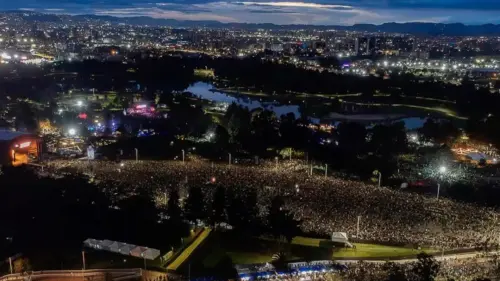
As night falls over Bogotá and the cello-driven melodies of Apocalyptica or the crushing doom riffs of Triptykon echo across the park, Rock al Parque 2026 reaffirms that the spirit of rock and roll is not only alive in Colombia—it is thriving, evolving, and preparing boldly for decades yet to come.

Leave a Reply