

Main Facts
The sacred sanctuary of Iguaque, an ecological and cultural jewel nestled in the high Andes of Colombia, has become the epicenter of a grueling environmental crisis. A massive forest wildfire, described by witnesses as a sinuous "serpent of fire," has devoured vast tracts of native forest, turning centuries-old ecosystems into apocalyptic landscapes of ash and charred timber.
The emergency has mobilized an extraordinary human response: a diverse coalition of civilian volunteers, specialized defense civil units, and frontline firefighters who risk their lives daily on treacherous slopes. Armed with little more than machetes, heavy backpacks filled with water, and an unyielding sense of duty, these brigades have waged a desperate war against a blaze that threatens not only the local biodiversity and water sources, but also the deep indigenous heritage tied to the Muisca mythology. The sanctuary—revered as the sacred womb from which humanity was born according to indigenous tradition—stands scorched, while airborne operations and ground teams work tirelessly to contain the advancing flames.
Chronology of a Crisis: Day by Day on the Frontlines
Day One: The Descent of the Fire Serpent
The crisis began when the fire was spotted winding along the ridge of the mountain, resembling a fiery serpent cutting through the twilight. The terrain, already weakened by drought, cracked earth, and dry vegetation, provided ideal fuel for the rapid propagation of the flames.
Upon arriving at the base camp, volunteers encountered "Comandanta Majo," a fierce operational leader whose tactical authority and adrenaline-driven resolve galvanized the incoming crews. The author of the account, joining the brigades for the first time, described the initial assignment: descending the steep mountain folds to hunt down "orphan fires"—small, smoldering embers left in the wake of the main front, capable of reigniting under sudden gusts of wind.
Moving in single file through the ruined forest, the brigades felt the heavy psychological weight of the disaster. What was once a lush, life-sustaining native forest was reduced to blackened pillars and a powdery white blanket resembling a Siberian steppe. The physical toll was immediate; rigid, water-filled backpack tanks dragged volunteers backward down unstable, ash-covered slopes.
After a grueling day of cutting firelines with machetes and smothering pockets of heat, the exhausted volunteers regrouped. However, the respite was brief. The fire, acting with a deceptive, almost organic intelligence, continually threatened to rise from the dead with a sudden shift in the wind.
Day Two: Scaling the Heights of the Apu
The second day brought renewed challenges as reinforcements pushed toward the high-altitude peaks, known locally as the domain of the Apus (sacred mountain spirits). Joined by veteran guides like Pablo, teams faced the grueling vertical ascent toward the rocky crags of the Tintal ravine.
The climb pushed human endurance to its absolute limits. Stripped of stabilizing root systems, the soil gave way with every step, turning the mountain into a treacherous cascade of dust and loose stone. Despite the exhaustion, the team pressed upward toward a powerful, isolated fire front that was threatening to encircle the northern ridge.

Operating at high altitudes, volunteers utilized climbing ropes to rappel down sheer precipices, battling localized flare-ups with targeted bursts of water and tactical earth-scraping. The danger became painfully real when a sudden volatile eruption from a burning tree engulfed a volunteer’s cap in flames, forcing a harrowing, split-second retreat.
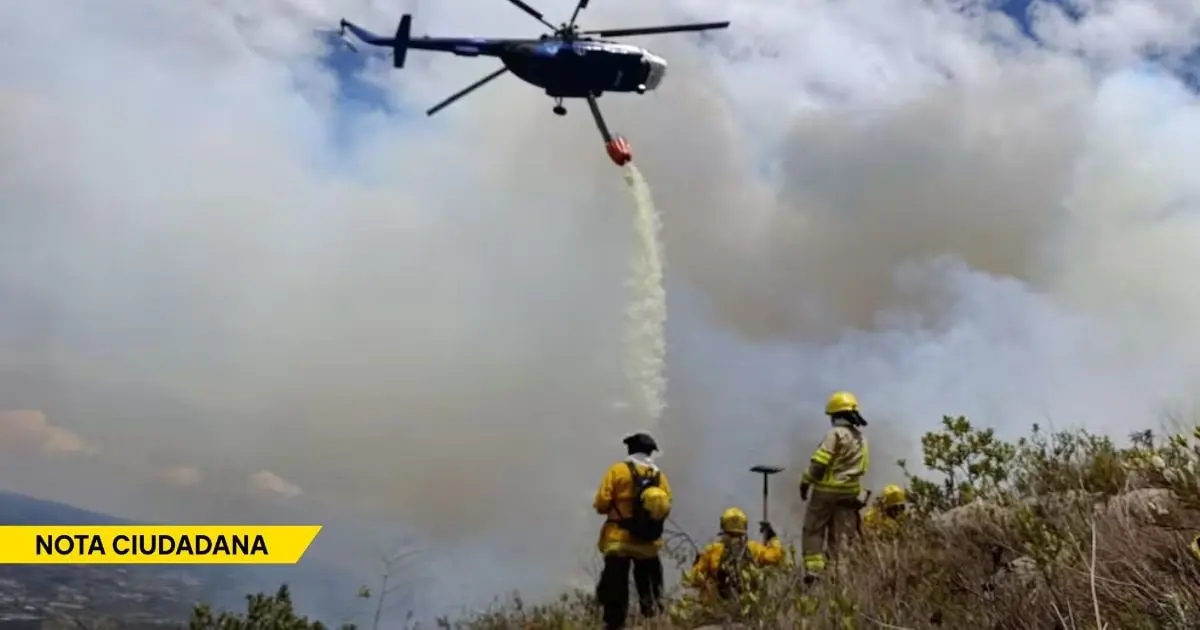
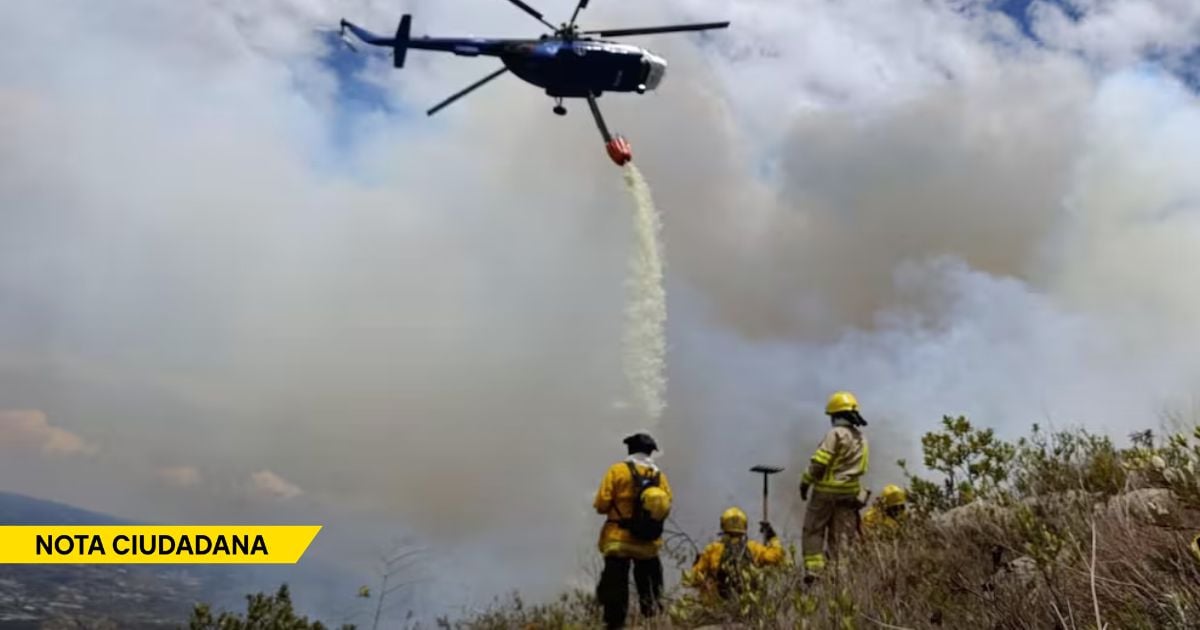
As afternoon turned to evening, the unmistakable roar of military and civil defense helicopters signaled a new phase in the battle. Swooping low over the canyons, the aircraft deployed aerial water drops directly into the heart of the firestorm, attempting to subdue the beast before nightfall allowed it to regain momentum.
Supporting Data and Environmental Context
- Ecological Significance: The Iguaque Flora and Fauna Sanctuary spans thousands of hectares of high-Andean forest and páramo ecosystem. It is a crucial water reservoir, feeding numerous local aqueducts and sustaining high-altitude endemic flora such as frailejones.
- Cultural Heritage: In Muisca mythology, Iguaque Lagoon is the sacred birthplace of humanity, where the goddess Bachué emerged with a child, populating the earth before returning to the waters as a serpent.
- Logistics and Equipment: Ground brigades operate under extreme physical constraints, carrying portable water tanks weighing upwards of 20 kilograms, alongside hand tools like Pulaskis, McLeod rakes, and machetes to establish critical fire breaks. Aerial support relies on Bambi Bucket-equipped helicopters capable of delivering rapid, high-volume water suppression to inaccessible canyon walls.
- Community Mobilization: The emergency has sparked an immense grassroots support network. Local residents, families of volunteers, and passersby have established impromptu supply chains, providing hydration, fruit, and continuous moral encouragement along the supply routes leading up the mountain.
Official Responses and Institutional Coordination
The containment of the Iguaque wildfire has required complex coordination between local environmental authorities, the National Unit for Disaster Risk Management (UNGRD), civil defense units, and regional fire departments.
- Strategic Command: Field operations are directed by experienced commanders who monitor fire behavior from high vantage points, directing specialized squads to high-risk zones while coordinating heavy machinery and logistics at the base camp.
- Aerial Interventions: Air assets have been deployed to target deep-seated canyon fires that are entirely inaccessible to ground personnel due to extreme slopes and the risk of rockslides.
- Call for Precautions: Authorities have reiterated warnings regarding human-induced fire risks, particularly during dry seasons when agricultural burning or irresponsible campfires can quickly escalate into ecological catastrophes of this magnitude. Environmental agencies continue to urge surrounding communities to remain vigilant and report any unauthorized smoke sightings immediately.
Implications: Ecological Impact and Human Resilience
The devastation of the Iguaque sanctuary carries profound implications that extend far beyond the immediate loss of timber and brush.

Environmental Repercussions
The destruction of high-mountain forests compromises the sponge-like capacity of the páramo and surrounding slopes, increasing the long-term risk of severe soil erosion, mudslides, and the depletion of vital water tables. Native fauna—including migratory birds, small mammals, and amphibians native to the Andean fog forests—suffer catastrophic habitat loss, threatening regional biodiversity balances that may take decades to recover naturally.
Cultural and Psychological Resonance
For the local communities and the volunteers who fought the flames, the experience transcended a routine firefighting effort. It became a deeply spiritual confrontation between human vulnerability and the elemental force of nature. The stark realization of human mortality—contrasted against the ancient majesty of the sacred mountain—forged unbreakable bonds among strangers.
Ultimately, the battle of Iguaque stands as a testament to both the fragility of our ecosystems and the indomitable resilience of human solidarity. As exhausted volunteers crossed paths on the steep mountain trails—passing water, sharing exhaustion, and replacing those forced to retreat—they embodied a collective ethos: that protecting the natural and cultural heritage of the land is a shared duty, woven hand-in-hand against the encroaching dark.




Leave a Reply