

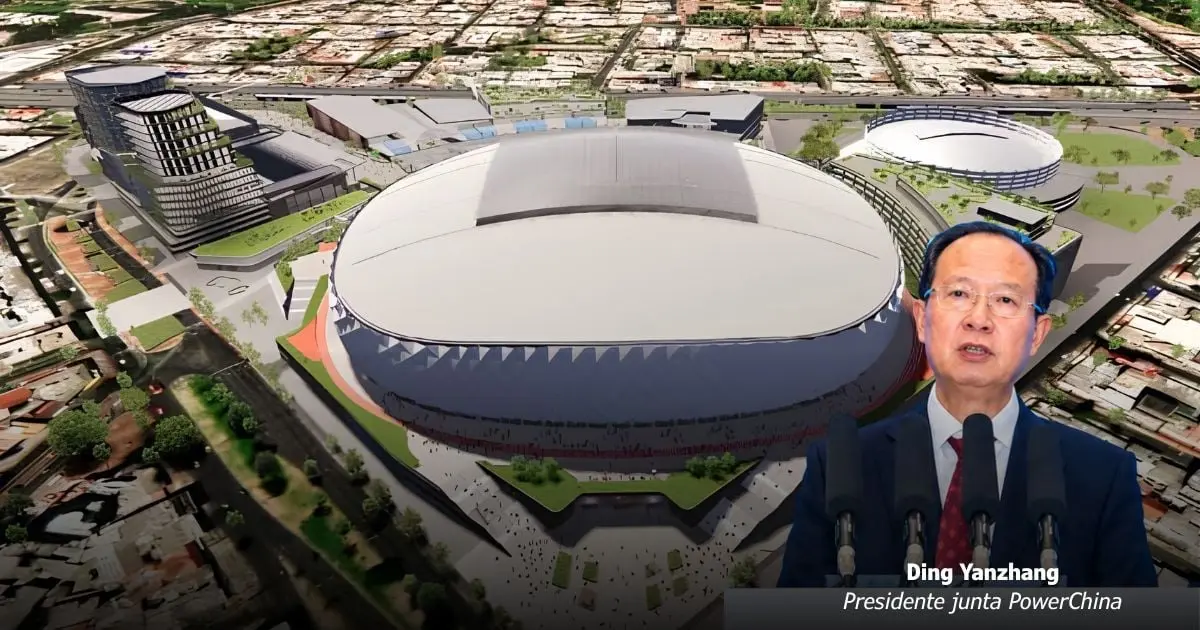
BOGOTÁ — In a move set to redefine the urban skyline and sports culture of Colombia’s capital, Sencia has finalized its choice for the master builder behind the ambitious overhaul of the Nemesio Camacho El Campín Stadium. Rather than relying on a traditional local or regional firm, the monumental task of modernizing Bogotá’s iconic sporting cathedral has been awarded to PowerChina, one of the world’s largest state-owned engineering and construction conglomerates.
Backed by the powerful Sarmiento Angulo group, this partnership marks a historic milestone for Colombian infrastructure, thrusting a state-of-the-art sporting arena into the portfolio of a global titan known for shaping monumental energy, water, and transportation networks across more than a hundred countries.
Main Facts
The decision to bring in PowerChina under an Engineering, Procurement, and Construction (EPC) "turnkey" model represents a paradigm shift in how large-scale urban and recreational projects are executed in Colombia.
- The Project: The complete demolition, reconstruction, and expansion of the Nemesio Camacho El Campín Stadium, transforming it into a world-class multi-arena complex.
- Capacity Expansion: The redesigned stadium is projected to house approximately 60,000 spectators, elevating it to international standards capable of hosting premier global soccer matches and massive entertainment events.
- The Contractor: PowerChina, a state-backed behemoth operating under the supervision of China’s State-Owned Assets Supervision and Administration Commission (SASAC) of the State Council.
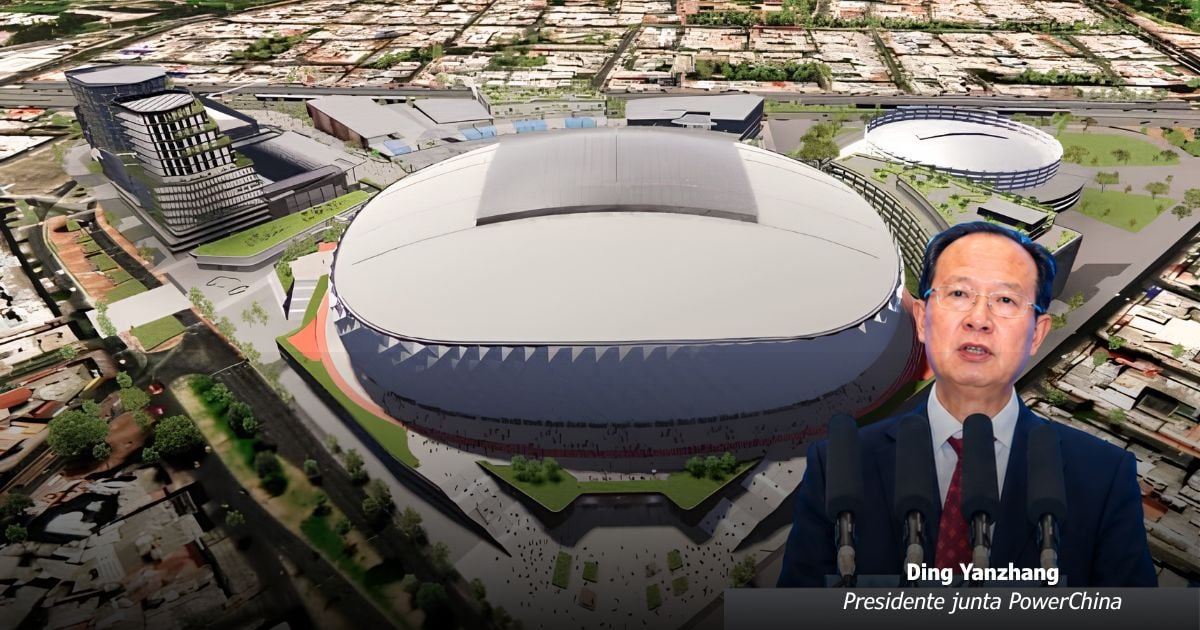
- Leadership: The global conglomerate is steered by Ding Yanzhang, Chairman of the Board and Communist Party Committee Secretary, with Wang Xiaojun serving as Vice Chairman and General Manager.
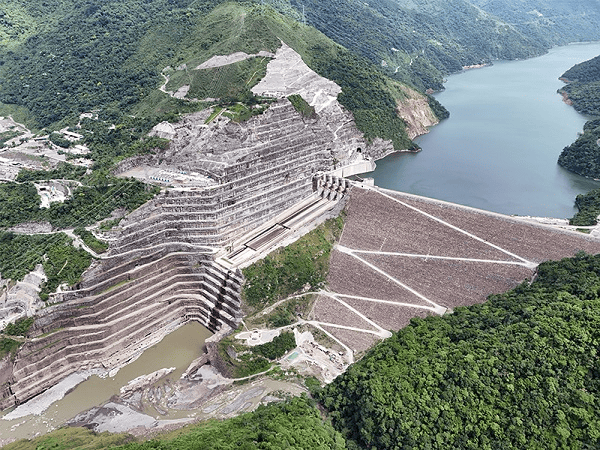
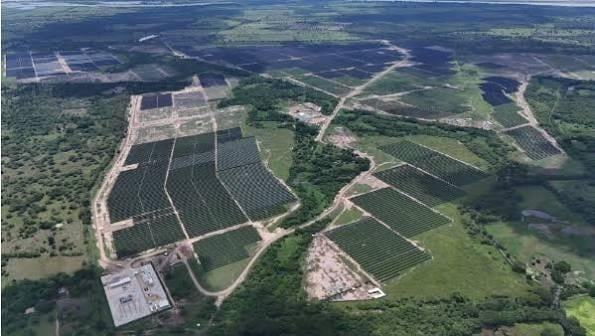
- Colombian Footprint: PowerChina is no stranger to complex Colombian terrain; its footprint already spans mega-projects such as Hidroituango, renewable energy parks (Guayepo III, Tepuy, and Escobal), water treatment infrastructure (Tibitoc), and civil works tied to the Bogotá Metro’s First Line.
Chronology of Expansion: From Hydro-Goliath to Urban Transformer
To understand the magnitude of PowerChina’s arrival in Bogotá, one must look at its institutional evolution and its steady, calculated expansion into the South American market.

2011: The Consolidation of a Giant
While tracing its roots back decades through specialized hydraulic and heavy construction institutions—most notably its prominent subsidiary Sinohydro—PowerChina in its current consolidated corporate structure was officially forged in 2011. The Chinese government unified various engineering enterprises and research institutes under a single umbrella to capture global infrastructure markets. Today, the group employs over 160,000 workers worldwide and commands consolidated annual revenues nearing US$85,000 billion, regularly claiming top spots on Engineering News-Record (ENR) global contractor rankings.
2023: The Hidroituango Turning Point
PowerChina’s capability to handle high-risk, high-complexity engineering in Colombia was cemented in 2023. Empresas Públicas de Medellín (EPM) awarded the Consorcio CYS—comprising Yellow River Co. (a PowerChina subsidiary) and the Colombian firm Schrader Camargo—the critical civil works contract to complete generation units 5 through 8 at Hidroituango. Valued at over one trillion Colombian pesos, the contract required complex subterranean excavation, cavern stabilization, and massive discharge works designed to push the hydroelectric plant toward its ultimate 2,400 MW capacity.

2024–2026: Diversifying into Energy, Water, and Transit
Before capturing the El Campín contract, PowerChina steadily embedded itself into Colombia’s infrastructural backbone. The company diversified its portfolio by building major solar energy assets, including the 80 MW Guayepo III, the 107.8 MWp Tepuy, and the 107.4 MWp Escobal complex, alongside autogeneration facilities for Reficar and Urrá. Simultaneously, it carved out a role in Bogotá’s vital municipal services, contributing to the modernization of the Tibitoc water treatment plant and engaging in civil works for the capital’s long-awaited First Metro Line.
The Present: The El Campín Concession
With Sencia locking in its final decision, PowerChina takes on its most visible urban-lifestyle project in Colombia to date. Moving away from remote mountain hydroelectric dams and remote solar fields, the Chinese conglomerate will now shape the cultural and athletic heart of Bogotá.
Supporting Data & Corporate Profile
The numbers defining PowerChina illustrate the sheer scale of the enterprise now operating within Colombia’s borders:
| Metric / Indicator | Data Point |
|---|---|
| Global Workforce | > 160,000 employees |
| Annual Revenue | ~ US$85,000 million |
| Global Reach | Operations in over 100 countries |
| Key Colombian Projects | Hidroituango (Units 5–8), Guayepo III Solar, Tibitoc Water Plant, Bogotá Metro (Civil works), El Campín Stadium |
| Contracting Model | EPC (Engineering, Procurement, and Construction / "Turnkey") |
| Target Stadium Capacity | ~ 60,000 spectators |
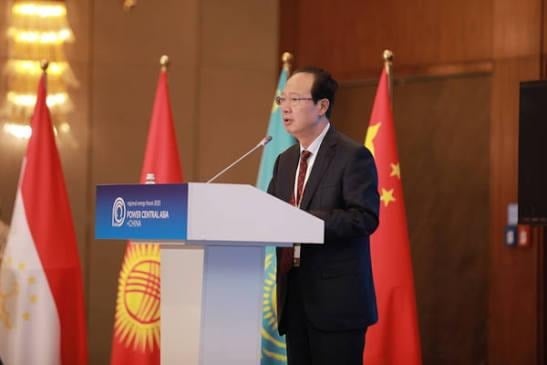
Leadership-wise, the company balances state strategic oversight with deep engineering pedigree. Ding Yanzhang, an engineer who has spent decades navigating heavy infrastructure sectors, leads the board, while Wang Xiaojun manages executive operations. Their deployment of specialized subsidiaries—such as Sinohydro and Yellow River Co.—ensures that localized engineering challenges are met with decades of accumulated global know-how.

Official Responses and Stakeholder Perspectives
While the awarding of the El Campín concession to a Chinese state-owned enterprise highlights the shifting tides of international contracting in Latin America, private sector and municipal stakeholders have emphasized the necessity of technical competence over geopolitical origin.
Sencia, backed by the financial muscle of the Sarmiento Angulo organization, sought a builder capable of handling a turnkey project of unprecedented financial and structural weight without the risk of paralysis or cost overruns that historically plague Colombian public-private partnerships. By employing an EPC model with PowerChina, the consortium aims to shift design, procurement, and construction risks onto an entity with infinite global liquidity and deep-pocketed state backing.
Municipal authorities in Bogotá have welcomed the injection of foreign direct investment into the city’s entertainment infrastructure, noting that modernizing El Campín is not merely about adding concrete and seats, but about creating an integrated urban ecosystem featuring retail, hospitality, and cutting-edge acoustic and digital layouts capable of hosting global events, concerts, and FIFA-standard matches.
Implications for Bogotá and Colombian Infrastructure
The partnership between Sencia and PowerChina carries profound implications for the future of Colombian development, urban planning, and international economic relations.
1. The Normalization of Chinese Mega-Contractors
PowerChina’s growing portfolio—stretching from the turbulent caverns of Hidroituango to the urban core of Bogotá—signals that Chinese state-owned conglomerates are no longer viewed merely as financiers of last resort, but as preferred prime contractors for high-stakes, highly complex engineering tasks in Colombia. Their ability to mobilize immense capital, specialized labor, and advanced machinery gives them a competitive edge that local construction firms alone cannot match.
2. Redefining Bogotá’s Urban Identity
The transformation of El Campín is set to shift Bogotá’s urban dynamics. For decades, the stadium has been a modest, aging venue constrained by its mid-20th-century architecture. By scaling capacity to 60,000 seats and implementing a modern multi-arena concept, Bogotá positions itself to rival Buenos Aires, São Paulo, and Rio de Janeiro in attracting global mega-concerts and international tournaments.
3. Execution Pressure and Public Scrutiny
With great scale comes heightened scrutiny. Large infrastructure projects in Colombia frequently face delays, environmental hurdles, and community pushback. Because PowerChina operates under the direct supervision of Beijing’s SASAC, its local execution will be watched closely not just by Colombian regulators and sports fans, but by international observers monitoring the footprint of Chinese state capital in Latin America.
As shovels prepare to break ground on the new El Campín, the spotlight shifts firmly to PowerChina. The conglomerate has proven it can tame roaring rivers and construct sprawling solar fields; now, it faces the ultimate test of building a modern sporting icon in the heart of the Andes.



Leave a Reply