By Global News Desk Updated for international distribution
Main Facts: A President on the Frontline
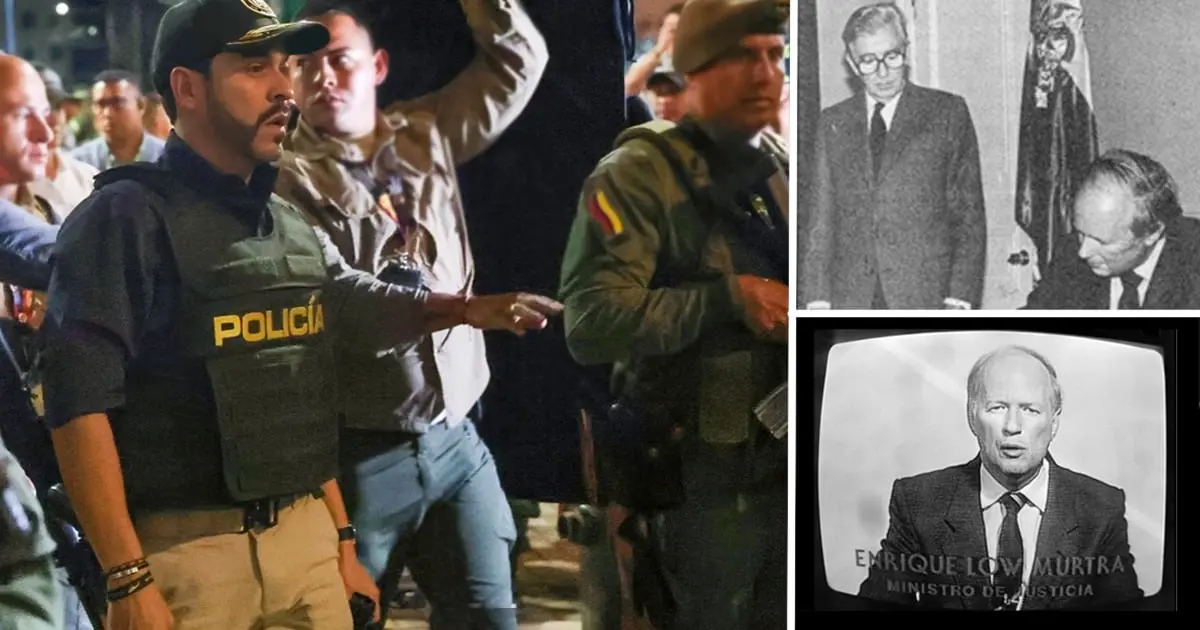
In a departure from traditional presidential protocols, Colombian President Abelardo De La Espriella has sparked national debate and international attention by personally patrolling the country’s most volatile urban centers. Clad in a tactical ballistic vest, carrying a military-grade communication radio, and armed with a 9mm Glock automatic pistol tucked into his belt, the President has taken a direct, hands-on approach to national security.
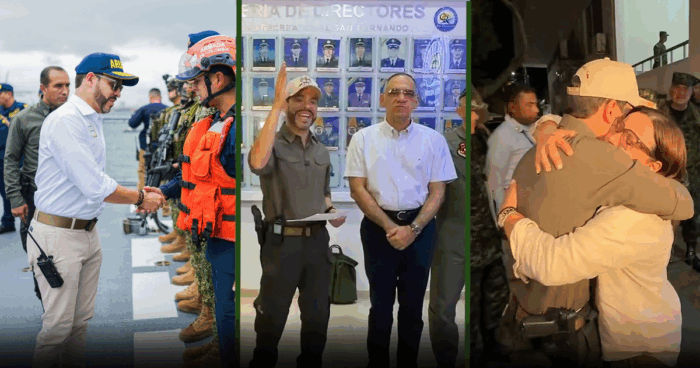
Within a span of less than 24 hours, De La Espriella’s relentless itinerary brought him to the high-risk streets of Santa Marta and Cali. Focusing on neighborhoods heavily impacted by organized crime—such as the Cristo Rey sector in Santa Marta—his deployment coincided with an intensive security sweep dubbed "Operation Orión." This military and police action followed the neutralization of "Cholo," a high-ranking commander of the Autodefensas Conquistadoras de la Sierra Nevada (also known as Los Pachenca), who had paralyzed the region through an armed strike. The very next day, the high-stakes security operation was replicated across six communes in downtown and eastern Cali.
Images and video footage broadcast across news networks show the President moving through active conflict zones with the posture, readiness, and gear of a frontline combatant. While supporters praise his hands-on resolve to combat surging criminality, critics and security analysts question the wisdom and protocol of a sitting head of state placing himself directly in the line of fire.
However, De La Espriella’s visible weapon—a standard-issue Glock—is not merely symbolic. It highlights a recurring, high-stakes tradition in Colombian political and military history: high-ranking leaders who refuse to remain behind desks while threats loom, choosing instead to take up arms alongside their security details.
Chronology: A History of High-Ranking Officials Who Defended Themselves
The image of a Colombian leader bearing arms and responding to direct attacks is deeply rooted in the nation’s turbulent history with guerrilla insurgencies, paramilitary groups, and drug cartels. Examining past security crises reveals a lineage of commanders and officials who were forced to draw their weapons to survive.
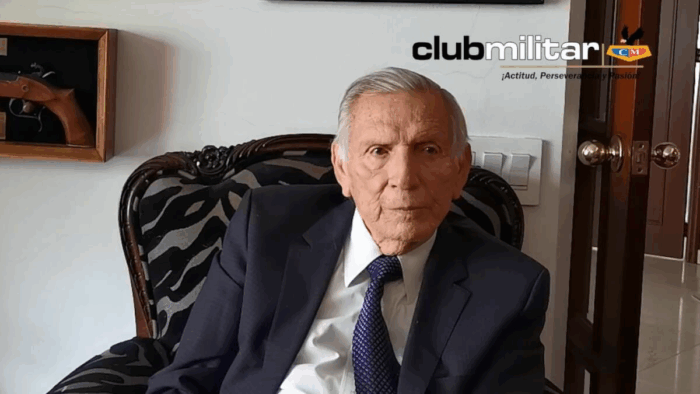
1. The Ambush of General Rafael Samudio Molina (1985)
On October 23, 1985, at approximately 2:30 p.m., General Rafael Samudio Molina, then Commander of the Colombian Army, was traveling with a modest security detail through a neighborhood in northeastern Bogotá. The area appeared deceptively secure until heavily armed individuals blocked the street with a vehicle and attempted to kidnap the high-ranking officer.
Refusing to be taken hostage or wait passively inside his vehicle, General Samudio drew his service pistol and engaged the attackers alongside his guards.
"I took cover as best I could and opened fire, just as I was trained to do since I was a young man," Samudio later recounted.
Despite suffering a minor wound in the brief, intense firefight, the Army chief survived. This harrowing event occurred just 14 days before the catastrophic M-19 guerrilla takeover of the Palace of Justice in Bogotá on November 6, 1985—an attack during which Samudio would coordinate the military’s retaking operation via radio under the tactical call sign "Paladín 6."
2. General Miguel Maza Márquez and the Cartel Wars (1989)
During the height of the drug wars in the late 1980s and 1990s, high-ranking state officials targeted by Pablo Escobar’s Medellín Cartel routinely carried personal firearms to supplement their security details.
On May 30, 1989, General Miguel Maza Márquez, Director of the Administrative Department of Security (DAS), survived a massive car bomb containing 100 kilograms of dynamite on Bogotá’s Seventh Avenue. The blast completely destroyed his armored Mercedes-Benz, killed four bystanders, and severely injured 37 others.
Convinced that a squad of cartel assassins was closing in to finish the job, Maza emerged from the wreckage with his pistol drawn, taking cover behind a low wall to return fire. He would go on to survive a total of five assassination attempts throughout his career.
3. General Manuel Jaime Guerrero Paz and General Fernando Landazábal Reyes
In the same turbulent era, the M-19 guerrilla movement attempted a kidnapping targeting General Manuel Jaime Guerrero Paz, then Commander of the Military Forces. Reacting swiftly, Guerrero and his escort engaged the attackers, successfully neutralizing one of them.
Similarly, General Fernando Landazábal Reyes, who served as Minister of Defense in the late 1980s, was forced to take up arms to defend his home and family during guerrilla hostilities in Facatativá, Cundinamarca. Tragically, years later in 1998, after he had retired and was completely defenseless, Landazábal was assassinated by FARC guerrillas in the parking lot of a Bogotá residential complex.
4. The Civilian Tragedy: Minister Enrique Low Murtra
While military commanders drawing weapons in self-defense aligned with tactical training, the calculus changed when civilian officials were targeted. The most tragic example occurred in 1989, when Enrique Low Murtra, serving as Minister of Justice, was ambushed by sicarios (hitmen) at the entrance of the University of La Salle in Bogotá. Displaying immense courage, Low Murtra managed to draw his personal firearm to defend himself, but he was overwhelmed and assassinated before his security detail could successfully intervene.
Supporting Data: The Security Landscape and Tactical Realities
President De La Espriella’s recent patrols occur against a backdrop of complex regional security challenges in Colombia. The deployment of elite military and police units to Santa Marta and Cali highlights the decentralized nature of modern criminal syndicates, which range from post-paramilitary drug trafficking clans like Los Pachenca to urban micro-trafficking networks.
Operational Parameters: The security operations ("Operation Orión" and concurrent urban sweeps) utilize joint task forces combining military infantry, national police, and tactical intelligence units.
Equipment Utilized: Reports highlight the President’s use of a 9mm Glock automatic pistol—widely adopted by law enforcement globally for its reliability—alongside encrypted military-grade radio communication systems designed to maintain real-time contact with theater commanders.
Risk Coefficients: Historical data from Colombian state security archives indicate that executive-level officials operating in active conflict or high-crime zones face exponential threat elevations, necessitating specialized close-protection protocols that traditionally restrict principals from engaging in direct frontline patrolling.
Official Responses and Political Reactions
The unprecedented sight of a sitting president patrolling heavily armed has polarized the nation’s political establishment, drawing sharp criticism from opposition lawmakers alongside robust defenses from administration officials.
Interior Minister Rodrigo Lara Restrepo forcefully defended the President’s actions, framing them as a necessary display of absolute resolve against organized crime. In a public statement, Lara Restrepo remarked:
"It is admirable to see a president on the ground, confronting criminals directly in the streets, sending an unmistakable message to outlaws: You will not break the spirit of the Colombian people."
Pro-government voices argue that De La Espriella’s physical presence reinvigorates troop morale and demonstrates a zero-tolerance policy that breaks away from bureaucratic detachment.
Conversely, constitutional scholars and security experts have raised valid concerns. Critics argue that a head of state acting as an operational combatant risks blurring the lines between civilian political leadership and the armed forces, potentially violating institutional separation-of-powers norms. Furthermore, security analysts point out the immense tactical risk: a president is a high-value target whose exposure in volatile urban zones could compromise entire security perimeters and endanger accompanying personnel.
Implications: What This Means for Colombia’s Future
President De La Espriella’s armed frontline patrols signal a profound shift in executive security doctrine and political communication in Colombia.
A Return to Hardline Deterrence: By physically embedding himself with troops in high-risk sectors, De La Espriella is signaling a return to unyielding, direct state authority reminiscent of Colombia’s historical conflicts against drug cartels and insurgencies.
Heightened Polarization: While the move plays well with a populace exhausted by rising crime and urban insecurity, it deepens political polarization, fueling debates over democratic governance versus authoritarian displays of force.
Operational Precedent: Whether this style of leadership becomes a short-lived tactical anomaly or sets a new benchmark for executive involvement in national security remains to be seen. However, history demonstrates that when Colombian leaders step onto the frontline armed and unshielded, the stakes—both political and personal—could not possibly be higher.





Leave a Reply