

By Special Cultural Desk
Published in Commemoration of the 80th Anniversary of his Birth
Main Facts: The Life, Legacy, and Last Breath of a Vallenato Giant
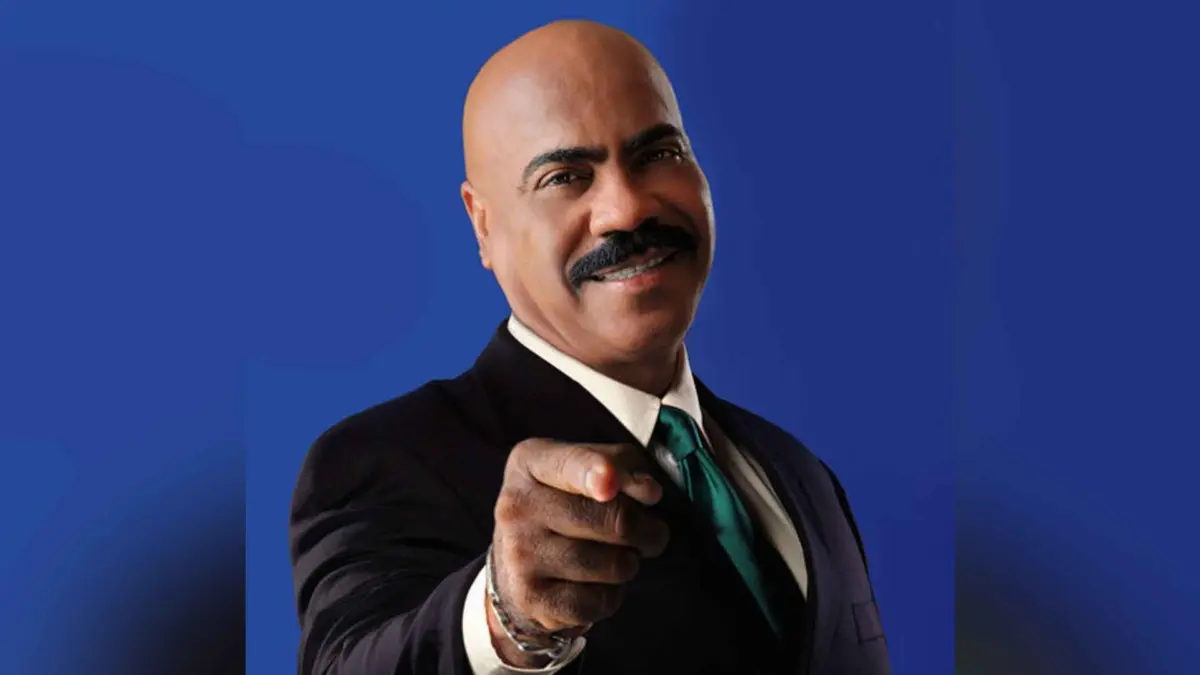
A life’s final chapter often reveals the very essence of the soul that lived it. For Lenín Alfonso Bueno Suárez, the end came with a cinematic, almost poetic punctuation mark that perfectly encapsulated his fiery spirit. It was November 2019 in Barranquilla. The veteran broadcaster, sociologist, and prolific vallenato composer sat glued to his television screen, his heart pounding in rhythm with the fate of his beloved football club, Junior. As the final whistle blew, sealing Junior’s dramatic qualification to the finals of the Torneo Finalización against Deportes Tolima, the sheer, unadulterated joy of the moment proved overwhelming. Bueno Suárez suffered a fatal heart attack—dying, fittingly, in a state of absolute euphoria, celebrating a victory for the team and the city that had adopted him decades prior.
Yet, football was merely one of his many passions. To understand Lenín Bueno Suárez is to understand the golden scaffolding upon which modern vallenato music was built. Operating frequently under his immortalized pseudonym, “Leabus,” Bueno Suárez was a man of manifold talents: a cultural visionary, a radio pioneer, a sharp sociologist who understood the grassroots poetry of the Colombian Caribbean, and a master songwriter whose compositions helped define the golden age of tropical and vallenato music.
As the cultural community commemorates what would have been his 80th birthday—born on June 16, 1946, in Riohacha, La Guajira—his legacy looms larger than ever. Long before streaming platforms and globalized Latin pop, Leabus was shaping the auditory landscape of Colombia from behind a radio microphone and via the lined pages of a composition notebook. His contributions stretch far beyond simple lyricism; he was a cultural broker, a kingmaker who played an instrumental, behind-the-scenes role in forging the most iconic partnership in vallenato history: El Binomio de Oro.
Chronology: From the Shores of Riohacha to the Heart of Barranquilla
The Formative Years (1946–1968)
Lenín Alfonso Bueno Suárez entered the world on June 16, 1946, in Riohacha, the sun-drenched capital of Colombia’s northernmost department, La Guajira. Growing up immersed in the folkloric cadence of the Caribbean coast, young Lenín absorbed the oral histories, the accordion riffs, and the syncopated rhythms that would later fuel his creative output.
Before permanently cementing his life in the cultural capital of the coast, Bueno Suárez spent a formative period residing in neighboring Venezuela—a migratory route common to many Guajiros of his generation. However, answering the call of civic duty, he returned to Colombia to complete his mandatory military service.
By 1968, the young visionary made the definitive move to Barranquilla, affectionately known as La Arenosa (The Sandy City). It was here that his multifaceted career truly caught fire. Armed with a sociological perspective and an innate charm, Bueno Suárez quickly integrated himself into the city’s vibrant intellectual and artistic circles, bridging the gap between traditional folkloric expression and modern mass media.
The Radio Pioneer and Musical Entrepreneur (1970s)
Upon establishing himself in Barranquilla, Bueno Suárez carved out a formidable reputation in the burgeoning field of commercial radio. He launched a pioneering and immensely successful program titled Festival Vallenato, which initially found a home on Emisora Atlántico before migrating to the prestigious La Voz de Barranquilla. Through the airwaves, Bueno Suárez became an arbiter of taste, championing the accordion-driven sounds of the provinces to an urban audience that was rapidly modernizing.
Simultaneously, his creative impulses spilled over into musical performance. At the dawn of the 1970s, Leabus formed his own vallenato ensemble, stepping up not only as the creative mastermind but also as a recording artist. He cut several singles featuring his own compositions for legendary record labels such as Discos Fuentes and Tropical. Tracks like "La huelga" (The Strike), "Qué vaina" (What a Nuisance), and "Parece mentira" (It Seems Impossible) showcased his witty, observational lyricism.
Furthermore, his collaborative spirit led him to join forces with elite musicians of the era. He became a singer and songwriter for Los Sabaneros, an iconic grouping that united him with alumni from the legendary Corraleros de Majagual, including Nacho Paredes, Luis Pérez Cedrón, and César Castro.
Supporting Data: The Birth of El Binomio de Oro and the Leabus Catalog
The Historic Night of June 1976
Perhaps the single most consequential contribution Lenín Bueno Suárez made to Colombian musical history occurred on a humid night in June 1976. During a spirited parranda (impromptu musical gathering) at his Barranquilla home, two titanic figures of Caribbean music crossed paths under Leabus’s roof: Rafael Orozco and Israel Romero (“El Pollo Irra”).
At the time, both artists were seasoned talents searching for their definitive artistic vehicles. Orozco had already recorded a couple of productions alongside accordionist Emilio Oviedo, while Romero had made his mark accompanying Daniel Celedón. Yet, destiny demanded a higher tier of elegance and precision for the genre.
Lenín Bueno Suárez recognized the electrifying chemistry between the charismatic vocalist and the virtuoso accordionist. Seizing the moment, Bueno Suárez leveraged his industry connections to secure a booking for Orozco at a major dance event in Sabanalarga, attaching a strict, visionary condition: Orozco could only perform if Israel Romero was his accompanying accordionist.
That pragmatic negotiation birthed El Binomio de Oro, a group that would revolutionize vallenato by injecting it with romanticism, refined arrangements, and international appeal.
The Immortal Pen of "Leabus"
Bueno Suárez’s songwriting catalog, published under his pen name Leabus, reads like a masterclass in vallenato storytelling. His compositions were recorded by virtually every major heavy-hitter in the genre, demonstrating an uncanny versatility that ranged from lighthearted party anthems to deeply poignant social dramas.
- For El Binomio de Oro: Leabus gifted the newly formed powerhouse with tracks such as "El que espabila pierde" (He Who Snoozes Loses)—which later received a sophisticated, orchestral makeover by French maestro Raymond Lefevre—and the quintessential festive anthem "La parranda es pa’ amanecé" (The Party is Until Dawn), a track that achieved massive cross-border success in a soaring version by Venezuela’s Los Melódicos.
- For Los Hermanos Zuleta: He penned crowd-pleasers like "Soy parrandero y qué" (I’m a Partier, So What?) and the nostalgic "Nostalgia estudiantil" (Student Nostalgia).
- For Julio Rojas and Ricardo Maestre: He contributed the evocative "Pena y dolor" (Grief and Pain).
- For Los Betos: He wrote the witty and memorable "El loco de mamá" (Mama’s Crazy Boy).
- For Romualdo Brito: He provided "El diario de mi vida" (The Diary of My Life).
- For Jorge Oñate and Raúl “Chiche” Martínez: He offered "Siempre unidos" (Always United).
- For Jairo Serrano: He composed "Más que amigos" (More Than Friends).
- For Adaníes Díaz: He wrote the soaring hit "Estrella fugaz" (Shooting Star).
- The Masterpiece: Perhaps his most ambitious lyrical achievement was "Drama provinciano" (Provincial Drama), recorded in 1981 by El Doble Poder. Structured like a sweeping choral novel, the song featured the distinct voices of Daniel Celedón, Mélida Yara, and a ten-year-old prodigy named Jorge Celedón, who would grow up to become a global vallenato icon.
Official Responses: Tributes from Contemporaries
The profound impact Lenín Bueno Suárez left on his peers is measured by the deep affection and enduring respect found in their testimonies.
Fernando Meneses, the legendary composer behind classics immortalized by El Binomio de Oro, recalls his first encounter with Bueno Suárez with profound fondness:
"He was a supremely amiable man, highly sensitive, joyful, full of wit, a truly exceptional partier, and above all, an excellent friend whom I met in 1976 when I arrived to work in Barranquilla."
Meneses noted that integration into the city’s artistic elite was seamless, largely because he moved into the very same apartment building inhabited by one of Bueno Suárez’s closest confidants—accordionist Israel Romero.
Cultural historians and fellow broadcasters have similarly emphasized that Bueno Suárez was the quintessential "glue" of the Caribbean artistic community. While many songwriters sought personal fame in the spotlight, Leabus was equally content operating as a catalyst—uniting talents, drafting lyrics that captured the heartbeat of the province, and championing the works of others through his influential radio slots.
Implications: Securing the Roots of Caribbean Identity
The passing of figures like Lenín Alfonso Bueno Suárez marks the gradual fading of an irreplaceable generation—the architects who transitioned vallenato from a localized folkloric curiosity into Colombia’s premier cultural export.
Preserving the Oral and Written Archive
The implications of Leabus’s life and work extend far into the realm of cultural preservation. As contemporary music shifts toward rapid digital consumption and algorithm-driven hits, the legacy of composers like Bueno Suárez serves as an essential anchor. His sociological training imbued his songwriting with a rare narrative depth; his lyrics were not merely verses meant to fill a melody, but sociological snapshots of Caribbean life, migration, romantic longing, and festive resilience.
A Blueprint for Artistic Synergy
Furthermore, the story of how El Binomio de Oro was brokered in a Barranquilla living room highlights the critical importance of cultural intermediaries. Without the strategic vision of radio hosts and songwriters who understood both the artistic pulse and the commercial mechanics of the industry, the golden era of vallenato might never have achieved its legendary heights.
Conclusion: The Eternal Parranda
As we mark the 80th anniversary of his birth, Lenín Alfonso Bueno Suárez stands vindicated by history. Whether remembered as the sharp-minded sociologist, the influential voice of Festival Vallenato, the strategic mastermind behind Rafael Orozco and Israel Romero, or simply "Leabus"—the author of songs that still make millions dance and weep—his spirit remains alive in every accordion squeeze.
He left this world exactly as he lived it: surrounded by passion, engulfed in the culture he helped build, and cheering for a victory. The music he penned ensures that the parranda he started back in 1976 will never truly end.


Leave a Reply