

By Environmental Desk
Published in partnership with conservation reports from the Parque Jaime Duque Foundation
Main Facts
In the high-altitude, windswept ecosystems of the Colombian Andes, the shadow of a flying condor is a sight of both profound national pride and increasing rarity. Today, that shadow is poised to grow slightly longer. Rafiki, a juvenile Andean condor (Vultur gryphus) hatched under human care at the Parque Jaime Duque in Tocancipá, Cundinamarca, is ready for the ultimate test: release into the wild at the El Almorzadero Páramo in the department of Santander.
Rafiki’s impending freedom is the culmination of more than two decades of meticulous conservation, scientific dedication, and heavy financial investment by the Fundación Parque Jaime Duque. Born on July 29, 2024, weighing a mere 208 grams after a tense 60-day artificial incubation process, Rafiki represents a beacon of hope for a critically endangered species. In Colombia, where the national bird has held a permanent place on the national coat of arms since 1834, the wild population hovers precariously at an estimated 150 individuals.
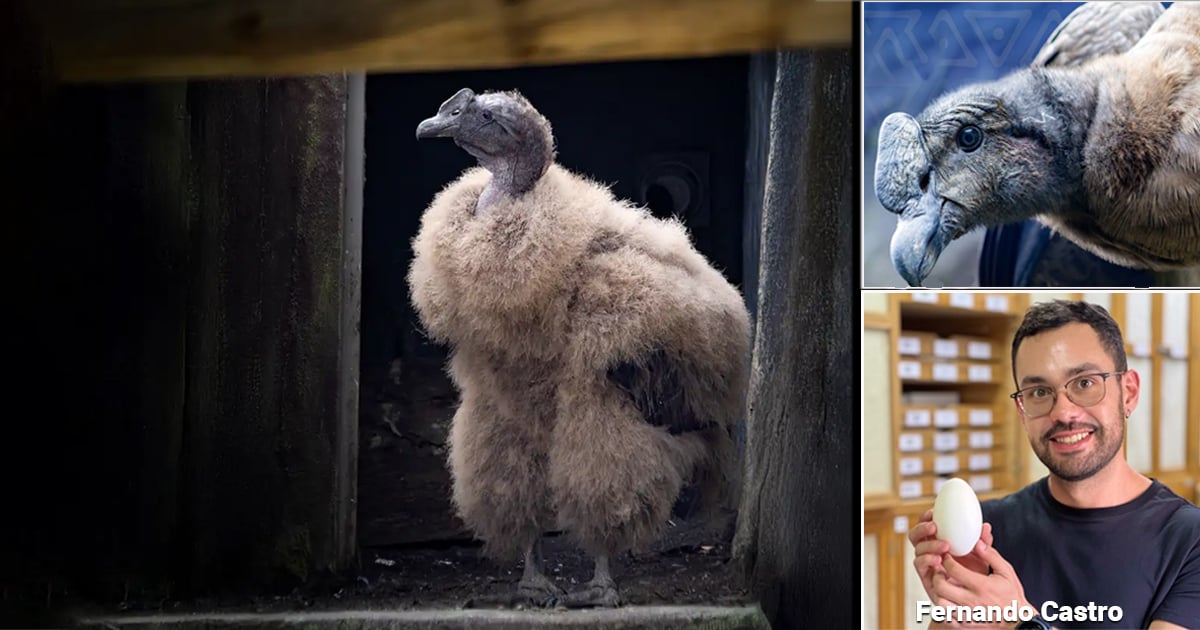
The initiative is part of a comprehensive, multi-front strategy led by Fernando Castro Vargas, Coordinator of Conservation and Research at the Foundation, alongside a dedicated team of biologists, veterinarians, and field researchers at the La Piedra del Cóndor reserve. Supported by recent institutional alliances—including a substantial investment of over COP $428 million from the CAR (Autonomous Regional Corporation of Cundinamarca) and sponsorship from OPAIN—the program transcends mere captive breeding. It is a holistic ecosystem restoration project that integrates genetic management, habitat rehabilitation, and critical engagement with rural communities to ensure that birds like Rafiki do not just survive, but thrive.
Chronology of a Miracle: From Chilean Roots to Páramo Skies
The journey that brought Rafiki to the precipice of freedom spans over a decade and crosses international borders. Understanding the gravity of the Andean condor’s decline in Colombia, the Parque Jaime Duque Foundation launched its dedicated Andean Condor Conservation Program in 2012.
2012–2015: Establishing the Foundation
- 2012: The conservation program officially commences under the guidance of Fernando Castro Vargas, establishing protocols for professional condor care, reproductive biology, and eventual rewilding.
- 2015: As part of a landmark genetic diversification effort, three pairs of condors are brought to Colombia from Chile. Among them is a foundational breeding pair: Xue (female) and Chie (male).
2024: The Birth of Rafiki
- May 31, 2024: Xue and Chie successfully produce a viable egg. Given the extremely slow reproductive rate of condors—which typically yield a single chick every two years—this is treated as a monumental scientific event.
- July 29, 2024: After approximately 60 days of precise artificial incubation—where temperature, humidity, and rotation are strictly regulated—Rafiki hatches. The name "Rafiki," meaning "friend" in Swahili, is chosen to honor Rafael Torres, manager of the Parque Jaime Duque Foundation.
- August–December 2024: To prevent imprinting, caretakers feed the chick using a puppet that mimics an adult condor’s head. This ensures Rafiki learns avian behaviors without associating humans with food or safety. He transitions from controlled indoor environments to expansive outdoor flight aviaries designed to build wing strength and muscle mass.
2025–2026: Expanding the Genepool and Preparing for Flight
- 2025: The breeding program celebrates the births of Wayra and Ámbar, followed shortly by Cattleya (daughter of Katuma, a male from the Medellín Conservation Park) and Audrey (a female brought from a United States zoo to diversify the genetic pool).
- Late 2026: Rafiki, now two years old and fully conditioned, is prepared for transfer to the La Piedra del Cóndor Natural Reserve in the El Almorzadero Páramo for his historic release.
Supporting Data and Institutional Investment
Saving a species as massive and slow-reproducing as the Andean condor requires capital, infrastructure, and continuous data collection. Between 2015 and 2019 alone, the Parque Jaime Duque Foundation directed COP $3.5 billion toward reproduction, field monitoring, community outreach, and release protocols.

Recent financial injections have further bolstered these efforts. A strategic alliance with the CAR injected over COP $428 million to upgrade technology, enhance animal protection, and strengthen technical capacities. Furthermore, corporate partnerships—such as airport operator OPAIN stepping in as Rafiki’s corporate godfather in 2025—demonstrate a growing synergy between private enterprise and environmental conservation in Colombia.
Population and Ecological Metrics
- Wild Population Status: While historical estimates placed the entire Colombian wild population at roughly 150 individuals, localized monitoring yields encouraging micro-trends.
- El Almorzadero Growth: In the El Almorzadero Páramo, intensive monitoring by the Foundation—utilizing direct observation, camera traps, and telemetry—recorded a significant rebound. The identified population in the area rose from 21 individuals in 2022 to over 40 in 2026.
- Maximum Simultaneous Sightings: The peak number of condors observed together in a single monitoring event in El Almorzadero increased from 27 in 2022 to 35 in 2024.
- Habitat Restoration: Recognizing that a healthy bird needs a healthy home, the Foundation’s reserve work has led to the planting of over 2,820 native plants between 2022 and 2026 across former grazing lands, boasting a survival rate exceeding 80%. More than 720 of these plants were integrated in 2026 alone, with 85% of planting sessions executed hand-in-hand with local communities.
Official Responses and Expert Perspectives
The success of the Andean Condor Conservation Program hinges on a multidisciplinary team operating across two distinct fronts: the breeding and conditioning center in Tocancipá (Cundinamarca) and the rugged wilderness of El Almorzadero (Santander).
Project coordinators emphasize that opening a cage door is merely the final step of a profoundly complex psychological and physical transition.

"A condor raised like a pet would not survive a handful of flights in the Andes," notes the scientific team at the Foundation. This philosophy dictates every interaction during a chick’s upbringing. From the specialized puppet-feeding techniques used during Rafiki’s infancy to the progressive introduction of complex wind currents in large open-air enclosures, every protocol is engineered to foster self-reliance.
Equally vital is the human dimension of the conservation effort. The Foundation works directly with 28 farming families across four municipalities in Santander—Cerrito, Concepción, San Andrés, and Guaca. Biologists recognize that conservation cannot succeed in opposition to rural communities. Historically, condors have fallen victim to illegal hunting and secondary poisoning when farmers lace animal carcasses with toxins, mistakenly believing the scavengers prey on livestock.
By actively engaging these communities, the program transforms rural populations from adversaries into active stewards of the páramo. Local farmers now participate directly in habitat restoration, monitoring workshops, and biodiversity protection programs.

Implications for Colombia’s Biodiversity
Rafiki’s impending release carries profound ecological, cultural, and national implications.
Ecological Importance
Ecologically, the Andean condor is an irreplaceable keystone species. As an obligate scavenger, it feeds exclusively on carrion, effectively cleaning ecosystems and acting as a natural sanitary barrier that prevents the spread of disease in high-mountain environments. Without healthy scavenger populations, the delicate balance of the páramo—a unique alpine ecosystem that supplies the bulk of Colombia’s fresh water—begins to fray.
A Nation of Contrasts
Culturally and nationally, the condor’s plight mirrors Colombia’s broader environmental reality. On one hand, Colombia is a global biological superpower. In 2026, the country once again claimed first place in the Global Big Day, registering an astounding 1,566 bird species in a single 24-hour period. It holds the crown as the most bird-rich nation on Earth.

Yet, this staggering wealth comes with an urgent warning label: Colombia also houses dozens of critically endangered avian species, of which the Andean condor is the most iconic. The nation’s skies are simultaneously a celebration of evolutionary diversity and a battleground against habitat fragmentation, illegal poaching, and anthropogenic conflict.
Looking Ahead
For Rafiki, the transition from the safety of Tocancipá to the icy winds of El Almorzadero will not be easy. Equipped with satellite tracking and telemetry devices, his movements will be closely watched by researchers eager to see if a captive-born chick can successfully integrate into wild social hierarchies, locate natural food sources, and eventually find a mate.
Ultimately, conservationists emphasize that the true measure of success will not be the moment Rafiki takes his first flight off the cliffs of Santander, but the day, years from now, when he reaches sexual maturity and contributes his own lineage to the skies of the Colombian Andes. Until then, Rafiki remains a living symbol of resilience—proving that with science, patience, and community collaboration, even a species brought to the edge of the abyss can find its wings once more.



Leave a Reply