


BOGOTÁ, COLOMBIA — In a decisive shift toward urban sustainability and water security, the administration of Bogotá has reignited a long-delayed initiative to repurpose treated wastewater from the city’s western sector. Natasha Avendaño, head of the Bogotá Aqueduct and Sewerage Company (EAAB), has formally advanced the environmental licensing process for the Salitre Wastewater Treatment Plant (PTAR El Salitre). With the backing of the Ministry of Environment—led by Minister Fabio Arjona—the project has cleared major administrative bottlenecks, securing prospective industrial and municipal clients as the capital braces for future dry periods and the looming threat of the El Niño phenomenon.
The move marks a profound pivot from previous political deadlocks, promising to integrate circular economy principles into Bogotá’s primary resource management frameworks. By channeling treated effluents back into industrial, construction, and public maintenance grids, the district aims to reserve high-purity potable water strictly for human consumption.
Main Facts
The core of the initiative centers on the technological and administrative transformation of PTAR El Salitre, located in the northwestern locality of Suba.
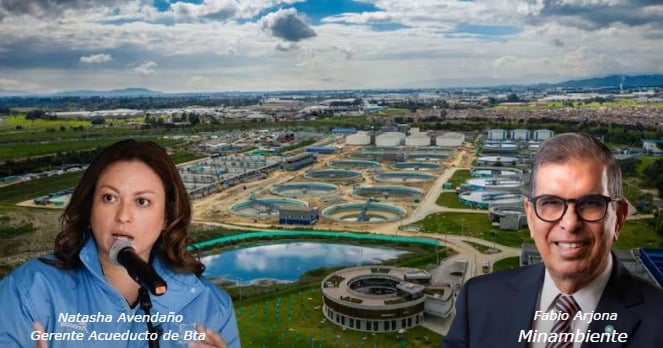
- The Scope of Reuse: The project seeks to harness up to 77 liters per second of treated wastewater and rainwater runoff. This translates to an estimated 22,000 cubic meters of non-potable water available monthly for industrial and municipal operations.
- Target Beneficiaries and Clients: The harvested water will not sit idle; a robust roster of public entities and private enterprises has already lined up for allocation. Prospective users include the Special Administrative Unit for Public Services (UAESP), the Bogotá Botanical Garden, the Urban Maintenance Unit (UMV), and heavy private sector players such as multinational building materials giant Cemex.
- Approved Applications: The reused water is strictly designated for activities that do not require potable standards. These include industrial manufacturing processes, construction mixing and dust suppression, urban gardening and park irrigation, and the systematic cleaning of public thoroughfares and building facades.
- Regulatory Oversight: The licensing process involves a collaborative framework across national and regional jurisdictions, spearheaded by the Ministry of Environment, the National Environmental Licensing Authority (ANLA), and the Regional Autonomous Corporation of Cundinamarca (CAR).
Chronology of the Project: From Political Stagnation to Revival
The path to transforming PTAR El Salitre into a hub of circular water management has been politically fraught, characterized by sharp ideological divides over environmental administration in Colombia.
The 2024 Water Rationing Crisis
During the severe droughts and subsequent water rationing cycles experienced by Bogotá in 2024, the potential of PTAR El Salitre remained untapped. Despite the urgent need to diversify water sources amid dwindling reservoir levels in the Chingaza system, technical proposals submitted by the Bogotá Aqueduct to leverage treated wastewater stalled. Analysts and local officials frequently pointed to political friction between the municipal administration and the central government—then headed by President Gustavo Petro—as the primary culprit for freezing the environmental licensing studies.
The Political Shift and Ministerial Unblocking
The political landscape shifted following the inauguration of President Abelardo de la Espriella. Under the new national administration, the Ministry of Environment adopted a proactive stance toward decentralized resource management and municipal resilience. Minister of Environment Fabio Arjona swiftly dismantled the bureaucratic impediments that had kept the EAAB’s application in legislative limbo.

Current Milestones (Late 2026)
With the administrative path cleared, the execution phase is accelerating. The National Environmental Licensing Authority (ANLA), directed by Sergio Piñeros, scheduled a comprehensive technical field visit to PTAR El Salitre for October 6, 2026. This onsite evaluation serves as the definitive step for ANLA technicians to inspect the facility’s output quality, distribution infrastructure, and environmental safety protocols before granting the final operational permits requested by EAAB Manager Natasha Avendaño.
Supporting Data and Technical Metrics
To understand the gravity and scale of the Bogotá Aqueduct’s proposal, one must examine the baseline capacity of PTAR El Salitre and the structural realities of the capital’s water supply.
- Volume and Scale: The recovery of 77 liters per second represents a significant relief valve for local aquifers and reservoirs. While 22,000 cubic meters per month may appear modest compared to the total daily consumption of a city of eight million people, it constitutes a massive volume of high-grade resource conservation when funneled exclusively into heavy industry and public works.
- Energy and Treatment Integrity: PTAR El Salitre utilizes advanced secondary and tertiary treatment technologies designed to remove organic loads, suspended solids, and chemical pollutants. However, because this water is categorized for non-potable (Class V or specialized industrial) uses, the infrastructure avoids the exponentially higher energy costs and chemical inputs required for tertiary potable purification, making it a cost-effective alternative for heavy users.
- Geographical Distribution: Situated along the Juan Amarillo river basin in Suba, the plant is ideally positioned to supply the northern and western industrial corridors of Bogotá, where a high concentration of construction projects, manufacturing plants, and municipal depots operate. This localized distribution significantly cuts down the heavy pumping and transport energy costs associated with moving raw water from eastern mountain reservoirs across the entire savanna plain.
Official Responses and Stakeholder Perspectives
The unfreezing of the PTAR El Salitre permits has elicited strong reactions from key figures across the Colombian environmental and political landscape, emphasizing a united front between municipal ambition and national oversight.
Ministry of Environment: A Vision of Circular Economy
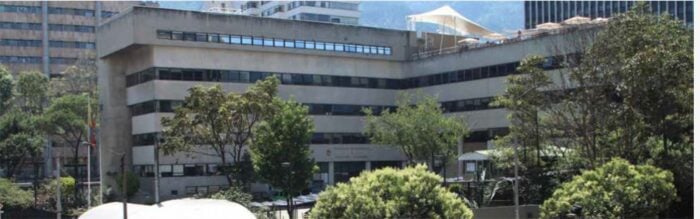
Environment Minister Fabio Arjona has championed the project not merely as an emergency response to climate variability, but as a structural paradigm shift.
"This process is crucial to advancing efficiently and circularly in our use of water resources, permitting its continuous reuse," Minister Arjona stated during policy briefings regarding the initiative. He emphasized that the national government’s overarching strategy is to eliminate the absurd practice of utilizing treated drinking water for industrial or cleaning tasks where lower-grade water suffices, thereby insulating the capital against future shocks from the El Niño oscillation cycle.
ANLA: Responsible Productive Integration
Sergio Piñeros, director of the National Environmental Licensing Authority (ANLA), echoed the ministry’s sentiments, framing the agency’s current evaluation as a balanced approach to industrial productivity and ecological preservation.
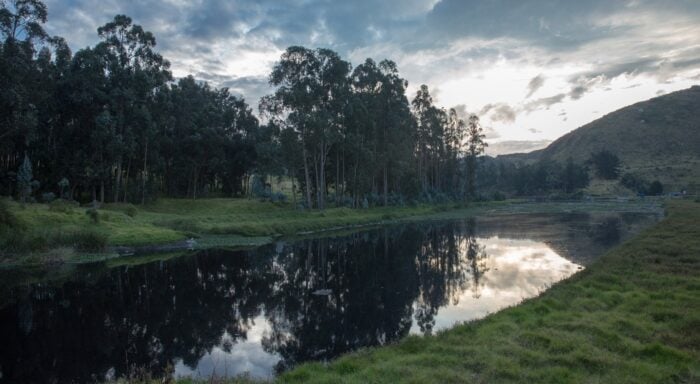
"The recent advancements at PTAR El Salitre aim to promote concrete solutions that allow for the responsible, productive utilization of our hydrological resources," Piñeros remarked. He confirmed that ANLA’s technical teams are meticulously reviewing every parameter to ensure that the EAAB’s integration of the plant complies with the strictest environmental safeguards.
Municipal Leadership: Execution Under Natasha Avendaño
For the Bogotá Aqueduct and Sewerage Company, under the executive direction of Natasha Avendaño, the progression of the license represents the culmination of technical persistence. Having weathered political opposition and complex regulatory hurdles, the EAAB is now positioned to deliver on a promise made years ago: turning a liability—wastewater discharge—into a core asset for urban economic sustainability.
Implications for Bogotá’s Future
The operationalization of water reuse at PTAR El Salitre carries profound socio-economic and environmental implications for the Bogotá-Cundinamarca region.

1. Enhanced Resilience Against Climate Change
As global weather patterns become increasingly erratic, characterized by acute alternation between prolonged droughts and intense precipitation driven by climate change phenomena, reliance on traditional mountain reservoirs (such as Chuza and San Rafael) is no longer a viable long-term strategy for a megacity. By diversifying its water matrix to include reclaimed wastewater, Bogotá builds structural redundancy into its utility infrastructure.
2. Economic Savings for Industrial and Municipal Sectors
For major industrial consumers and municipal contractors like Cemex, the UAESP, and the Botanical Garden, securing a stable, dedicated supply of non-potable water insulates them from the punitive tariffs and stringent consumption caps typically enforced during dry seasons. Furthermore, utilizing non-potable water reduces operational overhead, as raw or treated reclaimed water is traditionally priced lower than potable residential-grade water.
3. Precedent for National Water Policy
The successful unblocking of the PTAR El Salitre permits sets a vital legal and administrative precedent for other major Colombian urban centers—such as Medellín, Cali, and Barranquilla—which grapple with similar pressures on their sanitation and water supply networks. By proving that high-capacity urban wastewater treatment plants can successfully transition into dual-purpose supply nodes, the Ministry of Environment is effectively rewriting the playbook for urban water governance in Colombia.
As ANLA prepares its final technical evaluations for October 2026, Bogotá stands on the brink of a new era in resource management—one where wastewater is no longer viewed as a terminal waste product, but as the lifeblood of a modern, circular, and climate-resilient capital.



Leave a Reply