

By Global Environmental Desk
Published: October 2026
Main Facts
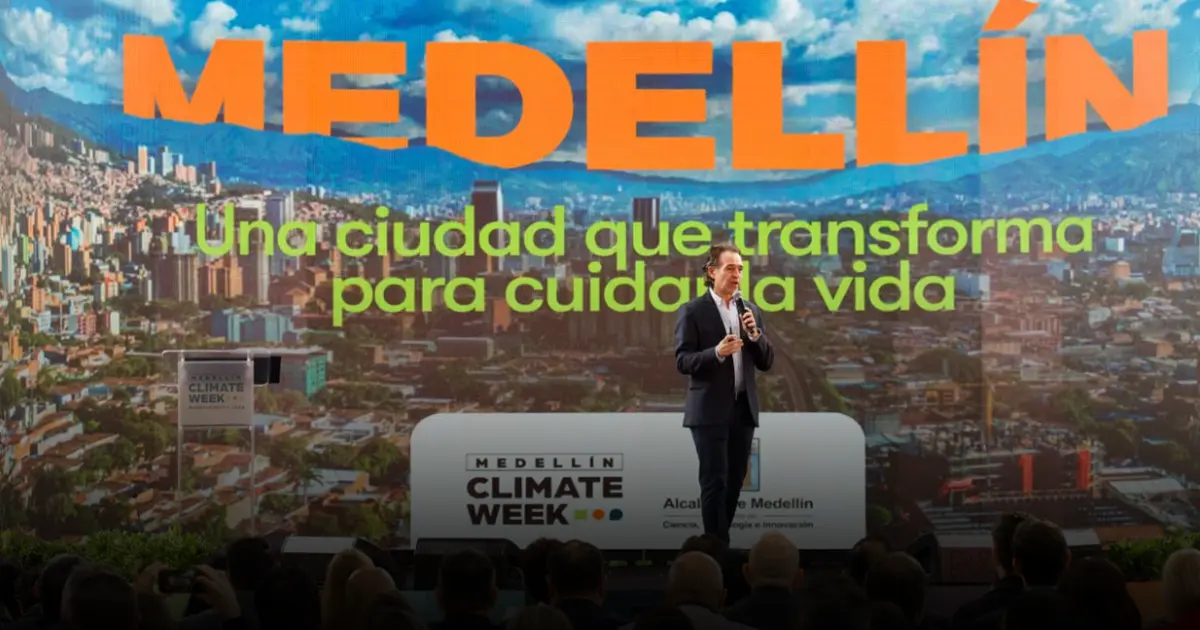
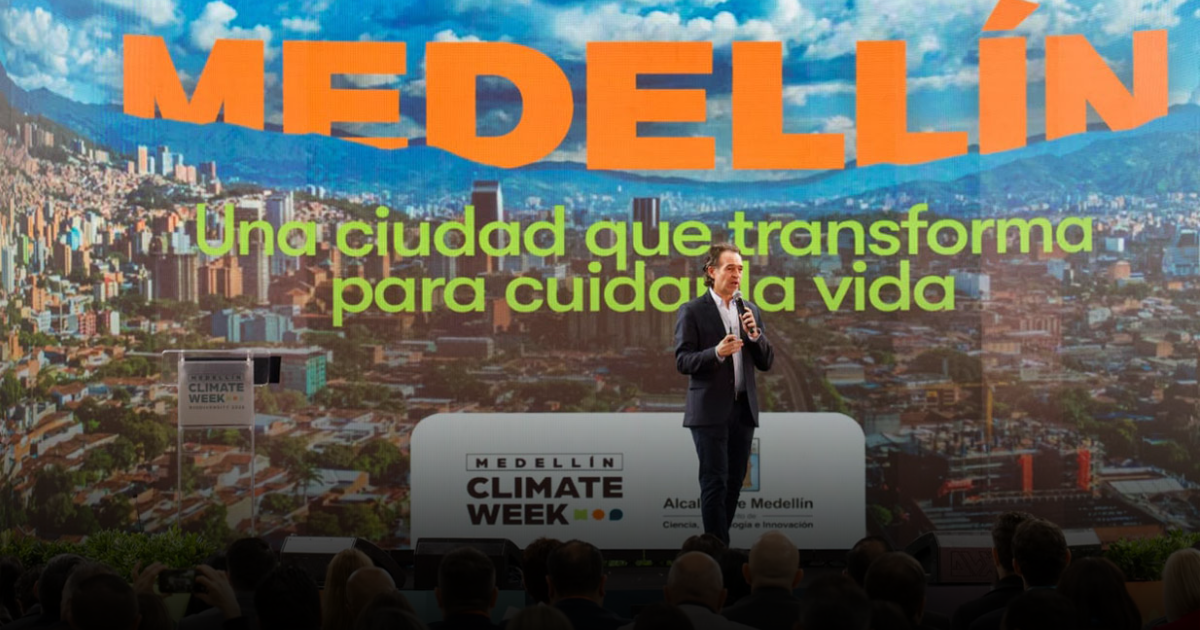
Medellín, Colombia’s renowned "City of Eternal Spring," has officially transformed into the epicenter of international environmental diplomacy, innovation, and urban sustainability. The Climate Week Biodiversity 2026 kicked off on September 28 and is scheduled to run through October 10, bringing together a vast coalition of global leaders, policymakers, corporate executives, academic researchers, and grassroots social organizations.
For twelve consecutive days, the city is hosting a comprehensive dialogue addressing some of the most critical challenges of our era: biodiversity loss, accelerating climate change, technological innovation, and sustainable development models for the Global South.
While the broader cultural and educational activities extend across the entire twelve-day period, the core academic and institutional programming is concentrated during the opening days—running through October 1. This initial burst features an impressive scale: nearly 244 distinct events, panel discussions, and workshops led by 76 high-level international speakers. Organizers report that over 1,600 participants have officially registered to attend in person, with thousands more engaging through virtual channels.
To ensure democratic access to these critical conversations, the event is entirely free to the public. However, due to high demand and spatial limitations, pre-registration through official channels remains mandatory. The complete agenda, along with registration portals, continues to be hosted via the official platform at www.climateweekmedellin.com/agenda.
Chronology of the Event
The unfolding of Climate Week Biodiversity 2026 represents months of rigorous multi-sector planning, structured to maximize engagement, policy formation, and cross-border cooperation:
- Pre-Event Phase (Mid-September 2026): Finalization of international delegations, setup of technological infrastructure across various innovation hubs in Medellín, and the launch of the public registration portal.
- September 28, 2026 (Opening Day): Official inauguration ceremonies featuring keynote addresses from the Mayor of Medellín, international environmental agency directors, and indigenous community representatives. The tone is set on the interconnectedness of urban development and biodiversity preservation.
- September 29 – October 1, 2026 (The Core Academic Window): The densest period of the summit. During these 72 hours, the majority of the 244 scheduled events take place. Panels explore green financing, circular economies, urban rewilding, and corporate accountability. Networking sessions connect local enterprises with global green funds.
- October 2 – October 9, 2026 (Extension & Community Integration): Decentralized workshops, university-led forums, cultural exhibitions open to the public, and field visits to ecological restoration projects across the Aburrá Valley.
- October 10, 2026 (Closing & Impact Assessment): Final plenary sessions, the presentation of the comprehensive carbon-footprint audit conducted by Portafolio Verde, and the drafting of the "Medellín Biodiversity Declaration," a roadmap for participating organizations heading into upcoming global climate summits.
Supporting Data & Multi-Sector Participation
One of the defining characteristics of Climate Week Biodiversity 2026 is its unprecedented cross-sectoral collaboration. Spanning participants from eight countries, the summit breaks down traditional silos by uniting institutions across seven distinct categories:
1. Government and Multilateral Organizations
Local leadership is spearheaded by the Mayor’s Office of Medellín (Alcaldía de Medellín), the Aburrá Valley Metropolitan Area (Área Metropolitana del Valle de Aburrá), and ACI Medellín (the agency responsible for international cooperation and investment attraction).
They are joined by a formidable roster of international and multilateral giants, including:
- The United Nations (UN)
- World Wide Fund for Nature (WWF)
- ICLEI – Local Governments for Sustainability
- C40 Cities Climate Leadership Group
- GIZ (German Corporation for International Cooperation)
- Global Green Growth Institute (GGGI)
- Development Bank of Latin America and the Caribbean (CAF)
2. Private Sector Leadership
Corporate heavyweights are stepping up to demonstrate that profitability and ecological stewardship can—and must—coexist. Prominent participants include financial institutions and multi-industry corporations such as SURA, EPM (Empresas Públicas de Medellín), KPMG, and Grupo Aval, alongside regional giants like Comfama, ISA, and Proantioquia. These companies are utilizing the platform to unveil new environmental, social, and governance (ESG) targets and showcase green-tech investments.
3. Academia and Innovation Ecosystems
Recognizing that scientific research must underpin policy, leading higher-education institutions are actively involved, notably the Universidad de los Andes, CES University, and Universidad EAN.
Furthermore, Medellín’s internationally acclaimed innovation ecosystem is fully integrated into the week’s events. Centers like Ruta N, Parque Explora, and the Medellín Planetarium are hosting interactive exhibits and tech-driven panels that explore how artificial intelligence, biotechnology, and citizen science can be leveraged to monitor and protect biodiversity.

Official Responses and Organizational Vision
The realization of an event of this magnitude requires robust orchestration. Climate Week Biodiversity 2026 is officially organized through a unique public-private partnership comprising the Mayor’s Office of Medellín, Impact Hub Medellín, Fundación Socya, the Climate Week Network, and ACI Medellín.
Speaking on the vision behind the summit, municipal leaders emphasized that Medellín is no longer just recovering from its complex historical narrative, but is actively exporting models of urban environmental resilience. By integrating nature-based solutions—such as the famous urban green corridors that have successfully lowered the city’s average temperatures—Medellín serves as a living laboratory for the tropics.
Accountability and Environmental Auditing
In a noteworthy commitment to operational integrity, the organizers have refused to let the event preach sustainability without practicing it. Every element of the summit is being rigorously evaluated for its ecological footprint.
Portafolio Verde, a specialized environmental consultancy and official ally of Climate Week Biodiversity 2026, has been contracted to measure the carbon footprint of the entire twelve-day event. Their mandate is to identify, quantify, and report all greenhouse gas emissions associated with travel, venue energy consumption, logistics, and waste generation.
By generating this transparent data, the organizers aim not only to offset the event’s immediate impact through localized reforestation initiatives but also to establish a gold standard for sustainable event management across Latin America.
Broader Implications for Global Climate Action
The timing of Climate Week Biodiversity 2026 is strategically critical. As the international community grapples with the cascading effects of climate change—ranging from severe droughts and erratic weather patterns to catastrophic biodiversity loss—regional forums like the one in Medellín are proving to be essential testing grounds for global policies.

Bridging Local Realities with Global Goals
While mega-conferences like the United Nations Climate Change Conferences (COP) set high-level international targets, they often feel disconnected from the day-to-day realities of local municipalities and indigenous communities. Climate Week Medellín bridges this gap. By anchoring global frameworks (such as the Kunming-Montreal Global Biodiversity Framework) within the urban and regional context of the Andes and the broader Latin American landscape, the summit demonstrates how municipal policies can directly feed into national and international climate goals.
The Rise of the Global South in Climate Diplomacy
Historically, global environmental agendas have been heavily dictated by Western nations. However, events like Climate Week Biodiversity 2026 underscore the growing leadership of the Global South. As a megadiverse country harboring roughly 10% of the planet’s biodiversity within its borders, Colombia is uniquely positioned to lead the conversation on bio-economy, ecological peacebuilding, and the rights of nature.
Catalyst for Green Investment
For the corporate and financial sectors, the summit is more than a talk shop; it is a marketplace for sustainable solutions. By convening venture capitalists, international cooperation agencies, and local green startups through entities like Ruta N, the event is actively channeling capital toward scalable environmental innovations. Whether through financing renewable energy transitions, supporting regenerative agriculture, or funding urban biodiversity monitoring systems, the economic implications of the week will reverberate long after the tents are dismantled on October 10.
Conclusion
As Climate Week Biodiversity 2026 continues its robust agenda through the first week of October, Medellín reaffirms its status as a beacon of urban resilience and environmental innovation. By successfully gathering governments, multinational agencies, corporate leaders, scientists, and citizens under one collaborative umbrella, the city is proving that systemic ecological transformation is not merely an idealistic goal, but an active, ongoing, and entirely necessary practice.
The lessons forged in the Aburrá Valley over these twelve days will undoubtedly echo far beyond Colombia’s borders, offering a vital blueprint for cities worldwide striving to harmonize human development with the preservation of the natural world.



Leave a Reply