

By Global Investigative Desk
Published in partnership with regional security briefings
Main Facts: A Landmark Facility Amidst Rural Isolation
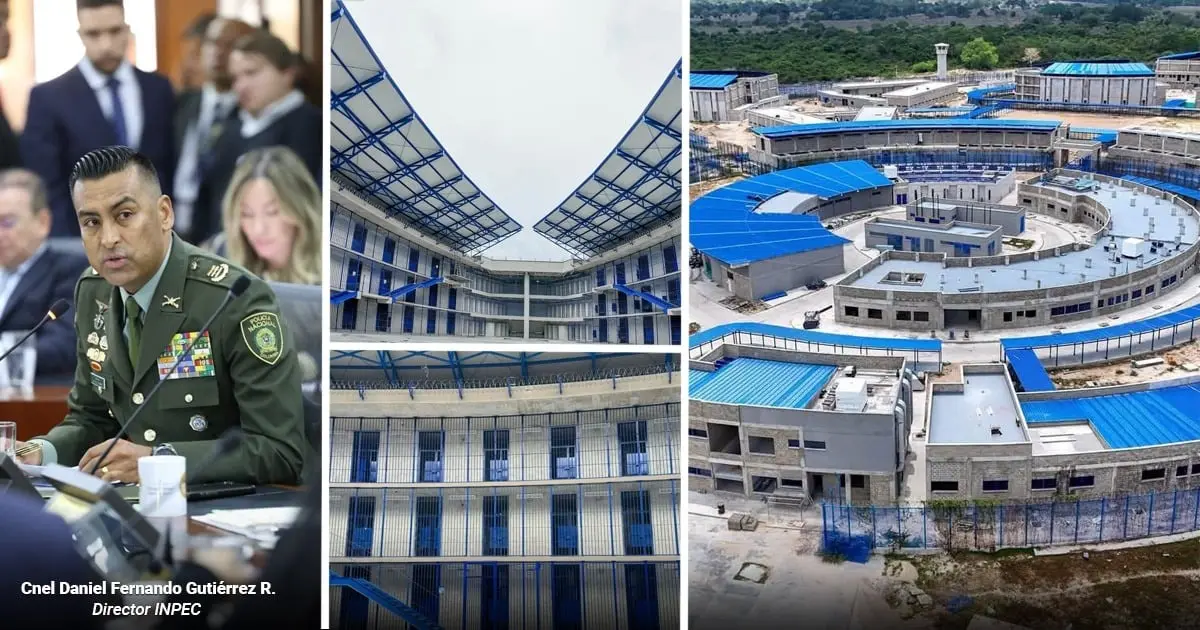
Roughly four hours southwest of Santa Marta, deep within the sun-scorched, rugged terrain of the Magdalena department, the rural landscape of Sabanas de San Ángel has been fundamentally altered. Spanning an expansive 22-hectare plot—equivalent to roughly 60,000 square meters—a fortress of reinforced concrete, heavy-duty security wire, and advanced surveillance systems rises from the dirt. This is the Renacer Mega-Prison (Cárcel Renacer), a high-security correctional complex designed to house up to 1,974 high-risk inmates.
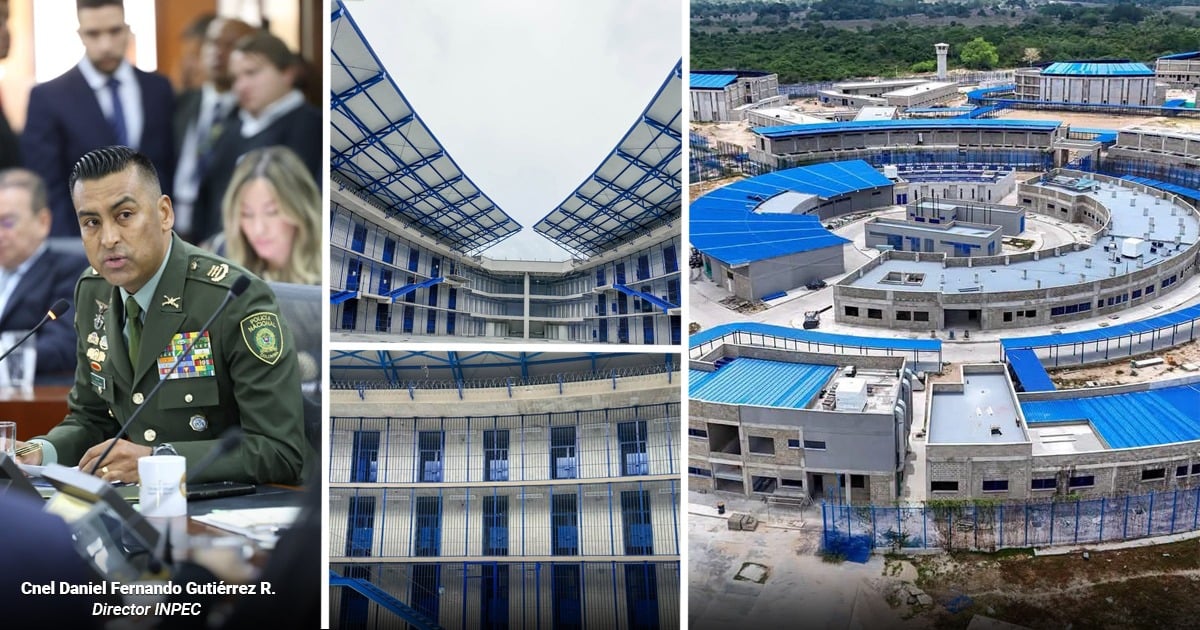
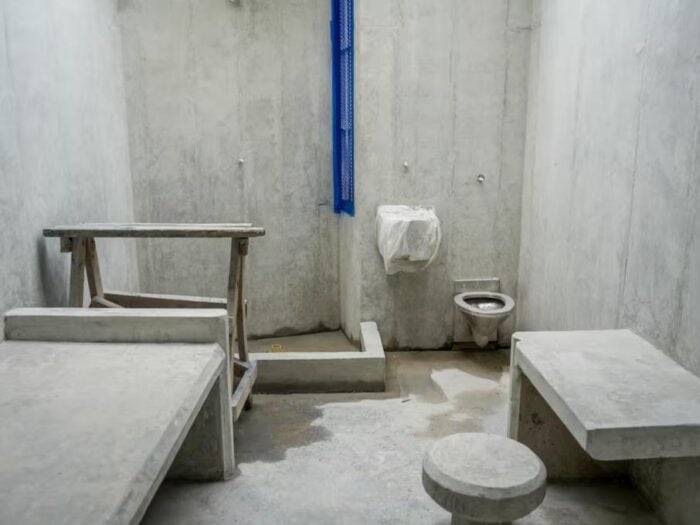
Currently standing at an 86% physical completion rate (with financial execution at roughly 75%), the facility represents a cornerstone of the national government’s hardline security strategy. Inspired heavily by the correctional models implemented by President Nayib Bukele in El Salvador, Renacer features stark, spartan individual cells equipped with basic rustic concrete furnishings: a concrete bed frame, a built-in table, a chair, and a primitive toilet. Designed to completely sever the connection between high-profile criminals and the outside world, the facility boasts advanced signal-blocking technology to prevent illicit cellular communications, reinforced perimeter meshes, and total geographical isolation from major urban centers.
Yet, behind the imposing architectural design and political promises lies a deeply troubled bureaucratic saga. Originally conceived under the administration of former President Iván Duque, the project has suffered nearly five years of cumulative delays, budgetary overruns, localized security threats, and a protracted 14-month operational paralysis during the tenure of former President Gustavo Petro. Now, the completed facility is slated to be inaugurated under the administration of President Abelardo de la Espriella, making Renacer the flagship opening of his broader campaign pledge to construct ten high-security mega-prisons across Colombia.

Chronology of a Project Delayed: From 2019 Contract to 2026/2027 Inundation
The timeline of the Renacer project is a case study in structural inertia, administrative bottlenecks, and poor initial planning.
- December 26, 2019: Under the administration of President Iván Duque and the leadership of Ricardo Gaitán Varela at the National Penitentiary and Prison Services Unit (USPEC), Contract No. 304 is officially signed. Valued at $183.630 billion pesos, the contract is awarded to the Consorcio Fundación 2020 (subsequently rebranded to reflect institutional modernization and a focus on resocialization). The objective is to build an Order-Level Penitentiary Establishment (ERON) to provide 1,500 initial slots for inmates in Sabanas de San Ángel, Magdalena, alongside an interventor (oversight) contract bringing the total projected cost to $275.400 billion pesos over a 32-month execution window.
- February 14, 2020: The official kickoff act is signed by contractor Alfredo Muñoz Rodríguez and USPEC Director Ricardo Gaitán Varela, setting high expectations for a prompt delivery.
- April 2021 (The Delayed Start): Despite the 2020 signing, physical construction does not begin until over a year later. The delay is attributed to extensive design modifications, protracted environmental licensing processes, and difficulties securing reliable water supply permits.
- 2022–2023 (The Petro Administration Paralysis): As political administrations shift, the project faces severe friction. Between 2022 and 2023, under the government of Gustavo Petro, construction experiences a staggering 14-month total paralysis. Critics point to this era as a period of bureaucratic stagnation where the project’s momentum was effectively lost.
- Mid-2023 to 2025 (Resumption and Overruns): Construction finally resumes, but not without further turbulence. Public order issues in the region, including direct threats against construction workers and logistical nightmares along the remote access routes, plague the site. Additional budgeting becomes necessary, forcing a $43.000 billion peso budgetary addition to cover essential equipment and outfitting.
- Late 2026 / Early 2027 (Current Status): With the physical completion rate currently resting at 86% and financial execution at 75%, authorities project that the facility will finally open its doors three months from now, marking an accumulated delay of 49 months (more than four years) past its original September 2022 deadline.
Supporting Data: Infrastructure, Consortiums, and Logistics
Understanding the scale of Renacer requires examining the granular data behind its construction, financing, and geographic placement:
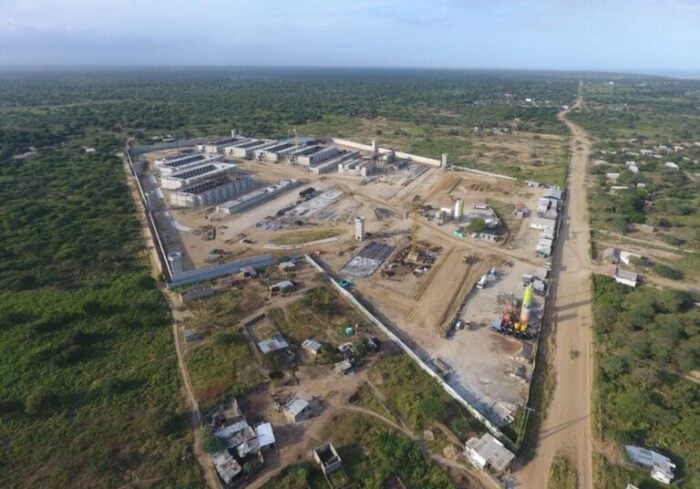
- Geographic Isolation: The prison is situated 170 kilometers from Santa Marta. The immediate municipality, Sabanas de San Ángel, has a total population of 17,856, with only about 5,000 residing in the urban core. The prison itself is located roughly 48 kilometers from the municipal seat, while the Estación Villa sector in the neighboring municipality of Algarrobo is a grueling two-hour journey by car or motorcycle.
- Capacity Adjustments: Initial projections by former Minister of Justice Wilson Ruiz suggested the facility could accommodate up to 3,500 inmates, making it the largest in the region. However, subsequent design revisions scaled back the capacity to a definitive maximum of 1,974 individual slots.
- The Construction Consortium: Consorcio Fundación 2020 is composed of four distinct corporate entities carrying specific equity stakes:
- Construcción Con – Unión Ltda. (50% participation)
- Meyan S.A. (20% participation)
- AMR Construcciones S.A.S. (15% participation)
- Constructora Amco (15% participation)
- Scope of Works: The complex includes critical support infrastructure: general services buildings, high-capacity electrical power plants, a massive institutional kitchen (rancho), a dedicated medical/sanitation unit, industrial boilers, and an advanced wastewater treatment plant (PTAR).
Official Responses and Institutional Scrutiny
The path toward completing Renacer has drawn intense scrutiny from state oversight bodies. The Office of the Comptroller General (Contraloría General de la República) repeatedly issued public warnings regarding structural flaws in the initial planning phase, inadequate preliminary studies, and poor architectural designs—particularly concerning the external electrical grid connections that threatened to leave the remote facility unpowered.
USPEC, as the executing entity under the Ministry of Justice, has defended the project’s inflated costs and timeline, pointing to unavoidable external shocks, including regional security crises, complex bureaucratic hurdles regarding water rights in a semi-arid zone, and necessary modifications to upgrade the facility to true maximum-security standards.
Meanwhile, political optics have shifted dramatically. While the project was conceived and initiated during the conservative administration of Iván Duque and largely stalled during the leftist tenure of Gustavo Petro, it is set to be inaugurated under the hardline government of President Abelardo de la Espriella. For De la Espriella’s administration, Renacer is not merely a delayed public works project; it is the physical embodiment of his campaign promise to reclaim the state’s monopoly on force by stripping violent cartels, gang leaders, and high-profile capos of their ability to command criminal empires from behind bars.
Implications: A New Era for Colombia’s Penitentiary System
The imminent opening of the Renacer Mega-Prison carries profound implications for Colombia’s chronically overcrowded and violence-plagued correctional system:

- The Bukele Model in the Andes: By adopting the architectural philosophy of El Salvador—characterized by extreme austerity, zero outside contact, total isolation, and concrete-heavy minimalist cells—Colombia is signaling a radical departure from traditional rehabilitation-focused correctional models for high-risk offenders. The use of specialized naval prison ships and isolated inland fortresses like Renacer indicates a broader state pivot toward incapacitation over reform for major crime bosses.
- Combating Prison-Led Extortion: Historically, Colombian prisons have served as command centers where incarcerated cartel bosses and gang leaders continue to orchestrate extortion, homicides, and drug trafficking via smuggled mobile phones. The implementation of state-of-the-art signal-blocking technology and total physical isolation at Renacer aims to sever these digital umbilical cords.
- Political Capital and Future Megaprojects: As the first of ten planned mega-prisons promised by President De la Espriella, Renacer will serve as a political litmus test. Its operational success—or failure—will dictate public and legislative support for the remaining nine facilities slated for construction across the country, including ongoing projects in departments like La Guajira.
As the final 14% of construction wraps up over the coming months, all eyes will turn to Sabanas de San Ángel to see whether this isolated concrete fortress can finally deliver on its half-decade-old promise to lock away Colombia’s most dangerous criminals for good.




Leave a Reply