

The promise of Direct Air Capture (DAC) has long been heralded as a vital technological pillar in the global fight against climate change. By vacuuming carbon dioxide ($CO_2$) directly from the atmosphere and burying it deep underground, DAC startups promised a pathway to actively reverse historical emissions.
However, the harsh realities of high energy costs, shifting political climates, and a volatile corporate carbon market are forcing pioneers in the space to re-evaluate their business models.
In a stark illustration of this industry-wide pressure, Spiritus, an emerging Direct Air Capture startup based in Los Alamos, New Mexico, has announced a dramatic strategic pivot. Originally founded with the sole mission of capturing atmospheric $CO_2$ for permanent geological sequestration, the company now plans to sell its captured carbon to the oil and gas industry to assist in fossil fuel extraction.
This decision highlights the growing economic friction between environmental ideals and commercial survival in the nascent carbon dioxide removal (CDR) sector.
Main Facts: The Spiritus-Oil Alliance
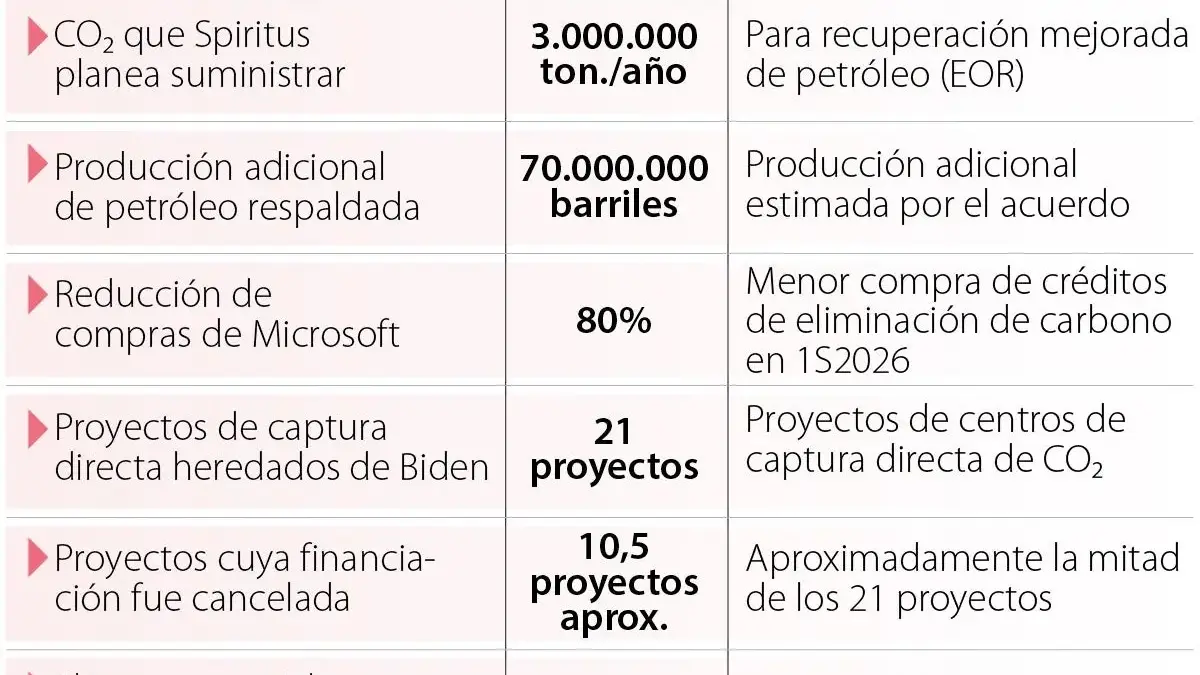
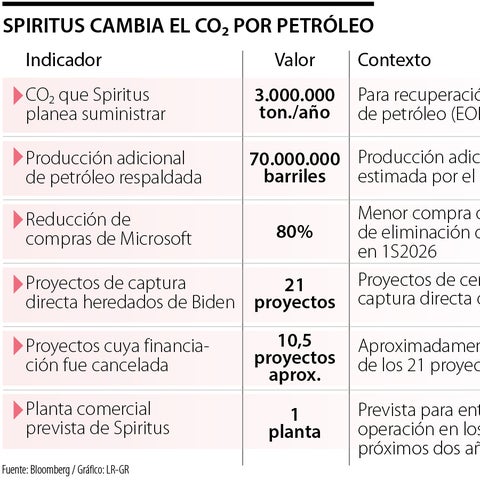
Spiritus has formally shifted its commercial trajectory by signing letters of intent (LOIs) with three major United States oil and gas producers. Under these agreements, the startup intends to supply more than 3 million metric tons of captured atmospheric $CO_2$ annually to these operators.
The primary destination for this captured gas is not permanent, isolated geological repositories, but active oil fields utilizing Enhanced Oil Recovery (EOR). EOR is a decades-old industrial technique where gas—historically sourced from natural underground reservoirs—is injected into mature, depleting oil wells to increase reservoir pressure, reduce crude viscosity, and sweep residual oil to the surface.
According to Spiritus Chief Executive Officer Charles Cadieu, the volume of carbon dioxide slated for delivery under these new agreements could facilitate the extraction of more than 70 million barrels of additional crude oil over the lifetime of the contracts.
Spiritus Commercial Pivot: At a Glance
┌──────────────────────────────────────┬──────────────────────────────────────┐
│ Original Business Model              │ New Commercial Strategy              │
├──────────────────────────────────────┼──────────────────────────────────────┤
│ • Atmospheric Direct Air Capture     │ • Atmospheric Direct Air Capture     │
│ • Permanent geological sequestration │ • $CO_2$ sold as industrial feed     │
│ • Funded by voluntary carbon offsets │ • Primary use: Enhanced Oil Recovery │
│ • Target: Net-negative emissions     │ • Target: Immediate commercial cash  │
└──────────────────────────────────────┴──────────────────────────────────────┘
Spiritus’s proprietary technology, which remains in the development phase, relies on a complex chemical process and massive industrial fans to pull ambient air through contactors, extracting the sparse concentration of $CO_2$ (roughly 420 parts per million) from the atmosphere. Because $CO_2$ is highly diluted in open air, the process is notoriously energy-intensive and capital-heavy.
Faced with a capital shortfall and dwindling options for non-dilutive funding, the company has opted to leverage the reliable, pre-existing demand of the oil patch to finance its early-stage deployment.
Chronology of a Pivot: How Market and Political Shocks Reshaped Spiritus
The strategic about-face of Spiritus did not occur in a vacuum; it is the direct result of a twin blow delivered by political shifts in Washington and a cooling voluntary carbon market.
Timeline of the Direct Air Capture Market Shift
│
├── 2022–2023: The Federal Funding Boom
│   └── Biden administration allocates billions for 21 regional DAC hubs.
│   └── Corporate buyers, led by Microsoft, pledge massive forward-purchases.
│
├── Late 2023: The Voluntary Market Cools
│   └── High costs ($600–$1,000/ton) limit buyer pool.
│   └── Microsoft slashes carbon removal purchases by ~80% in H1.
│
├── 2024: Political & Regulatory Reversal
│   └── Trump administration cancels federal funding for ~half of the 21 DAC hubs.
│   └── Startups face sudden liquidity crises and look to alternative revenue.
│
└── Present: The Pragmatic Pivot
    └── Spiritus signs LOIs to sell 3M+ tons of $CO_2$/year for EOR.
    └── Commercial plant slated to open within two years.
The Federal Funding Retrenchment
Under the previous Biden administration, carbon capture and removal technologies enjoyed unprecedented federal backing. The Infrastructure Investment and Jobs Act (IIJA) and the Inflation Reduction Act (IRA) set aside billions of dollars to jumpstart the industry, including plans for 21 regional DAC hubs across the country.
However, the political landscape shifted dramatically when the administration of Donald Trump took office. Championing a policy of fossil-fuel maximization and skepticism toward green subsidies, the Trump administration canceled federal funding for approximately half of the 21 inherited DAC hub projects. This sudden withdrawal of government backing left numerous startups without the financial safety net required to scale their unproven technologies.
The Corporate Retreat
Simultaneously, the voluntary corporate carbon market—which many analysts hoped would sustain the industry until compliance markets matured—began to show signs of severe fatigue. Microsoft Corp., historically the world’s largest corporate buyer of engineered carbon dioxide removal credits, aggressively scaled back its procurement. In the first half of this year, the tech giant reduced its carbon removal purchases by approximately 80%.
Without deep-pocketed corporate buyers willing to pay premium prices (often exceeding $600 to $1,000 per metric ton of permanently sequestered carbon), DAC developers were forced to look elsewhere for immediate revenue. For Spiritus, that search led directly to the Permian Basin and other major U.S. oil-producing regions, where operators are hungry for reliable sources of $CO_2$ to prolong the lifespans of their fields.
Supporting Data: The Economics of EOR and the DAC Deficit
To understand the economic gravity pulling Spiritus toward the oil sector, one must examine the stark cost disparities currently defining the carbon capture landscape.
- The Cost of Capture: Current estimates for capturing a single metric ton of $CO_2$ via Direct Air Capture range from $300 to over $800, depending on the technology, energy source, and scale. The industry’s ultimate goal is to reach $100 per ton, but achieving this requires massive scale and decades of optimization.
- The EOR Lifeline: Oil producers have long paid between $20 and $40 per ton for naturally occurring, mined underground $CO_2$ to run their EOR operations. However, as natural reservoirs deplete and oil companies face increasing pressure to lower their Scope 1 and 2 emissions, they are willing to pay a premium for recycled or atmospherically captured $CO_2$—especially when coupled with federal tax incentives.
- The 45Q Conundrum: Under Section 45Q of the U.S. tax code, companies receive tax credits for capturing and storing carbon. While the credit for permanent geological storage is higher ($180 per ton for DAC), the credit for using that carbon in EOR is still highly lucrative ($130 per ton for DAC). When combined with the cash payment from the oil company purchasing the gas, EOR presents a highly predictable, lower-risk revenue stream for startups struggling to find long-term corporate buyers.
For a startup like Spiritus, which plans to open its first commercial-scale plant within two years, the math is simple. Delivering 3 million tons of $CO_2$ annually to oil fields provides an immediate, highly bankable cash flow that voluntary corporate buyers, subject to quarterly budget fluctuations, simply cannot guarantee.
Official Responses and the Industry Divide
The announcement of Spiritus’s pivot has reignited a fierce ethical and scientific debate within the carbon management community, exposing a deep philosophical divide among its key players.
The Startup’s Defense
Charles Cadieu, CEO of Spiritus, has steadfastly defended the strategic shift as a matter of basic corporate survival and pragmatic market economics.
"The demand is enormous in the enhanced oil recovery sector, and that is part of what it means to be a company: going where there is commercial potential," Cadieu stated in an interview.
When confronted with scientific criticism regarding the environmental efficacy of using atmospheric carbon to extract more fossil fuels, Cadieu dismissed the pushback.
"We simply do not agree with that," he remarked, maintaining that utilizing DAC-sourced $CO_2$ in oil fields still represents a net benefit compared to using naturally mined, fossil-derived carbon dioxide.
The Scientific Backlash
The academic and environmental research community, however, remains deeply skeptical. Numerous peer-reviewed studies have concluded that utilizing direct air capture $CO_2$ for EOR does not yield "carbon-neutral" or "green" oil.
Critics point out that while some of the injected $CO_2$ remains permanently trapped in the depleted reservoir during the EOR process, the subsequent combustion of the newly extracted oil (Scope 3 emissions) far outweighs the carbon captured to retrieve it.
Furthermore, researchers argue that using state-of-the-art climate tech to squeeze the last remaining drops of oil out of mature wells simply delays the necessary transition to renewable energy sources and prolongs global reliance on fossil fuels.
A Fractured Industry Landscape
The broader carbon capture industry is highly polarized on the issue of EOR:
- Climeworks AG: The Swiss DAC pioneer has established a strict corporate policy against EOR. Representatives from Climeworks have repeatedly stated that selling captured $CO_2$ for fossil fuel extraction is a "red line" the company will never cross, choosing instead to focus exclusively on pure geological mineralization (such as their flagship operations in Iceland).
- 1PointFive: Conversely, 1PointFive, a subsidiary of Occidental Petroleum Corp. and developer of the massive Stratos DAC plant in Texas, represents a middle ground. While Occidental is one of the world’s largest operators of EOR fields, 1PointFive has branded its flagship commercial DAC facilities as dedicated strictly to permanent geological sequestration to appeal to premium corporate buyers like Microsoft and Amazon. Nonetheless, the parent company’s long-term strategy heavily integrates atmospheric carbon into its broader oil-production portfolio.
Implications: The Future of Carbon Markets and Climate Policy
Spiritus’s pivot serves as a powerful bellwether for the future of the decarbonization industry, carrying profound implications for climate policy, market integrity, and corporate sustainability.
Downstream Implications of the DAC-to-EOR Shift
┌───────────────────────────────┐
│     Macroeconomic Drivers     │
└───────────────┬───────────────┘
                │
                ▼
┌───────────────────────────────────────────────────────────────────────────────┐
│ • Environmental Integrity Risks                                               │
│   Allows fossil fuel companies to market "low-carbon" oil.                    │
│   Threatens the credibility of the voluntary carbon market (VCM).             │
├───────────────────────────────────────────────────────────────────────────────┤
│ • Market Fragmentation                                                        │
│   Creates a two-tier market: high-price "pure" credits vs. cheaper EOR credits.│
│   Forces corporate ESG buyers to define strict ethical boundaries.            │
├───────────────────────────────────────────────────────────────────────────────┤
│ • Policy Realignment                                                          │
│   Demonstrates that tax incentives (45Q) alone cannot sustain pure storage.   │
│   Highlights the vulnerability of climate tech to shifting administrations.   │
└───────────────────────────────────────────────────────────────────────────────┘
The Threat to Voluntary Carbon Market Integrity
The voluntary carbon market (VCM) relies heavily on consumer and investor trust. If carbon credits are generated from projects that ultimately facilitate the extraction of more oil, the credibility of the entire offset ecosystem risks collapse.
Corporations seeking to claim "net-zero" status will face intense scrutiny and potential greenwashing accusations if their carbon removal portfolios are linked to companies like Spiritus that actively supply the fossil fuel supply chain.
The "Fossil Fuel Lock-In" Risk
By providing a cheaper, more socially acceptable source of $CO_2$ to oil producers, DAC startups may inadvertently extend the economic viability of oil fields that would otherwise be decommissioned. This "fossil fuel lock-in" directly conflicts with international climate goals, which call for a rapid phase-out of hydrocarbon extraction to keep global warming within the 1.5°C threshold established by the Paris Agreement.
A Reality Check for Policymakers
For governments and climate strategists, the Spiritus pivot is a clear signal that technology alone cannot solve the climate crisis without robust, stable, and long-term compliance frameworks. Relying on voluntary corporate altruism and shifting political administrations creates an unstable environment for capital-intensive climate technologies.
Without a mandatory, high-priced compliance carbon market—or a sustained, guaranteed government procurement program—the market forces of supply and demand will inevitably steer cutting-edge green technologies back into the service of the fossil fuel economy they were designed to replace.




Leave a Reply