

By Global Sustainability & Education Desk
Published: October 2023
Main Facts
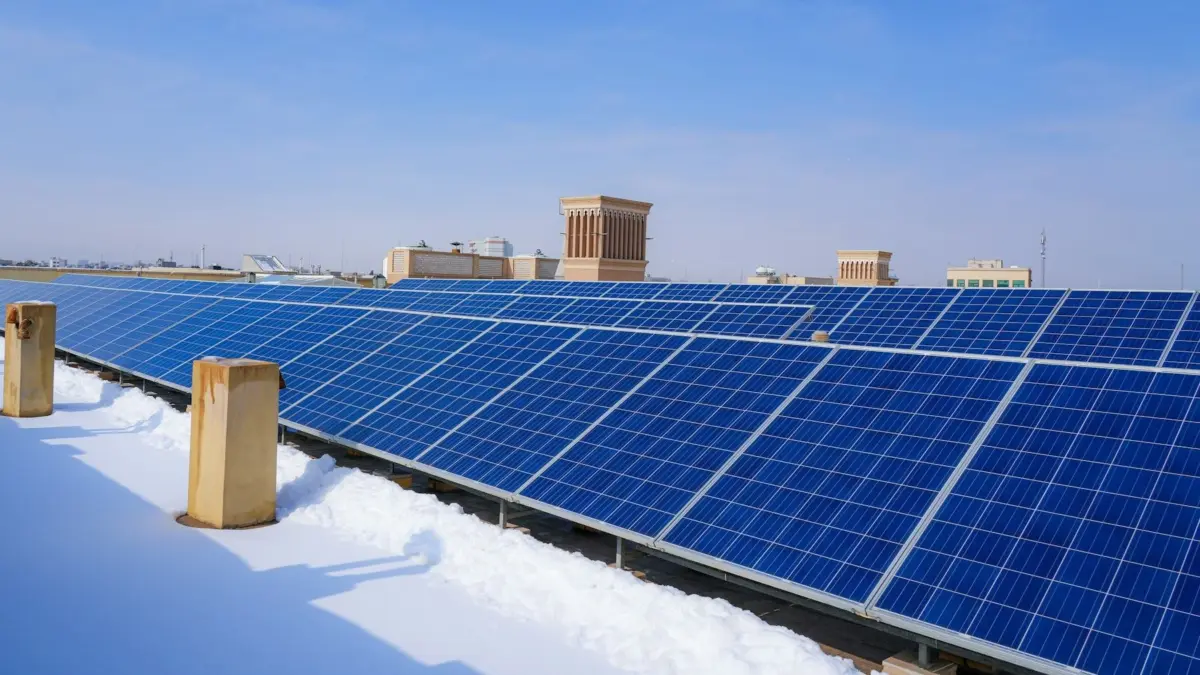
As the academic year gets underway across the United States, a growing number of educational institutions are embracing a transformative structural shift: the widespread adoption of rooftop and parking canopy solar energy systems paired with advanced battery storage. Far beyond a simple eco-friendly initiative, this clean energy integration serves a dual purpose. It acts as a robust resilience tool against escalating heatwaves and grid instability, while functioning as a living laboratory that instills practical environmental consciousness in students.
According to data compiled by the Solar Energy Industries Association (SEIA), more than 7 million students nationwide now attend a school powered—in part or entirely—by solar energy. Driven by intense summer heatwaves that once strained local power grids and inflated cooling budgets, school districts are turning intense sunlight from a climate threat into a potent economic asset.
By combining photovoltaic (PV) panels with localized energy storage, institutions are insulating themselves against peak energy pricing, securing emergency backup power during extreme weather events, and slashing administrative overhead. The capital freed up through reduced utility bills is subsequently redirected toward core educational programs, faculty resources, and student infrastructure. From multi-million-dollar state projections in Pennsylvania to striking annual savings in Massachusetts and Illinois, the solar revolution in American education is rewriting the playbook on institutional resource management.
Chronology: The Evolution of School Solar Integration
The integration of renewable energy into the American public education infrastructure did not happen overnight. It represents a steady evolution catalyzed by technological maturation, plummeting hardware costs, and an urgent imperative for climate action.
- Early 2010s — The Pilot Phase: Initially, solar adoption in schools was largely experimental, driven by federal grants and enthusiastic local school boards seeking to lower their carbon footprints. These early projects were typically small-scale installations on a single roof or standalone arrays meant for high school science demonstrations.
- Mid-2010s — The Financial Viability Turning Point: As the cost of photovoltaic cells dropped significantly and third-party financing models (such as Power Purchase Agreements or PPAs) emerged, school districts realized they could install massive solar arrays with little to no upfront capital expenditure. Universities and large high school districts began viewing solar as a predictable, long-term hedge against volatile utility rates.
- Late 2010s to 2020 — Scaling Up and Infrastructure Integration: Districts moved beyond rooftops. Forward-thinking campuses, such as the Sonoma State University in California, began pioneering dual-purpose installations, transforming large parking lots into solar-canopied structures that simultaneously generated electricity and provided critical shade for vehicles.
- 2021 to Present — The Resilience and Storage Era: Fueled by increasingly severe weather events, historic heatwaves, and grid reliability issues, school districts shifted their focus toward integrated systems combining solar generation with battery storage. This technological leap ensured that schools could not only save money during normal operations, but also maintain critical functions during emergency grid outages, cementing solar as a cornerstone of community resilience.
Supporting Data: By the Numbers
The financial and environmental dividends of educational solar adoption are comprehensively documented across multiple states and independent studies. The numbers demonstrate that clean energy investments yield immense returns for taxpayers, students, and local municipalities alike:
- Pennsylvania: A landmark study reported by SEIA indicates that schools across the state could collectively save up to $342 million simply by utilizing available rooftop space for solar panel installations.
- Arkansas: The University of Arkansas at Fayetteville projects a staggering savings of over $100 million across a 25-year period, proving that higher education institutions can leverage solar to manage massive energy demands sustainably.
- Massachusetts: At the Friedman Middle School, strategic solar implementation has unlocked direct annual savings of $35,000, funds that are immediately reinvested into community and educational resources.
- Illinois: McHenry Community High School achieved a remarkable 30% reduction in overall energy costs following the deployment of more than 2,000 rooftop solar panels.
- National Scale: SEIA data confirms that over 7 million students currently walk the halls of schools equipped with solar infrastructure. Meanwhile, initiatives like those in North Carolina generate clean energy equivalents capable of meeting the annual power needs of approximately 150,000 households, significantly driving down regional energy tariffs.
Official Responses and Stakeholder Perspectives
The rapid expansion of solar infrastructure across campuses has drawn widespread praise from educational administrators, environmental scientists, and energy policy experts.
Dr. Elena Vance, a senior energy policy analyst focusing on municipal sustainability, emphasizes the unique psychological and educational impact of these projects:
"When children walk into a school building every day and see panels generating the electricity that powers their classrooms, sustainability ceases to be an abstract concept found in a textbook. It becomes a lived reality. They witness firsthand how human ingenuity can harness natural phenomena like solar radiation to solve complex systemic challenges."
School facility managers have similarly championed the systems for their unmatched reliability during extreme weather events. Marcus Sterling, a district operations director in the American Southwest, noted during a recent roundtable discussion:
"During the unprecedented heatwaves of the past few summers, our local grid was pushed to the absolute brink. While other facilities faced rolling brownouts and skyrocketing cooling expenditures, our solar-plus-storage array kept our core systems stable. It changed the narrative completely; what used to be a grueling budgetary headache is now our greatest asset."
Financial officers within educational boards point directly to the long-term predictability of solar budgets. Unlike fossil fuel-derived energy, which is subject to geopolitical volatility and sudden price spikes, solar energy provides a fixed, deflationary cost structure over decades of operation. This fiscal certainty allows administrators to allocate tight public funds with unprecedented precision.
Broader Implications for Communities and the Future of Education
The ripple effects of widespread school solar adoption extend far beyond individual campus balance sheets. They touch upon community resilience, workforce development, and environmental justice.
1. Living Laboratories for Next-Generation Workflows
As the global economy transitions toward a green workforce, early exposure to renewable energy technology gives students an invaluable head start. High schools and universities integrating solar systems are naturally incorporating these arrays into their STEM (Science, Technology, Engineering, and Mathematics) curricula. Students regularly analyze real-time energy generation data, study photovoltaic efficiency, and learn the fundamentals of electrical engineering and energy storage management.
2. Multi-Functional Infrastructure and Urban Heat Mitigation
Innovations such as the solar parking canopies pioneered at Sonoma State University highlight how educational facilities can optimize limited spatial resources. By turning wide expanses of asphalt parking lots into shaded, energy-producing zones, institutions actively mitigate the urban heat island effect while shielding vehicles and pedestrians from harsh ultraviolet radiation.
3. Strengthening Community Resilience Hubs
During climate-induced emergencies—such as prolonged heatwaves, winter storms, or hurricanes—schools often serve as community shelters. By equipping these facilities with solar generation and battery storage capabilities, municipalities create decentralized "resilience hubs." These buildings can maintain lighting, refrigeration for vital medications, climate control, and communication networks even when the primary municipal power grid fails entirely.
4. Environmental Equity and Fiscal Relief
Lower-income school districts, which historically struggled disproportionately with aging infrastructure and soaring utility bills, stand to gain the most from solar integration. By slashing operational overheads, these districts can redirect funds toward upgrading classroom technology, hiring specialized educators, and improving student support services. In this way, clean energy deployment directly contributes to bridging educational equity gaps.
Conclusion
The convergence of advanced solar technology and American educational infrastructure marks a pivotal turning point in how society addresses climate change. By treating schools not just as consumers of energy, but as decentralized producers of clean power, communities are building a resilient, economically sound, and educationally vibrant foundation for generations to come. As more districts witness the undeniable financial and environmental returns, the transition to solar-powered education is rapidly evolving from an innovative trend into an essential standard for the modern world.




Leave a Reply