

By Global Culture Desk
Published: October 2026
Main Facts
The historic Caro y Cuervo Institute—Colombia’s premier public entity dedicated to safeguarding the Spanish language and preserving more than 62 indigenous languages—has found itself at the center of a national cultural storm. At the heart of the controversy is its newly appointed director, Sergio Esteban Vélez, a conservative journalist, poet, and former diplomat whose public remarks regarding iconic Colombian writers have sparked widespread indignation.
Vélez, whose career has long been intertwined with traditional conservative circles and who previously served as a cultural attaché in Switzerland under the administration of President Iván Duque (2018–2022), recently used the institution’s official communication channels to launch a scathing critique of writer Andrés Caicedo. Commemorating what would have been Caicedo’s 76th birthday, Vélez publicly blamed the celebrated Cali author for his own tragic suicide at the age of 25, when Caicedo ingested a fatal dose of 60 Seconal pills.
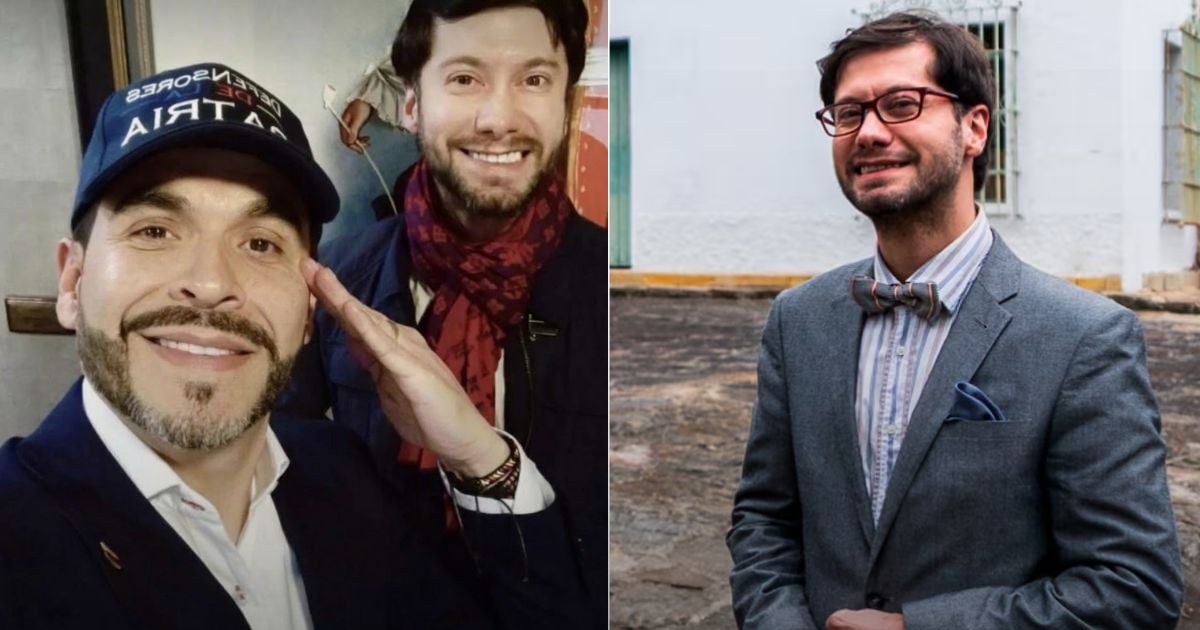
In a widely circulated video published on the institute’s official accounts, Vélez asserted that Caicedo had done irreparable damage to Colombia’s literary heritage by allowing "his genius to crash against the void of his own self-destruction." Furthermore, the director claimed that Caicedo’s death was the result of a defiant rejection of societal norms and institutional frameworks, which he described as having "turned into a mortal trap."
The reaction from the cultural sector was swift and uncompromising. Writers, artists, academics, and civil society members sharply condemned not only the moralizing and deeply personal tone of the director’s evaluation, but also the blurring of lines between his personal ideological crusade and the institutional mandate of a public cultural body. Critics have questioned whether academic research and funding decisions within the Caro y Cuervo Institute will now be subjected to the personal political and literary prejudices of its leadership.
Chronology of the Controversy
The unfolding crisis at the Caro y Cuervo Institute is tied to a timeline marked by political patronage, provocative social media commentary, and a sharp ideological shift in public cultural administration:

- The 1990s: Sergio Esteban Vélez emerges in public life in Medellín as a precocious adolescent known as "El niño poeta" (The Child Poet), heavily praised by conservative figures such as former President Belisario Betancur—who dubbed him the "Colombian Rimbaud"—and co-founding the Antioquian Academy of Letters alongside conservative former Education Minister Octavio Arizmendi Posada.
- 2019: Backed by the network of conservative political elites, Vélez is appointed by President Iván Duque as the cultural attaché at the Embassy of Colombia in Switzerland, stepping firmly into diplomatic and governmental cultural management.
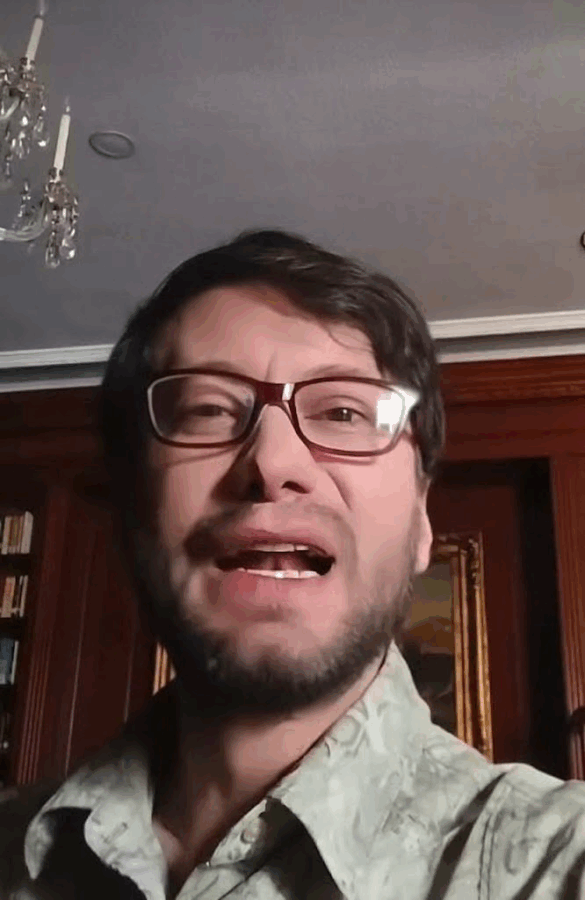
- Early September 2026: Prior to taking office at the Caro y Cuervo Institute, Vélez publishes a controversial video on his personal TikTok account. In the clip, he lambasts the previous administration of the institute, branding it a "stronghold of cultural Marxism" saturated with "anti-patriarchal hatred" and a "woke agenda." Shortly after, this video is quietly deleted from social media.
- September 2026: Vélez is officially sworn in as the director of the Caro y Cuervo Institute by the Minister of Culture, Paola Holguín.
- Late September 2026 (75th/76th Anniversary of Caicedo’s Birth): The Caro y Cuervo Institute publishes an official video featuring Vélez discussing the legacies of Gonzalo Arango (founder of the nadaísmo movement) and Andrés Caicedo. Vélez characterizes Arango as a "repenting rebel" who surrendered to faith, while accusing Caicedo of reckless self-destruction. The video triggers an immediate public outcry regarding the politicization of public institutional media.
- October 2026: Prominent cultural figures, including author Héctor Abad Faciolince, publicly criticize Vélez’s appointment and conduct, while Rosario Caicedo, sister of the late writer and guardian of his literary estate, reiterates that her brother’s vibrant, rebellious legacy remains fully alive and unbound by bureaucratic moralizing. Vélez remains silent in the face of mounting calls for clarification or resignation.
Supporting Data and Background
To understand the weight of the controversy, one must examine both the institutional stature of the Caro y Cuervo Institute and the biographical trajectory of its current director.
The Caro y Cuervo Institute
Founded to honor the legacy of philologists Rufino José Cuervo and Miguel Antonio Caro, the Institute is globally respected for its lexicographic research, particularly the monumental Diccionario de construcción y régimen de la lengua castellana. Beyond Spanish, it plays a vital role in documenting and preserving Colombia’s linguistic diversity, protecting dozens of indigenous tongues. Its prestige has historically rested on rigorous academic independence, scientific methodology, and international partnerships—notably with the Instituto Cervantes.
The "Child Poet" and Conservative Network
Sergio Esteban Vélez’s background diverges significantly from the traditional profiles of linguistic and literary scholars who have historically directed the Institute. Coming of age during a violent and chaotic decade marked by drug cartels and the urban realism of the "Disenchanted Generation" (writers like María Mercedes Carranza and Juan Gustavo Cobo Borda), Vélez chose a different path. He aligned himself closely with traditional, elite conservative institutions, focusing his early writing on genealogical research of surnames and hagiographic tributes to conservative political and literary figures.
His undergraduate thesis at the University of Antioquia focused on the expressive language of traditionalist painter David Manzur. This alignment with the political establishment eventually secured him a diplomatic foothold in Switzerland under the Duque administration, setting the stage for his eventual ascension to the helm of the Caro y Cuervo Institute under the current Ministry of Culture.
Official Responses and Public Reactions
The public backlash against Vélez’s statements has brought together a coalition of independent authors, academic researchers, and cultural administrators who view his administration as a direct threat to intellectual freedom.
The Family’s Defense of Andrés Caicedo
Rosario Caicedo, speaking on behalf of her brother’s estate, rejected the narrative of wasted potential and moral failure advanced by the institute’s director. She emphasized that Andrés Caicedo’s work continues to resonate globally precisely because of its visceral honesty, youthful urgency, and absolute rejection of rigid institutional orthodoxy. For millions of readers, Caicedo is not a cautionary tale of self-destruction, but an immortal symbol of artistic independence.

Intellectual and Media Condemnation
Prominent Colombian writer Héctor Abad Faciolince, in an interview with Caracol Radio, did not mince words regarding Vélez’s transition from a precocious child declaiming poetry in Medellín to a polarizing public official. Abad remarked that the puerile mannerisms and theatrical declarations that once seemed merely precocious or charming in his youth have evolved into grotesque and absurd attitudes unsuited for a high-ranking cultural administrator.
Furthermore, trade unions, cultural workers, and literary guilds have expressed deep anxiety over whether institutional grants, research programs, and publication priorities at the Caro y Cuervo Institute will be filtered through an ideological lens that disparages literary figures who challenge traditional moral frameworks.
Despite the growing storm, Sergio Esteban Vélez has not issued any official statement or apology regarding the video or the criticisms targeting his administration.
Implications for Colombian Culture
The appointment of Sergio Esteban Vélez and his subsequent public statements point to a broader, highly polarized culture war playing out within state institutions in Colombia. The implications of this crisis are multi-layered:
- Politicization of Heritage Institutions: The use of official institutional channels to advance personal moral judgments and partisan cultural narratives threatens the political neutrality and academic prestige that the Caro y Cuervo Institute has cultivated for decades.
- Stifling Academic and Artistic Freedom: When the director of a national philological and literary institute publicly condemns foundational national authors for their personal lives or rebellions, it sends a chilling signal to researchers, fellows, and contemporary writers who rely on state-backed entities for support.
- Erosion of Public Trust: The swift deletion of Vélez’s prior social media videos—in which he labeled the institute a "fortress of cultural Marxism"—followed by his official swearing-in, highlights a disconnect between the executive branch’s cultural appointments and the expectations of a pluralistic civil society.
As the debate continues to rage across Colombian media, the future of the Caro y Cuervo Institute hangs in the balance, caught between its historic mission as a sanctuary of linguistic science and the ideological ambitions of its current leadership.

Leave a Reply