

LETICIA, COLOMBIA — In an era when the word "sustainability" is frequently weaponized as a marketing buzzword—stamped onto corporate brochures to mask ecological footprints—true harmony with the earth remains an extreme anomaly. Most hotels are engineered against nature, carving out concrete platforms, clearing ancient canopies, and imposing foreign architectures upon delicate ecosystems.
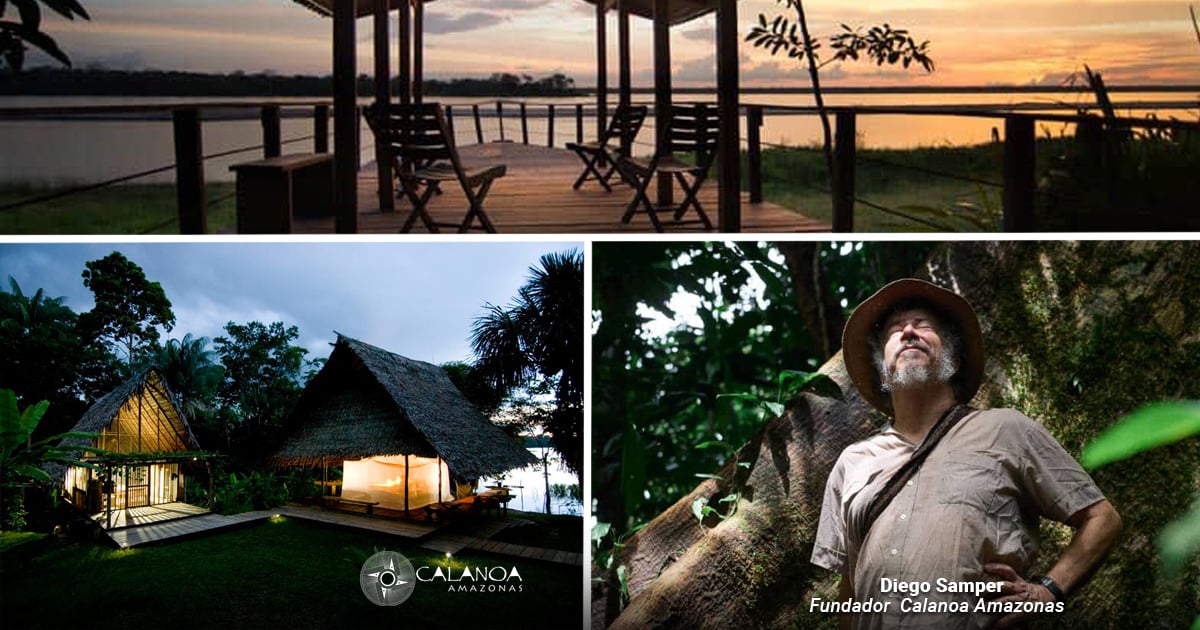
Yet, hidden sixty kilometers upriver from Leticia, deep within the Colombian Amazon, lies an elite exception. Calanoa—a 50-hectare private natural reserve comprising just eight thoughtfully crafted cabins—has emerged as a global benchmark for sustainable hospitality. Rising organically from the jungle floor and nestled delicately within the branches of the world’s most vital rainforest, Calanoa is not merely a resort; it is a living, breathing testament to four decades of artistic devotion, ecological stewardship, and profound symbiosis between humanity and the Earth.
This unorthodox jungle sanctuary has recently captured the highest echelons of international acclaim. Following a sweeping triumph at the Sustainable Luxury Hotel Awards and consecutive accolades from Condé Nast Traveler, Calanoa has proven that the future of elite travel does not lie in marble lobbies and infinity pools, but in raw, unmediated immersion into the wild.
Main Facts: The Anatomy of an Amazonian Masterpiece
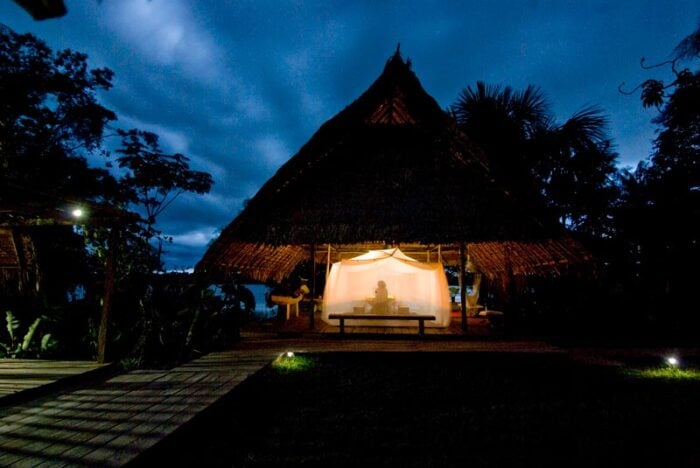
Calanoa’s architectural philosophy rejects the traditional paradigms of luxury. There are no marble finishes, no air-conditioned monoliths, and no paved roads leading to its doorstep. Instead, the property consists of eight lightweight, elevated structures crafted from local sustainably harvested wood, natural fibers, mesh, and woven palm thatch.

- Location: 60 kilometers up the Amazon River from Leticia, Colombia, directly adjacent to the sprawling Amacayacu National Natural Park.
- The Creator: Conceived and constructed almost entirely by hand by visual artist, photographer, filmmaker, and sound designer Diego Samper, alongside environmental educator Marlene Escobar.
- The Infrastructure: A 50-hectare nature reserve featuring eight open-air cabins, alternative energy systems, advanced wastewater management, and spaces dedicated to cultural and scientific research.
- Global Recognition: Recipient of three major accolades at the Sustainable Luxury Hotel Awards (Most Sustainable Luxury Rainforest Retreat, Most Sustainable Luxury Eco Retreat, and Most Sustainable Luxury Nature Retreat), consecutive honors for Best Immersive Experience from Condé Nast Traveler, and recognition by National Geographic as one of the premier lodges in South America.
Chronology: Four Decades of a Visionary’s Journey
To understand Calanoa, one must unspool a timeline that predates the modern eco-tourism boom by decades. The property’s existence is inextricably linked to the life and artistic evolution of its founder, Diego Samper.
The Formative Decades (1970s–1980s)
- 1970s: A young Diego Samper arrives in the Amazon region at age 19, driven by an artistic fascination with the poetic landscapes of South America’s great river basins.
- The 1980s (The Apaporis Exile): In a chapter echoing Daniel Defoe’s Robinson Crusoe, Samper spends two solitary years living entirely alone on an island in the Apaporis River. Stripped of modern distractions, he learns the cyclical rhythms, acoustic signatures, and survival codes of the jungle.
The Genesis of Calanoa (1980s–2000s)
- Meeting Marlene Escobar: Samper’s path crosses with environmental educator Marlene Escobar. Together, they shift their focus from pure artistic observation to active ecological conservation and cultural dialogue.
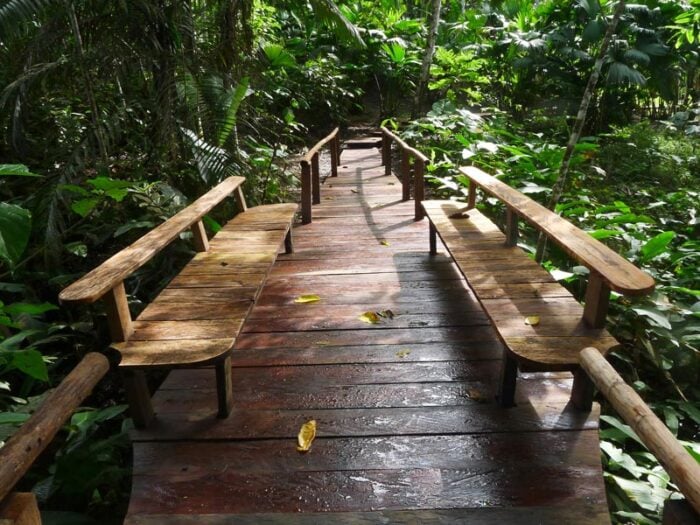
- Building by Hand: Rejecting external contractors and industrial machinery, Samper begins building the initial structures of what will become Calanoa. Every beam, platform, and roof is raised with his own hands, keeping a microscopic footprint on the forest floor.
The Era of Global Acclaim (2021–Present)
- 2021: Condé Nast Traveler inducts Calanoa into its prestigious Gold List, drawing international attention to its handmade, immersive treehouse architecture.
- 2025: Calanoa sweeps the Sustainable Luxury Hotel Awards, securing three distinct titles for its rainforest, eco, and nature retreat models, while clinching Condé Nast Traveler’s Best Immersive Experience for the second consecutive year. Over a two-year span, the independent lodge amasses seven major international tourism awards, displacing traditional hospitality giants in global rankings.
Supporting Data: Biodiversity and Conservation Metrics
Calanoa does not exist in an ecological vacuum. Its operational model is fortified by its proximity to some of the richest biodiversity hotspots on the planet.
- Amacayacu National Natural Park: Established in 1975 and spanning 267,241 hectares right next to Calanoa, this colossal neighbor houses:
- Over 5,000 species of plants.
- 468 species of birds.
- 150 species of mammals, including the world’s highest diversity of primates (such as the pygmy marmoset, or mono leoncito) and freshwater pink dolphins.
- Cultural Interconnection: The Calanoa Foundation actively fosters intercultural dialogue and conservation initiatives alongside indigenous Ticuna, Cocama, and Murui (Huitoto) communities.
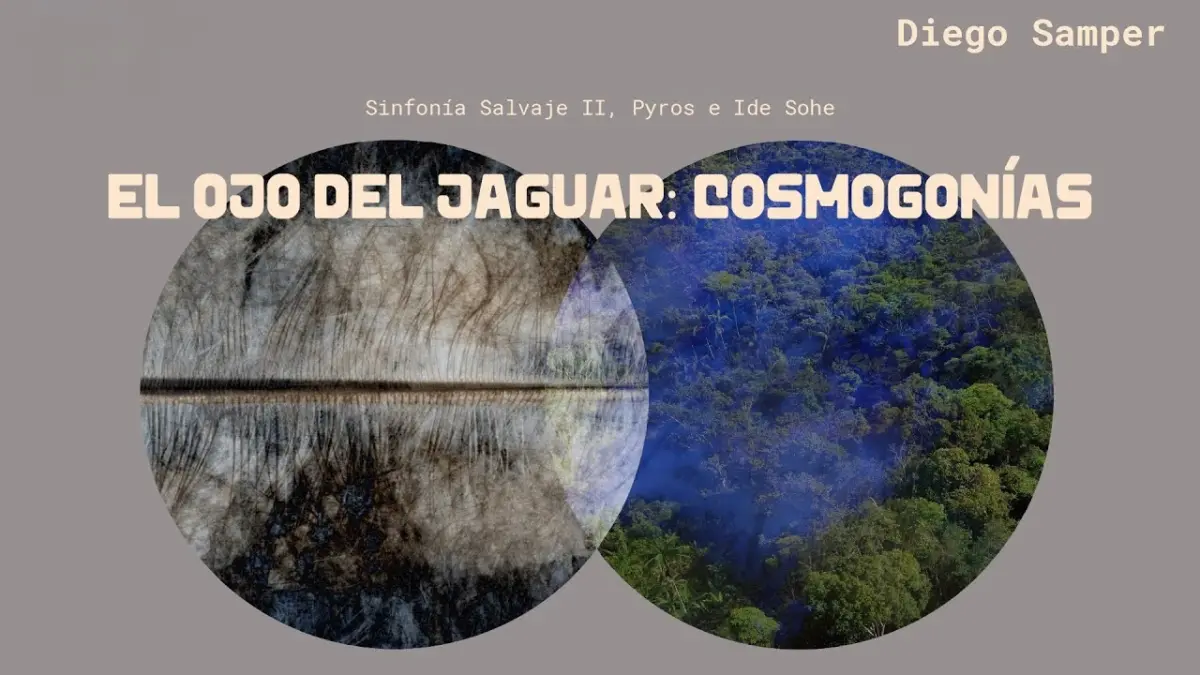
- The Art of Sound and Vision: Samper’s creative output—including major multimedia projects like Voces de la Tierra, Canto Amazónico, Sinfonía Salvaje (a collaborative acoustic project featuring indigenous singers and rainforest soundscapes), and El Ojo del Jaguar: Cosmogonías—frames the Amazon not merely as a scenic backdrop, but as an active, sentient participant in human culture.
Official Responses and Industry Perspectives
The rise of independent, hyper-sustainable operators like Calanoa has sent shockwaves through the broader Latin American tourism sector, challenging legacy corporate models that long dominated national parks and protected regions.
International travel authorities have universally lauded Calanoa for rewriting the rules of hospitality. Reviewers from Condé Nast Traveler have repeatedly emphasized the radical nature of the lodge’s design, noting that guests fall asleep to the unfiltered symphony of night frogs and jungle insects, suspended safely above the forest floor in structures that feel alive.
Furthermore, conservationists point to Calanoa as a masterclass in how private enterprise can co-exist with indigenous stewardship. Rather than imposing an external corporate agenda, Samper and Escobar’s foundation works in tandem with local Ticuna, Cocama, and Murui communities, ensuring that traditional ecological knowledge remains central to the guest experience. In an official statement following their 2025 sweep of the Sustainable Luxury Hotel Awards, the jury highlighted Calanoa as the gold standard for "regenerative tourism"—travel that leaves a destination richer, both ecologically and culturally, than before the traveler arrived.
Implications: The Paradigm Shift in Elite Travel
Calanoa’s ascendancy to the apex of global luxury hospitality signals a profound cultural shift among high-net-worth travelers. For decades, "luxury" was defined by excess: climate-controlled interiors that sealed guests off from the local environment, imported gourmet foods flown in at great carbon expense, and pristine, manicured landscapes devoid of native unpredictability.

Calanoa dismantles this paradigm entirely. Here, true luxury is redefined as:
- Absolute Acoustic and Visual Immersion: The luxury of hearing the breathing of the jungle, watching a pink dolphin break the surface of the Amazon River, and drifting to sleep under a hand-woven palm thatch canopy.
- Radical Architectural Humility: Proof that human habitation can occupy space within a fragile ecosystem without erasing it. By utilizing local materials, renewable energy systems, and advanced waste management, Calanoa demonstrates that zero-impact luxury is achievable.
- The Integration of Art and Science: Through Samper’s lifetime of work—bridging painting, photography, acoustic ecology, and indigenous cosmologies—guests are forced to confront the Amazon not as a recreational playground, but as an ancient, intellectual library of life.
As small-scale operators continue to outmaneuver and outperform corporate giants across Latin America’s protected reserves, Calanoa stands as a shining beacon. It proves that when human enterprise listens to the earth rather than shouting over it, the result is nothing short of transcendent. Forty years after Diego Samper first stepped into the emerald labyrinth of the Amazon, his living art installation remains a masterclass for the future of our planet.



Leave a Reply