

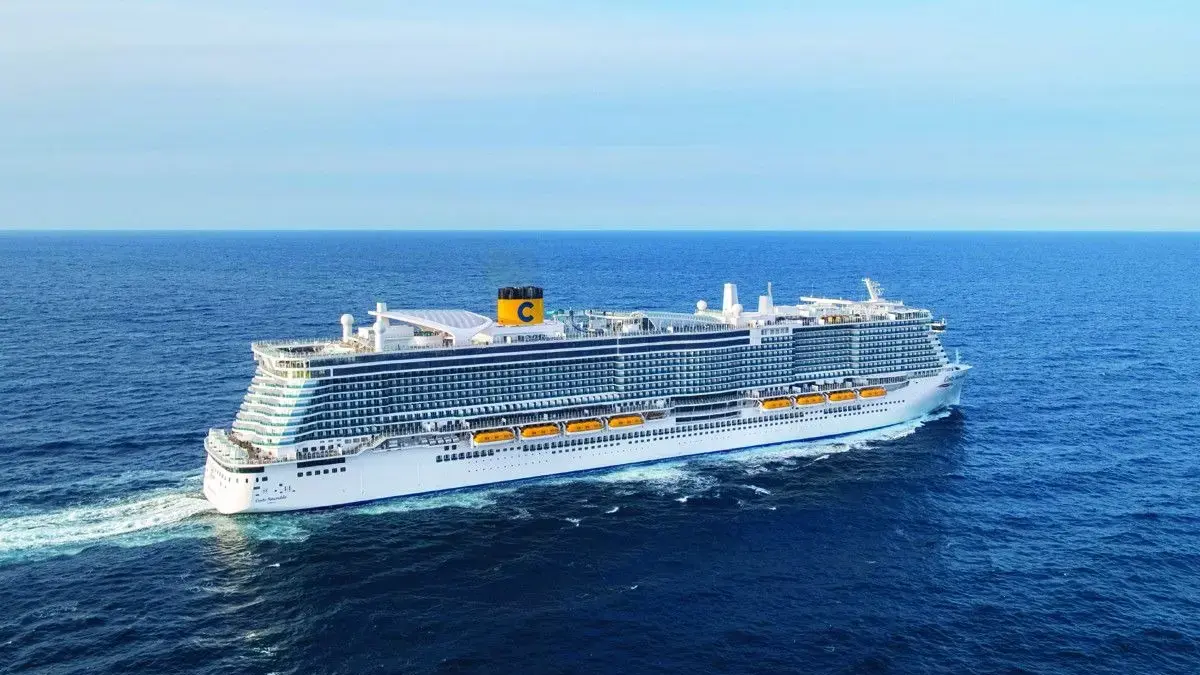
The international cruise industry is experiencing an unprecedented surge in demand. Major global operators are already well into selling voyages for 2027, securing a rapidly growing share of their passenger capacity months—and in some cases years—ahead of historical averages. Remarkably, this robust commercial momentum is persisting despite all-time high ticket prices and growing macroeconomic uncertainties.
While industry leaders like Carnival Corporation and Royal Caribbean Group report record-shattering booking curves, exceptional occupancy rates, and bulging order books, the broader market reveals a nuanced landscape. Pockets of vulnerability remain, notably for operators navigating regional geopolitical disruptions and fluctuating consumer confidence. Nevertheless, the overarching narrative heading into the latter half of the decade is one of extraordinary resilience and pent-up consumer appetite for experiential travel at sea.
1. Main Facts: The 2027 Advance Booking Phenomenon
The scale of early commitments for 2027 voyages highlights a fundamental shift in consumer behavior: travelers are planning and locking in vacations further in advance than ever before, prioritizing leisure and experiential travel over traditional land-based alternatives.
- Carnival Corporation Leads the Charge: The world’s largest cruise company has already reserved 50% of its total capacity for 2027. This milestone has been achieved at record price points and unprecedented occupancy levels, signaling that consumer willingness to pay premium rates remains entirely unabated.
- Royal Caribbean Outpaces History: Royal Caribbean Group has confirmed that its advance booking metrics for the upcoming year are tracking significantly ahead of historical benchmarks. Demand remains robust globally, defying inflationary pressures and cost-of-living concerns in major Western markets.
- Norwegian Cruise Line Holdings (NCLH) Diverges: Representing the exception to the rule, NCLH acknowledged earlier in the operational cycle that its booking volumes sat below optimal internal targets, compounded by regional conflicts and softer demand in specific segments. However, recent adjustments suggest a stabilizing financial recovery.
- Financial Health Rebounds: Balance sheets across the major lines have strengthened considerably. Customer deposits—a vital leading indicator of future revenues and liquidity—have reached historic highs, giving operators immense financial flexibility for fleet expansion and debt reduction.
2. Chronology of Events: How the Cruise Sector Secured the 2027 Horizon
The trajectory toward the 2027 booking boom was forged through a series of calculated strategic shifts, financial disclosures, and market adjustments across the industry over recent quarters.
Early 2024–2025: Post-Pandemic Normalization Transitions to Growth
Following the turbulent years of recovery from the COVID-19 pandemic, cruise lines shifted from survival mode and heavily discounted "catch-up" sailings to yield-management optimization. Operators deliberately constrained capacity growth while enhancing onboard offerings, private island destinations (such as Royal Caribbean’s Perfect Day at CocoCay), and itinerary diversity.
July 2025: The Mid-Year Check-In and NCLH’s Reality Check
During the second-quarter financial reporting window, Norwegian Cruise Line Holdings publicly stated that its booking volumes for the subsequent twelve months were trailing optimal targets. NCLH cited localized softness within its core Norwegian Cruise Line brand and the lingering negative impacts of geopolitical tensions—specifically conflicts in the Middle East, which forced costly re-routings away from the Red Sea and Eastern Mediterranean.
September–October 2025: Carnival’s Third-Quarter Blockbuster
Carnival Corporation presented its third-quarter financial results, sending shockwaves of optimism through the maritime and investment communities. The multi-brand behemoth revealed that demand had dramatically accelerated during the summer months, outstripping both the comparable prior-year period and the modest net capacity growth projected for the fleet. Customer deposits surged to $7.6 billion (approximately €6.77 billion), marking a 7% year-over-year increase.
Late 2025: Royal Caribbean Confirms the Trend and NCLH Revises Upward
Shortly after Carnival’s announcements, Royal Caribbean Group corroborated the industry-wide phenomenon, confirming that its 2027 bookings were tracking well ahead of historical ranges. Meanwhile, NCLH issued an updated guidance statement indicating that its third-quarter financial results would comfortably beat previous summer forecasts due to stronger-than-expected onboard revenues, though it withheld detailed 2027 booking figures at that stage.
3. Supporting Data and Financial Metrics
The commercial success of the cruise sector is deeply rooted in hard financial data. The numbers demonstrate that the industry is not merely filling cabins through aggressive discounting; rather, it is commanding record yields while filling ships faster than at any point in modern maritime history.
Carnival Corporation: Record Revenues and Deposits
Carnival Corporation’s multi-brand ecosystem—which encompasses Carnival Cruise Line, Costa Cruises, AIDA Cruises, Princess Cruises, Holland America Line, Cunard, P&O Cruises, and Seabourn—reported extraordinary financial performance for its latest fiscal quarter:
- Quarterly Revenue: Reached an all-time corporate record of $8.435 billion (approx. €7.515 billion).
- Net Income: Surged to $1.920 billion (approx. €1.710 billion), reflecting massive operating leverage and stringent cost management.
- Customer Deposits: Closed the quarter at $7.6 billion (€6.77 billion), up 7% compared to the same period in the previous year, despite flat capacity growth over the corresponding twelve-month window.
- The 2028 Horizon: Looking even further ahead, Carnival noted that early indications for 2028 are already following the same hyper-accelerated pattern, opening with higher occupancy levels and elevated pricing compared to equivalent historical milestones.
Royal Caribbean Group: Premium Yields Across Global Brands
Royal Caribbean Group—home to Royal Caribbean International, Celebrity Cruises, and Silversea, alongside a strategic stake in TUI Cruises—reported similar financial resilience. The company emphasized that its pricing power remains exceptionally strong. Even itineraries that experienced disruptions in previous years due to regional conflicts in Eastern Europe and the Middle East have experienced a swift bounce-back in consumer confidence for upcoming itineraries.
Capacity and Regional Resilience
A critical driver of this financial strength is geographic diversification. While North American source markets continue to perform above expectations, European summer deployments have shown remarkable vigor. Domestic and intra-regional European travelers have proven resilient to economic headwinds, consistently booking Mediterranean, Northern European, and Fjords itineraries well in advance.
4. Official Responses and Corporate Commentary
Industry executives have been remarkably candid regarding the structural shifts driving consumer demand. Far from viewing high prices as a deterrent, cruise executives argue that value-seeking consumers increasingly view cruising as superior to land-based resort vacations.
"The acceleration we are seeing in our advance booking curve is unprecedented," noted a senior Carnival Corporation representative during the third-quarter earnings call. "Consumers are securing their holidays earlier because they recognize the unmatched value proposition of a modern cruise vacation. Achieving 50% capacity sold for 2027 at record price points validates our long-term fleet strategy and marketing investments."
Executives from Royal Caribbean Group echoed this sentiment, highlighting that modern cruise ships function as floating smart-cities, offering multi-generational appeal, entertainment, and culinary diversity that traditional land-based tourism struggles to match at comparable price points.
Conversely, the leadership at Norwegian Cruise Line Holdings adopted a pragmatic, recovery-focused tone during their updates. While acknowledging the earlier lag in booking velocity—driven heavily by external geopolitical shocks and localized brand positioning challenges—NCLH executives emphasized operational agility. By optimizing deployment, focusing on high-yielding core source markets, and leveraging stronger onboard spending, NCLH successfully stabilized its trajectory heading into the final stretch of the year.
5. Broader Implications for the Global Tourism Ecosystem
The rapid sell-out of cruise capacity for 2027 carries profound implications for the wider tourism economy, port cities, supply chains, and environmental stewardship initiatives.
Impact on Port Cities and Local Economies
Destination management organizations (DMOs) in major turnaround and transit ports—such as Barcelona, Miami, Civitavecchia (Rome), Dubrovnik, and the Caribbean islands—must prepare for sustained, high-volume visitor flows. With ships sailing at or near 100% occupancy year-round, local municipalities face renewed pressure to balance economic windfalls with sustainable destination management, tourist congestion mitigation, and infrastructure investments.
Supply Chain and Maritime Logistics
The sheer volume of advance bookings requires immense coordination across global supply chains. Sourcing food, beverage, fuel, and entertainment for millions of passengers years in advance demands sophisticated logistical frameworks. Furthermore, shipyards worldwide are booked out for newbuilds well into the 2030s, meaning major cruise lines must maximize the efficiency, environmental sustainability, and revenue-generating potential of their existing fleets.
Environmental and Regulatory Pressures
As cruise lines lock in record revenues, scrutiny from international regulators and environmental organizations intensifies. The high advance booking rates provide cruise corporations with the necessary capital investments to accelerate green transition technologies—such as liquefied natural gas (LNG) propulsion, shore power connectivity (cold-ironing), advanced wastewater treatment systems, and exploratory zero-emission propulsion pilots. Consumers booking 2027 voyages are increasingly demanding sustainable travel practices, making environmental compliance a core competitive differentiator.
Conclusion: A Transformed Industry
The ability of major cruise operators to fill half their cabins for 2027 at record price points marks the definitive conclusion of the industry’s post-pandemic recovery era. Cruising has successfully repositioned itself as a dominant force in global leisure travel. Provided that macroeconomic stability holds and geopolitical flashpoints do not escalate further, the global cruise sector is poised to sail into the latter half of the decade on a wave of unprecedented profitability and consumer demand.



Leave a Reply