

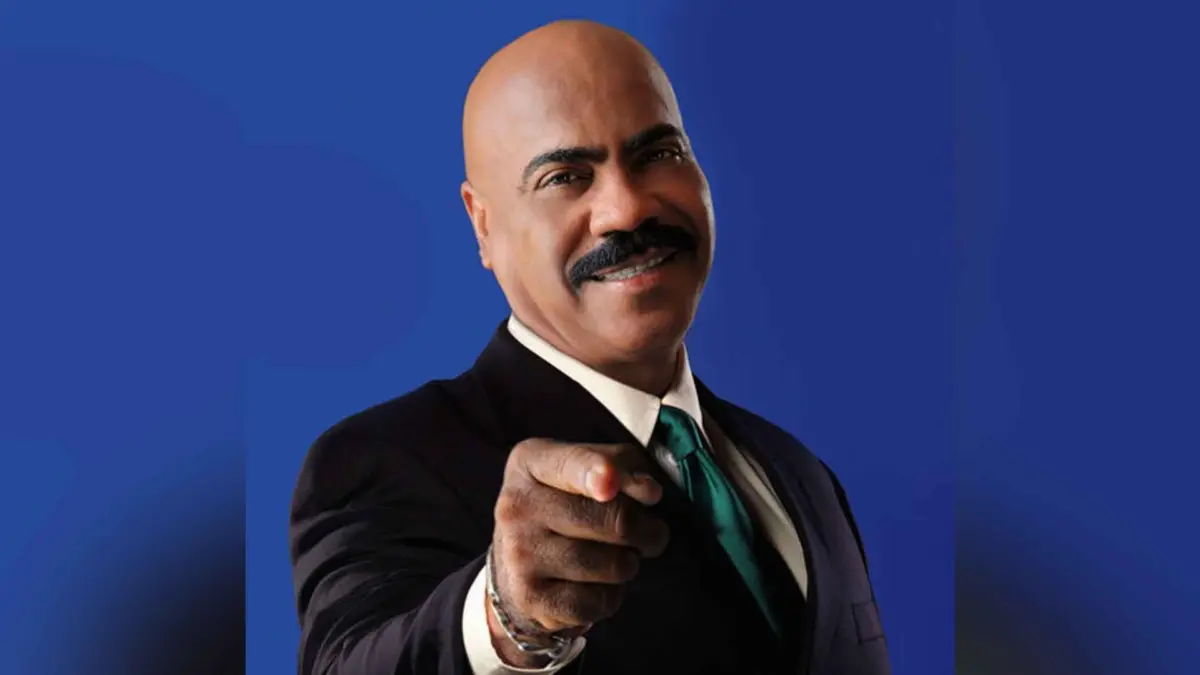
By Cultural Desk
Published in Commemoration of the 80th Anniversary of his Birth
Main Facts
A passionate life often finds its definitive mirror in the manner of its closing. For Lenin Alfonso Bueno Suárez, a man whose existence was inextricably bound to the vibrant rhythms of Colombia’s Caribbean coast, his final moments reflected the unbridled enthusiasm that defined his character. In November 2019, sitting before his television set in Barranquilla, Bueno Suárez suffered a fatal heart attack at the exact moment his beloved Junior de Barranquilla football club secured its dramatic qualification to the finals of the Torneo Finalización against Deportes Tolima. It was a fittingly theatrical climax for a man who lived loudly, laughed deeply, and loved intensely.
To understand Bueno Suárez—better known to the annals of Colombian music history by his enigmatic pen name, "Leabus"—is to understand the golden age of vallenato. A polymath of the Caribbean cultural landscape, Bueno Suárez was simultaneously a pioneering radio broadcaster, a trained sociologist, an astute businessman, and a prolific composer. Yet, beyond his formidable résumé, he is remembered by his peers as a quintessential friend: amiable, deeply sensitive, cheerful, irrepressibly witty, and a legendary life of the party (parrandero).
His legacy, however, extends far beyond his personal charisma. Operating quietly behind the scenes and boldly at the forefront of Caribbean media, Bueno Suárez was a structural architect of modern vallenato. He was the catalyst behind the formation of the legendary Binomio de Oro, the pen behind timeless classics recorded by vallenato royalty, and a tireless promoter of folkloric traditions who used his influential radio programs to elevate a regional folk music into an international phenomenon. As the cultural community marks what would have been his 80th birthday, a retrospective look at his life reveals a man whose creative DNA remains woven into the very fabric of Colombian identity.
Chronology: From Riohacha to the Heart of Barranquilla
Roots in the North and Early Wanderings
Lenin Alfonso Bueno Suárez was born on June 16, 1946, in Riohacha, the sun-baked capital of Colombia’s northernmost department, La Guajira. Growing up in the cradle of guajiro culture—a land where poetry, accordion melodies, and oral storytelling merge seamlessly—young Lenin developed an early and profound appreciation for the vernacular music of the region.
Before making his permanent mark on the Caribbean cultural capital of Barranquilla, Bueno Suárez’s path was marked by youthful exploration. He spent a formative period living in neighboring Venezuela, absorbing the cross-border musical exchanges that frequently fertilized the Caribbean basin. Upon returning to Colombia, he fulfilled his civic duty by completing his compulsory military service, an experience that instilled in him the discipline and organizational acumen that would later characterize his professional endeavors in radio and music production.
Arrival in "La Arenosa" and Radio Pioneering
In 1968, Bueno Suárez arrived in Barranquilla—affectionately known as La Arenosa (The Sandy City)—with a head full of ideas and a deep reservoir of folkloric knowledge. It was here that he found his true professional footing. Transitioning into broadcasting, he launched a groundbreaking radio program titled Festival Vallenato.
Initially broadcast on Emisora Atlántico and later moving to the powerhouse station La Voz de Barranquilla, the show became a mandatory listening ritual for Caribbean audiences. Festival Vallenato was more than just a musical hour; it was a cultural salon where new compositions were debuted, young accordionists were discovered, and the traditional roots of the genre were dissected and celebrated. Bueno Suárez successfully bridged the gap between his work as a sociologist and his passion for mass media, analyzing and promoting vallenato not merely as entertainment, but as an essential sociological expression of the Caribbean soul.
The Birth of a Legend: June 1976
Perhaps the single most consequential chapter in Bueno Suárez’s life as a musical kingmaker occurred on a sultry night in June 1976. During a legendary, alcohol-fueled gathering (parrandera) at his Barranquilla home, two towering figures of Colombian music—vocalist Rafael Orozco and accordion virtuoso Israel Romero—found themselves in deep conversation.
At the time, both men were at professional crossroads. Orozco had already recorded a couple of albums alongside accordionist Emilio Oviedo, while Romero—affectionately nicknamed "Pollo Irra"—had made his mark accompanying singer Daniel Celedón. However, the chemistry between Orozco and Romero was palpable, though neither had yet taken the plunge to formalize a partnership.
Sensing a monumental alignment of the stars, Bueno Suárez seized the moment. Leveraging his industry connections, he managed to secure a high-profile booking for Rafael Orozco to perform at a dance in Sabanalarga, Atlantic Department. There was, however, a strict condition: Orozco could only take the stage if his accompanist was Israel Romero. The gambit was an unmitigated success. That night forged an artistic marriage of elegance, romanticism, and technical perfection that would conquer the Spanish-speaking world: El Binomio de Oro.
Supporting Data: The Catalogue of "Leabus"
While Bueno Suárez’s contributions as a broadcaster and facilitator are legendary, his legacy as a songwriter under the pseudonym Leabus places him firmly in the pantheon of vallenato’s elite composers. His lyrics possessed a unique duality: they could capture the melancholy of unrequited love with devastating precision, yet pivot effortlessly to joyous, life-affirming celebrations of the Caribbean lifestyle.
Immortalized by El Binomio de Oro
Given his instrumental role in uniting Rafael Orozco and Israel Romero, it is fitting that Leabus contributed iconic numbers to their early repertoire. Among these are:
- "El que espabila pierde": A witty, rhythmically driving track that captured the playful rivalry characteristic of vallenato storytelling. Its cross-cultural appeal was so profound that it received a sophisticated, orchestral pop makeover by the celebrated French orchestrator Raymond Lefèvre.
- "La parranda es pa’ amanecé": An absolute anthem of nocturnal endurance that encapsulates the ethos of the Caribbean weekend. The track achieved continental resonance not only through the Binomio de Oro but also via a high-energy tropical cover by Venezuela’s legendary orchestra Los Melódicos.
Collaborations Across the Vallenato Firmament
Leabus’s compositional genius was not confined to a single group; virtually every major heavyweight of the golden era sought out his lyrical craftsmanship:
- Los Hermanos Zuleta: Recorded two of his most enduring and autobiographical-sounding anthems, "Soy parrandero y qué" and "Nostalgia estudiantil".
- Julio Rojas and Ricardo Maestre: Achieved notable success with the poignant "Pena y dolor".
- Los Betos: Infused their characteristic charisma into "El loco de mamá".
- Romualdo Brito: Lent his revered voice to "El diario de mi vida".
- Jorge Oñate: Joined forces with accordionist Raúl "Chiche" Martínez to record the evocative "Siempre unidos".
- Jairo Serrano: Brought his distinctive Huila sensibility to "Más que amigos".
- Adanís Díaz: Turned "Estrella fugaz" into a regional radio staple.
The Epic Choral Novel: "Drama Provinciano"
Perhaps the crown jewel of the Leabus songwriting catalogue is "Drama provinciano". Recorded in 1981 by the ensemble El Doble Poder, this composition functioned less like a traditional three-minute song and more like a sweeping, multi-act theatrical tragedy set to an accordion beat. The track featured a powerhouse vocal triumvirate: Daniel Celedón, Mélida Yara, and a ten-year-old prodigy named Jorge Celedón—who would grow up to become a Grammy-winning vallenato superstar. "Drama provinciano" remains a masterclass in narrative lyricism, demonstrating Bueno Suárez’s capacity to weave complex emotional tapestries.
Performing and Independent Ventures
Leabus was not merely a pen-for-hire; he was an active practitioner of the art form. In the early 1970s, he fronted his own vallenato ensemble, cutting several singles for the historic record labels Discos Fuentes and Tropical. Tracks like "La huelga", "Qué vaina", and "Parece mentira" showcased his sharp social commentary and dry wit.
Furthermore, he lent his talents as both singer and songwriter to Los Sabaneros, an all-star supergroup formed alongside legendary veterans of Los Corraleros de Majagual, including Nacho Paredes, Luis Pérez Cedrón, and César Castro. This collaboration solidified his reputation as a musician who could seamlessly transition from elite composer to grassroots troubadour.
Official Responses and Testimonials
The profound impact of Lenin Bueno Suárez on the cultural landscape of Colombia is best measured through the words of those who shared dressing rooms, radio studios, and late-night parrandas with him.
Fernando Meneses, a master composer whose timeless classics were immortalized by the Binomio de Oro, offered a heartfelt tribute to his lifelong friend:
"Lenin was a supremely amiable man, highly sensitive, cheerful, irrepressibly witty, a phenomenal parrandero, and, above all, an exceptional friend whom I met in 1976 when I arrived to work in Barranquilla."
Meneses recalled how their friendship was cemented by simple geographic fortune—Meneses moved into the exact same apartment building in Barranquilla where Bueno Suárez’s close friend and musical partner, accordionist Israel Romero, already resided. That residential proximity birthed a creative vortex that helped redefine the sound of the Colombian Caribbean.
Cultural institutions, radio collectives, and regional historians have similarly stepped forward to honor his memory. During memorial tributes following his passing in late 2019, and echoed during subsequent cultural retrospectives, figures from the Fundación Festival de la Leyenda Vallenata praised Bueno Suárez as a "custodian of tradition who understood that folk music must evolve without ever losing its sociological anchor in the soil from which it sprang."
Implications: Preserving a Cultural Architect’s Legacy
The commemoration of the 80th anniversary of Lenin Bueno Suárez’s birth is far more than a sentimental walk down memory lane; it is a vital exercise in cultural preservation. In an era where modern vallenato is increasingly influenced by global pop trends, urban reggaeton fusions, and commercial homogenization, revisiting the life and work of figures like "Leabus" serves as an essential anchor.
The Sociological Value of Folkloric Media
Bueno Suárez represented a rare hybrid in Colombian intellectual history: the academic-turned-popular-chronicler. Holding a degree in sociology, he viewed vallenato not merely as a commercial commodity, but as an oral archive documenting the trials, romances, and daily philosophies of Caribbean peasants, fishermen, and townspeople. His radio programs were early models of ethnomusicological preservation, ensuring that regional styles—often marginalized by centralist elites in Bogotá—were broadcast with pride across the airwaves.
The Collective Memory of the Caribbean
The story of the June 1976 parranda that birthed the Binomio de Oro illustrates a broader implication about how Caribbean culture operates: greatness in vallenato is rarely forged in sterile recording studios; it is born in the heat of communal celebration, fueled by rum, laughter, and spontaneous artistic communion. Bueno Suárez was the ultimate facilitator of these spaces, proving that the business of art is deeply intertwined with the art of human connection.
As cultural programmers, historians, and music lovers reflect on his contributions during this landmark anniversary, the call to action is clear: the works of Leabus—from the theatrical narrative of "Drama provinciano" to the infectious bravado of "Soy parrandero y qué"—must be preserved, archived, and taught to younger generations.
Lenin Alfonso Bueno Suárez may have taken his final breath while watching his beloved Junior de Barranquilla secure a victory in November 2019, but the soundtrack he helped write continues to play on every corner of the Caribbean coast. It is a soundtrack of resilience, romanticism, and unyielding joy—a fitting monument to a man who lived every single beat of his life to the absolute maximum.



Leave a Reply