

By Cultural Desk / Special Report
Published in honor of the centennial of Rafael Enrique Ruiz Romero (July 6, 1926 – Atlanta, Georgia)
Main Facts: The Eternal Legacy of Bobby Ruiz
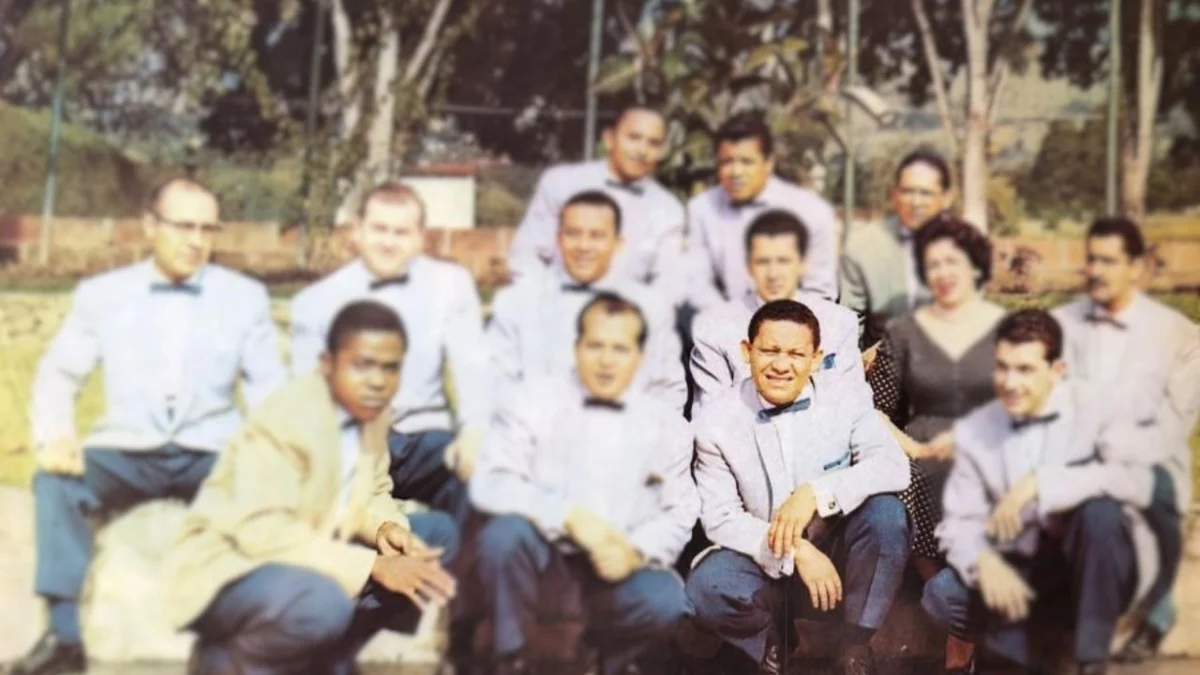
As the Caribbean coast of Colombia and the broader Latin American music community prepare to commemorate the centenary of his birth on July 6, the name Rafael Enrique Ruiz Romero—universally known as Bobby Ruiz—stands tall as a foundational pillar of golden-age tropical music. While iconic songstress Matilde Díaz is rightfully remembered as the quintessential vocal star of Lucho Bermúdez’s legendary orchestra, history reserves a permanent, cherished space for her dynamic counterpart, Bobby Ruiz.
A consummate showman, vocalist, and charismatic stage presence, Ruiz was far more than a secondary act. Together with Díaz, he formed one of the most successful, harmonically balanced vocal duos in the history of Colombian popular music. Their natural vocal symbiosis defined an era, breathing life into cumbias, porros, and gaita arrangements that would cross borders and captivate audiences from Cartagena to Buenos Aires, and eventually, to the United States.
As biographer José Portaccio Fontalvo observes in his definitive work, Lucho Bermúdez. Cumbias, porros y viajes:
"The duo of Bobby Ruiz and Matilde Díaz was fundamental to the success of the orchestra. Their voices intertwined and brought luster to the songs. The highest testimony of this remains captured in the long-play record ‘Lucho en el Tequendama’."
Chronology: From the Underage Bars of Cartagena to the Stages of Los Angeles
The trajectory of Bobby Ruiz reads like a classic narrative of mid-20th-century Caribbean musical migration—a tale of raw talent, relentless touring, and cross-pollination among the vibrant musical hubs of Colombia.
Early Beginnings and Cartagena Nights (1926–1944)
Born in Cartagena on July 6, 1926, Ruiz displayed an innate passion for music early in life. By his adolescence around 1944, his undeniable vocal abilities drew him to the city’s burgeoning nightlife. He began performing in local bars and clubs—ventures frequently cut short by local police officers who routinely escorted the underage crooner off the premises. These early escapades, however, forged his stage resilience and quick wit.
The Barranquilla Debut and Early Recordings
Eager to expand his horizons, Ruiz relocated to Barranquilla, marking his professional debut as an orchestra vocalist alongside Rumbavana, a Cuban ensemble directed by Armando Cartaya. When Cartaya later moved to Cartagena to direct the Orquesta Emisoras Fuentes (a radio station that later evolved into a powerhouse record label), Ruiz’s career gained significant momentum.
His earliest commercial recordings materialized during this period, featuring playful and rhythmically complex tracks such as:
- "El clarinete de Simón"
- "El currimbié"
- "La mano descompuesta"
The Golden Era with Lucho Bermúdez and Other Giants (1950s–1960s)
Seeking broader artistic challenges, Ruiz traveled to Medellín, the nation’s industrial and recording capital. There, he integrated into several elite musical institutions, including:
- La Sonora Cardenio, led by Edmundo Arias
- Pacho Galán’s Orchestra
- Ultimately, Lucho Bermúdez’s Orchestra, which he joined in the mid-1950s.
It was within Bermúdez’s ensemble that Ruiz reached the zenith of his career. Beyond his vocal precision, Ruiz was a master entertainer. Matilde Díaz fondly recalled his unmatched stage presence:
"He was the grace of the orchestra. He would move, he would invent words, he would sing in French, he would sing in Italian, but he wasn’t saying anything. And everyone loved him for it too."
His voice anchored dozens of iconic Bermúdez recordings, including solo performances like "Los primos Sánchez", "La buchaca", "El marañón", "La gaita de las flores", "Carnaval", "El gallito", "Molongo", "El pájaro macuá", "El pitirre", "María tumbas", and "La boquillera".
Concurrently, his duets with Matilde Díaz became legendary blueprints for tropical vocal arrangement. Tracks such as "Diana María", "Manizaleña", "El helado de leche", "Hasta luego Medellín", "Arepa de pilón", and "Julián el solterón" demonstrated an effortless vocal blend that few groups have replicated since.
Furthermore, Ruiz’s versatility allowed him to record with a constellation of other major acts:
- With Sonora Cardenio: "Qué ladrón", "La flaca", "Que le den", "Juan Torero", and "Qué campanera"
- With Italian Jazz: "Chachita bonita"
- With Edmundo Arias: "Solo estoy", "Qué dichoso es", and "Cumbia candelosa"
- With Sonora Dinamita: "Marañón" and "Pedazo de cariño"
- With Pedro Laza y sus Pelayeros: "El pescador"
Internationalization and Later Years (1970s–2010s)
As the 1970s dawned, the musical landscape began to shift, and Ruiz made a major life transition. Alongside his wife, Dioselina, he emigrated to the United States, settling in Los Angeles, California. There, he founded Los Internacionales, an orchestra dedicated to preserving and promoting salsa and traditional Colombian tropical music on the West Coast.
Despite his expatriate status, Ruiz maintained a deep connection to his homeland, returning frequently to Cartagena for holidays, reunions with old friends, and routine medical checkups. True to a life well-traveled, the legendary interpreter passed away in Atlanta, Georgia, at the remarkable age of 91.
Supporting Data: Discographical Milestones
To understand Bobby Ruiz’s impact, one must examine the sheer volume and cultural weight of his recorded output. His career spanned multiple decades and traversed major independent and industrial record labels of twentieth-century Colombia, including Discos Fuentes, Tropical, Philips, and Sonolux.
| Category | Representative Tracks / Works | Key Collaborators / Ensembles |
|---|---|---|
| Definitive Long-Play | "Lucho en el Tequendama" | Lucho Bermúdez Orchestra |
| Hit Duets (with Matilde Díaz) | "Lina", "Baila negra", "Tumbasón en Bogotá", "Mono Fabio", "Diana María", "Arepa de pilón" | Lucho Bermúdez |
| Solo Standards with Bermúdez | "El gallito", "La boquillera", "El marañón", "Carnaval" | Lucho Bermúdez |
| External Collaborations | "El pescador", "Marañón", "Chachita bonita" | Pedro Laza, Sonora Dinamita, Italian Jazz |
| International Project | Founder and Director, Los Internacionales | Los Angeles-based Latin musicians |
The album Lucho en el Tequendama remains a masterclass in mid-century tropical orchestration, where Ruiz and Díaz served as vocal architects for rhythms that bridged rural Caribbean folklore with sophisticated urban big-band arrangements.
Official Responses and Cultural Evaluations
Musicologists, biographers, and cultural historians continue to reevaluate the critical role played by vocalists like Bobby Ruiz in shaping national identity through music.
José Portaccio Fontalvo, noted biographer of Lucho Bermúdez, emphasizes that the orchestra’s commercial and artistic triumphs cannot be attributed to the bandleader alone. In his writings, Portaccio stresses that the complex arrangements required interpreters who could match technical skill with theatrical flair—a balance that Ruiz executed flawlessly.
Meanwhile, cultural institutions across the Colombian Caribbean have begun planning tributes ahead of the July 6 centennial. The Ministry of Culture, alongside regional heritage foundations in Bolívar and Atlántico, has highlighted Ruiz as a quintessential ambassador of música sabanera and tropical jazz.
Local music critics point out that while composers receive initial credit for penning melodies, it is performers like Bobby Ruiz who humanize the art form, transforming localized musical experiments into pan-American anthems. His capacity to improvise nonsense syllables in pseudo-French or Italian while maintaining strict rhythmic integrity proved that music, at its core, is a universal language of joy.
Implications: Preserving the Heritage of Tropical Golden Age Music
The approaching centennial of Bobby Ruiz’s birth arrives at a critical juncture for Latin American music preservation. As contemporary genres dominate global streaming platforms, the foundational roots of Colombian tropical music—porro, cumbia, gaita, and fandango—risk fading from the collective consciousness of younger generations unless actively curated and studied.
1. Archival Recovery and Digital Remastering
Much of Ruiz’s catalog—recorded across 78 RPM discs and early long-plays for labels like Tropical and Sonolux—remains inaccessible on modern digital streaming platforms. Music preservationists argue that the centennial should serve as an urgent catalyst for record labels and cultural ministries to systematically digitize, remaster, and catalog these historical recordings.
2. Educational Integration
Music academies and university folklore programs in Colombia can utilize the artistic partnership of Bobby Ruiz and Matilde Díaz as a pedagogical case study. Analyzing their vocal phrasing, breath control, and harmonic interaction offers invaluable lessons for contemporary vocalists exploring traditional Caribbean styles.
3. Transnational Cultural Ties
Ruiz’s migration to Los Angeles and his creation of Los Internacionales underscore an early, vital chapter of the Colombian musical diaspora in North America. Recognizing his work highlights how immigrant artists maintained cultural sovereignty and community cohesion far from the shores of Cartagena and Barranquilla.
As we look toward July 6 and honor Bobby Ruiz as our Artist of the Week, we do not merely look back at a bygone era of big bands and ballroom dances. We celebrate an enduring spirit—a Cartagena native whose voice, smile, and theatrical grace helped define the soundtrack of a continent.


Leave a Reply