

Main Facts: The Silence After the Shaking
On August 10, a powerful earthquake struck Pereira, Colombia, fundamentally altering the geography, economy, and auditory landscape of a city renowned for its vibrant cultural life. Known for streets perpetually animated by the hum of conversation, clinking glasses, and live acoustic guitars drifting from neighborhood cafes, Pereira was suddenly plunged into a radically different acoustic reality. The familiar rhythms of salsa, Andean folk, rock, and jazz were abruptly replaced by the wail of emergency sirens, the heavy grinding of excavator machinery, and the urgent shouts of rescue workers navigating compromised infrastructure.
The physical devastation heavily targeted Pereira’s cultural ecosystem. Numerous independent music venues, historic theaters, restaurants, and bohemian bars—the lifeblood of the city’s nocturnal and artistic economy—were forced to close their doors indefinitely due to structural damage. For the thousands of individuals whose livelihoods depend entirely on the performance arts, the disaster triggered an immediate economic freefall. Singers, instrumentalists, sound engineers, lighting technicians, booking agents, and career DJs suddenly found themselves without stages, audiences, or income.
Yet, beyond the immediate financial crisis lay a profound psychological hurdle: grief. As Pereira entered a period of communal mourning and stabilization, the prospect of making music felt to many like an insensitive or premature pursuit. Art, so often synonymous with celebration and leisure, needed to find an entirely new vocabulary to address a traumatized public.
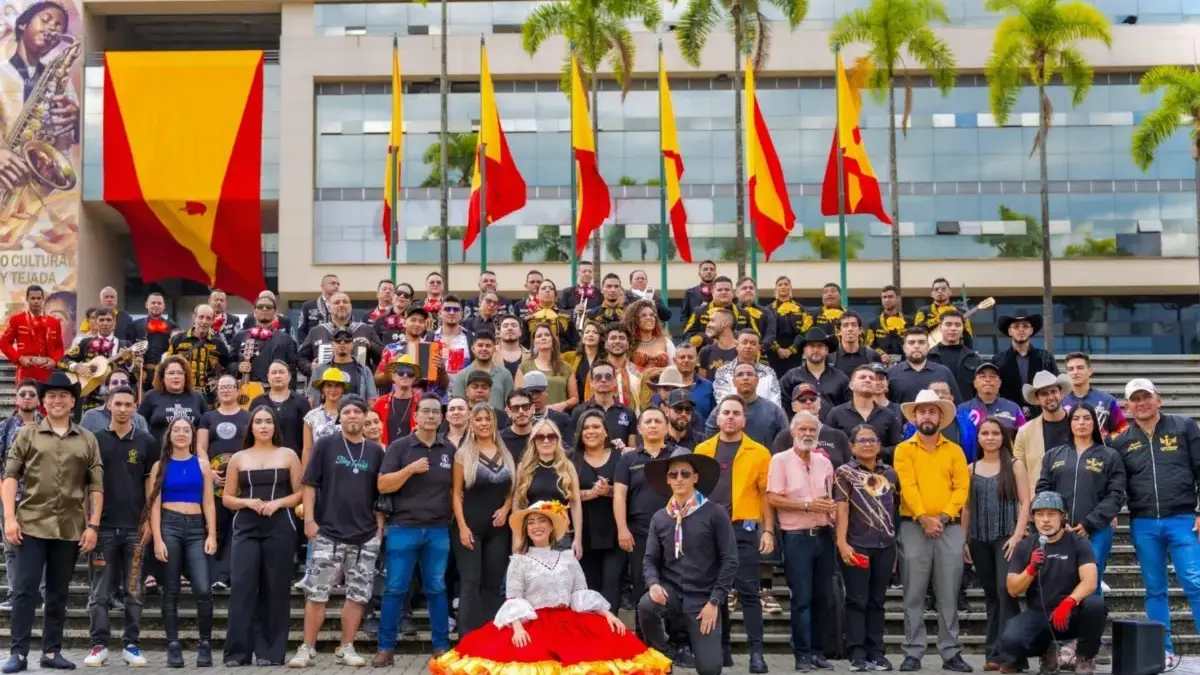
Out of this profound structural and emotional silence emerged Pereira Resuena (Pereira Resonates), a grassroots collective of musicians and creative workers who chose not to wait for institutional relief, but to take up the instruments of recovery themselves. Rather than asking what the city could do for them in their hour of need, these artists inverted the question, asking: What can we offer a wounded city?
Chronology: From the Rubble to the Birth of a Movement
Phase One: The Immediate Aftermath (August 10 – August 20)
In the days immediately following the earthquake, Pereira focused entirely on life safety, triage, and structural assessments. Music venues went dark. For local artists, the initial phase was characterized by shock, isolation, and immediate survival concerns. Many cultural workers, accustomed to informal, gig-to-gig economies, saw their weekly earnings evaporate overnight.
Phase Two: The Creative Awakening and Collective Formation (Late August)
As the dust began to settle and the reality of a long recovery process set in, individual artists began reaching out to one another through messaging apps and impromptu neighborhood meetings. They recognized that while physical reconstruction was being handled by engineers and municipal authorities, the social and emotional fabric of Pereira was severely frayed.
Artists like Juan Gufo and Aguasanta Carreyo began spearheading informal gatherings. They debated the role of the artist in a time of disaster. The consensus was clear: music could not wait until everything was perfectly rebuilt, because music was part of the rebuilding process. This realization birthed Pereira Resuena. The collective’s ethos was crystallized in a simple, powerful maxim coined by its members: "Any of us can make a sound, but when we are together, Pereira resonates."
Phase Three: Mobilization and Data Collection (Early September)
Moving past the initial emotional catharsis, the collective recognized that effective advocacy required hard data. Teaming up informally with municipal cultural data collectors, Pereira Resuena began mapping the devastation within the creative sector. They shifted from spontaneous jam sessions to strategic organization, creating portfolios of local talent and laying the groundwork for sustainable economic reactivation rather than one-off charity concerts.
Phase Four: Institutional Dialogue and Strategic Expansion (Present Day)
One month after the earthquake, Pereira Resuena has transitioned into a recognized socioeconomic force. The collective is actively bridging gaps between independent artists, private commercial enterprises, and public agencies. Through initiatives like "Tarimas para Todos" (Stages for Everyone), they are systematically negotiating performance spaces that ensure a rotational, steady stream of income for hundreds of creative workers, proving that the collective is here for the long haul.
Supporting Data: The Hidden Vulnerability of the Creative Sector
The earthquake did not create the vulnerabilities plaguing Pereira’s cultural sector; rather, it exposed systemic cracks that had persisted for decades. The tragedy laid bare the precarious nature of informal labor within the arts.
According to data compiled by the collective and municipal agencies, the scope of the crisis is vast:
- 7,000+: The estimated total number of artists, technicians, and support staff making up Pereira’s broader cultural ecosystem.
- 1,119: The number of cultural workers who formally registered their direct losses with the Pereira Secretariat of Culture by early September.
- 700 to 800: The subset of registered workers who reported severe, immediate economic distress.
- 500: The precise number of professional musicians among the registered affected population who lost their primary sources of income due to venue closures.
These figures underscore a stark reality: the vast majority of Pereira’s cultural workforce operates without employment contracts, health insurance, or unemployment safety nets. When a venue closes, a musician does not experience a temporary furlough—they experience an immediate cessation of survival income.
Pereira Resuena responded to this data by abandoning traditional models of competition. In a pre-earthquake environment, local musicians often vied fiercely for the limited weekend slots available in the city’s premier bars. Today, veterans and newcomers share the same tables. Established artists with name recognition have begun leveraging their bookings to uplift lesser-known acts, negotiating clauses that ensure younger or emerging artists share the stage with them.
Official Responses: Institutional Coordination and Public-Private Bridges
The municipal government of Pereira, led by the Secretariat of Culture, faced an unprecedented challenge in attempting to allocate emergency relief while simultaneously managing civil engineering and public safety crises.
Initial institutional responses focused on emergency food aid, housing stabilization, and structural evaluations of public buildings. However, as the weeks progressed, pressure from grassroots organizations like Pereira Resuena forced a pivot toward economic reactivation strategies tailored specifically to the creative class.
The Secretariat of Culture’s censo (census) initiative served as the primary administrative bridge, attempting to quantify the human cost of the disaster on the arts. Yet, municipal officials have openly acknowledged that public funds alone cannot sustain the thousands of displaced creative workers.
This realization has prompted local government to look toward public-private partnerships. Discussions are currently underway to establish a unified recovery fund—a financial pool fed by municipal grants and private commercial investments. This fund aims to subsidize public pop-up performances in parks, transit hubs, and surviving commercial centers.
Furthermore, chambers of commerce and local business associations have begun engaging with Pereira Resuena to explore how safely reopened restaurants and cafes can safely integrate live acoustic acts back into their business models, viewing cultural reactivation not as a luxury, but as an essential driver for consumer confidence and foot traffic.
Implications: The Long Road to Cultural and Economic Resilience
The emergence of Pereira Resuena carries profound implications for urban disaster recovery models in Colombia and Latin America. Too often, cultural infrastructure is treated as an afterthought in post-disaster planning—something to be restored only after bridges, roads, and commercial storefronts are fully operational.
The artists of Pereira are proving this paradigm wrong. By treating music as an essential public utility of the soul, they are demonstrating that psychological and social recovery cannot occur in an aesthetic vacuum.
1. The Death of Hyper-Competition
For years, Pereira’s music scene suffered from fragmentation, with genres and individual artists operating in insular silos. The earthquake wiped away the physical spaces that housed these divisions, forcing a radical democratization of the local scene. The solidarity forged in the wake of the disaster—where headliners demand spots for novices—has permanently altered the social contract of Pereira’s artistic community.
2. Institutionalizing Grassroots Resilience
What began as an informal support group is now laying the groundwork for a permanent advocacy union. The long-term implication is the creation of a robust, formalized guild capable of lobbying for labor rights, better contracts, and social security protections for informal cultural workers long after the memory of the August 10 earthquake begins to fade.
3. Redefining Urban Identity
A city is more than its concrete and mortar; it is the collective memory encoded in its sounds, traditions, and public gatherings. By fighting to bring music back into the streets, cafes, and pop-up stages, Pereira Resuena is ensuring that the identity of the city is not permanently defined by a tragedy, but by its capacity to harmonize in the face of adversity.
As Juan Gufo, Aguasanta Carreyo, and hundreds of their peers continue their work, the message to Pereira is unequivocal: rebuilding a city requires more than fixing its foundations. It requires tuning its instruments, opening its venues, and allowing the community to gather once more. In Pereira, the sirens have finally begun to recede, replaced by the unmistakable, triumphant resonance of a city singing itself back to life.

Leave a Reply