

By Cultural Desk
Published in commemoration of the 120th birth anniversary of Tobías Enrique Pumarejo Gutiérrez
Main Facts: The Legend of "Don Toba"
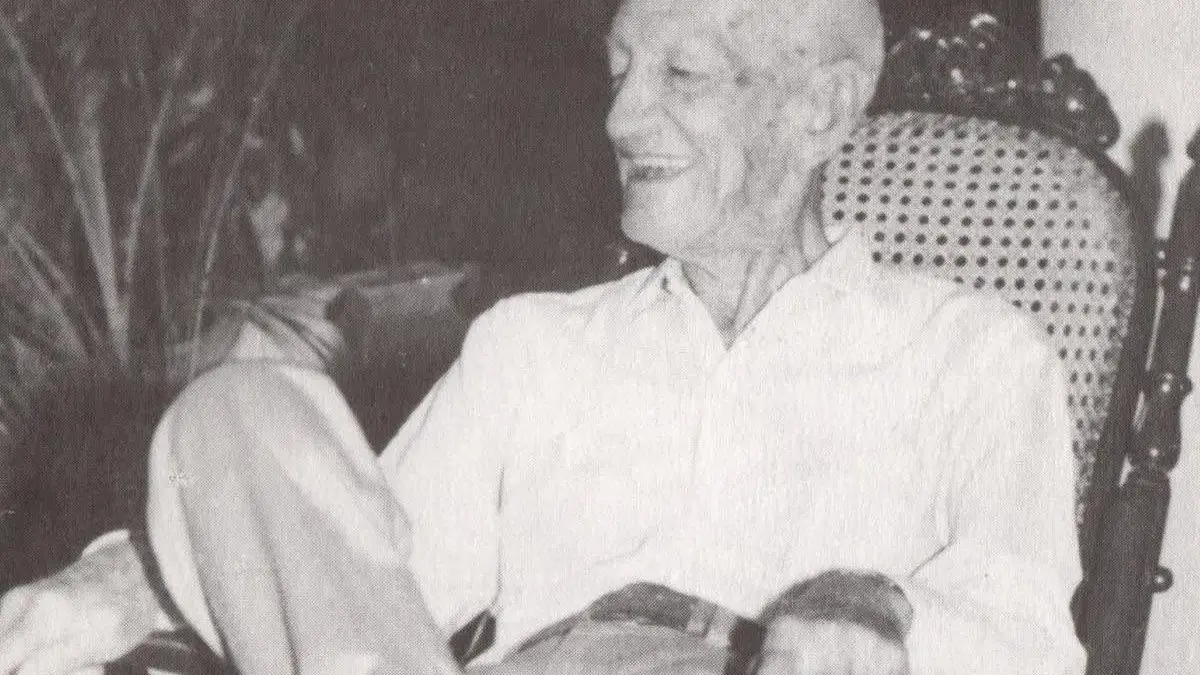
To understand the emotional landscape of Colombian music, one must look beyond the modern stages and trace the roots back to the sun-baked plazas and sprawling cattle ranches of the Caribbean coast. At the heart of this foundational era stands Tobías Enrique Pumarejo Gutiérrez—universally known as “Don Toba.”
Born on August 8, 1906, in Valledupar (then part of the Magdalena Department), Don Toba was much more than a wealthy landowner or a charismatic troubadour; he was a visionary architect of vallenato music. In his seminal book Cuando Matilde camina, dedicated to the history of vallenato songs, researcher Julio Oñate Martínez paints a vivid portrait of Pumarejo: a "famous vallenato troubadour, romantic and party-loving, descended from landowners, who had a great fondness for roan horses, fine hats, and women with penetrating eyes."
Despite never learning to play a musical instrument, Don Toba composed over 150 songs, traversing genres from traditional vallenato aires to rancheras, waltzes, and pasillos. He was a trailblazer who planted the seeds of romantic vallenato—a lyrical style later perfected by his disciples. His life bridged the gap between elite agrarian society and the folkloric heartbeat of the Colombian Caribbean, forever altering the nation’s cultural identity.
Chronology: The Life and Times of Tobías Enrique Pumarejo
The trajectory of Don Toba’s life reflects the transformation of Colombian society and music over the course of the 20th century.
Early Life and Academic Years (1906–1920s)
- August 8, 1906: Tobías Enrique Pumarejo Gutiérrez is born in Valledupar into a prosperous cattle-ranching family.
- Youth: Sent away from the Caribbean lowlands to complete his high school education at the prestigious Liceo Antioqueño of the University of Antioquia in Medellín.
- The University Years: Far from home, Pumarejo bonds with fellow coastal intellectuals, including future governor Pedro Castro Monsalvo. Together, they form the Orquesta Magdalenense, an amateur group dedicated to popularizing Caribbean music in the Andean interior. It is during this period that Pumarejo begins experimenting with composition.
The Return to the Land and "El Otoño" (1930s–1940s)
- The Hacienda Manager: Upon returning to his native region, Pumarejo takes over the administration of El Otoño, the family’s sprawling estate near El Copey, Cesar.
- Equine Inspiration: His passion for music is rivaled only by his love for horses. He writes tributes such as “Los tres caballos”, “Mi potrerito”, and “El alazanito” (the latter famously recorded by Alfredo Gutiérrez).
- Legendary Parrandas: El Otoño becomes a legendary cultural sanctuary, hosting multi-day vallenato parrandas (parties) that sometimes last up to two weeks. It is in this bohemian paradise that Pumarejo mentors future icons like Rafael Escalona and Gustavo Gutiérrez, teaching them the foundational rules of composition.
Golden Era and National Crossover (1948)
- 1948: Pumarejo hands over a composition to legendary singer Guillermo Buitrago. The song is the vallenato merengue “La víspera de año nuevo” (“New Year’s Eve Eve”), which instantly becomes an immortal Christmas soundtrack across Colombia and Latin America.
Institutional Recognition and Final Years (1968–1995)
- 1968: Leveraging his social standing and respect within the community, Don Toba serves as a juror for the inaugural edition of the prestigious Festival de la Leyenda Vallenata. He uses his influence to break cultural barriers, successfully opening the doors of the exclusive Club de Valledupar to accordion music.
- April 8, 1995: Don Toba passes away in Barranquilla at the age of 88, leaving behind a monumental musical legacy.
Supporting Data: The Musical Architecture of Don Toba
Don Toba’s catalog is a masterclass in emotional resonance and lyrical storytelling. Though his body of work encompasses more than 150 pieces, several stand out as pillars of Colombian folklore.
The Eternal Anthem: “La Víspera de Año Nuevo”
No Colombian New Year’s celebration is complete without the echoing notes of “La víspera de año nuevo.” Cultural critic José I. Pinilla Aguilar, in his book Cultures of Colombian Music, captures the profound impact of the song:
"Mixed feelings pour into every breast upon hearing the explosions of firecrackers that, like giant fireflies, streak across the skies on joyous nights when one year dies and another is born […]. Superstitions of traveling with luggage in hand, walking around the house, grapes, glasses of wine, feasts, drinks, and a thousand other things intermingle across all social fabrics that populate the universe, with the song of ‘La víspera de año nuevo’."
A Catalog of Masterpieces
Beyond his holiday anthem, Pumarejo’s pen produced enduring classics deeply embedded in the collective memory of the Caribbean coast:
- “Mírame Fijamente” (with verses inspired by a cuplé heard in a Sarita Montiel film)
- “Muchacha patillalera”
- “La cita”
- “Nueve de mayo”
- “Alma de Valledupar”
- “Desolación”
- “Sabana sanjuanera”
- “Ojos penetrantes”
- “La muerte de Pedro Castro” (also known as “Tres de marzo”)
- “Mala suerte”
Comparative Overview of Pumarejo’s Musical Legacy
| Category | Key Details / Examples |
|---|---|
| Total Compositions | Over 150 recorded and unrecorded pieces. |
| Musical Styles | Vallenato (paseo, merengue), rancheras, waltzes, and pasillos. |
| Instrumental Background | Non-player; composed entirely through vocal melody and poetic intuition. |
| Key Protegés | Rafael Escalona, Gustavo Gutiérrez. |
| Social Contributions | Integrated accordion music into elite spaces; co-established festival standards. |
Official Responses and Cultural Commemorations
As the nation marks the 120th anniversary of Tobías Enrique Pumarejo’s birth this August 8, cultural institutions, historians, and folk organizations have united in paying homage to his legacy.
In a recent statement released by the Ministry of Culture and regional heritage boards in Cesar and Magdalena, officials emphasized the transformative role Don Toba played in elevating regional folklore to a national art form.
"Tobías Enrique Pumarejo did not merely write songs; he scripted the emotional DNA of the Colombian Caribbean," stated a representative from the Vallenato Legend Festival Foundation. "He possessed the rare gift of marrying high-society elegance with the raw, rustic authenticity of the accordion. As we celebrate 120 years since his birth, we reaffirm our commitment to preserving the lyrical grace he introduced to our music."
Local universities and cultural centers across Valledupar have scheduled symposiums, academic panels, and tribute concerts highlighting his influence on modern songwriting. Historians note that public recognition of figures like Pumarejo is vital to maintaining the historical continuity of traditional genres against the pressures of commercial homogenization.
Implications: The Evolution of Romantic Vallenato
The legacy of Don Toba extends far beyond nostalgia; it carries profound implications for the evolution of modern Colombian music.
Before Pumarejo, vallenato was largely viewed through a picaresque, narrative, and historical lens—chronicling local events, smuggling stories, and rural gossip. While masters like Francisco "El Hombre" laid the instrumental groundwork, Don Toba injected a deep sense of introspection, longing, and romantic vulnerability into the lyrics.
The Birth of Lyrical Romanticism
By focusing on themes of unrequited love, deeply personal heartbreak, and the haunting beauty of the Caribbean landscape, Pumarejo established the foundational blueprint for romantic vallenato. This subgenre would later explode globally in the 1970s, 80s, and 90s through artists like Binomio de Oro, Los Chiches Vallenatos, and his direct spiritual successor, Gustavo Gutiérrez.
Bridging Social Divides
Furthermore, Pumarejo’s social standing as a scion of a wealthy landowning family played a crucial geopolitical role in the legitimation of vallenato. In an era when accordion music was often looked down upon by the urban elite of the interior and coastal capitals as "music of the lower classes," Don Toba’s unyielding patronage brought the genre into high-society salons, country clubs, and elite gatherings. By hosting marathon parrandas at El Otoño, he forced the traditional establishment to listen, respect, and ultimately embrace the poetry of the accordion.
As contemporary vallenato continues to adapt to global digital markets, the fundamental emotional core established by Tobías Enrique “Don Toba” Pumarejo remains an unshakeable anchor. One hundred and twenty years after his birth, every time a lover pines for a distant glance, every time a family gathers under the December fireworks to the sound of “La víspera de año nuevo,” Don Toba’s timeless spirit lives on.

Leave a Reply