

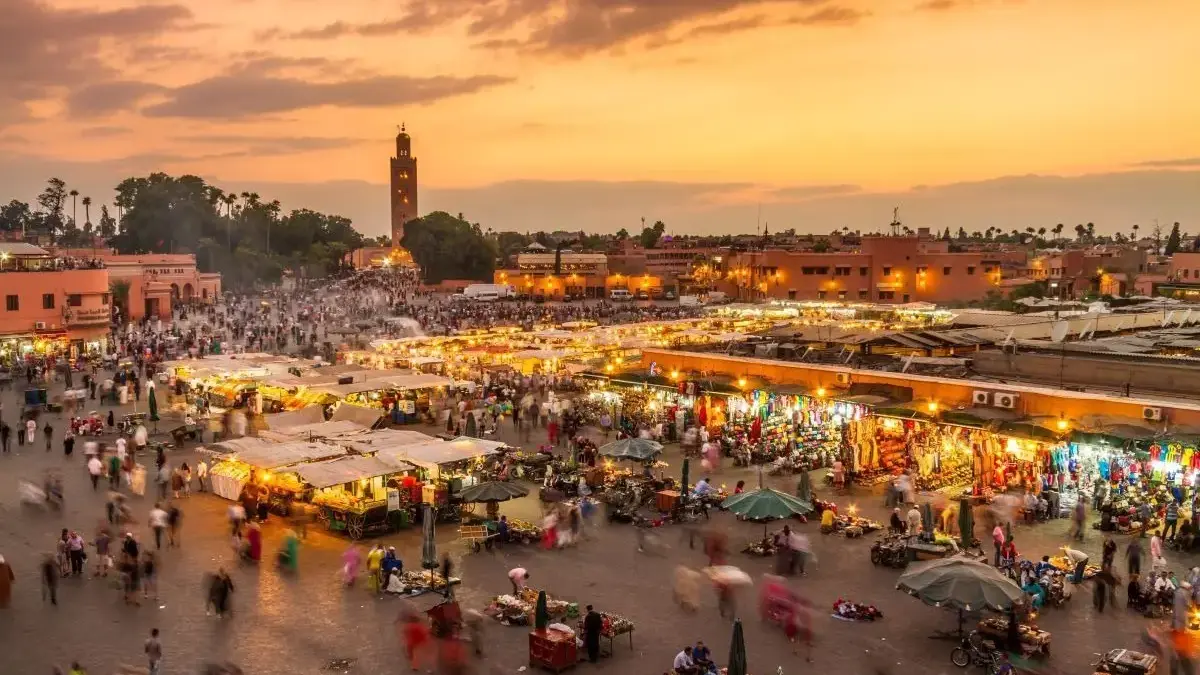
RABAT — Morocco continues to cement its status as one of the most dynamic and resilient tourist destinations in the Mediterranean and African regions. According to official data released by the Moroccan Ministry of Tourism, the North African kingdom welcomed an impressive 15.7 million visitors between January and September, marking a robust 5% increase compared to the same period in the previous year.
This sustained upward trajectory translates to over 717,000 additional tourists, outperforming last year’s historic figures and keeping the nation firmly on track to achieve its ambitious national target of 26 million visitors by 2030—the landmark year Morocco will co-host the FIFA World Cup alongside Spain and Portugal.
1. Main Facts: Sustained Growth Across All Quarters
The numbers released by the Ministry of Tourism reflect not just seasonal spikes, but broad-based, structural growth in Morocco’s hospitality and travel ecosystem.
- Total Arrivals (Jan–Sep): 15.7 million tourists (a 5% year-on-year increase).
- September Performance: Over 1.5 million international visitors chose Morocco in September alone, representing a remarkable 8% growth compared to the same month last year.
- Economic Impact: The tourism sector currently accounts for 7.3% of the country’s Gross Domestic Product (GDP), serving as one of the primary drivers of foreign exchange earnings, job creation, and regional development.
- Key Source Markets: Traditional European markets remain the cornerstone of Morocco’s international inbound tourism, led by France, Spain, the United Kingdom, Belgium, and Italy.
The performance through the first three quarters of the year demonstrates that Morocco has successfully extended its tourism season. The country is no longer relying solely on peak summer holiday periods; instead, it is drawing steady streams of travelers throughout the spring, late summer, and early autumn months.
2. Chronology of a Success Story: From Post-Pandemic Recovery to 2030 Ambitions
To understand Morocco’s current tourism milestones, it is essential to trace the strategic evolution of the sector over recent years.
2021–2022: The Post-Pandemic Pivot
Following the severe global disruptions caused by the COVID-19 pandemic, Morocco implemented aggressive, targeted recovery plans. The government launched a 2 billion dirham emergency plan to support hoteliers and tourism workers, ensuring that infrastructure remained intact and workforce skills were preserved.
2023–2024: The Return of International Travel and New Strategies
As global travel resumed, Morocco outpaced many of its regional competitors. The nation introduced the "Light in Action" global promotional campaign, showcasing its diverse offerings—from the imperial cities and coastal resorts to the Sahara Desert and the Atlas Mountains.
2025: The Record-Breaking Milestone
Last year proved to be a watershed moment for the nation’s economy. Marrouecoc welcomed a historic record of 19.8 million tourists in 2025, shattering all previous benchmarks. This unprecedented influx laid a solid foundation for the current 2026 figures, proving that the destination’s appeal is structural rather than fleeting.
2026 (Current): On the Road to September
The period spanning January to September 2026 has built directly upon last year’s momentum. Despite global economic headwinds, inflationary pressures, and shifting travel trends worldwide, Morocco has continued to post positive monthly growth figures, culminating in the 15.7 million arrivals milestone reported at the end of the third quarter.
3. Supporting Data: Market Dynamics and Economic Footprint
A closer examination of the data reveals crucial insights into who is traveling to Morocco and why the sector is outperforming broader regional averages.
Geographic Diversity and Regional Spread
While major hubs like Marrakech (famed for its vibrant medinas, luxury resorts, and cultural heritage), Casablanca (the economic engine), and Tangier (the gateway to Europe) continue to capture the lion’s share of international arrivals, emerging destinations are experiencing rapid growth. Cities like Agadir, Fez, Rabat, and the coastal towns along both the Atlantic and Mediterranean coasts are benefiting from improved domestic connectivity and targeted regional marketing campaigns.
Air Connectivity and Infrastructure
The expansion of national carrier Royal Air Maroc, alongside aggressive route development by low-cost carriers (such as Ryanair, EasyJet, and Transavia), has drastically improved air access to secondary Moroccan airports. Increased seat capacity from major European capitals has directly fueled the 5% year-to-date growth.
The Power of the Eurozone Markets
France and Spain remain the undisputed heavyweights in Morocco’s tourism portfolio, driven by geographical proximity, cultural ties, and deep historical connections. Meanwhile, the UK market has exhibited double-digit growth over the past twenty-four months, bolstered by new direct flight connections from regional British airports to Marrakech and Agadir.
4. Official Responses: Leadership Confidence and Strategic Vision
The leadership in Rabat has expressed immense satisfaction with the performance of the sector, viewing the latest figures as validation of a meticulously crafted national tourism roadmap.
Fatim-Zahra Ammor, Morocco’s Minister of Tourism, highlighted the resilience and long-term potential of the nation’s tourism industry in her official statements:
"The dynamics of Moroccan tourism continue, and its long-term potential remains considerable. The objective of reaching 26 million tourists by 2030 is closer than ever," stated Fatim-Zahra Ammor.
The Ministry of Tourism further emphasized that these figures confirm the "solidity" of Morocco’s growth trajectory. In official briefings, ministry officials pointed out that the ability to generate an 8% increase in September alone proves the country’s capacity to maintain strong demand well beyond the traditional high-season summer months.
Industry associations, including the National Confederation of Tourism (CNT), have echoed the Minister’s optimism, noting that public-private partnerships have been instrumental in streamlining investments, upgrading hospitality standards, and enhancing service quality across the board.
5. Implications: The 2030 World Cup Horizon and Future Challenges
Looking ahead, the horizon for Moroccan tourism is inextricably linked to one of the most significant mega-events in the global sporting calendar: the 2030 FIFA World Cup, which Morocco will co-host alongside Spain and Portugal.
Infrastructure Overhaul and Capacity Expansion
To successfully accommodate millions of football fans, tourists, and delegates in 2030, Morocco is currently executing a massive, multi-billion-dollar infrastructure modernization program. Key areas of focus include:
- Accommodation Capacity: Thousands of new hotel rooms—ranging from budget-friendly accommodations to ultra-luxury resorts—are under development across the host and secondary cities. International hotel chains are heavily investing in the Moroccan market.
- Airport Modernization: Major hubs, including Mohammed V International Airport in Casablanca and Menara Airport in Marrakech, are undergoing significant expansions to increase passenger handling capacity, streamline customs processes, and upgrade terminal facilities.
- Transport Networks: The ongoing expansion of the Al Boraq high-speed rail network, alongside upgraded national highways and urban transit systems, will ensure seamless mobility for travelers moving between host cities.
Socio-Economic Benefits and Sustainability
Beyond the immediate economic boost, the Moroccan government is acutely aware of the need for sustainable tourism growth. Initiatives are underway to promote eco-tourism in rural areas, preserve historical heritage sites, and ensure that the economic benefits of the tourism boom are distributed equitably among local communities.
Conclusion
As Morocco closes in on the final quarter of the year with 15.7 million visitors already on record, the country is proving that it is not merely a seasonal hotspot, but a premier, globally competitive destination. With the 2030 World Cup acting as a powerful catalyst for long-term modernization, Morocco’s tourism sector is well-positioned to write an even more prosperous chapter in the years to come.



Leave a Reply