MONTPELLIER, FRANCE — In the realm of contemporary architecture, the materials of vernacular heritage are frequently relegated to the history books or utilized merely as nostalgic facades. However, experimental design studio COAT has boldly inverted this paradigm with their latest ephemeral intervention, Chaume Sublimé. Curated by Nina Vuga and captured through the lens of architectural photographers Paul Kozlowski and the COAT team, this captivating installation was unveiled for the Festival des Architectures Vives (FAV) 2025 in Montpellier, France.
Transforming the humble marsh reed—historically known in French as chaume—into a sophisticated medium of sensory immersion and atmospheric performance, the project challenges modern design to rethink ecological sustainability through the lens of profound craftsmanship.
Event: Festival des Architectures Vives (FAV) 2025
Location: Montpellier, France
Curator: Nina Vuga
Photographers: Paul Kozlowski and COAT
Primary Material: Marsh reed (chaume / common reed)
Typology: Ephemeral architecture, spatial installation, public art intervention
Chronology of the Intervention
The journey of Chaume Sublimé from concept to physical realization reflects a meticulous timeline of material research, site integration, and public engagement characteristic of the Festival des Architectures Vives.
Phase 1: Conceptualization and Material Selection (Late 2024)
COAT initiated the project with a rigorous inquiry into vernacular building traditions across Southern France. Recognizing the thermal, acoustic, and aesthetic potential of raw marsh reeds, the studio moved away from high-carbon industrial products. They sought a material that carried historical weight yet possessed a lightweight, flexible physicality suitable for an ephemeral urban intervention.
Phase 2: Fabrication and Craft Integration (Early 2025)
Working closely with local artisans specializing in traditional thatch work, the designers developed structural modules that honored ancient hand-weaving techniques. Unlike permanent building applications, these modules were engineered to be assembled and disassembled rapidly without damaging the historic urban fabric of Montpellier’s interior courtyards.
Phase 3: Site Installation and Assembly (Spring 2025)
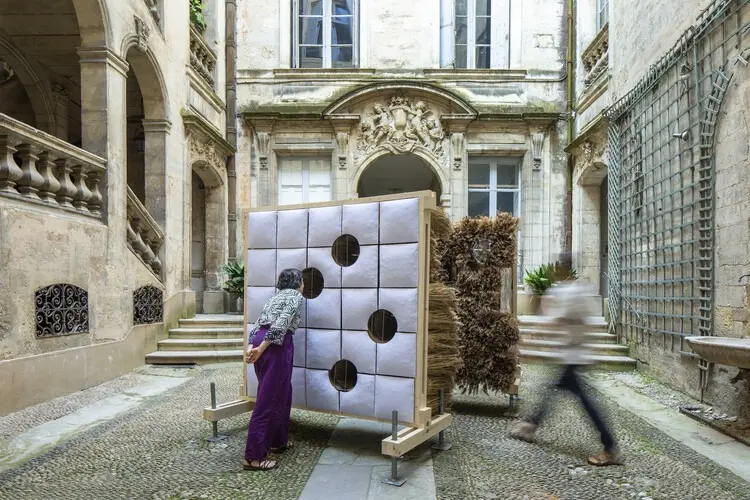
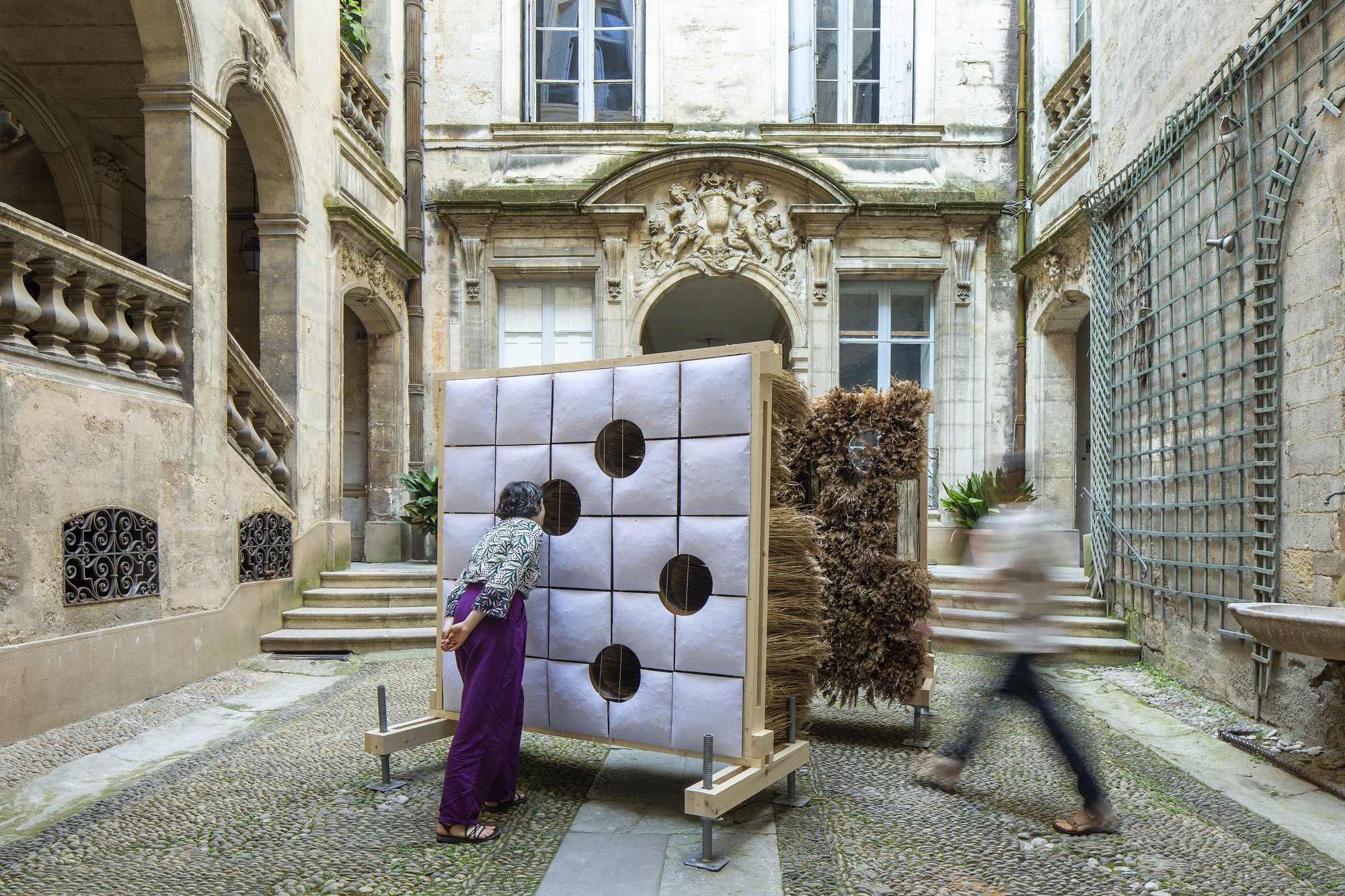
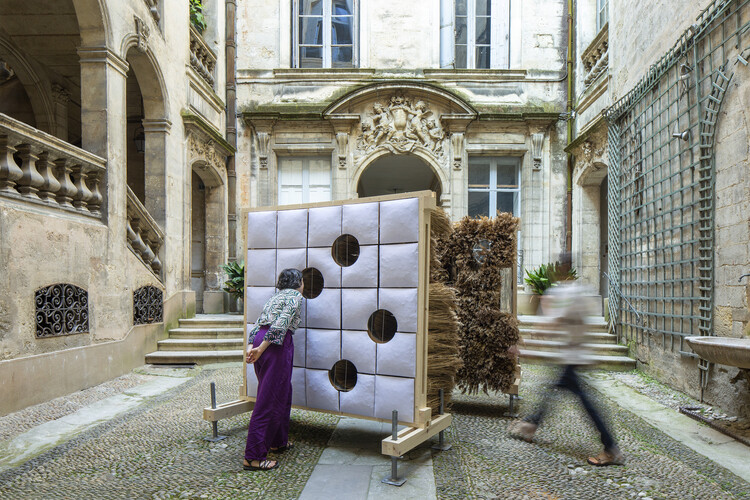
The installation was assembled on-site in Montpellier ahead of the festival opening. The process required delicate handling to fit the voluminous reed structures into tight historical archways and open patios, creating a striking visual tension between the medieval stone architecture and the organic, textured materiality of the reeds.
Phase 4: Festival Debut and Public Interaction (FAV 2025)
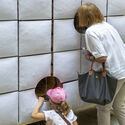
During the festival, Chaume Sublimé served as an interactive spatial experience. Visitors were invited to walk through, touch, and listen to the installation, experiencing how natural light filters through densely packed botanical fibers to alter the atmospheric quality of the courtyard.
Supporting Data and Materiality
The success of Chaume Sublimé lies in its clever deployment of architectural and environmental data:
Embodied Carbon: By utilizing locally sourced, rapidly renewable marsh reeds, COAT achieved a near-zero carbon footprint for the structural envelope of the installation. The project highlights how biogenic materials can replace energy-intensive synthetic polymers and metals in temporary pavilions.
Acoustic Absorption: Field tests within the installation noted a significant dampening of urban ambient noise. The fibrous, porous nature of the dried reeds traps sound waves, creating a meditative acoustic sanctuary inside the bustling historic center of Montpellier.
Thermal Regulation: The installation demonstrated passive microclimate control. Shade provided by the layered reeds reduced surface temperatures on surrounding stone paving by several degrees during peak afternoon solar exposure.
Lifecycle Management: True to the ethos of the Festival des Architectures Vives, the installation is fully biodegradable or recyclable. Following the conclusion of the event, the reeds are designated for agricultural mulch and local composting streams, ensuring a closed-loop material lifecycle.
Official Responses and Curatorial Vision
The curatorial framing by Nina Vuga positioned Chaume Sublimé as a vital critique of contemporary architectural excess.
"We live in an era obsessed with high-tech optimization, yet we frequently overlook the profound intelligence embedded in traditional materials," Vuga noted during the festival’s opening week. "COAT has not merely decorated a space with reeds; they have re-engineered our perception of the ordinary. Chaume Sublimé forces us to slow down, to engage our senses, and to recognize that true innovation often looks backward to move forward."
The design collective COAT emphasized that their work is fundamentally an exploration of atmospheric conditions (conditions atmosphériques d’espaces):
"Architecture is not just about the solid geometry of walls and roofs; it is about how air, light, and sound move through a space," the studio shared in an official project statement. "By elevating the reed—a material historically used for the most basic rural shelter—into an object of sublime aesthetic contemplation, we wanted to question the hierarchy of building materials. Why should luxury be defined by rarity or expense, rather than sensory richness and ecological harmony?"
Implications for Future Architecture
While Chaume Sublimé was conceived as an ephemeral installation for a temporary festival, its broader implications for permanent architecture are substantial. As the global construction industry grapples with strict decarbonization mandates and resource scarcity, experiments like those by COAT offer a viable blueprint for mainstream adoption.
1. Mainstreaming Biogenic Building Blocks
The project demonstrates that agricultural byproducts and wetland flora can be structurally and aesthetically competitive with conventional materials. Architects are increasingly looking at straw-bale construction, hemp-crete, and reed-thatching not as relics of the past, but as high-performance components for modern building envelopes.
2. The Rise of Experiential Ephemerality
Ephemeral architecture festivals like FAV Montpellier serve as critical laboratories for ideas that are too risky for traditional client-driven commissions. By testing radical material uses on a temporary scale, designers can gather empirical data on durability, weathering, and public perception, paving the way for larger permanent applications.
3. Re-enchanting the Urban Realm
In an era dominated by glass, steel, and concrete, urban spaces frequently suffer from sensory monotony. Chaume Sublimé proves that introducing tactile, organic textures into historic or hyper-urban environments re-awakens human emotional connection to the built environment, fostering spaces that promote psychological well-being alongside environmental sustainability.
Ultimately, COAT’s Chaume Sublimé transcends its status as a temporary festival attraction. It stands as a poetic manifesto for a more grounded, tactile, and ecologically responsible architectural future—proving that even the humblest reed, when viewed through the lens of thoughtful design, can achieve the sublime.



Leave a Reply