

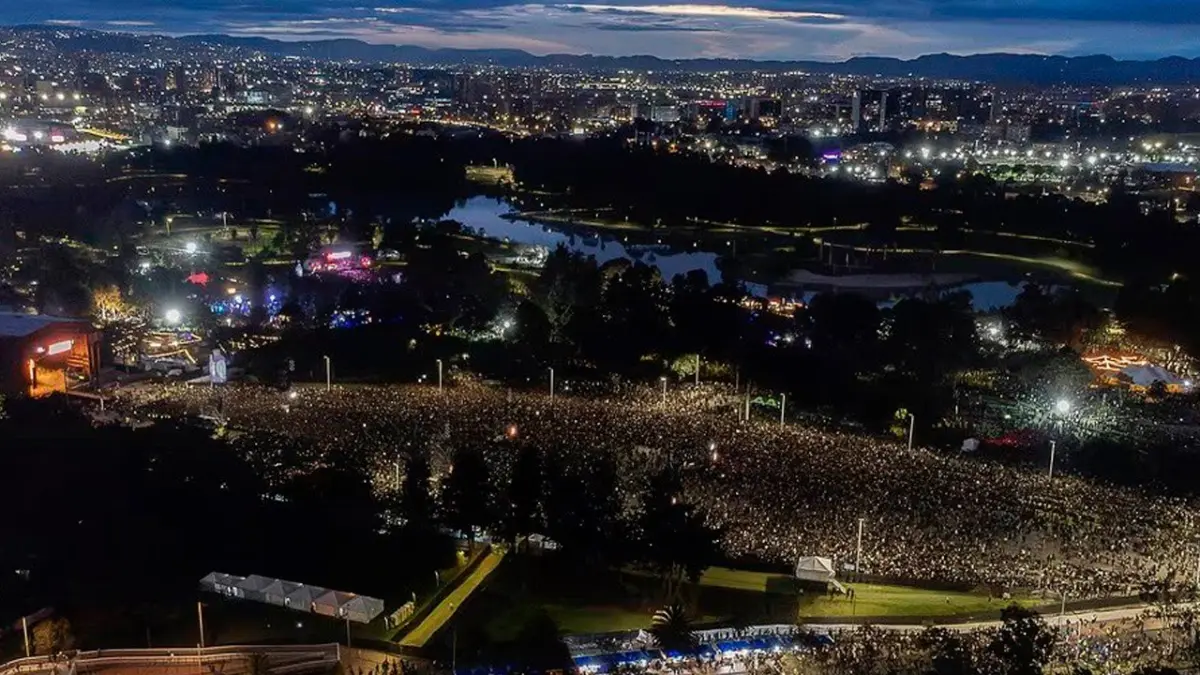
BOGOTÁ, COLOMBIA — The iconic Parque Metropolitano Simón Bolívar has once again transformed into the beating heart of Latin American rock culture. Celebrating its monumental 30th anniversary, the Rock al Parque festival has transcended expectations, shattering attendance records even before the final chord of its closing day could ring out.
With cultural affinity, artistic diversity, and an unbreakable bond between the public and the music, the 2026 edition has firmly cemented its status as free-access festival royalty on a global scale. As tens of thousands of leather-clad fans, melodic-rock enthusiasts, and generational metalheads flooded the green expanses of Bogotá’s largest urban park, the numbers told an unprecedented story of cultural resilience and enduring passion.
Main Facts: A Historic Milestone Before the Final Curtain
Even before the dawn of its third and final day on Monday, October 12, Rock al Parque 2026 had already welcomed an astonishing cumulative attendance of over 465,500 people across its first two operational days.
This staggering figure outstrips the total historical attendance of numerous peak editions from previous decades. The festival, which remains free to the public, proved that live rock and alternative music in Latin America are not merely surviving—they are thriving on a massive scale.
- Total Cumulative Attendance (Days 1 & 2): >465,500 entries.
- Saturday, October 10: >191,000 attendees (Setting a historic record for an opening day).
- Sunday, October 11: 274,500 attendees.
- Location: Parque Metropolitano Simón Bolívar, Bogotá, D.C.
- Context: 30th Anniversary milestone edition.
The event, supported by the District Secretariat of Culture, Recreation, and Sports, along with IDARTES (The Institute of Arts in Bogotá), demonstrated sophisticated logistical management capable of handling crowd numbers that rival the population of entire cities, all while maintaining a safe, family-friendly, and vibrant atmosphere.
Chronology of the Weekend: Day-by-Day Breakdown
Saturday, October 10: A Record-Breaking Opening
The gates of Parque Simón Bolívar opened under a bright Bogotá sky on Saturday morning, welcoming an eager multitude. By the time the sun began to dip behind the western hills, the Secretariat of Culture confirmed a jaw-dropping milestone: more than 191,000 people had passed through the turnstiles.
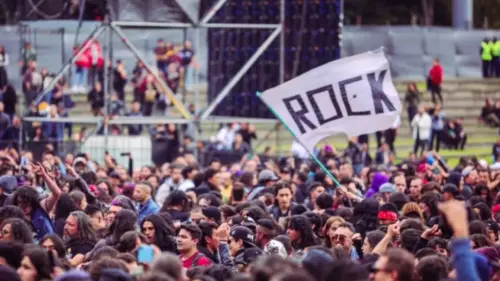
This number obliterated previous opening-day benchmarks, setting an energetic and ecstatic tone for the entire weekend. Mosh pits formed harmoniously, food and merch stalls hummed with activity, and the four stages vibrated continuously with a diverse array of local and international talent that satisfied both purists and newcomers.
Sunday, October 11: The Wave Swells Higher
If Saturday was an impressive display of dedication, Sunday was a tidal wave of humanity. A massive surge of 274,500 music lovers circulated through the festival grounds throughout the day and evening.
The air was thick with anticipation as a stellar roster of heavy-hitting acts took control of the stages. Chilean singer-songwriter Mon Laferte mesmerized the sprawling crowd with her intense emotional delivery and theatrical presence. Indie-pop darlings Esteman and Bándalos Chinos brought infectious rhythms and synchronized sing-alongs, while the legendary Tokyo Ska Paradise Orchestra injected an explosive, brass-driven energy that turned the grassy fields into a gigantic, skanking dance floor. Reggae royalty Gondwana and Chilean rock pioneer Claudio Narea rounded out a day that will be etched into the memories of Colombian music history forever.
Monday, October 12: The Grand Finale
Entering its final stretch on Monday, October 12 (a Colombian civic holiday), the festival prepared to push its record-shattering figures even higher. With a lineup featuring industrial metal pioneers Ministry, neo-classical heavy metal icons Rata Blanca, British post-punk visionaries Editors, Chilean alternative mainstays Los Bunkers, and a dynamic mix of local legends like La Severa Matacera and Los Elefantes, the 30th-anniversary celebration promised an unforgettable crescendo.
Supporting Data: How 2026 Dwarfs the History Books
To truly understand the magnitude of Rock al Parque 2026, one must look back at the historical data published by municipal organizers over the past three decades. While counting methods have naturally evolved since the festival’s inception in 1996 under the vision of Julio Correal and Idarts, the comparative scale remains overwhelmingly clear.
Historically, reaching the 400,000 mark was considered a monumental ceiling achieved only during anniversary milestones or exceptional cultural moments.
Major Attendance Benchmarks in Rock al Parque History (1996–2026)
| Ranking | Edition Year | Reported Attendance | Context / Notes |
|---|---|---|---|
| 1 | 2026* | >465,500 | Accumulated total in the first 2 days only. |
| 2 | 2004 | >400,000 | 10th Anniversary edition (Full 3-day total). |
| 2 (tie) | 2014 | ~400,000 | 20th Anniversary edition (Full 3-day total). |
| 4 | 2023 | >390,000 | Post-pandemic resurgence edition. |
| 5 | 2015 | >350,000 | Strong regional and international lineup year. |
*Note: The 2026 figures are partial, capturing data exclusively prior to the conclusion of the final day on October 12.
By surpassing 465,500 attendees in just 48 hours, the 2026 festival has not only beaten its own previous decade-mark records but has redefined the physical and operational capacity limits of public arts events in Colombia.
Official Responses and Administrative Insights
Local cultural authorities have been quick to praise both the citizenry and the logistical apparatus that made this historic turnout possible. Representatives from the District Secretariat of Culture, Recreation, and Sports emphasized that the success of Rock al Parque 2026 is a testament to Bogotá’s identity as a capital of peace, tolerance, and artistic appreciation.
"Rock al Parque is no longer just a music festival; it is a profound social ritual for our city," stated a spokesperson for IDARTES during a mid-festival press briefing. "The fact that nearly half a million people have gathered peacefully, sharing space across generations—from parents who attended the 1996 inaugural editions to teenagers experiencing their very first mosh pit—proves that music remains the most powerful bridge we have."
Security, mobility, and health teams worked in coordinated shifts. Mass transit systems, including specialized routes managed by TransMilenio, adjusted their schedules and fleet capacities to ensure that hundreds of thousands of fans could travel to and from the Parque Simón Bolívar efficiently and securely. Medical tent personnel reported standard levels of minor dehydration and fatigue, easily managed on-site, pointing to a remarkably well-behaved and conscientious audience.
Implications: What This Means for the Future of Rock al Parque
The sheer scale of the 2026 edition carries profound implications for the future of the festival, the local creative economy, and the broader Latin American music circuit.
1. Economic and Tourism Impact
Rock al Parque has long functioned as an economic engine for Bogotá. Hotels, restaurants, transport providers, and independent merchandise vendors experienced a substantial spike in revenue over the October holiday weekend. Thousands of international tourists—particularly from Ecuador, Peru, Chile, Argentina, and Mexico—traveled specifically for the 30th-anniversary lineup, cementing Bogotá’s reputation as the live music capital of the Andean region.
2. Validation of the Free-Access Model
In an era where major international music festivals around the globe are plagued by skyrocketing ticket prices, exclusive VIP tiers, and economic gatekeeping, Rock al Parque’s steadfast commitment to being a free, public event run by the state is a radical and triumphant statement. The 2026 numbers prove that cultural democratization does not compromise scale; rather, accessibility breeds unprecedented community loyalty and engagement.
3. Generational Continuity
Perhaps the most striking sociological takeaway from the 2026 edition is the seamless transfer of counter-cultural passion across generations. Veterans of the 90s underground scene stood shoulder-to-shoulder with Gen Z fans discovering the raw power of live instrumentation for the first time. This guarantees that Rock al Parque is not merely preserving its history as a nostalgic museum piece, but is actively shaping the future of alternative music in the Spanish-speaking world.
As the final amps powered down on Monday night, echoing out over the waters of the Simón Bolívar park lake, one thing was certain: Rock al Parque at 30 years old is stronger, louder, and more vital than ever before.

Leave a Reply