

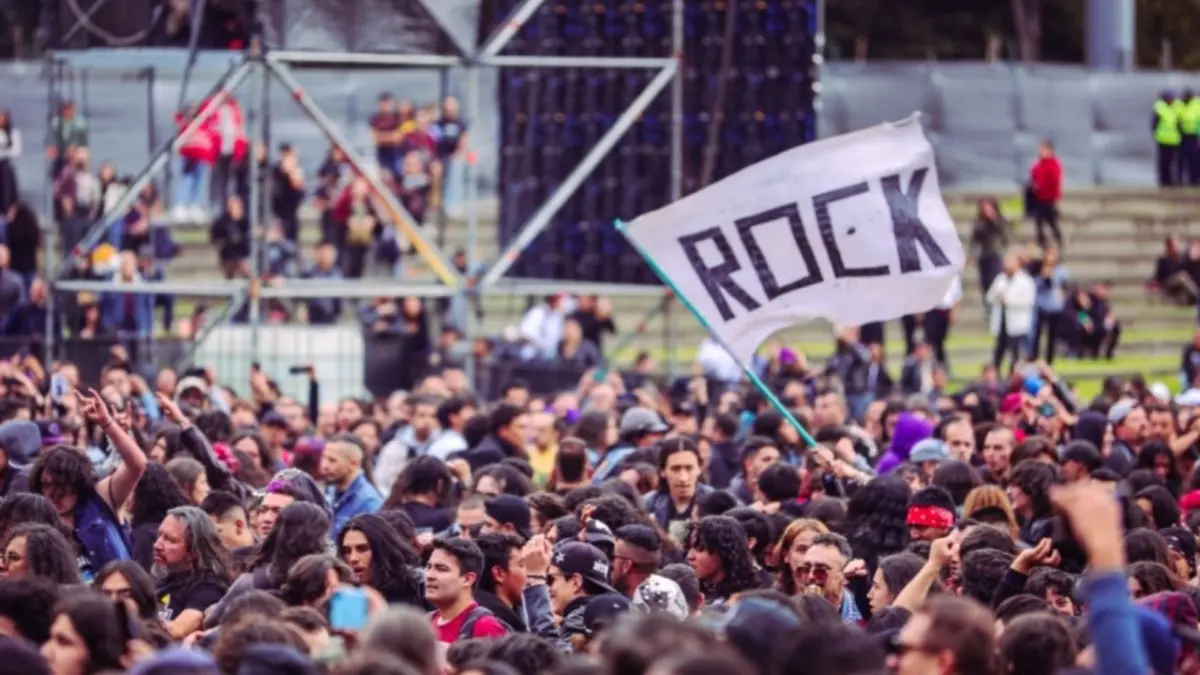
BOGOTÁ, COLOMBIA — The iconic Parque Metropolitano Simón Bolívar has once again opened its expansive gates for one of Latin America’s most revered cultural milestones: the 30th-anniversary edition of Rock al Parque. As thousands of black-clad attendees stream into the venue under the crisp Bogotá sky, the air vibrates with anticipation. Celebrating three decades of resistance, counterculture, and musical unity, this year’s festival brings together an unprecedented cross-generation of rock and metal enthusiasts. Across four distinct stages, a massive roster featuring over 60 stellar national and international acts will deliver three days of unforgettable performances, solidifying Bogotá’s status as a true capital of rock.
The landmark festival, which runs from October 10 to October 12, 2026, continues its historic tradition of free admission, keeping the spirit of accessible, public art alive. From legendary pioneers to modern heavy metal titans, the initial days of the festival are shaping up to be an absolute masterclass in sonic power, pulling in fans from every corner of Colombia and across the globe.
Main Facts: A Historic Milestone for Latin America’s Premier Rock Festival
Rock al Parque is not merely a music festival; it is a vital social institution for the city of Bogotá. Celebrating its pearl jubilee—30 years of history—this edition carries profound symbolic weight. Over the decades, the festival has evolved from a local showcase into a continental powerhouse, nurturing generations of fans who have passed down their passion for rock and metal like a cherished family heirloom.
- Dates: October 10 – October 12, 2026.
- Location: Parque Metropolitano Simón Bolívar, Bogotá, D.C.
- Admission: 100% Free (Ciudad Rock).
- Scale: Over 60 musical acts distributed across four specialized stages: Escenario Plaza, Escenario Bio by Vans, Escenario Eco, and Escenario BBC.
- Global Reach: The festival proudly hosts bands hailing from Sweden, Switzerland, Finland, the United States, Spain, and domestic powerhouses from Bogotá, Medellín, and beyond.
- Headlining Heavyweights: International legends such as Apocalyptica, Stratovarius, Triptykon (performing classic Hellhammer and Celtic Frost material), Burning Witches, Between the Buried and Me, and Darkest Hour stand shoulder-to-shoulder with Colombian legends like Kraken.
Chronology and Stage-by-Stage Schedules
With four concurrent stages operating at high capacity, meticulous planning is essential for attendees hoping to catch their favorite acts. The schedule for the opening Saturday is a relentless onslaught of heavy riffs, blast beats, and thunderous basslines. Below is the complete chronological breakdown of performances across all four zones.
Escenario Plaza
The main asphalt artery of the festival hosts some of the most anticipated international and heavy-hitting domestic acts.
- 2:00 p.m. – 2:40 p.m.: Solegnium
- 2:55 p.m. – 3:35 p.m.: Narcocracia
- 3:50 p.m. – 4:30 p.m.: Vein
- 4:50 p.m. – 5:40 p.m.: Hellbutcher
- 6:00 p.m. – 6:50 p.m.: Burning Witches
- 7:15 p.m. – 8:15 p.m.: Stratovarius (Power metal mastery from Finland)
- 8:35 p.m. – 9:20 p.m.: Perpetual Warfare
- 9:45 p.m. – 10:45 p.m.: Apocalyptica (The cello-metal sensation closing out the plaza)
Escenario Bio by Vans
Known for hosting experimental, progressive, and extreme metal subgenres, this stage offers a masterclass in musical complexity.
- 3:20 p.m. – 4:00 p.m.: Maskhera
- 4:15 p.m. – 4:55 p.m.: Ataque de Pánico
- 5:15 p.m. – 5:55 p.m.: Syracuse
- 6:15 p.m. – 7:05 p.m.: Between the Buried and Me (Progressive metal titans)
- 7:20 p.m. – 8:00 p.m.: Valore
- 8:20 p.m. – 9:10 p.m.: Grave
- 9:30 p.m. – 10:30 p.m.: Triptykon (Performing exclusive classics from Hellhammer and Celtic Frost)
Escenario Eco
Dedicated to punk, hardcore, and alternative heavy sounds, the Eco stage is guaranteed to generate massive mosh pits.
- 3:00 p.m. – 3:40 p.m.: No Dependiente
- 3:55 p.m. – 4:45 p.m.: End It
- 5:00 p.m. – 5:50 p.m.: Agua Bendita
- 6:05 p.m. – 6:55 p.m.: Nadie
- 7:10 p.m. – 8:00 p.m.: I.R.A.
- 8:15 p.m. – 9:15 p.m.: Darkest Hour (Melodic death metal/metalcore onslaught)
Escenario BBC
A celebration of domestic heavy metal heritage and contemporary alternative subcultures.
- 2:50 p.m. – 3:35 p.m.: Darkness
- 3:50 p.m. – 4:35 p.m.: El EM3
- 4:55 p.m. – 5:40 p.m.: Real House of Hate
- 6:00 p.m. – 6:45 p.m.: Kraken (Honoring the eternal legacy of Colombian heavy metal)
- 7:05 p.m. – 7:50 p.m.: Info
- 8:10 p.m. – 8:55 p.m.: Pornomotora
- 9:15 p.m. – 10:00 p.m.: Los Setas
Supporting Data: Mobility and Logistical Framework
Managing tens of thousands of music lovers requires a massive, coordinated civic effort. City authorities, transportation networks, and park administrators have rolled out an extensive logistical framework to ensure safety, accessibility, and smooth crowd dispersion throughout the festival weekend.
Public Transportation: Extended TransMilenio Operations
To prevent transit bottlenecks and help attendees return home safely after late-night headlining sets, Bogotá’s mass transit system, TransMilenio, has announced special operational hours. Key stations surrounding Parque Simón Bolívar will keep their doors open until midnight, with frequencies adjusted dynamically based on passenger demand.
The district has highlighted the following strategic stations and routes for post-festival transit:
- Estación Siete de Agosto: Routes available include D21, Fácil 4, B12, F32, G12, S42, H17, and H21.
- Estación Movistar Arena: Routes available include Fácil 4, B72, D21, C25, H21, L25, and H72.
- Estación CAN – British Council: Routes available include Fácil 1, K10, K54, B16, B23, H54, L10, and M86.
- Estación Salitre El Greco – Vive Claro: Routes available include Fácil 1, K43, K10, K54, S43, L10, B16, B23, and H54.
Civic Advisory: Authorities strongly advise commuters to check real-time updates on the TransMilenio app, as route adjustments may occur depending on sudden surges in pedestrian traffic around the park perimeter.
Private Vehicle Parking Infrastructure
For those attending the festival by car or motorcycle, parking facilities are available directly at Parque Metropolitano Simón Bolívar.
- Capacity: The official park parking lot can accommodate approximately 800 vehicles.
- Operating Hours: According to data provided by the Instituto Distrital de Recreación y Deporte (IDRD), the parking area will operate continuously from 5:00 a.m. to 10:00 p.m. throughout the three-day event.
- Fees: Standard parking rates apply. Attendees opting to drive are encouraged to arrive early due to limited capacity and surrounding traffic restrictions implemented by transit police.
Official Responses and Institutional Statements
The significance of reaching the 30-year milestone has not been lost on cultural organizers and city officials. Through official channels, the festival committee expressed profound enthusiasm regarding the monumental turnout and the sheer diversity of this year’s lineup.
In a widely shared statement via social media, the official festival account (@rockalparquefes) highlighted the core ethos of the event:
"¡Ya está la programación por días de #RockAlParque30Años! Del 10 al 12 de octubre, el Parque Simón Bolívar recibe a más de 60 agrupaciones. Mon Laferte, Serú Girán, Apocalyptica y grandes nombres nacionales e internacionales. Entrada libre Bogotá Ciudad Rock."
This sentiment underscores the administration’s ongoing commitment to democratizing culture. By blending international heavyweights—such as Finland’s cello-rock pioneers Apocalyptica and Swiss extreme metal innovators Triptykon—with regional icons like Kraken, the festival bridges stylistic and generational divides. Cultural curators have emphasized that Rock al Parque remains a testament to Bogotá’s resilience, creativity, and unwavering love for heavy music.
Implications: Cultural Impact, Community Unity, and Economic Growth
As Rock al Parque enters its fourth decade, its broader implications for Bogotá and the broader Latin American music industry are profound.
1. Cultural Preservation and Intergenerational Bonding
Heavy metal and rock in Latin America have long fought for institutional legitimacy. By granting events like Rock al Parque premier public spaces and state backing, Bogotá validates countercultural movements as legitimate high art. The festival acts as a cultural bridge: parents who attended the inaugural editions in the late 1990s now walk hand-in-hand with their teenagers, moshing to the same enduring riffs. This intergenerational transmission ensures that rock remains a living, breathing tradition rather than a nostalgic relic.
2. Economic Catalyst for the Capital
Events of this magnitude generate a massive ripple effect across Bogotá’s economy. Hotels, restaurants, local transportation networks, and independent merchandise vendors experience a significant surge in revenue over the holiday weekend. Music tourism has steadily grown around Rock al Parque, drawing fans from Ecuador, Peru, Argentina, Mexico, and the United States, who flock to the Colombian capital to experience one of the few free, large-scale rock festivals left in the world.
3. A Beacon of Tolerance and Social Cohesion
In a world frequently fractured by polarization, Parque Simón Bolívar transforms into an egalitarian sanctuary. For three days, corporate workers, students, blue-collar workers, and artists stand side-by-side in the mud and dust, united solely by their devotion to music. The absence of social stratification in the general admission zones fosters a unique sense of community, empathy, and collective joy.
As the sun sets over Bogotá and the haunting cellos of Apocalyptica give way to the final crushing chords of the night, Rock al Parque 2026 cements its legacy once more. Thirty years down, and the beast is louder, prouder, and more alive than ever.

Leave a Reply