

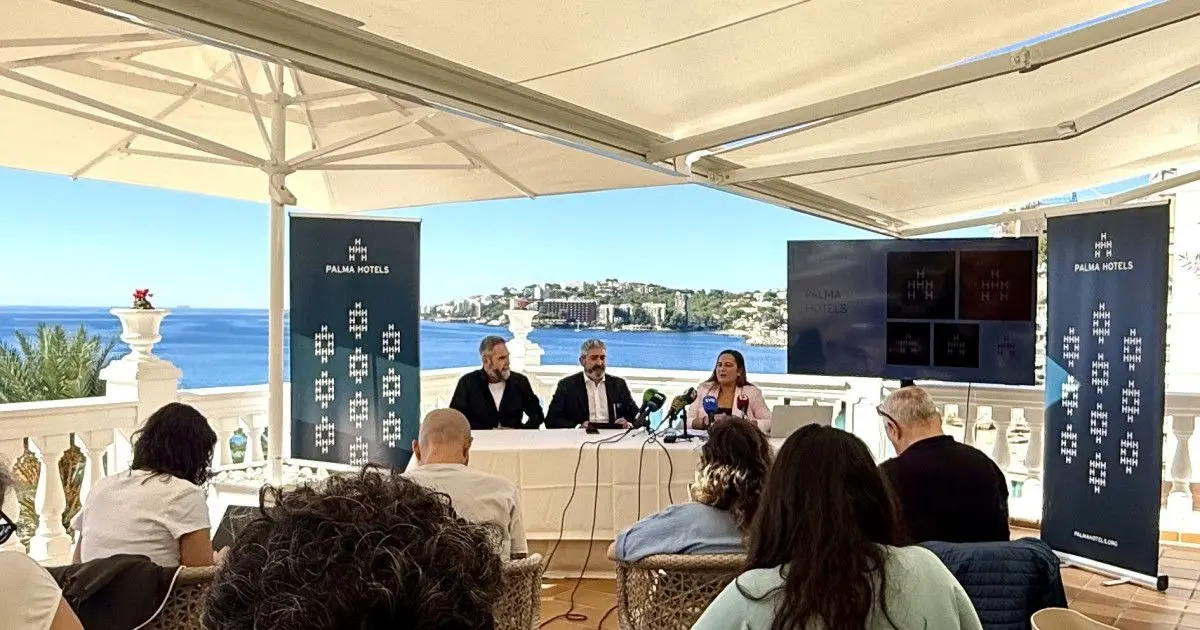
PALMA DE MALLORCA — The Balearic capital’s hospitality sector has officially closed the books on the summer 2026 season, revealing a nuanced financial and operational reality that signals a maturation of its tourism model. According to the end-of-season balance presented by the business association Palma Hotels, local accommodations registered an average occupancy rate of 89% between June and August.
While this figure represents a minor, one-percentage-point decrease compared to the 90% recorded during the same period in 2025, the nominal drop in visitor volume has been more than compensated by a significant surge in profitability. Driven by a conscious strategic pivot toward high-value tourism rather than mass volume, Palma’s hotels have managed to boost their financial returns, elevate guest satisfaction to near-record levels, and set an ambitious agenda to combat seasonality moving into the winter months.
This comprehensive overview examines the primary facts, chronological evolution of the season, foundational economic data, official responses from industry leaders, and the broader implications of Palma’s evolving tourism landscape.
1. Main Facts and Executive Summary
The primary takeaway from Palma Hotels’ summer 2026 audit is that less can indeed equal more in modern destination management.
- Occupancy Rate: Averaged 89% across the summer months (June–August), down slightly from 90% in 2025.
- RevPAR Growth: Revenue per Available Room (RevPAR) reached €173.2 during the peak summer months, marking a robust 8.9% increase year-over-year.
- Guest Satisfaction: An internal provisional analysis of Booking.com reviews across 38 associated hotels (representing nearly 59,000 individual guest opinions) revealed an outstanding global average score of 8.9 out of 10.
- Human Capital: Hotel staff received the highest individual sub-score in guest reviews, averaging 9.46 out of 10, outperforming metrics related to physical comfort and cleanliness.
- Strategic Outlook: The sector is maintaining an optimistic yet cautious outlook for the upcoming winter season, bolstered by enhanced international flight connectivity—most notably United Airlines’ early-March relaunch of its daily New York route—and a renewed focus on local residents through targeted cultural, gastronomic, and leisure campaigns.
2. Chronological Evolution of the Summer Season
To fully understand how Palma’s hotels achieved higher revenues despite a minor dip in foot traffic, it is necessary to examine how the summer unfolded chronologically and how structural shifts in marketing and operations took effect.
The Spring Transition (April – May)
The season effectively kicked off earlier than in previous decades, supported by a concerted public-private effort to stretch the shoulder season. April and May saw steady growth in European city-break tourism, particularly from core markets such as Germany, the United Kingdom, and mainland Spain. Hoteliers noted that early-season investments in energy efficiency, room renovations, and digital infrastructure began paying dividends immediately, as travelers booking spring getaways demonstrated a higher willingness to pay premium rates for upgraded facilities.
The Peak Summer Core (June – August)
By the time June arrived, Palma Hotels’ members had fully embraced a strategy of yield management over volume maximization. Rather than pushing for 100% capacity at discounted rates—a practice historically associated with overcrowding and strain on municipal resources—establishments prioritized average daily rate (ADR) optimization.
- June set a strong tone, with early bookings remaining resilient despite broader macroeconomic pressures and European inflation.
- July experienced minor pricing adjustments as families and traditional holidaymakers navigated cost-of-living constraints, leading to the marginal one-point dip in overall occupancy. However, luxury and upper-upscale segments maintained exceptionally high pricing integrity, preventing any erosion of overall gross operating profit.
- August consolidated these trends, proving that Palma’s urban-beach hybrid model possesses a resilient demand floor. Even as regional competitors reported sharper drops in occupancy due to heatwave anomalies and shifting consumer travel habits, Palma’s diversified appeal—combining urban culture, high-end gastronomy, and immediate beach access—helped buffer its establishments against major downturns.
3. Supporting Data and Economic Indicators
The financial metrics released by Palma Hotels, cross-referenced with data from the economic lobby group Exceltur, paint a clear picture of an industry shifting toward sustainable economic performance.
Revenue per Available Room (RevPAR) Surge
The headline financial figure for the summer of 2026 is the €173.2 RevPAR recorded between June and August. This represents an 8.9% increase over the figures posted in the summer of 2025.
Industry analysts point out that RevPAR growth is the ultimate indicator of pricing power and asset efficiency. By capturing higher margins per occupied room, hotels offset the marginal decline in raw guest numbers. This approach reduces wear and tear on properties, lowers resource consumption (such as water and energy), and mitigates the perceived negative impacts of over-tourism on local infrastructure.
The Voice of the Customer: Booking Data Analysis
Beyond hard financials, Palma Hotels conducted a deep-dive internal analysis of guest feedback, examining approximately 59,000 reviews across 38 associated properties hosted on Booking.com.
- Global Average: The collective score stood at an impressive 8.9 / 10.
- Staff Performance: Human-centric service emerged as the standout category, with hotel employees scoring an exceptional 9.46 / 10.
- Physical Assets: Comfort and cleanliness closely followed, validating ongoing capital expenditures in room hardware, bedding, and hygiene protocols.
These metrics suggest that travelers visiting Palma are not merely paying higher prices; they feel that the monetary value matches or exceeds the quality of service received.
4. Official Responses and Industry Leadership
During a press presentation held at the iconic Hotel Nixe, Francisco Serrano, president of the Palma Hotel Association, articulated the philosophy guiding the sector’s current trajectory.
"We are completely in line with our core philosophy: generating more value with less volume," Serrano declared to the press.
Addressing the stellar performance of hotel personnel in guest satisfaction metrics, Serrano emphasized that technological innovation must always be balanced with authentic human connection:
"We can transform physical buildings, invest heavily in cutting-edge technology, and upgrade our rooms to the highest modern standards, but true hospitality must always have a human face. What our guests value most about our hotels is, without a doubt, the people."
Looking toward the future, Serrano underscored the importance of resilience, community integration, and strategic diversification. Addressing the upcoming winter season, he acknowledged lingering global uncertainties—including geopolitical instability, fluctuating inflation rates, and evolving consumer spending behaviors—while maintaining a distinctly optimistic outlook.
5. Broader Implications, Winter Outlook, and the Resident Strategy
As the local industry transitions from the summer season into the autumn and winter months, the strategic focus shifts toward overcoming historical challenges associated with seasonality. Palma Hotels has laid out a multi-layered roadmap to ensure year-round economic sustainability.
Extending Connectivity and Winter Tourism
A major catalyst for winter optimism is the ongoing expansion of transport links. Palma’s tourism board and hoteliers have welcomed the announcement that United Airlines will accelerate its direct New York–Mallorca flight connection to launch as early as March, rather than late spring. This move extends the North American feeder market, which typically exhibits high purchasing power and deep interest in cultural and gastronomic offerings.
Furthermore, the winter calendar will be heavily supported by:
- The expansion of international and national congresses and corporate business events (MICE sector).
- Enhanced Christmas and holiday programming designed to attract domestic and European weekend travelers.
- Continued cultivation of foundational source markets (Germany, the United Kingdom, and the domestic Spanish market), balanced with selective diversification into emerging regions.
The Public-Private Imperative
Serrano stressed that year-round hotel openings cannot succeed in a vacuum. True desestacionalización (the elimination of seasonality) requires robust, continuous collaboration between private enterprise and public administration.
For hotels to remain viable outside the summer peak, public authorities must ensure consistent year-round maintenance of municipal services, reliable public transport connectivity, active commercial zones, and a vibrant, uninterrupted cultural calendar spanning all twelve months of the year.
Bridging the Gap: The Local Resident Campaign
In a groundbreaking move coinciding with the 50th anniversary of the Palma Hotel Association, hoteliers are turning their attention inward to strengthen bonds with the local community.
Palma Hotels is finalizing a comprehensive campaign tailored specifically to local residents. The initiative aims to open hotel doors to the people of Palma through curated gastronomic experiences, cultural events, wellness programs, and leisure packages that allow locals to enjoy high-end hotel amenities without necessarily booking an overnight stay.
"We want to bring the hotels closer to Palma, and Palma closer to its hotels," Serrano explained.
This localized outreach is designed not only to create alternative revenue streams during off-peak months but also to foster a healthy, continuous dialogue between the hospitality sector, neighborhood associations, and local businesses—ensuring that tourism remains an integrated, welcomed pillar of the city’s social fabric rather than an isolated economic enclave.
Conclusion
The 20th-century model of high-volume, low-margin coastal tourism is rapidly giving way to a more sophisticated urban-tourism paradigm in Palma de Mallorca. By accepting a minor reduction in occupancy to secure a near-9% increase in revenues, local hoteliers have proven that quality management, human-centric service, strategic connectivity, and community engagement form the ultimate formula for sustainable long-term success.




Leave a Reply