

BOGOTÁ — Few phenomena in contemporary Latin American history match the chilling administrative efficiency and moral depravity of Colombia’s falsos positivos (false positives) scandal. For decades, the systemic extrajudicial execution of innocent civilians—lured away by false promises of employment, murdered in cold blood, and subsequently dressed in fatigues to be falsely counted as guerrilla combatants killed in action—has haunted the nation’s collective conscience.
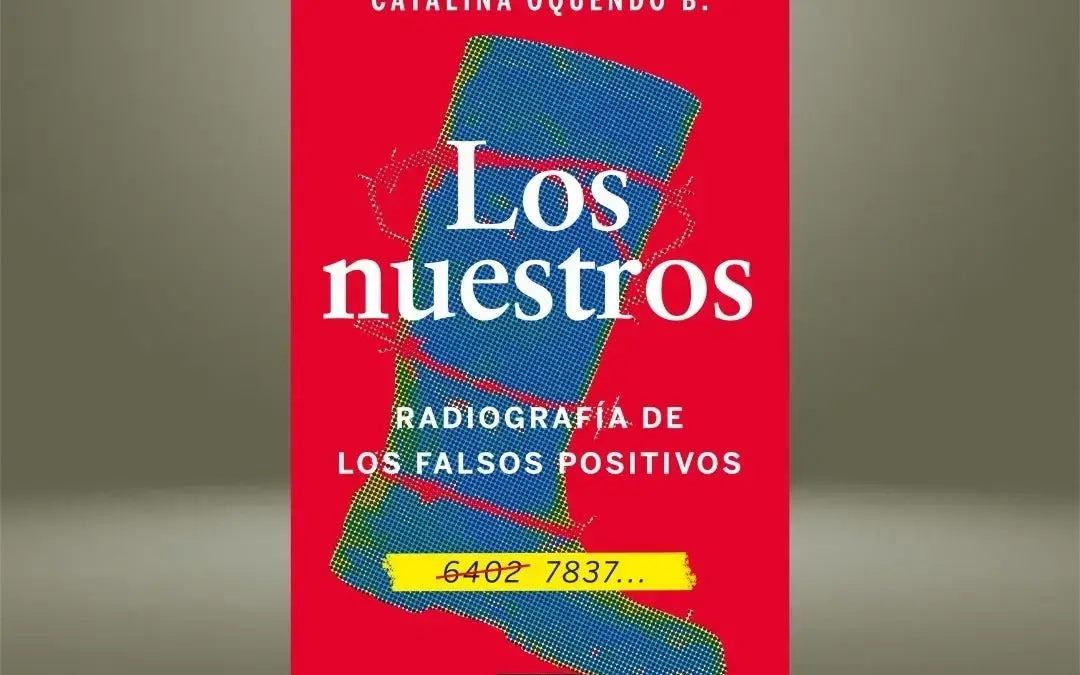
Now, a monumental new piece of investigative journalism brings fresh urgency, meticulous documentation, and devastating human empathy to this dark chapter. In Los nuestros: Radiografía de los falsos positivos (Our People: An X-Ray of False Positives), veteran journalist Catalina Oquendo B. weaves together years of rigorous reporting, intimate victim testimonies, unprecedented disclosures from the Special Jurisdiction for Peace (JEP), and a profound analysis of institutional decay. Far more than a recounting of atrocities, Oquendo’s work serves as a searing indictment of a state military apparatus that commodified human life to inflate body counts, satisfy perverse performance incentives, and project a fraudulent image of operational victory.
Main Facts: The Anatomy of a State-Sponsored Atrocity
At its core, the false positives scandal represents a catastrophic perversion of military duty. During the height of the Colombian internal armed conflict—particularly under the Democratic Security policy of the 2000s—members of the National Army operated under immense institutional pressure to demonstrate constant, quantifiable results against leftist insurgencies like the FARC and the ELN.
Instead of legitimate battlefield engagement, a segment of the armed forces resorted to industrial-scale murder. Vulnerable civilians—frequently young men from marginalized urban peripheries, rural laborers, individuals with mental disabilities, or petty criminals—were targeted. Perpetrators utilized deception, offering nonexistent jobs in distant regions, only to transport the victims to isolated areas, execute them, and alter crime scenes. Weapons were planted in their stiffening hands; boots were forced onto feet; combat gear was draped over civilian clothes.
Oquendo’s Los nuestros meticulously maps this machinery of death, shifting the focus from abstract tactical assessments to the human cost. The book highlights the stark reality of how systemic incentives destroyed the moral fabric of battalions across multiple brigades. The author dissects how institutional impunity, systemic corruption, and a culture of metric-driven warfare fostered an environment where human beings were dehumanized into statistical data points designed to secure promotions, vacations, and budgetary rewards for commanders.
Furthermore, the book confronts one of the most contentious debates surrounding the scandal: the true magnitude of the slaughter. While the JEP—the transitional justice tribunal born out of the 2016 Havana peace accords—officially recognized 6,402 victims between 2002 and 2008, Oquendo’s investigation elevates this number to 7,837 victims. By challenging the baseline figures, the author emphasizes that the full scale of the tragedy remains under-quantified, obscured by decades of institutional cover-ups, fear, and bureaucratic erasure.
Chronology: The Evolution and Exposure of a Systemic Crime
To understand how the false positives phenomenon expanded into a systemic strategy, one must examine its evolution across political and military epochs. While isolated extrajudicial killings occurred throughout the decades-long Colombian conflict, the practice metastasized into a systematic pattern at the turn of the 21st century.
The Genesis and Acceleration (Late 1990s – Early 2000s)
- 1990s: Sporadic reports emerge of human rights organizations documenting civilian deaths attributed incorrectly to combat. These early warnings are frequently dismissed by military high command as isolated incidents or subversive propaganda.
- 2002–2006: With the implementation of aggressive counter-insurgency doctrines, military budgets and international military aid become closely tied to operational results. Brigades across the country face intense pressure to produce "kills." The incentives trigger a rapid escalation in false positive cases, peaking sharply during these years.
- 2006–2008: The practice reaches industrial proportions. Reports of missing youths from urban centers like Soacha (a municipality bordering Bogotá) begin to surge. Families notice a terrifying pattern: their sons disappear and reappear days or weeks later as unidentified "subversives" killed hundreds of miles away.
The Turning Point and Public Exposure (2008)
- Early 2008: The wall of silence begins to fracture. The disappearances of young men from Soacha capture media attention when families band together to search for their loved ones.
- Late 2008: The scandal breaks into the open with the revelation of the "Soacha scandal." Confronted with undeniable evidence, the government of President Álvaro Uribe is forced to dismiss several high-ranking generals and military officers. The Prosecutor General’s Office initiates sweeping investigations.
Transitional Justice and Institutional Reckoning (2016 – Present)
- 2016: The signing of the Final Agreement for the Termination of the Conflict between the Colombian government and the FARC establishes the Comprehensive System for Truth, Justice, Reparation, and Non-Repetition, prominently featuring the Jurisdiction Especial para la Paz (JEP).
- 2021–Present: The JEP opens Macro-case 03, specifically targeting extrajudicial executions presented as combat kills by state agents. Military officers—ranging from low-ranking soldiers to high-ranking generals—begin appearing before the tribunal to confess their roles, offer public apologies to victims’ families, and provide details on the operational chains of command. Catalina Oquendo’s work builds directly upon these historical confessions, integrating them into a cohesive narrative.
Supporting Data and Quantitative Analysis: Beyond the Numbers
Statistics in the context of transitional justice often risk reducing human tragedy to cold arithmetic. However, in Los nuestros, data serves as a vital tool to expose the systematic nature of the crime.
Oquendo’s interrogation of the numbers reveals the following key dimensions:
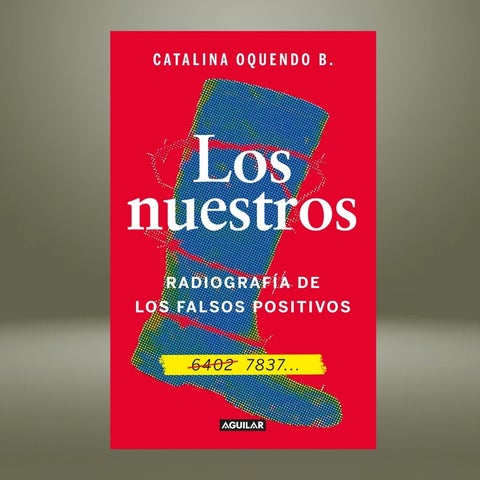
- The Discrepancy of 6,402 vs. 7,837: While the JEP’s verified figure of 6,402 extrajudicial executions between 2002 and 2008 sent shockwaves through Colombian society—exceeding previous estimates by the Prosecutor General’s Office exponentially—Oquendo’s investigation points toward 7,837 potential victims. This variance highlights the chilling reality that hundreds, perhaps thousands, of families may still live in limbo, unaware of the precise fate of their disappeared relatives.
- Geographic Distribution: The practice was not confined to a single battalion or region. Investigations cataloged by the JEP and reinforced in Oquendo’s book demonstrate that false positives occurred across multiple military divisions, including the Caribbean, North, Central, and Eastern commands, proving that the phenomenon was systemic rather than the work of a few "bad apples."
- Demographic Profile of Victims: Statistical breakdowns consistently show that the vast majority of victims were young men aged 18 to 30, predominantly from low-income socioeconomic strata. Unemployment, lack of educational opportunities, and spatial marginalization made these youths prime targets for predatory recruitment networks operated by civilian intermediaries (reclutadores) working in collusion with military units.
Official Responses: Denial, Acknowledgment, and the Search for Accountability
The reaction of the Colombian state to the false positives scandal has evolved through distinct, often painful phases—shifting from flat denial and institutional deflection to historic, albeit contested, admissions of guilt.
The Era of Denial and Deflection
For years, successive military commands and political leaders dismissed allegations of extrajudicial executions. Victims’ families and human rights defenders who dared to question official military reports were frequently stigmatized as guerrilla sympathizers, subjected to surveillance, threats, and, in some cases, targeted violence. The official narrative maintained that every death reported by the military was the result of legitimate combat engagement.
The Shift Toward Accountability
The establishment of the JEP fundamentally altered the landscape of accountability. For the first time, military personnel faced a judicial mechanism designed to offer reduced sentences in exchange for comprehensive truth-telling, acknowledgment of responsibility, and direct reparation to victims.
- Military Confessions: Dozens of soldiers, non-commissioned officers, and high-ranking commanders have stepped forward to testify before the JEP. In harrowing public hearings, officers have detailed how they falsified operational orders, paid informants for civilian bodies, and coordinated with criminal networks to secure "targets."
- Institutional Resistance: Despite these breakthroughs, pushback remains fierce. Conservative political factions, military veterans’ associations, and certain legal defense groups frequently accuse transitional justice mechanisms of bias, arguing that investigations unfairly tarnish the honor of the entire armed forces. These tensions underline the deep polarization that continues to define contemporary Colombian politics.
Implications: Memory, Dignity, and the Imperative of Non-Repetition
The release of Los nuestros: Radiografía de los falsos positivos arrives at a critical juncture for Colombia. As the nation attempts to navigate the treacherous waters of post-conflict reconciliation, Catalina Oquendo’s investigation underscores several profound implications for the future of democracy, human rights, and transitional justice.
1. The Centrality of the Victims
The most powerful aspect of Oquendo’s work is its refusal to let the narrative be dominated exclusively by perpetrators or bureaucratic metrics. By centering the stories of the Madres de Soacha (Mothers of Soacha) and other grieving families who waged decades-long crusades for truth against insurmountable odds, the book restores humanity to the fallen. The symbolic imagery utilized throughout the work—such as a military boot wrapped in barbed wire featured on the cover—serves as an unsparing reminder of the betrayal experienced by citizens who were murdered by the very institutions sworn to protect them.
2. Dismantling the Logic of Metrics
The book offers a vital warning regarding institutional culture. When military, corporate, or state performance is evaluated exclusively through quantitative metrics—such as body counts, arrests, or quota-based productivity—the risk of moral degradation and criminal enterprise multiplies exponentially. Oquendo’s analysis demands that civil society and international observers remain vigilant against the return of performance-based incentives that prioritize statistical outputs over human rights and constitutional legality.
3. The Indispensable Role of Memory in Peacebuilding
True reconciliation cannot occur in the shadow of historical amnesia. By meticulously reconstructing the mechanics of the false positives scandal, Los nuestros contributes directly to the national archive of historical memory. It challenges denialism, counters historical revisionism, and provides future generations with an unvarnished account of how state power can be catastrophically abused.
Ultimately, Catalina Oquendo’s masterwork is essential reading not only for scholars of Colombian history and international human rights law, but for anyone concerned with the fragile architecture of global democracy. It stands as a testament to the resilience of those who refused to let their loved ones be erased by history, and a stark reminder that the pursuit of truth remains the ultimate foundation for justice and lasting peace.




Leave a Reply