

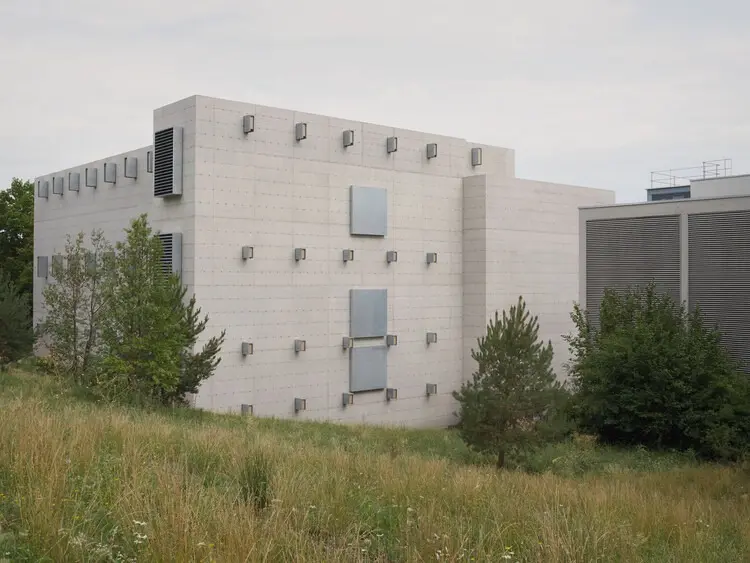
ZURICH, SWITZERLAND — In an era defined by exponential data generation and the relentless expansion of cloud computing, the physical infrastructure supporting high-performance academic research is undergoing a quiet revolution. Gone are the days when university data centers were relegated to windowless, utilitarian basements or hastily converted industrial sheds. Today, institutions of global caliber are demanding architectural solutions that harmonize computational might with structural elegance, environmental consciousness, and long-term urban adaptability.
Nowhere is this paradigm shift more evident than at the Swiss Federal Institute of Technology (ETH Zürich), one of the world’s leading science and technology universities. Through the realization of the new Hönggerberg Data Center (HRZ)—conceived, designed, and executed by the renowned Swiss architecture and engineering firm Penzel Valier—ETH Zürich has established a new benchmark for how critical digital infrastructure can be synthesized with contemporary architectural discourse.
The project represents a masterclass in co-design, where structural engineering, complex mechanical systems, and formal architectural expression were formulated in tandem from the very first stroke of the pencil. By consolidating scattered, aging technological nodes into a unified, highly secure, and scalable fortress of data, Penzel Valier has delivered a building that is as intellectually rigorous as the research calculations humming within its server racks.
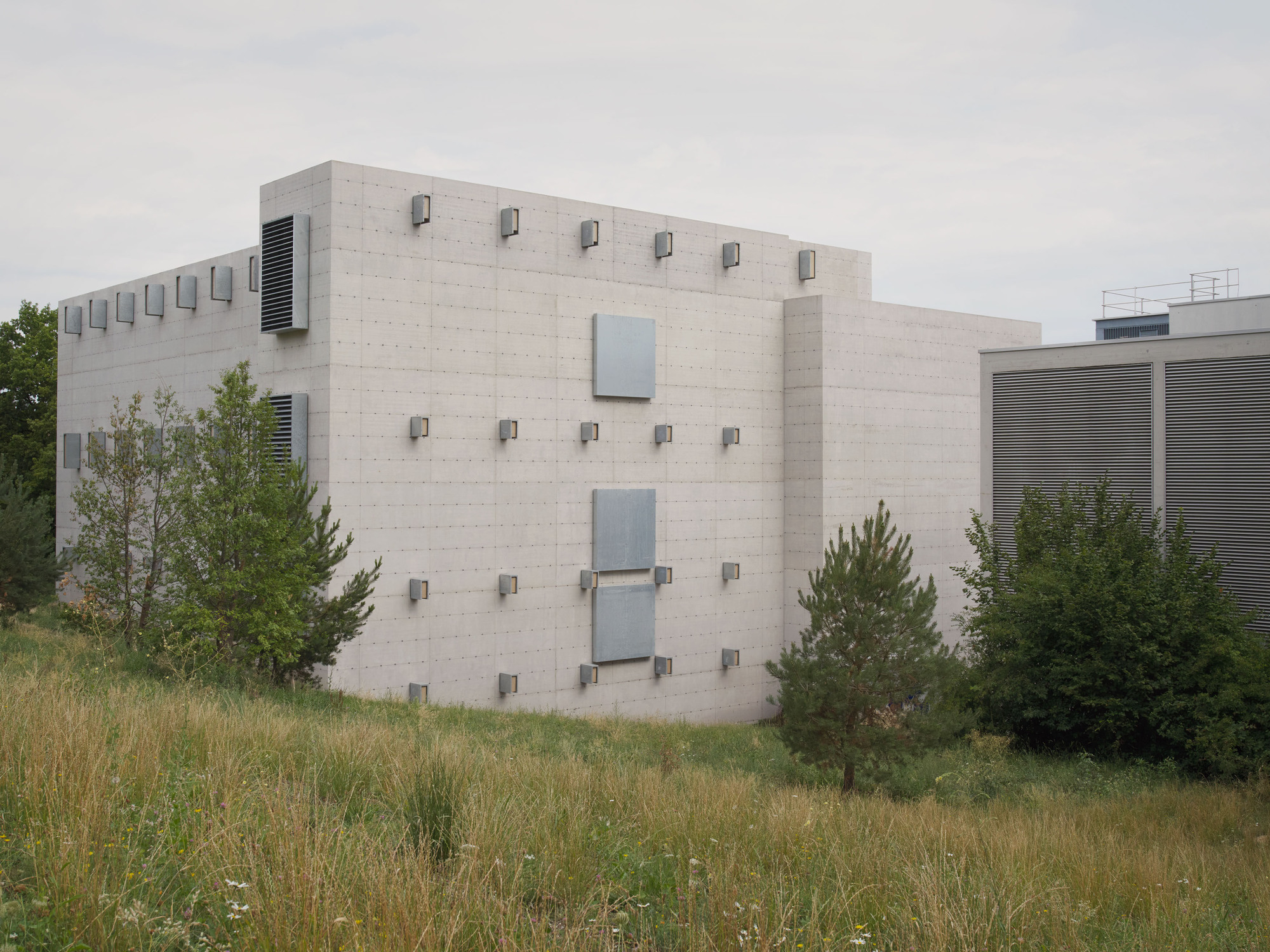
Main Facts
- Project Name: Hönggerberg Data Center (HRZ) / Centro de Datos ETH Zürich
- Architects & Engineers: Penzel Valier
- Client: ETH Zürich (Swiss Federal Institute of Technology)
- Location: Hönggerberg Campus, Zürich, Switzerland
- Primary Function: High-performance data center housing server infrastructure, storage systems, and communication nodes for university-wide IT services and specialized academic departments.
- Photographers: Peter Tillessen, Bruno Augsburger
- Structural Material: Exposed, precision-cast architectural concrete.
- Strategic Purpose: Replacement of multiple disparate, obsolete facilities across the campus; implementation of a future-proof modular architecture aligned with ETH Zürich’s long-term digital master plan.
Chronology: The Evolution of the Hönggerberg Data Center
The journey toward the realization of the HRZ reflects the meticulous, long-range planning characteristic of major Swiss institutional investments. The project’s timeline bridges rapid technological obsolescence with the deliberate pace of civic infrastructure development.
- Early 2010s — Identification of Need: As digital research methodologies—ranging from climate modeling and quantum computing to complex genomics and particle physics—generated unprecedented volumes of data, ETH Zürich’s existing IT infrastructure reached a critical bottleneck. Core computing resources were scattered across various campus buildings in decentralized, legacy server rooms that suffered from spatial constraints, inefficient cooling systems, and escalating maintenance costs.
- 2015–2016 — Strategic Masterplanning & Architectural Competition: ETH Zürich updated its institutional digital strategy, outlining the necessity for a centralized yet expandable data hub on the Hönggerberg campus. Penzel Valier secured the commission through a competitive procurement process, impressing the jury with an integrated concept that treated engineering infrastructure not as a hidden machine, but as the primary architectural driver of the building.
- 2017–2018 — Design Development and Engineering Synergy: During this phase, Penzel Valier worked in close collaboration with specialized MEP (Mechanical, Electrical, and Plumbing) consultants and structural engineers. Rather than designing a generic shell and attempting to fit complex cooling and cabling systems inside afterwards, the team developed a simultaneous co-design methodology. Every structural wall, service duct, and security perimeter was mapped out in a unified digital environment.
- 2019–2021 — Construction and Structural Execution: Groundbreaking marked the commencement of a complex construction phase. Given the extreme precision required for data center foundations and vibration-dampening measures, the project utilized high-grade architectural concrete. The building’s distinct exterior began to take shape, showcasing a monolithic, robust aesthetic designed to withstand both physical and digital threats.
- 2022–2024 — Systems Integration and Infrastructure Migration: The interior fit-out saw the installation of state-of-the-art server corridors, advanced climate control arrays, uninterrupted power supply (UPS) systems, and high-speed fiber-optic linkages. A methodical migration plan was executed to transition workloads from legacy campus facilities into the new HRZ environment without disrupting ongoing academic research.
- 2025–2026 — Official Commissioning and Public Release: With the facility fully operational and absorbing computational loads from multiple academic departments, the architectural documentation and public presentation of the building by firms like ArchDaily highlighted its success as a landmark of institutional infrastructure design.
Supporting Data & Architectural Analysis
To understand the architectural merit of the Hönggerberg Data Center, one must look beyond its clean concrete facades and examine the complex intersection of structural engineering, thermodynamic management, and spatial programming.
1. The Co-Design Paradigm
In conventional architecture, structure and mechanical services are often treated as distinct layers. Electrical trays, ventilation shafts, and plumbing lines are threaded through structural frames as an afterthought. Penzel Valier rejected this hierarchical separation. For the HRZ, the technical infrastructure is the architecture. The heavy thermal loads, intense cabling requirements, and stringent security parameters dictated the building’s geometry, massing, and material palette. The result is a structure where form, force, and function are completely indistinguishable.
2. Materiality and Aesthetic Expression
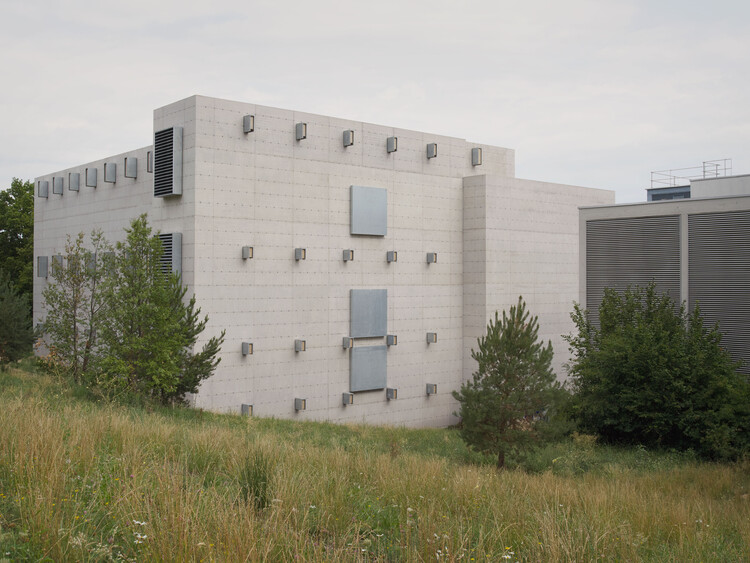
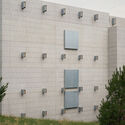
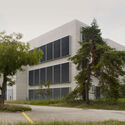
The building makes extensive use of exposed concrete—a material deeply rooted in Swiss modernist traditions. However, rather than functioning merely as a heavy, impassive barrier, the concrete surfaces of the HRZ are cast with rigorous precision. The board-formed and smooth-cast facades give the facility a tectonic dignity. It communicates permanence, absolute security, and physical resilience—qualities essential for a facility tasked with safeguarding the intellectual capital of one of Europe’s premier research institutions. The monumental scale of the exterior is modulated by subtle shifts in texture, shadow lines, and precise joint detailing, preventing the facility from appearing oppressive within the campus landscape.
3. Spatial Flexibility and Future-Proofing
Data centers are notoriously difficult buildings to design because technology cycles operate on a much faster timeline than architectural lifespans. Hardware becomes obsolete every three to five years, while buildings are expected to endure for decades. Penzel Valier solved this paradox by incorporating a high degree of modularity and internal flexibility. The floor plates, clear heights, and infrastructural distribution spines are engineered to accommodate rapid reconfigurations. Whether ETH Zürich needs to scale up its liquid-cooling capacity, integrate next-generation high-density server racks, or expand fiber-optic distribution nodes, the building’s internal framework can absorb these upgrades with minimal structural disruption.
4. Campus Integration
The Hönggerberg campus functions as a self-contained academic city, blending brutalist and contemporary scientific architecture. The HRZ occupies a strategic node within this precinct, acting as the nervous system for the entire university. By replacing decentralized, energy-inefficient server closets scattered across various faculties, the facility dramatically improves the campus’s overall energy efficiency profile, centralizing waste-heat recovery and power management into a single, optimized node.
Official Statements and Project Insights
While detailed institutional commentary from ETH Zürich’s executive board emphasizes the strategic imperative of digital sovereignty and infrastructural reliability, the design team at Penzel Valier has repeatedly stressed the philosophical shift underlying the project.
"With the Hönggerberg Data Center, our objective was to strip away the industrial anonymity typically associated with server farms and replace it with a clear, tectonic identity," noted representatives from Penzel Valier during the design coordination phase. "When a university invests in its digital future, the architecture must reflect the precision, clarity, and innovation of the research conducted inside its walls. By designing the structure and the technical installations simultaneously, we eliminated compromises, resulting in a building where engineering efficiency and architectural form are two sides of the same coin."
Academic stakeholders within ETH Zürich’s Informatikdienste (IT Services) have similarly underscored the operational advantages of the consolidation strategy. Moving away from legacy, decentralized server rooms has not only reduced vulnerability to localized hardware failures and thermal throttling, but has also drastically streamlined administrative oversight and cybersecurity protocols. The HRZ functions as a unified, high-security zone protected by multi-layered physical and digital barriers, ensuring that sensitive research data remains secure against unauthorized access or environmental hazards.
Implications for Institutional Architecture and Digital Infrastructure
The completion of the ETH Zürich Hönggerberg Data Center by Penzel Valier carries profound implications for how architects, engineers, and institutional clients approach the design of digital infrastructure in the 21st century.
1. Elevating Utility Infrastructure to Monumental Status
Historically, data centers have been treated as NIMBY (Not In My Back Yard) typologies—windowless sheds hidden behind industrial park fences. By siting a major data center directly within an active, highly populated academic campus and treating it with architectural dignity, Penzel Valier challenges this spatial segregation. The HRZ proves that high-security technical facilities can—and should—participate actively in the architectural dialogue of the city or campus they serve.
2. The Imperative of Co-Design in Complex Systems
As buildings become increasingly saturated with smart technologies, IoT sensors, automated climate controls, and high-density computing loads, the traditional linear design process (architect first, engineers second, MEP consultants last) is becoming obsolete. The success of the HRZ serves as a compelling case study for integrated project delivery and simultaneous co-design. When structural engineers and architects sit at the same table from day one, buildings achieve higher performance levels, lower maintenance lifecycles, and superior aesthetic coherence.
3. Sustainability and Resource Optimization
While computing infrastructure is often criticized for its massive energy consumption, centralized state-of-the-art facilities like the HRZ represent a massive leap forward in resource optimization compared to dozens of inefficient, localized server rooms. By housing servers in an environment optimized for advanced thermodynamic management, the facility lays the groundwork for advanced heat-recovery systems—capturing excess thermal energy generated by servers and redirecting it to heat surrounding campus buildings. This circular approach to institutional energy management is set to become the gold standard for university campuses worldwide.
Conclusion
The ETH Zürich Hönggerberg Data Center is much more than a secure warehouse for servers; it is a monument to the digital age. Through the visionary execution of Penzel Valier, raw engineering necessity has been alchemized into architecture of the highest order. As universities and research institutions continue to grapple with the insatiable demands of the digital frontier, the HRZ stands as a brilliant blueprint: a facility where uncompromising technical performance, structural integrity, and architectural beauty exist in absolute equilibrium.

Leave a Reply