

Main Facts
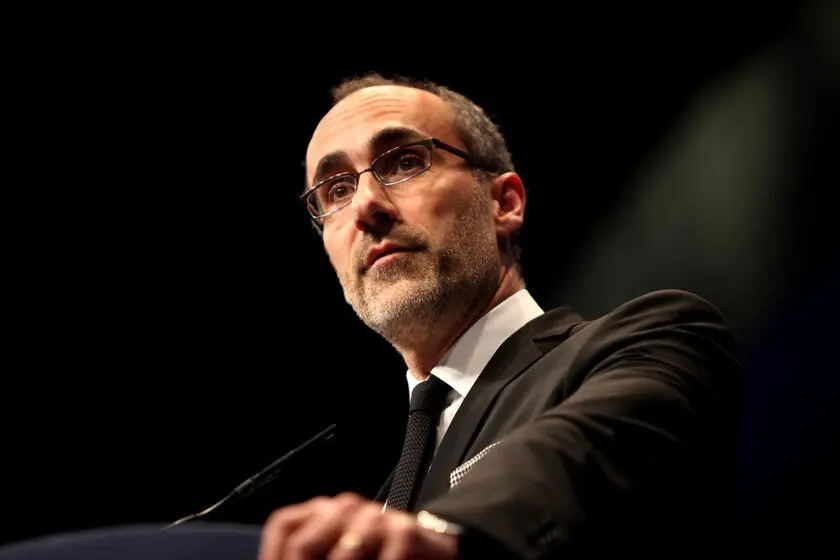
The conventional narrative surrounding aging in the workplace is steeped in a quiet, pervasive dread. Society frequently conditions workers to believe that advancing age equals an inevitable erosion of professional faculties—a slow, irreversible march toward obsolescence. However, Arthur C. Brooks, a professor at the Harvard Kennedy School and the Harvard Business School, offers a radical, scientifically grounded paradigm shift. According to Brooks, we do not inherently lose intelligence as we age; rather, the fundamental type of intelligence in which we excel undergoes a profound transformation.
This concept, championed by Brooks across a seminal 2019 essay in The Atlantic, his 2022 bestselling book From Strength to Strength, and subsequent digital media masterclasses, rests on a classic psychological framework: the dichotomy between fluid intelligence and crystallized intelligence, originally formulated by British psychologist Raymond Cattell.
Fluid intelligence represents the raw processing power of the mind. It is the capacity to reason, solve novel problems swiftly, navigate complex working memories, and maintain rigorous focus. This form of cognition naturally dominates our younger years, typically peaking in early adulthood. Crystallized intelligence, conversely, relies on the accumulation of lifelong knowledge, wisdom, and pattern recognition. It is akin to possessing a vast, exquisitely organized internal library and knowing precisely how to pull the right volume off the shelf when it matters most.
While fluid intelligence governs the agile innovator who disrupts markets in their twenties and thirties, crystallized intelligence fuels the master mentor, the strategic executive, and the transformative teacher who guides organizations through decades of complexity. Understanding this transition is not merely an academic exercise; it is the ultimate blueprint for career longevity, psychological well-being, and professional reinvention in the modern economy.
Chronology of an Idea
The evolution of Arthur C. Brooks’s thesis has unfolded over several years, capturing the global conversation on modern work, career satisfaction, and cognitive aging.
- July 2019: Brooks publishes a widely read and heavily debated essay in The Atlantic entitled "Your Professional Decline Is Coming (Much) Sooner Than You Think". The piece sends shockwaves through white-collar industries by arguing that high-achieving professionals often peak in their fields much earlier than anticipated, leading to mid-career crises when raw cognitive speed begins to wane.
- March 2015 (Parallel Scientific Milestones): Researchers Joshua Hartshorne and Laura Germine publish a landmark study in Psychological Science analyzing nearly 50,000 individuals, demonstrating that human cognitive capacities do not peak uniformly. Instead, different mental faculties—from processing speed to short-term memory—reach their zenith at vastly different stages of life.
- February 2022: Expanding upon his essay, Brooks releases his book From Strength to Strength: Finding Success, Happiness, and Deep Purpose in the Second Half of Life. The book becomes a cultural touchstone, offering actionable philosophical and behavioral frameworks for pivoting from the first curve of professional success to the second.
- February 2022 (Longitudinal Insights): A comprehensive longitudinal study led by researcher Elliot Tucker-Drob sheds new light on cognitive trajectories, revealing nuanced interactions between losses in fluid abilities and gains in crystallized knowledge across aging cohorts.
- Late 2024 / Early 2025: Brooks summarizes the core tenets of his life’s work in a viral videopodcast distributed via Instagram, bringing the conversation to a new generation of digital-native professionals grappling with burnout, workplace stress, and the pressure to perpetually innovate.
Supporting Data and Psychological Research
While Brooks’s narrative provides a compelling and digestible roadmap for professional life, empirical research reveals a landscape defined by intricate nuances, distinct timelines, and fascinating individual variations.
The Myth of a Single Peak
Brooks posits that fluid intelligence generally peaks around age 39—a slight upward revision from his 2019 assertions, which pegged the onset of professional decline to the early thirties. However, psychological science demonstrates that cognitive faculties follow a much more fragmented calendar.
The extensive research by Hartshorne and Germine (2015) underscores that cognitive peaks are highly specialized:
- Processing Speed: Tocks its absolute techo remarkably early, typically between ages 18 and 19.
- Short-Term Memory: Reaches its operational maximum around age 25.
- Vocabulary and Accumulated Knowledge: Serving as the cornerstone of crystallized intelligence, vocabulary tests show that linguistic and factual mastery does not peak until a person reaches their late sixties or even early seventies.
Interestingly, historical comparisons show that this timeline is malleable. Data collected between 1974 and 1987 placed the vocabulary peak firmly in the early forties. Sociologists and cognitive scientists attribute the modern upward shift to expanding educational access, longer professional careers, and the cognitive demands of modern knowledge-based economies.
The Interdependence of Cognitive Curves
A critical caveat identified by modern science is that what an individual gains in crystallized intelligence does not automatically offset what they lose in fluid capacities. A 2022 longitudinal study directed by Elliot Tucker-Drob found a direct correlation in cognitive trajectories: individuals who experience the steepest declines in fluid capabilities often exhibit smaller gains in crystallized domains. Conversely, those who maintain their mental agility and processing speed tend to accumulate the deepest stores of knowledge.
General cognitive aging often affects multiple domains simultaneously. Therefore, visualizing life as a clean transition from a downward curve to an upward curve is a profoundly useful metaphor, yet it manifests differently across individual neurobiology, lifestyle factors, and overall health.
Official Responses and Expert Perspectives
The intersection of cognitive aging and workplace productivity has drawn intense scrutiny from institutional bodies, public health organizations, and corporate leadership consultants.
Burnout Versus Cognitive Aging
Brooks frequently links the mid-career slump—often hitting professionals squarely in their mid-forties—to the psychological distress of trying to compete on fluid intelligence parameters (speed, raw innovation, and relentless concentration) against younger peers. When former high-achievers find that tasks requiring sheer cognitive stamina demand disproportionate effort, frustration and depression can ensue.
Public health organizations offer a vital operational distinction here. The World Health Organization (WHO) formally classifies burnout (or the occupational phenomenon of professional burnout) as a syndrome resulting from chronic workplace stress that has not been successfully managed. Public health experts emphasize that while cognitive shifts naturally occur with age, burnout is fundamentally an environmental and organizational failure—a product of toxic workloads, lack of control, and misaligned incentives—rather than an inevitable biological consequence of growing older.

The Unique Strengths of Older Workers
In reports compiled by the Association for Psychological Science (APS), organizational psychologists stress that contemporary workplaces routinely undervalue the unique cognitive strengths of older employees. While younger workers excel in tasks requiring rapid problem-solving and unscripted adaptability, mature workers possess unrivaled capacities for:
- Complex Pattern Recognition: Quickly diagnosing systemic institutional or market failures based on historical precedent.
- Emotional Regulation and Diplomacy: Navigating high-stakes interpersonal conflicts with seasoned composure.
- Strategic Coaching and Institutional Continuity: Translating chaotic data streams into coherent, long-term organizational visions.
Practical Implications: From Innovator to Instructor
The ultimate value of Arthur C. Brooks’s philosophy transcends theoretical psychology; it serves as a pragmatic, highly actionable life strategy. The core prescription can be distilled into a single, transformative mandate: Be the innovator when you are thirty; be the instructor when you are sixty.
Redefining Career Trajectories
Decades of research initiated by scholars such as Dean Keith Simonton indicate that creative output and professional productivity generally expand for about twenty years from the inception of an individual’s serious career focus. Someone who commits earnestly to a professional path at age thirty will naturally hit their apex of raw productivity around fifty.
Beyond this milestone, the secret to avoiding professional stagnation lies not in fighting the inexorable currents of biological aging, but in actively pivoting toward tasks where humans actually improve with time. By shifting away from solitary, speed-dependent output and leaning into mentorship, executive coaching, editorial oversight, and strategic stewardship, seasoned professionals unlock a second wind of career satisfaction.
Cultivating the Second Curve
Embracing this transition requires a conscious unlearning of societal ageism. Organizations must actively redesign leadership pipelines to value the wisdom of tenure, creating institutional spaces where older workers can pass the torch of their accumulated libraries to younger innovators. By aligning daily responsibilities with the brain’s natural evolutionary arc—moving from fluid execution to crystallized wisdom—professionals can transform the second half of their careers from a period of quiet retreat into their most profound and impactful chapter.



Leave a Reply