

By Global Science & Workplace Correspondent
Published: October 2023
Main Facts: Redefining Professional Aging
In modern corporate culture, youth is often incorrectly conflated with peak capability. Society implicitly teaches us that as the calendar pages turn and our hair begins to gray, our professional faculties inevitably erode. We brace ourselves for a slow, agonizing descent into irrelevance, fearing that younger generations will inevitably outpace us with fresher ideas and quicker wits.
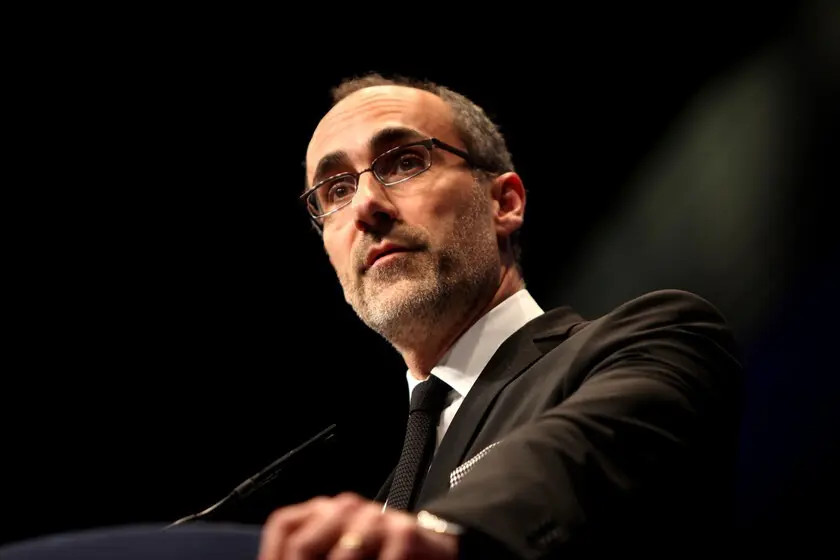
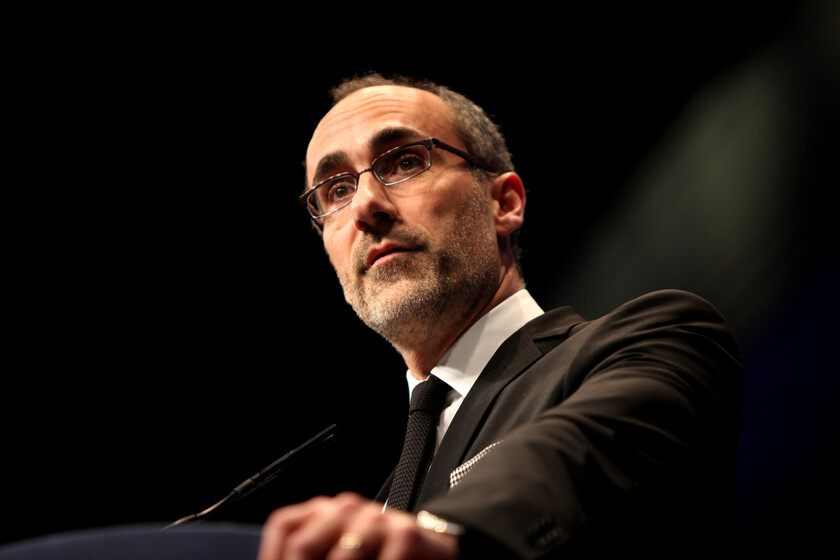
However, Arthur C. Brooks—a prominent professor at the Harvard Kennedy School and the Harvard Business School—offers a radical paradigm shift. According to Brooks, we do not simply lose intelligence as we age; rather, the very nature of our intelligence transforms.
For years, Brooks has championed this perspective. He originally introduced the concept in a widely discussed 2019 essay for The Atlantic titled "Your Professional Decline Is Coming (Much) Sooner Than You Think." He later expanded this thesis into a comprehensive 2022 bestselling book, From Strength to Strength, and recently condensed the core message into a viral video podcast on Instagram.
The central premise is elegant yet profound: human cognition is not a monolith. By understanding how our mental wiring shifts over decades, we can stop fighting a losing battle against our youth and instead pivot toward the cognitive superpowers unique to our later years. Rather than facing an irreversible professional death sentence, aging workers can transition from individual innovators to irreplaceable institutional anchors.
Chronology: The Evolution of Brooks’s Thesis
To understand how this theory entered the mainstream business and psychological discourse, it is helpful to trace its evolution over the past decade through Brooks’s essays, books, and digital media appearances:
- The Foundational Insights (Pre-2019): Drawing inspiration from classical psychology and historical observations of creative geniuses, Brooks began analyzing why top-tier academics, artists, and executives often experience a sudden mid-career crisis where their brute-force productivity begins to plateau.
- July 2019 (The Atlantic Essay): Brooks published "Your Professional Decline Is Coming (Much) Sooner Than You Think." The essay struck a raw nerve globally, warning white-collar professionals that their peak analytical years might conclude earlier than anticipated—frequently during their early-to-mid-30s or 40s—triggering a profound psychological crisis.
- The 2022 Masterclass (From Strength to Strength): Building heavily upon his initial essay, Brooks released From Strength to Strength: Finding Success, Happiness, and Deep Purpose in the Second Half of Life. This book served as a practical manual, teaching readers how to deliberately pivot from innovation-based work to wisdom-based mentorship before burnout takes root.
- Late 2023 / Present (Digital Expansion): Brooks adapted his core philosophy for short-form media, releasing a widely shared Instagram videopodcast that translates complex cognitive psychology into accessible, digestible wisdom for digital-native generations navigating career anxieties.
Supporting Data: Two Forms of Intelligence and What Science Really Says
To grasp Brooks’s argument, one must first understand a foundational concept established by British psychologist Raymond Cattell: the vital distinction between fluid intelligence and crystallized intelligence.
Fluid Intelligence vs. Crystallized Intelligence
- Fluid Intelligence: This is the cognitive engine that allows humans to reason, solve entirely novel problems rapidly, maintain intense focus, and utilize working memory. "People under about 40 have a lot of what’s called fluid intelligence," Brooks explains. It represents raw mental horsepower—the ability to crunch data, master new software instantly, and out-innovate peers through sheer cognitive speed. Fluid intelligence typically peaks relatively early in life.
- Crystallized Intelligence: This is the art of leveraging accumulated knowledge, deep domain expertise, and hard-earned life experience. It is not acquired overnight; rather, it forms slowly from childhood onward, becoming a formidable asset during maturity. Brooks illustrates this brilliantly by comparing it to having an "enormous library in your head"—and, crucially, knowing precisely how, when, and why to pull the right book off the shelf.
What Science Says: Nuance vs. Broad Strokes
While Brooks’s narrative provides a compelling and useful framework, contemporary psychological research introduces important nuance.
A landmark 2015 study published in Psychological Science by Joshua Hartshorne and Laura Germine analyzed nearly 50,000 participants and concluded that different cognitive capabilities peak at vastly different ages. According to data synthesized by the Association for Psychological Science:
- Raw processing speed typically reaches its apex around ages 18 or 19.
- Short-term memory peaks around age 25.
- Conversely, vocabulary—the classic metric of crystallized intelligence—frequently does not reach its zenith until a person is in their late 60s or early 70s.
Furthermore, historical shifts matter. Studies tracking vocabulary peaks show that societal changes, such as expanded formal education and the rise of knowledge-based office work, have steadily pushed these cognitive milestones older over the decades.
Additionally, cognitive aging is rarely a clean zero-sum trade-off. A significant 2022 longitudinal study directed by Elliot Tucker-Drob revealed that the transition from one curve to the other is not uniform: individuals who experience the steepest declines in fluid capacities tend to exhibit smaller gains in crystallized capacities. Conversely, those who maintain their mental agility tend to accumulate the most profound stores of wisdom. Cognitive aging impacts individuals differently, meaning Brooks’s clean two-curve model is an invaluable conceptual tool rather than an absolute biological law.
Official Responses and Psychological Implications
The intersection of cognitive decline and workplace burnout has attracted significant attention from public health organizations, workplace psychologists, and corporate leaders.
The Burnout Phenomenon
Brooks argues that mid-career crises—often manifesting around age 45—stem directly from cognitive friction. When experienced professionals attempt to compete on the exact same terrain where they excelled in their twenties (and where agile twenty-somethings still dominate), they hit a wall. As Brooks notes, "What used to be easy is now hard, what used to be hard now seems impossible, and you get tired of not making progress." Attempting to force fluid intelligence past its biological expiration date leads directly to frustration and despair.
The Official Stance on Burnout
While Brooks links this mid-life friction directly to professional burnout (burnout), institutional definitions offer a broader perspective. The World Health Organization (WHO) formally defines burnout strictly as a syndrome resulting from chronic workplace stress that has not been successfully managed, rather than framing it exclusively as an inevitable consequence of cognitive aging.

Nevertheless, occupational health experts widely agree that misaligning job roles with an employee’s evolving psychological strengths is a primary catalyst for chronic stress, disengagement, and disillusionment in the modern workplace.
Implications: Adapting the Modern Career Arc
Ultimately, the work of Arthur C. Brooks and the underlying psychological data do not spell doom for the aging professional; rather, they offer a liberating roadmap for professional reinvention. The transition from youth to maturity requires a deliberate structural shift in how we approach our life’s work.
From Innovator to Instructor
Brooks distills this imperative into a memorable, life-altering maxim:
"Be the innovator when you’re 30. Be the instructor when you’re 60."
This philosophy aligns seamlessly with historical productivity research by Dean Keith Simonton, which demonstrates that creative output and professional impact typically scale over a 20-year window from the commencement of serious career efforts. Someone who enters their professional stride at 30 often achieves their highest individualized impact around 50.
Once past that threshold, the secret to longevity is abandoning the exhausting pursuit of raw speed and instead leaning heavily into what ages best: deep institutional experience, nuanced crisis management, structural intuition, and the profound capacity to mentor others.
In an economy increasingly obsessed with disruptive speed, the seasoned professional who has mastered the art of crystallized intelligence becomes an invaluable asset—transforming age from a professional liability into an ultimate competitive advantage.



Leave a Reply