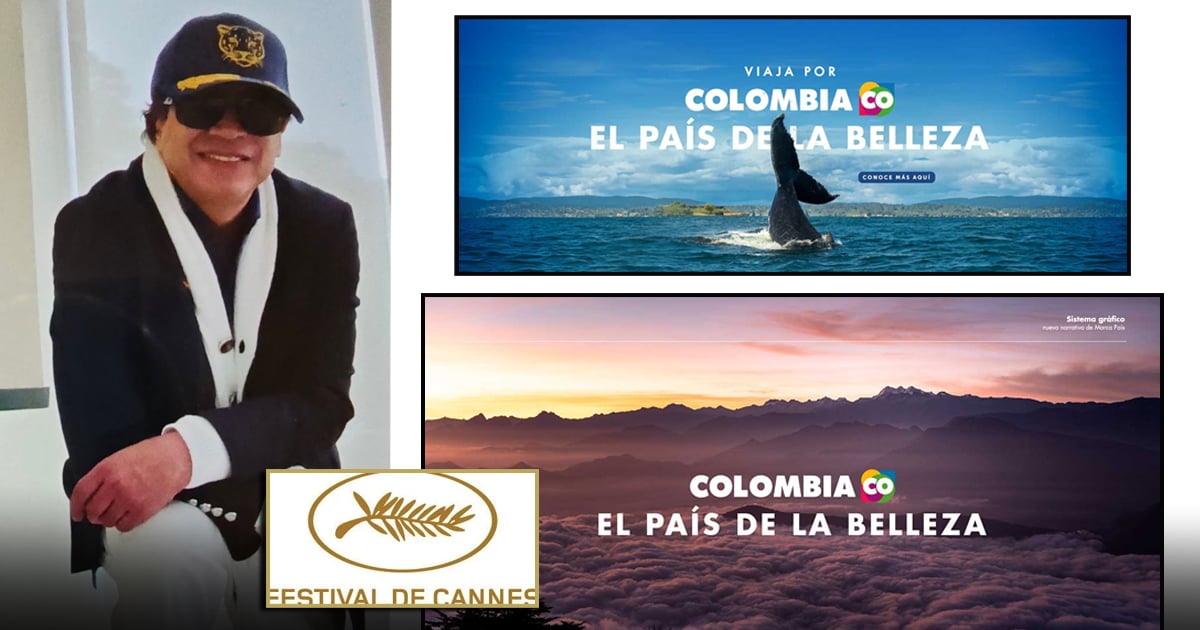
The piece “Discover the Diversity of Colombia, the Land of Beauty” has achieved what few state-sponsored promotional campaigns manage to do: transition seamlessly from a tourism initiative into an award-winning cinematic work of art on the global stage. Produced by the Colombian place-branding firm Tornus Agency—led by Dago Ospina and David Ospina—in collaboration with the Ministry of Commerce, Industry and Tourism and Fontur (Fondo Nacional de Turismo), the audiovisual piece has captured international acclaim.
Its crowning achievement arrives at the Cannes Corporate Media & TV Awards 2026, where it secured a prestigious Dolphin Trophy during the festival’s official ceremonies on the French Riviera.
However, the journey to Cannes was paved with a succession of major victories across continents. Earlier in the year, the campaign triumphed at the India Catalina Awards (winning Best Non-Fiction Editing, alongside multiple nominations for its cinematography and editing team, including Felipe Prieto, Ángel Ruiz, and Maicon Martelo), earned high honors at the New York Festivals TV & Film Awards, and walked away with both the Grand Prix and Gold at the Japan World’s Tourism Film Festival.
The political resonance of the project is equally palpable. Former Colombian President Gustavo Petro confirmed his attendance on the French Riviera alongside the former Minister of Commerce, Industry and Tourism, Diana Marcela Morales, under whose administration the narrative framework of the campaign was conceptualized and executed. The project stands as a cornerstone of an ambitious, multi-billion-peso national strategy designed to overhaul how the world perceives Colombia—moving past dated stereotypes and generic beach posturing into an immersive exploration of its hidden territories, vibrant human tapestries, and cultural soul.
Chronology of a Global Triumph
The path to global recognition for “Discover the Diversity of Colombia, the Land of Beauty” did not happen overnight; it represents the culmination of a multi-year creative endeavor and a relentless festival run.
The Conceptualization Phase (2022–2025): Following the inauguration of Gustavo Petro’s administration, the Ministry of Commerce and Fontur pivoted away from conventional advertising formulas. Tasked with developing a fresh strategy, Tornus Agency spent years researching how to market Colombia authentically. Instead of relying on stock drone footage of major cities and standard Caribbean resorts, the agency committed to filming directly within remote regions, embedding crews deep within local communities.
The International Rollout (FITUR 2026, January): The comprehensive campaign made its grand international debut at the International Tourism Fair (FITUR) in Madrid. Here, industry experts and international buyers were introduced to a narrative style that prioritized human connection, ancestral traditions, and localized biodiversity over standard tourist checklists.
Domestic Validation (India Catalina Awards, April 2026): The campaign’s cinematic merit was first recognized at home during Colombia’s premier audiovisual awards, the India Catalinas. The associated piece, “A Country I Haven’t Seen,” took home the award for Best Non-Fiction Editing, while key crew members earned critical nominations for their artistic vision.
Conquest of New York and Japan (Spring 2026): In May, the campaign garnered international validation at the New York Festivals, praised for its world-class storytelling. Shortly after, it traveled to Asia, sweeping the Japan World’s Tourism Film Festival and capturing the coveted Grand Prix and Gold honors, establishing its status as a universal masterpiece of destination marketing.
The Cannes Ascendance (September 2026): Selected from a competitive global pool at the Cannes Corporate Media & TV Awards, the production cemented its legacy. Former President Petro and former Minister Morales traveled to France to receive the Dolphin Trophy on September 24, framing the accolade as a definitive triumph for the administration’s cultural and economic policies.
Supporting Data and Financial Investment
Executing a state promotional strategy of this magnitude required substantial financial commitment. While the viral promotional video itself represents a specific artistic output, it is tied to a sprawling national tourism framework funded by Fontur and the Ministry of Commerce.
The Macro Budget: Reports regarding the comprehensive international launch and subsequent global pushes cite an overarching investment framework approaching $400,000,000,000 COP through Fontur over the course of the multi-year strategy.
Targeted Deployments: Financial allocations were carefully distributed to maximize global and regional visibility. For instance, in February 2026, Fontur channeled $14,100,000,000 COP into 17 distinct promotional projects to secure Colombia’s dominant presence at ANATO, deploying a massive 4,808-square-meter pavilion featuring all 32 departments of the country.
Economic Returns and Visitor Inflows: The fiscal gamble appears to be yielding tangible results. Ministry figures indicate that between August 2022 and November 2025, Colombia welcomed more than 21 million non-resident visitors, marking a historic high for the country’s tourism sector and validating the economic utility of the revamped global brand.
Production Philosophy: The capital invested was consciously steered away from traditional high-cost, gloss-heavy advertising agencies and funneled into local, deeply collaborative place-branding frameworks. By partnering with independent creators and regional experts, Tornus ensured that the capital directly supported the national creative economy while capturing the raw, unfiltered essence of Colombian identity.
Official Responses and Perspectives
The intersection of public administration, cinematic art, and international prestige has generated varied reactions from political figures, creators, and cultural analysts.
The Executive Perspective
For former President Gustavo Petro, the triumph in Cannes is a direct vindication of his government’s ideological and cultural branding choices. Upon confirming his flight to the French Riviera, Petro underscored that the narrative of "Colombia, the Land of Beauty" was intentionally forged during his tenure to subvert historical narratives of violence and conflict. By shifting the state’s global voice toward ecological preservation, ancestral wisdom (such as the inclusion of indigenous Mamo rituals and coca-mambear practices), and regional diversity, the administration sought to project a progressive, culturally rich nation.
Former Minister of Commerce, Industry and Tourism Diana Marcela Morales, who spearheaded the tactical rollout of the campaign, emphasized that the project’s success proves state communication can transcend bureaucratic monotony and achieve genuine artistic relevance.
The Creative Vision
Dago Ospina and David Ospina of Tornus Agency have consistently maintained that the core strength of the project lies in its refusal to talk down to the audience or sanitize the national reality.
"We spent years studying how to market a complex country without falling back on the tired clichés of standard tourism ads," the agency noted.
By focusing on everyday, poetic realities—such as an accordion player moving through the historic streets of Cartagena or remote indigenous communities preserving centuries-old traditions—the creators built a bridge between high-end commercial cinema and authentic documentary storytelling.
Implications for Colombia’s Global Brand
The success of “Discover the Diversity of Colombia, the Land of Beauty” carries profound implications for the future of the nation’s soft power, cultural diplomacy, and economic development.
Redefining Place Branding: For decades, Colombia’s international public relations campaigns were defensive—focused on overcoming security concerns and drug-cartel stigmas. This campaign represents a maturation of the national brand. It does not argue that Colombia is safe; it demonstrates that Colombia is profoundly alive, culturally vibrant, and aesthetically breathtaking. This proactive narrative sets a new benchmark for how developing nations can leverage public art to reshape geopolitical perception.
A Boost for Regional Tourism: By deliberately shining a light on regions, communities, and culinary traditions that historically sat outside standard travel itineraries, the campaign helps decentralize tourism. Travelers drawn in by the cinematic beauty are increasingly looking beyond Bogotá, Medellín, and Cartagena, injecting capital into marginalized or emerging regions across the Pacific coast, the Amazon, and the Andean highlands.
Validation of the Colombian Creative Economy: Winning at Cannes, New York, and Japan signals to the global market that Colombia’s audiovisual sector possesses world-class technical and narrative capabilities. This elevates the country not just as a scenic backdrop for Hollywood productions, but as a net exporter of sophisticated creative intelligence.
Political Legacy and Continuity: As administrations shift, the institutionalization of campaigns like "The Land of Beauty" demonstrates the power of a cohesive state narrative. Whether future governments choose to modify the branding or build upon its foundations, the global benchmarks established in 2026 ensure that Colombia’s cultural footprint on the world stage has reached an unprecedented, permanent altitude.












Leave a Reply