


HARRISBURG, Pa. — In an aggressive push to accelerate its comprehensive environmental agenda, the Commonwealth of Pennsylvania has announced a sweeping overhaul of how climate financing is distributed across the state. Moving away from bureaucratic bottlenecks that have historically favored large corporations, the administration under Governor Josh Shapiro is democratizing access to millions of dollars in federal and state green subsidies.
By pairing massive infrastructure investments with personalized, barrier-free advisory services, Pennsylvania is aiming to ensure that grassroots organizations, local municipalities, and small-to-medium-sized enterprises (SMEs) are no longer sidelined in the global transition toward a sustainable, decarbonized economy.
Main Facts: What You Need to Know
Pennsylvania’s newly expanded climate financing initiative is designed to bridge the gap between ambitious environmental goals and the practical realities of project funding. Key elements of the initiative include:
- Democratized Access: The Pennsylvania Department of Environmental Protection (DEP) is actively dismantling complex bureaucratic requirements that have traditionally locked smaller entities out of federal and state grant programs.
- Personalized Advisory Services: The state has launched a dedicated digital platform offering free 30-minute one-on-one consultations with state financial advisors.
- Targeted Inclusivity: Special emphasis is being placed on reaching small businesses, agricultural sectors, and under-resourced communities that possess high-impact sustainability projects but lack the administrative bandwidth to navigate complex grant applications.
- Multi-Million Dollar Backing: The funding draws from massive pools of state and federal resources earmarked for electric vehicle (EV) infrastructure, residential clean energy adoption, and agricultural grid modernization.
- Leadership and Oversight: The initiative is spearheaded by the DEP in close coordination with state specialists, including Louie Krak, Climate Finance Advisor, working alongside cross-governmental agencies to streamline the state’s overarching climate strategy.
Chronology of Events: Pennsylvania’s Green Momentum
The journey toward this major financial restructuring has been marked by a series of strategic milestones driven by Governor Shapiro’s administration:
- Early 2023 – Setting the Agenda: Upon taking office, Governor Shapiro’s administration prioritized modernizing Pennsylvania’s energy framework, signaling a commitment to aggressive carbon reduction and infrastructure development.
- Mid-2024 – Infusion of Federal Funds: Benefiting from federal legislation such as the Bipartisan Infrastructure Law and the Inflation Reduction Act, Pennsylvania secured substantial funding pools dedicated to environmental resilience and clean energy.
- Late September / Early October – The Sustainability Push: Pennsylvania launched its high-profile Sustainability Week, utilizing the platform to highlight infrastructural expansions, EV investments, and renewable energy adoption programs.
- October 8 (Conclusion of Sustainability Week): The DEP officially rolled out its streamlined climate financing portal and advisory system, addressing the long-standing complaint that securing green grants was too complex for everyday businesses and local leaders.
- Present Day – Active Implementation: State-backed advisors like Louie Krak are actively conducting personalized 30-minute consultation sessions, mapping out customized funding pathways for applicants across the Commonwealth.
Supporting Data and Strategic Investments
To understand the scale of Pennsylvania’s financial push, one must look at where the capital is flowing. The Commonwealth’s decarbonization strategy is backed by significant capital injections designed to transform multiple sectors of the state’s economy:
1. Transportation and EV Infrastructure
Transportation remains one of the largest contributors to carbon emissions. Pennsylvania has directed millions toward expanding electric vehicle charging corridors along major highways and local municipalities. This infrastructure reduces range anxiety for consumers and supports commercial fleet electrification.
2. Residential Energy Efficiency
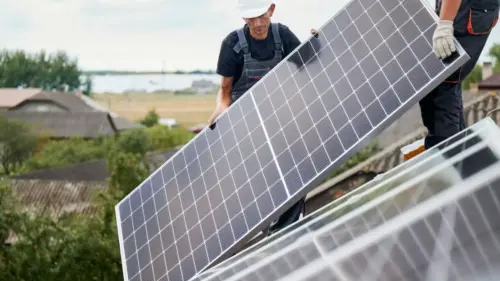
Homeowners across the state are receiving targeted support to transition away from fossil fuels. Programs are specifically tailored to help low- and middle-income families install modern heat pumps, solar panels, and upgrade home insulation, directly lowering household energy burdens.
3. Agricultural Modernization
Pennsylvania’s robust agricultural sector is receiving targeted resources to clean up its energy grid. Funding is being channeled into modernizing farm operations with renewable energy sources, waste-to-energy systems, and precision agriculture tools that lower carbon footprints while reducing operational costs for farmers.
4. The Funding Accessibility Gap
Prior to the new DEP initiative, data indicated that up to 60% of small businesses and grassroots community projects abandoned grant applications midway due to dense regulatory language and complex compliance criteria. By introducing human-led advisory services, the state aims to drive application completion rates significantly higher.
Official Responses and Perspectives
The shift in policy has received widespread attention and praise from environmental advocates, state officials, and business representatives alike.
In an official statement released through government channels, the DEP emphasized the moral and practical imperative of simplifying financial pathways:
“Finding the right funding path should not be an obstacle to making positive environmental changes in your community or business. We are leveling the playing field so that good ideas—no matter how small the organization behind them—have a fighting chance to come to life.”
Louie Krak, Climate Finance Advisor for the state, elaborated on the hands-on approach the administration is taking:
“Our goal is simple: we are cutting through the red tape. When a local business owner or a community organizer schedules a 30-minute consultation through our portal, they aren’t just getting a list of links. They are getting a dedicated partner who helps them match their specific project goals with the exact federal or state program designed to fund it.”
Environmental economists have also lauded the move, noting that many states fail to fully utilize federal climate grants simply because local stakeholders lack the grant-writing infrastructure. Pennsylvania’s model of providing free, expert guidance acts as a force multiplier for public investments.
Implications for the Future of Pennsylvania
The democratization of climate financing in Pennsylvania carries profound implications for the state’s economic and environmental landscape:
Empowering the Local Economy
By unlocking capital for small and medium-sized enterprises (SMEs), Pennsylvania is fostering a decentralized green economy. Local contractors, green-tech startups, and independent agricultural producers can now compete for projects that were once the exclusive domain of multinational corporations. This localized approach ensures that green jobs are created directly within Pennsylvania neighborhoods.
Accelerating State Climate Goals
Pennsylvania is positioning itself as a regional leader in climate action. By making its funding mechanisms user-friendly, the state ensures that every dollar of federal and state allocation is deployed efficiently rather than sitting unused in government accounts. This high velocity of capital deployment directly translates into faster emissions reductions and improved public health outcomes through cleaner air and water.
A Blueprint for Other States
As state governments grapple with how best to distribute historic levels of federal climate funding, Pennsylvania’s combination of a dedicated web portal, free expert consultations, and personalized follow-up tracking serves as a potential national model. It proves that environmental justice and fiscal efficiency go hand in hand: by lowering the barrier to entry, the government can unearth innovative, community-driven solutions that top-down bureaucracies often miss.
As Pennsylvania moves forward from its landmark Sustainability Week into a phase of active, hands-on implementation, the message to its citizens is clear: the green transition is open for everyone, and the state is ready to help pay the way.

Leave a Reply