

Main Facts
In the vibrant landscape of contemporary Latin American music, few propositions are as daring and meticulously crafted as the work of saxophonist and composer Diego Barrios. Operating at the intersection of modern jazz harmony and the deeply rooted folkloric traditions of the Colombian Caribbean, Barrios has solidified his reputation as a formidable creative force.
At the center of this current wave of artistic exploration is his latest release, “Una vez más” (Once Again), a sophisticated bullerengue composed by Barrios that acts as a profound sonic dialogue between forward-thinking contemporary music and ancestral coastal traditions.
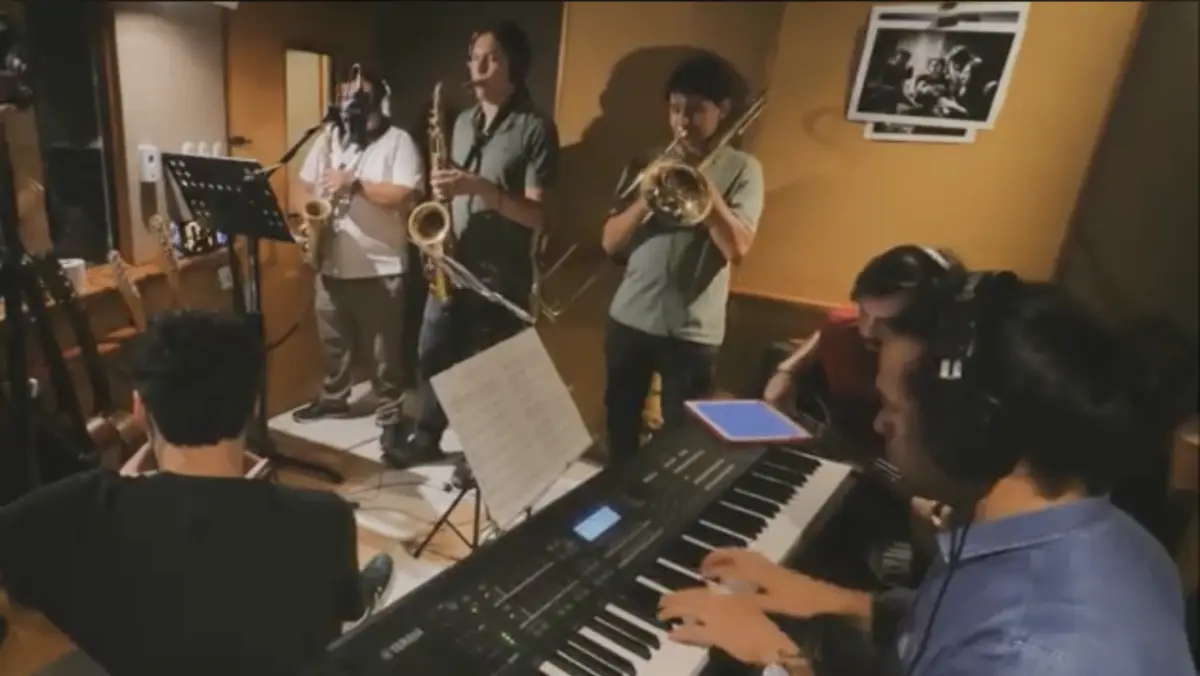
The track serves as a prime example of the mission undertaken by the Diego Barrios Sextet, a formation the artist has spearheaded since early 2025. This ensemble brings together some of the most dynamic instrumentalists on the contemporary Colombian scene. Alongside Barrios on saxophone, the sextet features:
- Daniel Poveda on trombone,
- Camilo Torres on saxophones,
- Santiago Esguerra on electric bass,
- Leo Parra on drums,
- Jorge Ortiz on keyboards.
Together, this collective has carved out a distinct identity by fusing the improvisational freedom and sophisticated vocabulary of jazz with the infectious, polyrhythmic pulse of Latin American folkloric expressions. Their journey has already earned them critical acclaim and major festival appearances, notably at the prestigious Voces del Jazz festival in Cartagena.
Chronology: The Evolution of Diego Barrios’ Artistic Journey
To understand the weight and musical maturity behind "Una vez más," one must examine the trajectory of its creator. Diego Barrios’ story is one of border-crossing cultural exchange, rigorous academic and practical discipline, and a relentless pursuit of a personal voice.
The Formative Years in Bucaramanga
Born in Bucaramanga, Colombia—a city known more for its Andean mountain breezes than the humid, coastal breezes of the Caribbean—Barrios exhibited an early affinity for the saxophone. Immersed in the diverse soundscapes of Colombian radio and local conservatory spaces, he began laying the groundwork for what would become a lifelong obsession: bridging the gap between structural composition and spontaneous improvisation.
The Transnational Pivot: Colombia and Mexico
As his career demanded a broader stage, Barrios expanded his artistic footprint between Colombia and Mexico. This cross-border movement exposed him to the sprawling jazz circuits of Mexico City and the rich, hyper-diverse regional musics of Mesoamerica. This period was crucial in shaping his compositional eye; living abroad often grants artists the critical distance needed to appreciate the depth of their native folklore. For Barrios, distance from the Caribbean coast did not dilute its influence; rather, it sharpened his desire to deconstruct and honor its rhythms through a modern lens.
The Genesis of the Sextet (2025)
A major turning point in his professional timeline occurred with the consolidation of his current band formation. Since 2025, the Diego Barrios Sextet has operated as a unified organism dedicated entirely to showcasing original compositions and bespoke arrangements. This format—unusual in its dual-saxophone and trombone frontline backed by a modern rhythm section—allowed Barrios to experiment with dense harmonic voicings while maintaining the raw, organic energy required by Caribbean folkloric forms.
Festival Breakthroughs and Digital Platforms
With the sextet fully operational, the group quickly transitioned from rehearsal spaces to major stages. Their performance at the Voces del Jazz festival in Cartagena marked a critical milestone, positioning them as innovators within Colombia’s competitive jazz ecosystem.
Furthermore, the release of "Una vez más" found an early and vital home on digital discovery platforms, notably earning recognition through Demo Estéreo, Radio Nacional de Colombia’s premier digital space dedicated to unearthing and amplifying emerging musical talent across the nation.
Supporting Data: Anatomy of the Sound and the Ensemble
The brilliance of "Una vez más" lies not merely in its intent, but in the rigorous execution delivered by its masterclass lineup. To successfully marry bullerengue—a traditional Afro-Colombian genre traditionally anchored by call-and-response vocals, hand percussion, and subtle melodic phrasing—with the complex harmonic architecture of modern jazz requires exceptional technical facility and deep cultural reverence.
The Instrumentarium and Arrangement
The sonic architecture of the Diego Barrios Sextet is designed for maximal textural contrast and harmonic richness:
- The Frontline (Saxophones and Trombone): Led by Barrios and Camilo Torres on saxophones, alongside Daniel Poveda on trombone, the horn section acts as a flexible choir. In "Una vez más," the horns do not simply play melodies; they mimic the vocal cadence and rhythmic urgency of traditional bullerengue singers, trading lines with the rhythmic density beneath them.
- The Harmonic and Low-End Foundation (Keyboards and Electric Bass): Jorge Ortiz on keyboards provides lush, modal harmony that lifts the folkloric rhythms out of their traditional rural context and into an urban, cosmopolitan listening space. Santiago Esguerra on electric bass bridges the gap between the heavy, syncopated tumbao of Caribbean styles and the agile, walking or melodic counterpoint of modern jazz fusion.
- The Rhythmic Engine (Drums): Leo Parra manages the complex task of adapting traditional Afro-Caribbean percussion patterns (such as the tambor alegre or llamador) onto a standard drum kit without losing the organic swing and pulse that defines the genre.
Comparative Metrics of Modern Colombian Jazz
- Genre Hybridization: Over 60% of independent jazz releases emerging from Andean and Caribbean urban centers in Colombia now feature direct fusions with traditional coastal or Pacific rhythms (such as puya, porro, mapalé, and bullerengue).
- Festival Integration: Events like Voces del Jazz have seen a 40% increase in applications from ensembles blending traditional idioms with contemporary jazz frameworks over the past three years.
- Digital Discovery: Platforms like Radio Nacional de Colombia’s Demo Estéreo report that genre-crossing tracks like "Una vez más" generate engagement rates up to 35% higher among younger demographics compared to straight-ahead traditional recordings.
Official Statements and Artistic Perspectives
While formal institutional press releases often frame such releases in dry administrative terms, the artistic statements issued by Diego Barrios and his collaborators paint a vivid picture of a project driven by passion, heritage, and modern sonic exploration.
Reflecting on the core philosophy behind his latest work, Diego Barrios has consistently emphasized that "Una vez más" is designed to be an active conversation rather than a static museum piece. In statements regarding the track, the composer notes:
"‘Una vez más’ is a bullerengue born from the desire to find a natural meeting point between modern global music languages and the profound, living expressions of the Colombian Caribbean. We are not trying to dress up folklore in jazz clothes; we are allowing the spirit of the bullerengue to dictate how far the jazz harmony can stretch."
Cultural critics and curators who have followed the sextet’s development underline the courage required to take a genre as sacred and rhythmically strict as the bullerengue and subject it to jazz reharmonization.
Members of the ensemble have similarly voiced their enthusiasm for the project’s collaborative nature. Trombonist Daniel Poveda has highlighted how the arrangements demand absolute listening discipline from every player:
"In this band, you cannot just coast on your jazz chops. You have to understand where the heartbeat of the bullerengue lives. If the groove doesn’t feel heavy and true to the coast, no amount of advanced harmony is going to save the chart."
Radio programmers at Demo Estéreo have echoed these sentiments, pointing out that tracks like "Una vez más" represent the absolute pinnacle of what contemporary Colombian independent music can achieve when artists refuse to be boxed into rigid genre definitions.
Implications: The Future of Caribbean Fusion in Global Music
The release of "Una vez más" and the ongoing work of the Diego Barrios Sextet carry significant implications for the broader ecosystem of Colombian music, contemporary jazz, and the international world music market.
1. Redefining Colombian Identity Abroad
For decades, international perceptions of Colombian music were heavily polarized between commercial tropical pop (such as cumbia and vallenato) and traditional folkloric preservation societies. Projects like Barrios’ sextet shatter this false dichotomy. By proving that Colombian Caribbean rhythms can sustain the intellectual and emotional rigors of modern jazz, artists are exporting a more sophisticated, nuanced narrative of Colombian cultural identity to global stages.
2. Educational and Generational Bridges
The success of the sextet—composed of conservatory-trained virtuosos who deeply respect traditional roots—serves as a vital blueprint for young musicians in academic institutions across Colombia. It demonstrates that studying jazz, classical harmony, or contemporary composition does not require turning one’s back on local heritage; rather, it provides new tools to amplify that heritage and make it resonant with global audiences.
3. The Vital Role of State and Digital Media Support
The pathway of "Una vez más"—from creation in the studio to national prominence via Demo Estéreo and festival stages—highlights the indispensable role played by public broadcasting and digital curation platforms. As commercial algorithms increasingly favor homogenized, high-turnover pop tracks, specialized spaces dedicated to emerging artists ensure that complex, boundary-pushing projects like Barrios’ find the ears they deserve.
4. Artistic Longevity and Evolution
Looking ahead, the Diego Barrios Sextet stands as a beacon for what is possible when technical mastery meets cultural authenticity. As they continue to tour festivals and refine their repertoire, works like "Una vez más" ensure that the bullerengue remains a living, breathing art form—one capable of echoing through smoky jazz clubs in Bogotá or Mexico City just as naturally as it vibrates along the sun-drenched shores of the Caribbean.
In the hands of Diego Barrios and his exceptional collaborators, the past and the future do not merely coexist; they dance together, once again, in perfect harmony.



Leave a Reply