

By Global News Desk
Updated: September 2026
Main Facts
The agricultural sector in the Commonwealth of Virginia faces an unprecedented convergence of economic, geopolitical, and environmental pressures that threaten the livelihood of generational farming families. At the epicenter of this crisis is a destructive trade war initiated by the federal administration under President Donald Trump, compounded by volatile fossil fuel costs and a punishing, historic climate crisis characterized by severe droughts, extreme heatwaves, and erratic weather events.
Virginia Governor Abigail Spanberger has emerged as one of the most vocal critics of the White House’s trade agenda, particularly targeting a controversial policy involving imported Canadian beef. According to state officials, the federal decision to suspend tariffs on 300,000 metric miles of foreign beef—subsidized heavily by taxpayers and slated for sale at 25 percent below market value—has flooded domestic markets. This influx has directly undermined local livestock producers who are already grappling with spiraling operational overhead and a crippled domestic processing infrastructure.
The compounding factors of trade retaliation, skyrocketing diesel prices, and a crippling 85-year drought have created what Governor Spanberger has termed a "lethal combination" for the state’s primary economic driver. Despite these systemic shocks, the state’s agricultural community has demonstrated remarkable resilience, retaining its status as Virginia’s number one industry and recently earning the honor of hosting Farm Aid, one of the nation’s most prestigious rural advocacy and music events.
Chronology of a Crisis: The 2026 Agricultural Timeline
The tribulations facing Virginia’s agricultural community did not materialize overnight. They are the result of a sequenced chain of policy decisions and escalating environmental anomalies that unfolded throughout 2026.
Late August: The Salvo of the Trade War
The current economic turmoil traces its roots to late August 2026, when President Donald Trump launched a broad and aggressive trade war against Canada as a cornerstone of his renewed protectionist economic strategy. While designed to force concessions on a geopolitical scale, the implementation of sweeping tariffs sent immediate shockwaves through integrated North American supply chains.
Agriculture, which relies heavily on frictionless cross-border trade for feed, equipment, and livestock distribution, was hit hardest. Rather than absorbing the economic penalty, the government of Ottawa swiftly retaliated with targeted sanctions and counter-tariffs on key U.S. exports. The resulting tit-for-tat dynamic effectively closed vital export markets for American farmers while destabilizing domestic pricing models.
Early September: Policy Backlash and the Beef Controversy
As the trade war escalated, agricultural lobbies and state-level executives began sounding the alarm. The federal government’s subsequent decision to drop barriers on 300,000 metric tons of foreign beef—subsidized to undercut domestic producers by a quarter—triggered immediate outrage. Governor Spanberger took formal action, dispatching a scathing letter of protest to U.S. Secretary of Agriculture Brooke Rollins.
Mid-September: The Processing Bottleneck
By mid-September, the structural weaknesses of the national meat supply chain were laid bare. As imported, subsidized beef saturated local markets, domestic livestock producers found themselves with nowhere to turn. Regional packing houses and processing plants, squeezed by rising energy costs and labor shortages, accelerated their closures. This left Virginia ranchers with mature livestock and zero viable processing avenues, plunging farm gate prices and forcing many small-scale operations to contemplate permanent liquidation.
Late September: A National Stage and a Call to Action
On Saturday, September 27, 2026, Governor Spanberger took her message to a national audience during an appearance on CNN. Speaking against the backdrop of the Farm Aid event—hosted in Virginia in recognition of the state’s agricultural prominence—the governor celebrated the resilience of the local farming community while issuing a dire warning about the sustainability of current federal policies. She urged the White House to reverse its course, abandon the punitive trade strategies, and return to the negotiating table to secure durable, predictable trade frameworks.
Supporting Data and Economic Realities
To understand the severity of the 2026 crisis, one must examine the macroeconomic indicators and environmental metrics bearing down on Virginia’s rural economy.
Market Distortion and Import Subsidies
The core economic grievance voiced by state agricultural leaders centers on market distortion. The federal suspension of tariffs on 300,000 metric tons of imported beef represents a massive volume that directly displaces domestic supply. When these foreign goods are subsidized by taxpayers to enter the market at 25 percent below the cost of production, local producers—who receive no comparable federal price supports—are effectively priced out of their own backyards.
Economists note that this intervention occurs during a vulnerable window for domestic processing capacity. With independent slaughterhouses and packing plants shuttered across the Mid-Atlantic region due to regulatory pressures and high utility costs, Virginia ranchers face a severe structural bottleneck. They are forced to hold livestock longer, incurring exorbitant feed costs while market values plummet due to foreign oversupply.
Energy Overhead: The Diesel Factor
Compounding the pricing pressure are persistent high costs for agricultural inputs, most notably diesel fuel. Farming is an energy-intensive enterprise, requiring heavy machinery for planting, tilling, harvesting, and transporting goods to market. Throughout 2026, elevated diesel prices eroded operating margins to razor-thin thresholds. Every phase of the agricultural supply chain—from hauling fertilizer to moving cattle to auction—became exponentially more expensive, absorbing whatever cash reserves farmers had managed to accumulate during prior seasons.
The 85-Year Drought and Climate Pressures
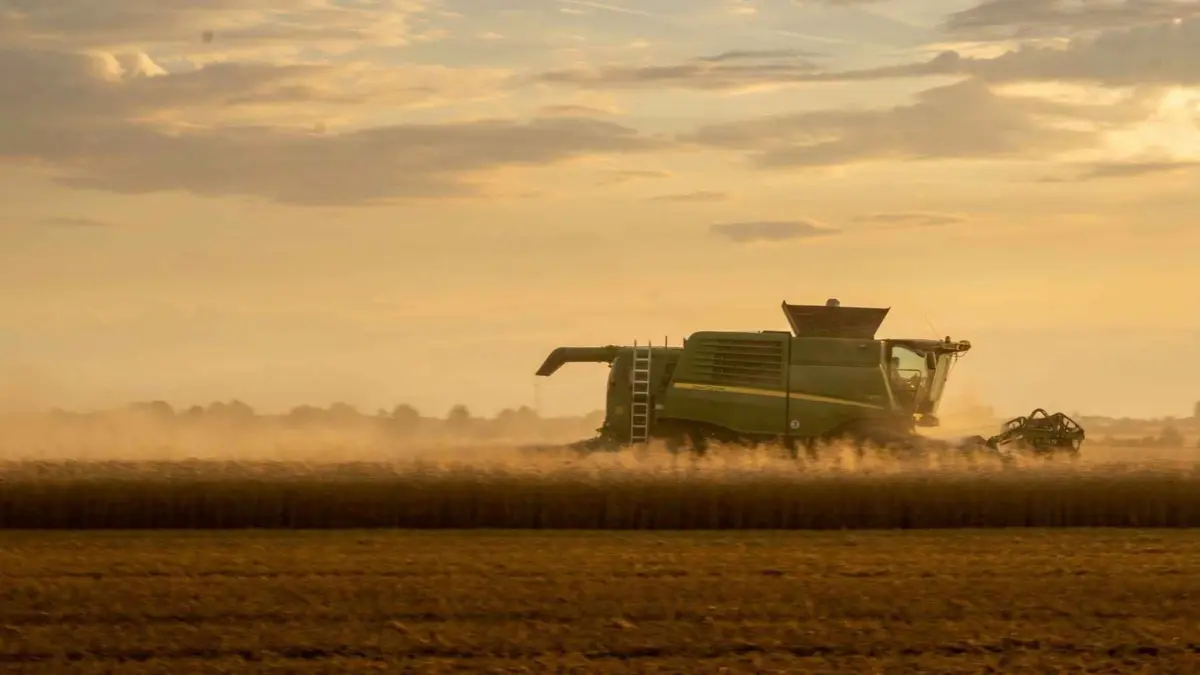
While policy decisions battered profit margins, Mother Nature delivered body blows to production volume. Virginia is currently enduring one of the most severe and prolonged droughts in 85 years.
This historic dry spell has decimated crop yields, particularly for corn and soybean farmers who rely on rain-fed irrigation systems. Pastures have turned to dust, forcing livestock producers to prematurely liquidate herds or purchase expensive supplementary feed.
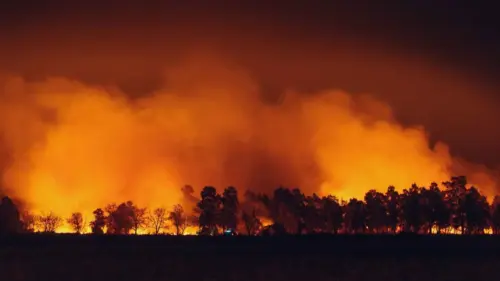
Compounding the crisis, the state has not suffered from drought alone. An unpredictable meteorological cycle has subjected Virginia farms to a destructive whipsaw of extreme heatwaves, sudden localized flooding, and damaging tornadoes. This environmental volatility has transformed traditional farming from a calculated business venture into an unpredictable gamble against the elements.
Official Responses and Political Friction
The divergence between federal economic ambitions and state-level realities has generated significant friction between Richmond and Washington, D.C.
Governor Spanberger’s Stance
Governor Abigail Spanberger has positioned herself as the chief defender of Virginia’s rural economy, utilizing both formal administrative channels and public media platforms to challenge the White House. In her correspondence with Secretary of Agriculture Brooke Rollins, Spanberger emphasized that national economic policies cannot be formulated in a vacuum that ignores regional consequences.
"This policy will directly harm Virginia cattle producers by flooding the market with government-subsidized, imported beef, to the detriment of our ranchers and farmers," Spanberger stated in her official communications. She highlighted the tragic irony of federal policies that undermine domestic food security at the very moment producers are struggling to keep their operations afloat amid climate catastrophes.
Furthermore, Spanberger has consistently argued that the long-term health of American agriculture depends on stability and predictability. She contends that trade wars launched on a whim strip producers of the confidence required to make multi-year capital investments in land, infrastructure, and herd genetics.
The Federal Silence and Administrative Defense
Thus far, the federal administration has maintained a defensive posture regarding its trade policies with Canada. Officials in Washington have defended the tariffs and import adjustments as necessary components of a broader strategy to rebalance international trade agreements and protect American industrial interests.
However, the administration has offered few substantive solutions for the regional agricultural sectors caught in the crossfire. Requests from state leaders to reconsider the beef import subsidies and re-engage in bilateral agricultural trade talks have largely met with bureaucratic resistance or outright rejection, leaving state officials to manage the fallout independently.
Implications for the Future of Virginia Agriculture
The convergence of trade friction, energy inflation, and climate disruption in 2026 carries profound implications for the future trajectory of agriculture in Virginia and the broader United States.
The Threat to Intergenerational Farming
The most immediate casualty of this multi-front crisis is the institution of the family farm. Unlike corporate agribusinesses with diversified portfolios and deep financial reserves, family-owned operations operate on tight annual cash flows. When a historic drought destroys a harvest simultaneously with a federal trade policy that deprives ranchers of fair market value, the result is often insolvency.
Agricultural extension agents report an alarming increase in distress sales of farmland to developers. Once agricultural land is paved over or converted for residential use, it is permanently lost as a food-producing asset, threatening regional food security and forever altering the rural landscape of the Commonwealth.
The Call for Cohesive Policy and Climate Adaptation
In the wake of these events, industry stakeholders are demanding a fundamental reassessment of how agricultural policy is drafted. There is a growing consensus that future federal administrations must consult closely with state-level agricultural departments before launching broad trade offensives that risk retaliatory strikes against perishable goods.
Additionally, the severity of the 2026 drought has underscored the urgent need for state and federal investment in climate-resilient agricultural infrastructure. Expanding access to modern irrigation technology, supporting soil conservation programs, and modernizing regional processing plants are no longer optional luxuries; they are essential prerequisites for survival in an era of environmental volatility.
As Virginia’s farming community gathers for events like Farm Aid—celebrating their hard-won resilience as the state’s premier industry—the underlying anxiety remains palpable. Unless federal trade belligerence gives way to pragmatic diplomacy and targeted disaster relief, the foundational pillars of Virginia’s agricultural heritage will face an increasingly perilous future.



Leave a Reply